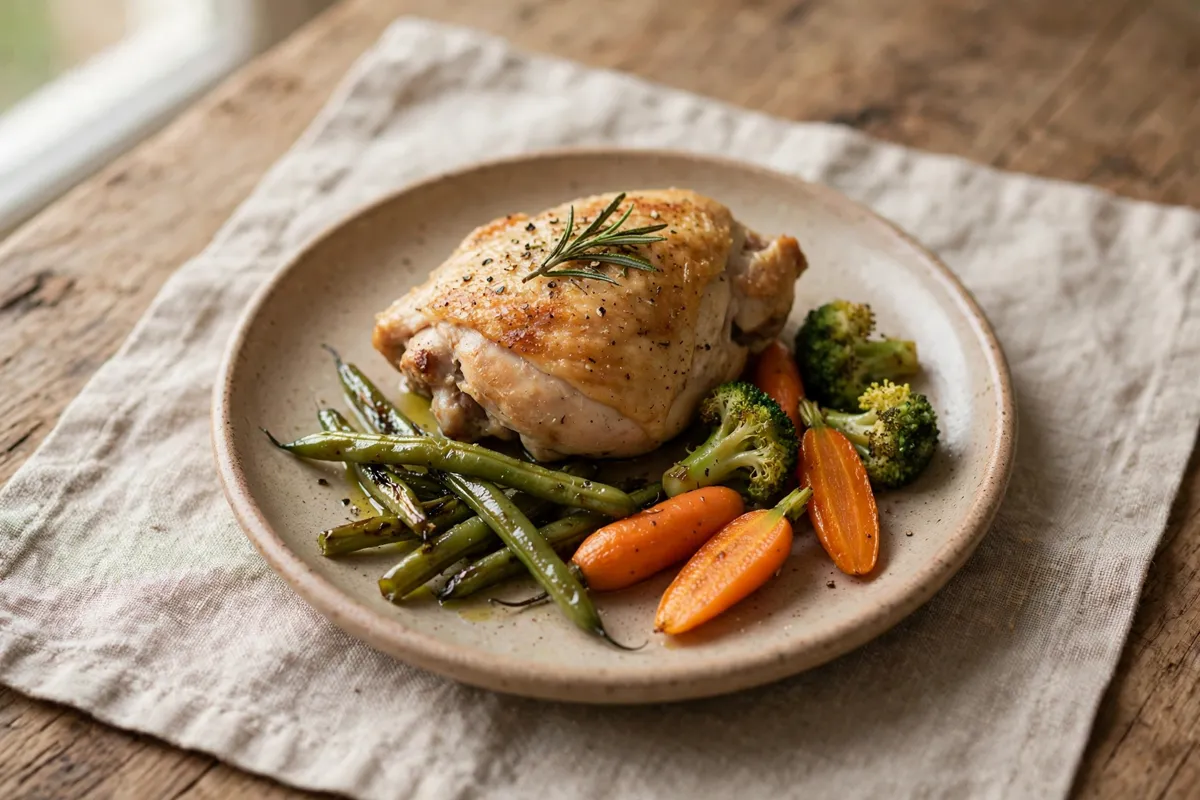
Chicken Protein Calculator: The Short Answer
One serving of chicken is 3 to 4 ounces cooked — the standard guidance range, and the USDA's own reference portions land inside it: the half-breast portion is 86 grams, about 3 ounces, deriving to 141.9 calories and 26.7g protein (FDC ID 171477). Four ounces (113.4g) derive to 187.1 calories and 35.2g protein. This article shows what those servings deliver, why the range exists, and when the right serving for a particular eater is the top of it — or beyond it.
A serving is a planning unit, not a law of appetite. The 3-to-4-ounce band exists because it brackets the protein a typical meal should anchor — roughly 25 to 35 grams — at a calorie cost any budget absorbs. Bigger eaters, athletes and anyone building a meal around chicken alone will scale up from the standard, and the arithmetic for doing so is the same per-ounce ladder used throughout this series. Every step of it converts in the chicken protein calculator.
Short Answer
3 to 4 ounces cooked is one serving of chicken. At 3 ounces (85.1g of breast), the serving derives to 140.3 calories and 26.4g protein; at 4 ounces (113.4g), 187.1 calories and 35.2g protein, both from the roasted breast entry (FDC 171477) at 165 calories and 31.02g protein per 100g. The USDA half-breast portion — 86g, about 3 ounces — is the canonical single serving.
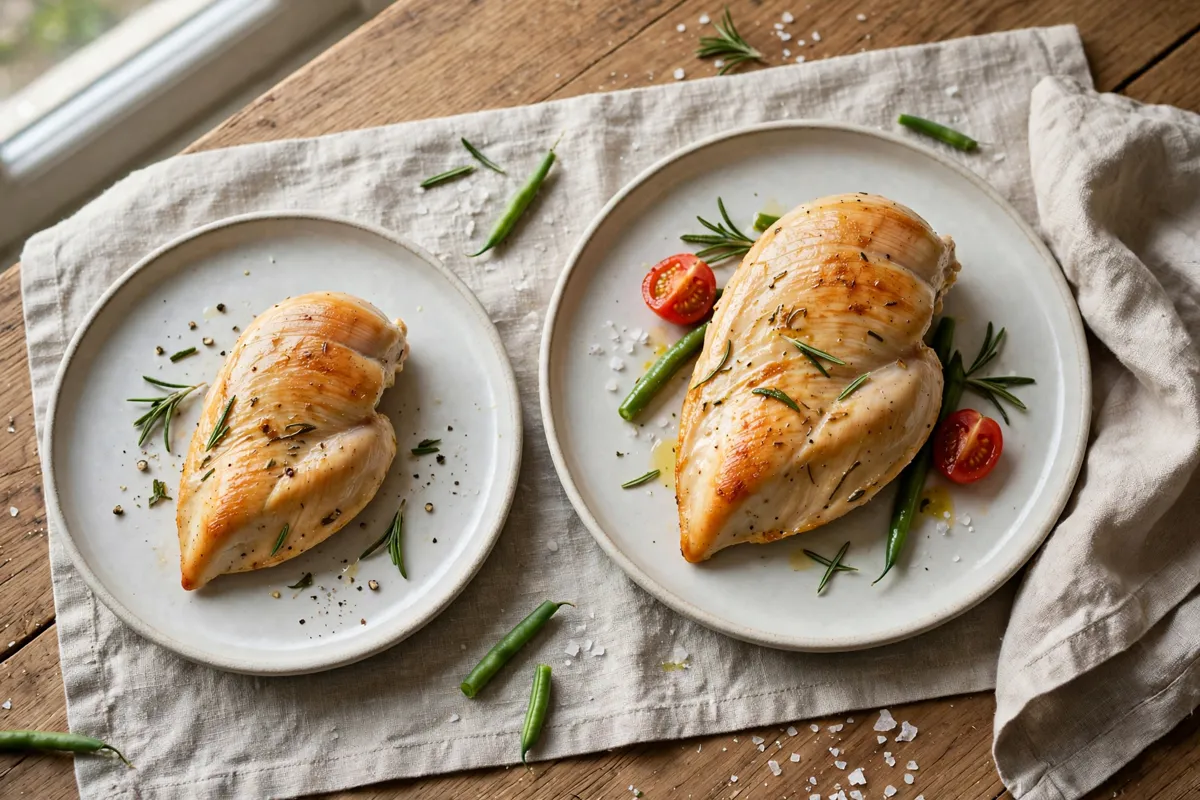
What Does a 3-to-4-Ounce Serving Actually Deliver?
Breast is the reference cut, so price the band on it first. Per ounce of cooked breast (28.35g): 46.8 calories and 8.8g protein, derived from the per-100g entry. Three ounces: 140.3 calories, 26.4g protein, about 3.0g fat. Four ounces: 187.1 calories, 35.2g protein, about 4.0g fat. Both ends carry 0g carbohydrate and 0g fiber, and sodium stays in the plain meat's low band — about 63mg at 3 ounces and 84mg at 4 ounces, derived from 74mg per 100g.
Other parts fill the same band differently. Three ounces of skinless thigh meat (85g at the entry's own portion size) derives from the thigh entry (FDC 172388) to about 152.2 calories and 21.0g protein — less protein than breast at the same weight, with more fat (about 6.9g). A whole skinless thigh portion is 116g, about 4.1 ounces, deriving to 207.6 calories and 28.7g protein: one thigh is, neatly, a top-of-band serving by itself. The drumstick portion (96g, about 3.4 ounces) derives to 148.8 calories and 23.3g protein. The band is therefore best understood as a weight, not a piece count — 85 to 115 grams of cooked meat, whichever part supplies it. How many calories are in 3 ounces of chicken and the 4-ounce companion article price the band's two ends in full.
Why Is the Standard a Range Instead of One Number?
Because servings serve different bodies and different meals. The 3-ounce end matches the dataset's own reference portions and suits a smaller eater, a lunch built with other protein-bearing foods, or a meal where chicken shares the plate with beans, grains or dairy that add their own protein. The 4-ounce end suits a dinner where chicken is the sole protein anchor, or a larger or more active eater whose per-meal target is 35 grams rather than 25. Both ends are "one serving" because the planning question — how much protein does this meal need from its meat? — has a range of right answers. That question is taken up directly in carbohydrates in chicken.
The protein-target framing makes the choice mechanical. Divide your meal target by the per-ounce rate: at 8.8g protein per ounce of breast, a 25-gram target needs about 2.8 ounces (call it 3), a 30-gram target about 3.4 ounces, a 35-gram target about 4.0 ounces, and a 40-gram target about 4.5 ounces — just past the band, which is the data's way of saying the band was drawn around typical targets. How much chicken do I need for 100g of protein extends the same division to day-scale targets.
Raw or Cooked — Which Ounces Are These?
Cooked, because the entries are cooked. Three to four ounces weighed after cooking is the serving; weighed raw, the same meat is roughly 4 to 5.3 ounces before the oven takes its quarter-to-third in water and juices. Meal preppers who portion raw chicken into 4-ounce raw servings are actually serving about 3 cooked ounces — 140.3 calories and 26.4g protein of breast, not the 187.1 and 35.2g they logged. Neither habit is wrong; mixing them is. Portion by the basis you log, and log by the entry you use: this series' entries are cooked, so its servings are cooked weights.
Restaurants deserve the same translation. A menu's "8-ounce chicken breast" is almost always a raw weight — the cooked meat landing on the plate is nearer 6 ounces, deriving to about 280.7 calories and 52.8g protein of breast. That is roughly two standard servings, which is not a complaint: it is the correct log entry, and it explains why restaurant chicken so often overshoots a plan drawn in 3-to-4-ounce servings. The chicken protein calculator converts any of these weights, raw intentions aside, at the cooked-entry rates.
How Many Servings Are in a Whole Chicken or a Pack?
Batch arithmetic is the band applied repeatedly. A pound of cooked breast (453.6g) derives to 748.4 calories and 140.7g protein — that is about 5.3 servings at 3 ounces or 4 servings at 4 ounces, which is why a pound of breast is the natural meal-prep unit for four lunches. The reference whole breast (172g) is two 3-ounce servings or one-and-a-half 4-ounce servings. A whole chicken's meat-only yield prices from the whole-bird entry (FDC 171054: 190 calories, 28.93g protein per 100g) — every 100 grams of picked meat is a little over one 3-ounce serving — so the bird's serving count is its picked-meat weight divided by 85 to 113 grams.
For a dinner party, the planning rule runs in reverse: servings needed × 4 ounces cooked × about 1.33 for the raw purchase gives the raw weight to buy, since raw meat loses about a quarter to a third in cooking. Four diners at 4 ounces cooked need 16 cooked ounces — a pound — which means buying roughly 1.3 pounds of raw breast. The companion article on chicken per person in this series works the host's version of this calculation for whole birds and mixed parts.
How Does the Serving Band Apply to Children and Smaller Eaters?
The band scales down by the same protein logic that sets it. A smaller eater whose meal target is 15 to 20 grams of protein needs only about 2 ounces of breast (about 17.6g protein at 93.6 calories, derived from the 2-ounce row of the entry ladder) — a portion the size of a matchbox, roughly — while a child eating from the family chicken will naturally take a drumstick (96g portion, 23.3g protein) as a single piece-sized serving. Nothing about the standard band is a minimum: it describes the adult planning middle, and portions below it are complete servings whenever the meal's other foods or the eater's smaller target say so. The scale of the band matters less than its basis — cooked weight, named cut, per-ounce rates — which holds at 2 ounces exactly as it holds at 4.
Common Mistakes to Avoid
- Weighing the serving raw and logging cooked-entry values — the mismatch overstates protein by about a third
- Treating "one breast" as one serving: a large fillet can hold two to three servings by weight
- Applying the breast's per-ounce protein (8.8g) to thigh or drumstick portions, which run lower per ounce
- Reading a restaurant's raw menu weight as cooked servings — an 8-ounce menu breast plates at about 6 cooked ounces, roughly two servings
- Forcing every eater onto 3 ounces: the band runs to 4 for a reason, and big targets legitimately exceed it
Final Thoughts
One serving of chicken is 3 to 4 ounces cooked — 85 to 113 grams — delivering 26.4 to 35.2g protein from breast at 140.3 to 187.1 calories. The USDA's own 86g half-breast portion anchors the band's low end; your meal's protein target picks your place inside it. Weigh cooked, price by the ounce ladder, and scale any serving in the chicken protein calculator.
People Also Ask
How Many Chicken Thighs Should You Serve Per Person?
Serve 2 chicken thighs per person for a main course — one skinless thigh at the USDA portion of 116 grams delivers 28. 7 grams of protein at 207. 6 calories (derived from FDC ID 172388), so one thigh suits a light plate or a lunch portion, while two thighs deliver 57.
How Many Ounces of Chicken Are in One Cup?
One cup of chicken holds about 4. 9 ounces — the USDA roasted breast entry (FDC ID 171477) sets 1 cup, chopped or diced, at 140 grams, and 140 grams is 4. 94 ounces.
How to Calculate Your Weight-Loss Percentage?
To calculate your weight-loss percentage, divide the weight you have lost by your starting weight and multiply by 100: (starting weight − current weight) ÷ starting weight × 100. Losing 6 kg from a 90 kg start is (6 ÷ 90) × 100 = 6. 7% — and percentages matter because they are the fair way to compare progress between different-sized bodies and the unit the safe rate of 0.
How Many Carbs Are in Broccoli?
One cup of cooked broccoli contains about 11. 2 grams of carbs. That figure comes from USDA FoodData Central's cooked broccoli entry (FDC ID 169967), which lists 7.