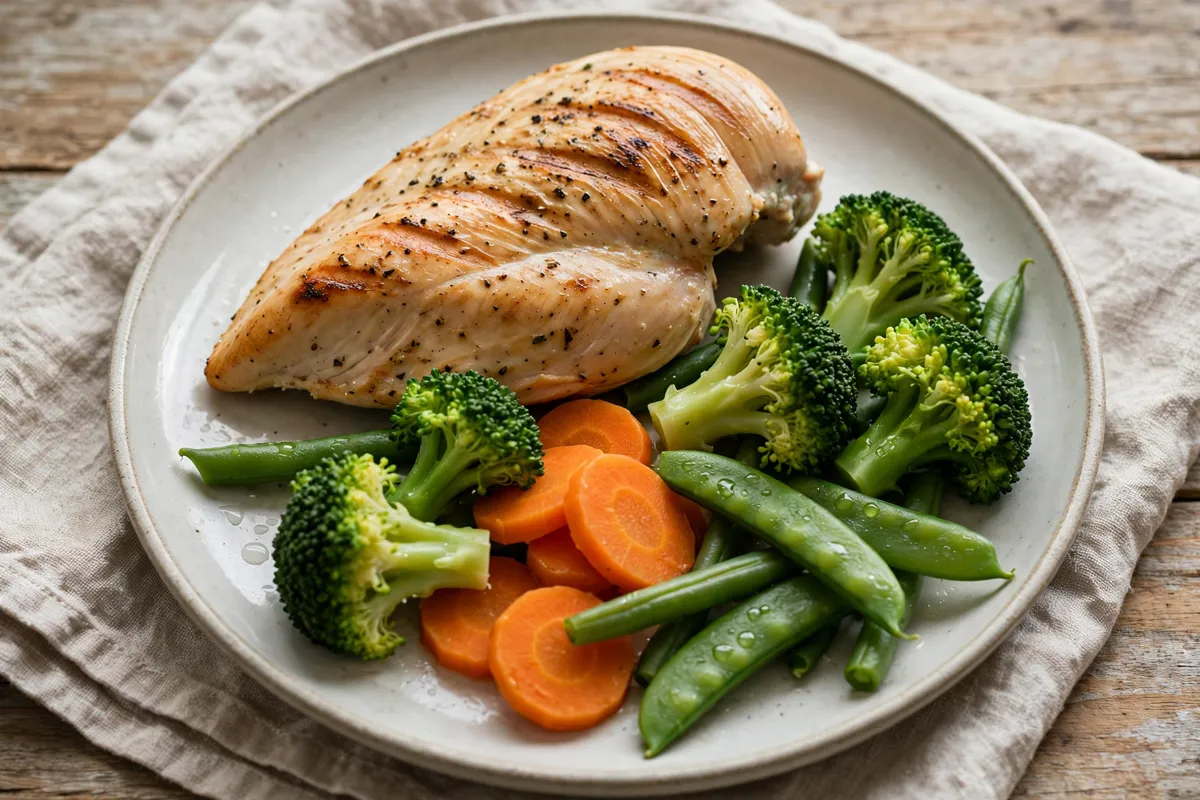
Chicken Protein Calculator: The Short Answer
No — plain chicken contains no carbohydrates: the USDA entry for chicken breast, meat only, cooked roasted (FDC ID 171477), lists 0 grams of carbohydrate per 100 grams, and the thigh, drumstick, leg and wing entries all list 0g as well. Carbohydrates enter chicken dishes only through what is added to the bird — breading, batter, sugary glazes and sauces — never from the meat itself. This article shows the zero across every part, then prices the additions that change it.
That zero is one reason chicken anchors low-carbohydrate eating: a portion of plain chicken can be logged without touching a carb budget at all. But the zero belongs to plain meat, and much of the chicken people actually eat arrives coated, glazed or sauced. Knowing exactly where the line sits — meat on one side, everything added on the other — is the whole skill this article teaches. Poultry portions of every cut price out in the chicken protein calculator.
Short Answer
Plain chicken contains 0g carbohydrate per 100g in every USDA part entry logged here — breast (171477), thigh (172388), drumstick (172376), leg (172380) and wing (172392) all read zero, as does the stewed breast entry. The one exception inside plain meat is fried breast without breading (171078) at 0.51g per 100g, a trace from the cooking process. Breading is the real source of chicken carbs, and it is a coating, not the chicken.
What Do the Part Entries Actually Show?
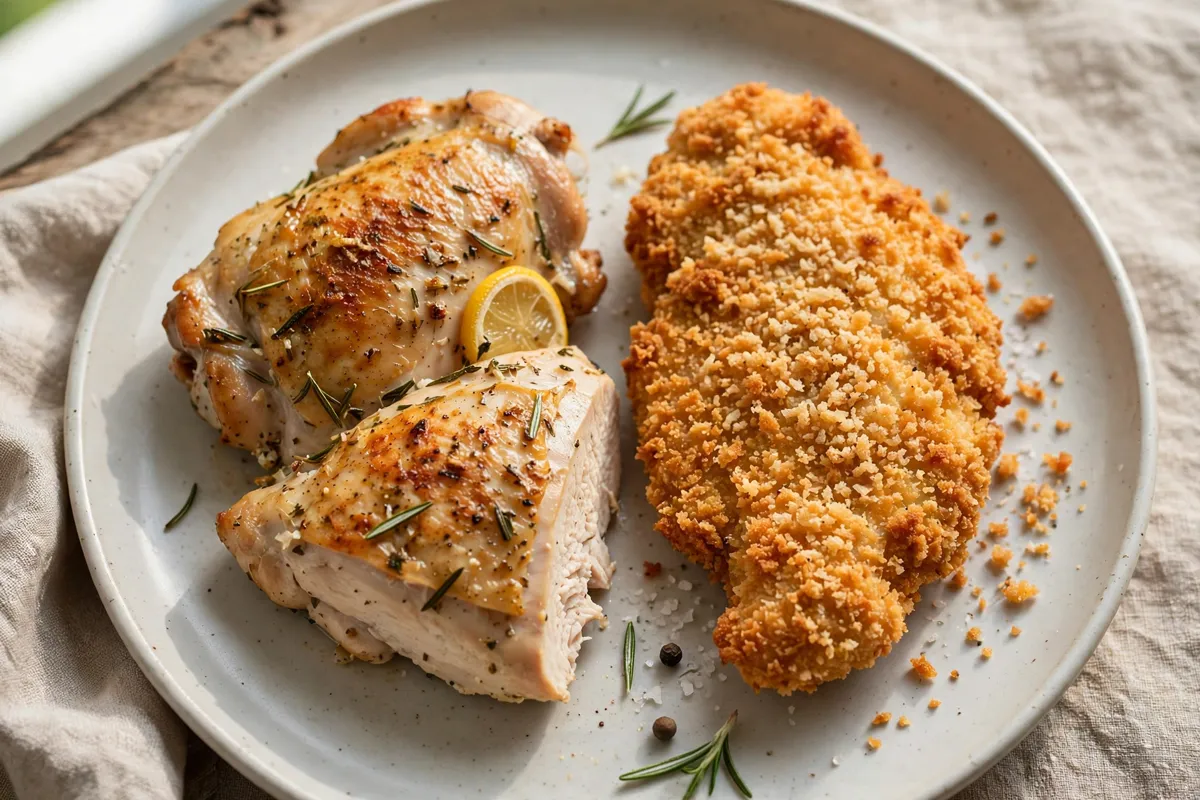
Breast, meat only, cooked roasted (FDC 171477): 165 calories, 31.02g protein, 0g carbohydrate, 0g sugar, 3.57g fat per 100g. Thigh, meat only, roasted (172388): 179 calories, 24.76g protein, 0g carbohydrate, 8.15g fat. Drumstick (172376): 155 calories, 24.24g protein, 0g carbohydrate. Whole leg (172380): 174 calories, 24.22g protein, 0g carbohydrate. Wing (172392): 203 calories, 30.46g protein, 0g carbohydrate. Whole chicken, meat and skin (171450) and meat only (171054): both 0g carbohydrate per 100g. The pattern is total — muscle meat, white or dark, skin on or off, carries no carbohydrate in the data.
Biology explains the clean sheet. Carbohydrate in animal tissue exists mainly as glycogen stored in muscle and liver, and by the time meat is butchered, rested and cooked, the muscle's glycogen is effectively exhausted — what remains is below the threshold the data reports, hence the zeros, and the trace 0.51g in the fried entry shows the reporting granularity rather than a real carb source. A meat that is roughly three parts water, one part protein and a small part fat simply has no compartment where carbohydrate could accumulate. How much protein is in 100 grams of chicken breast builds the full per-100g profile that this zero sits inside.
Where Do Carbs in Chicken Dishes Come From?
From everything that is not chicken. Breading and batter are flour-based coatings, and they convert a zero-carb food into a carb-carrying one in a single step — the fried breast entry's small 0.51g figure is for meat fried without breading (FDC 171078, 187 calories and 33.44g protein per 100g), and a breaded product prices from its own entry, not from any plain one. Glazes and barbecue-style sauces bring sugar; marinades built on sweet ingredients bring smaller amounts; and the plate around the chicken — rice, bread, potatoes, tortillas — usually dwarfs anything on the chicken itself.
The honest way to price a chicken dish is therefore in layers:
A grilled breast with a sweet glaze, for example, is a zero-carb meat wearing a sugary coat: the carb count belongs to the glaze's serving, not the chicken's. Keeping the layers separate is what lets a low-carb eater order accurately in restaurants where the menu never separates them. The chicken protein calculator prices layer one at any weight; layers two to four price from their own entries.
- Layer one, the meat: 0g carbohydrate at any portion, from any plain part entry
- Layer two, the coating: breading or batter adds the dish's first real carbs — price the coated product as its own food
- Layer three, the sauce or glaze: sweet sauces add sugar gram for gram as served
- Layer four, the sides: the starches sharing the plate, which typically exceed layers two and three combined
What Does the Zero Mean for Low-Carb and Keto Eating?
It means plain chicken is one of the few anchor foods that never needs a carb negotiation. A 6-ounce breast portion (170.1g) derives to 280.7 calories, 52.8g protein and 0g carbohydrate — a full meal's protein with the carb budget untouched, leaving the day's allowance entirely for vegetables, dairy and whatever else the plan includes. The same holds at every part and portion: the thigh portion (116g, 207.6 calories, 28.7g protein) is 0g; the whole leg (199g, 346.3 calories, 48.2g protein) is 0g.
Two cautions keep the zero honest in practice. First, processed chicken products are not plain chicken: deli slices of poultry carry small carbohydrate figures from their curing and binding ingredients — deli turkey, the logged example, reads 2.2g carbohydrate per 100g — and formed or coated chicken products must be read from their own labels. Second, "zero" describes the meat as logged, not the meal as served; a chicken dinner's carbs are set by its coating, sauce and sides, which is where a careful logger spends attention. Should I weigh chicken raw or cooked settles the companion question of which weight the zero attaches to — cooked, per these entries.
How Does Chicken Compare With Other Proteins on Carbs?
The zero is shared across the plain-protein field, which is worth knowing before anyone credits chicken uniquely. Sirloin steak (FDC 168634) reads 0g carbohydrate per 100g; 90% lean ground beef crumbles (171794) read 0g; turkey breast (171496) reads 0g; cod (171956) reads 0g; salmon (171998) reads 0g. Shrimp (175180) is the near-exception at 0.2g per 100g — a trace, nutritionally irrelevant at any real portion. Plain muscle foods, land or sea, are a zero-carb category; carbohydrate enters a protein-centred diet from plants, dairy, coatings and sauces, not from the meat aisle.
The comparison that actually varies is protein density inside that shared zero: chicken breast 31.02g per 100g, turkey breast 30.13g, sirloin 30.55g, ground beef 28.45g, salmon 25.44g, shrimp 23.98g, cod 22.83g. A low-carb eater choosing among them is choosing protein density, fat and calories — never carbs, because none of them bring any.
How Do You Verify the Zero on a Label?
Packaged plain chicken — fresh portions, plain frozen fillets — should show 0g carbohydrate on its panel, matching the entries here, and any figure above a gram is a signal to read the ingredient list: something has been added, typically a marinade, a coating or a glaze, and the product should be logged as the dressed food it is. Restaurant descriptions require the same reading in prose form: "crispy," "crusted," "glazed" and "sticky" all announce a carbohydrate layer in the dish's name, while "grilled," "roasted" and "baked" describe plain methods priced at the zero. The zero is therefore not just a fact but a test — a quick way to tell, from a label or a menu, whether the chicken in front of you is still the plain food this article prices or has already become a layered dish that needs its layers counted. That question is taken up directly in whether baked chicken is fattening.
Common Mistakes to Avoid
- Assuming breaded chicken inherits the plain zero — the coating is a flour food with its own carb count
- Crediting chicken uniquely for a zero that every plain meat and fish in the data shares
- Logging processed poultry products at plain values: formed and deli products carry small real carb figures on their own entries
- Blaming the chicken for a dish's carbs when the glaze, sauce or sides supplied them — price the layers separately
- Treating the fried entry's 0.51g trace as meaningful — at a 4-ounce portion it derives to about 0.6g, below any practical threshold
Final Thoughts
Chicken does not contain carbohydrates — 0 grams per 100 grams in every plain part entry, breast to wing, skin on or off. Carbs arrive with breading, glazes, sauces and sides, each priced as its own food. Keep the layers separate and chicken remains the zero-carb anchor its reputation claims, at any portion you scale in the chicken protein calculator.
People Also Ask
How Much Fiber Is in Chicken?
Chicken has 0 grams of fiber — the USDA entry for chicken breast, meat only, cooked roasted (FDC ID 171477), lists 0g fiber per 100 grams, and every other part entry logged here reads the same zero. Fiber is a plant structure, and no cut of chicken, prepared any plain way, contains it. This article explains why the zero is permanent, what it means for planning a day's fiber, and where the fiber in a chicken meal actually comes from.
How Much Sodium Is in Chicken?
Plain chicken breast has 74 milligrams of sodium per 100 grams, cooked roasted and meat only (USDA FDC ID 171477) — a low figure that belongs to the plain meat alone. Chicken's sodium story is really two stories: the plain parts, which run from 74mg to 128mg per 100g depending on the cut, and the treated, brined and processed forms, where sodium climbs several-fold. This article prices both stories only from sourced figures, so you can see which chicken your…
What Is the Healthiest Hawaiian Meal?
The healthiest meal you can build from the tracked Hawaiian Bros menu is Shoyu Chicken with Steamed Vegetables: 300 + 70 = 370 calories, with 34 grams of protein, 24 grams of carbohydrates, 16 grams of fat, 4 grams of fiber, 14 grams of sugar and 1,650 milligrams of sodium. It wins not because any single number is perfect — its sodium is still high — but because it is the only tracked combination that is simultaneously low in calories,…
What Is the Healthiest Restaurant Meal?
On the Portillo's menu tracked in the calculator on this site, the healthiest restaurant meal is the Garden Salad (with dressing) at 320 calories — the lowest-calorie food item here, with 8 grams of protein, 24 grams of carbohydrates, 21 grams of fat, 4 grams of fiber, 7 grams of sugar and 620 milligrams of sodium, the lowest sodium of any meal item on the list. If you need a meal that also keeps you full, the strongest all-round answer…