Calorie Counter: The Short Answer
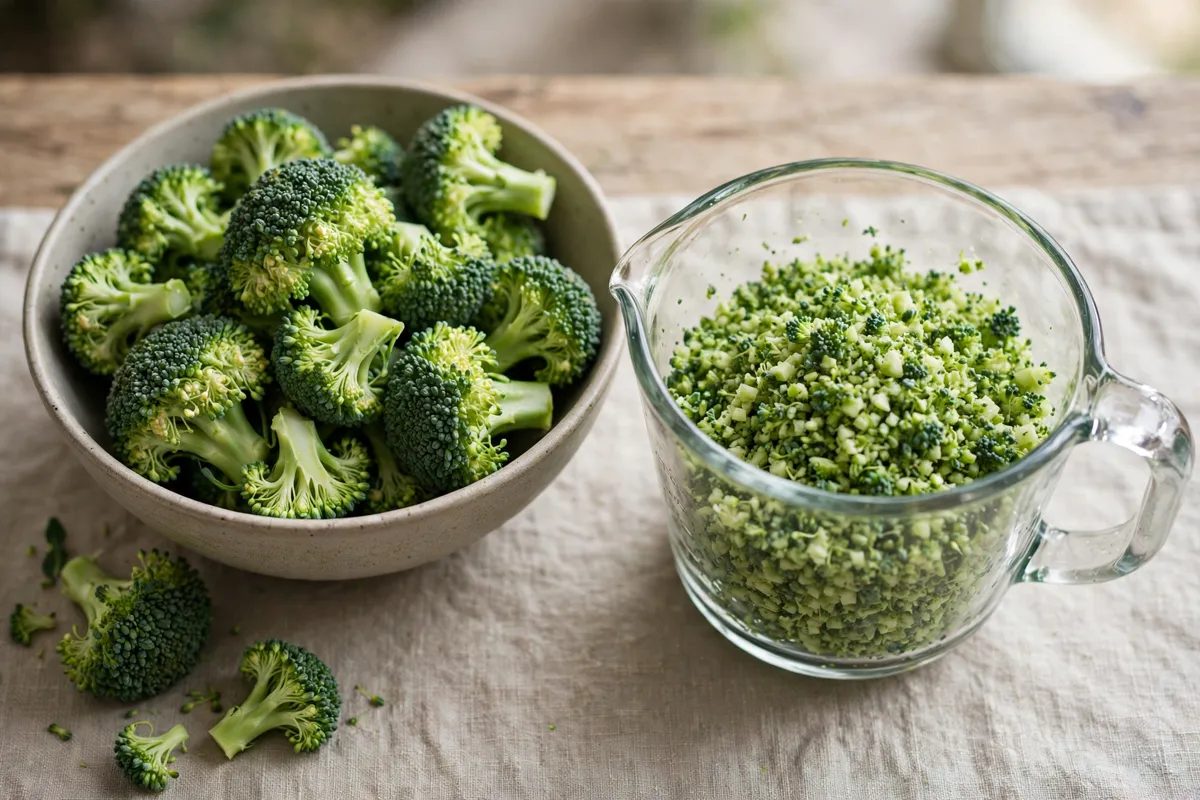
One cup of cooked broccoli contains about 11.2 grams of carbs. That figure comes from USDA FoodData Central's cooked broccoli entry (FDC ID 169967), which lists 7.18 grams of carbohydrate per 100 grams, and a cup of chopped cooked broccoli weighs 156 grams — so 156 × 0.0718 gives you the carbs in broccoli at the portion people actually serve.
The reason this question needs a cooked entry, a cup weight and a small multiplication — rather than one tidy number — is that broccoli's carb count changes with the state of the vegetable. Raw broccoli runs slightly lower per 100 grams, a raw cup weighs far less than a cooked cup, and a meaningful share of the carbohydrate is fibre, which behaves differently from the starches and sugars most people are counting. This article works through each of those layers so the number you log is the number you actually ate. The calorie counter prices broccoli alongside the rest of your meal; this page shows where its carb figure comes from.
Short Answer
Cooked broccoli has 7.18g of carbohydrate per 100g (USDA FDC ID 169967, boiled and drained). A half cup of chopped cooked broccoli (78g) has about 5.6g of carbs, and a full cup (156g) has about 11.2g — of which about 5.1g is fibre, leaving roughly 6.1g of net carbs per cup. Raw broccoli (FDC ID 170379) has 6.64g of carbs per 100g, and a cup of raw chopped broccoli weighs only 91g, for about 6.0g of carbs.
Why Does the Cup Weight Matter More Than the Per-100g Figure?
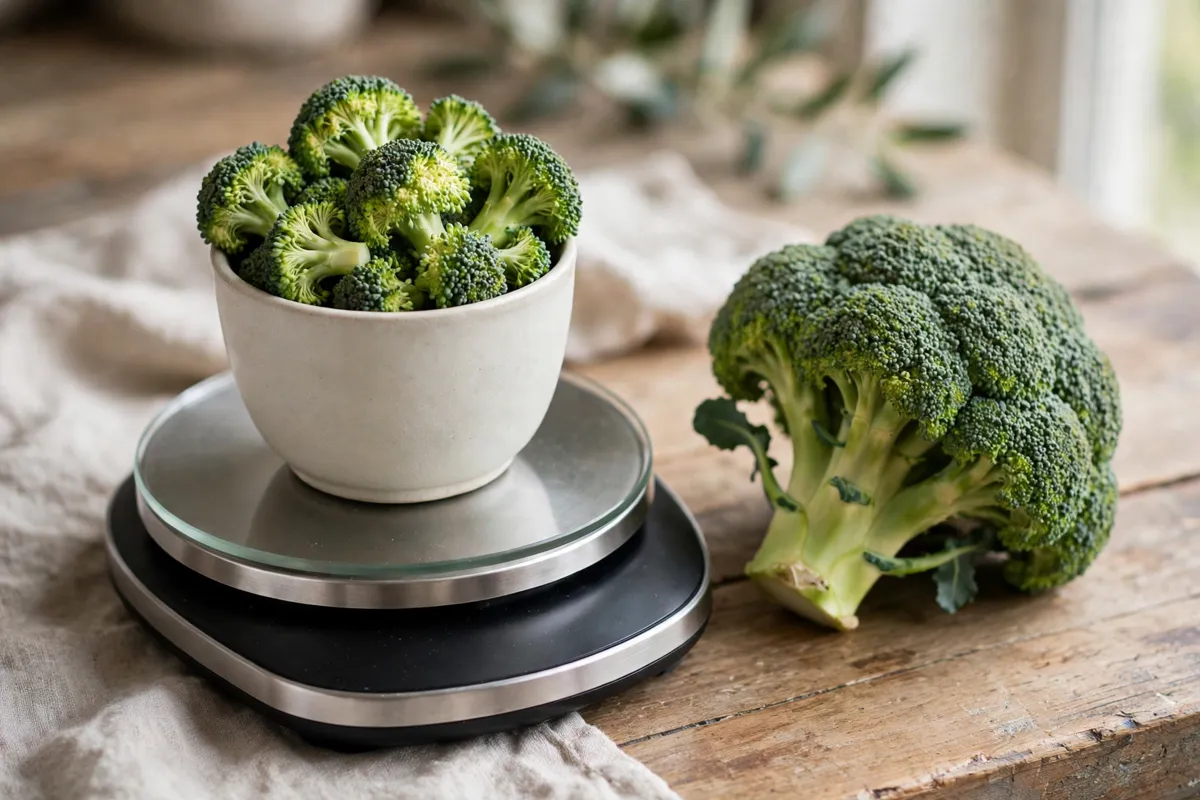
Because nobody eats broccoli by the 100-gram unit, and broccoli is one of the foods where a "cup" is two different weights depending on preparation. USDA's portion table for the cooked entry lists half a cup of chopped broccoli at 78 grams, which makes a cooked cup 156 grams. The raw entry lists a cup of chopped raw broccoli at just 91 grams. Cooking collapses the florets, drives off some water and lets far more vegetable pack into the same measuring cup — so a cooked cup delivers roughly 70% more broccoli by weight than a raw cup.
That single fact explains most of the confusion around broccoli's carbs online. One source quotes about 6 grams of carbs per cup and another quotes about 11, and both are honestly derived — the first weighed a raw cup, the second a cooked one. If you steam a pan of broccoli and scoop it into a cup, the cooked figure is the one that describes your plate: 11.2 grams of carbohydrate, 5.1 grams of fibre, about 2.2 grams of sugar (1.39g per 100g scaled) and about 55 calories. If you are crunching raw florets from a crudité plate, the raw figure applies: about 6 grams of carbs per loosely chopped cup.
The practical habit is to match the entry to the state of the food on your plate, the same discipline that applies to how much fiber is in common fruits and vegetables, where raw and cooked portions of the same vegetable routinely differ. Weigh once if you can; a single weighing of your usual cooked cup teaches your eye what 156 grams looks like, and after that the estimate stays honest.
How Much of Broccoli's Carbohydrate Is Fibre?
Just under half of it, which is an unusually high share for a vegetable and the main reason broccoli is a staple of low-carb cooking. The cooked entry carries 3.3 grams of fibre per 100 grams, so the 156-gram cup delivers about 5.1 grams of fibre against its 11.2 grams of total carbohydrate. Subtract the fibre and the net carbohydrate — the portion that digests into glucose in the ordinary way — is roughly 6.1 grams per cooked cup.
That fibre share matters in two directions. For someone counting total carbs, broccoli looks moderately carby for a non-starchy vegetable; for someone counting net carbs, it is one of the cheapest bulky foods available, because you get a full cup of food for about 6 grams of digestible carbohydrate. The fibre itself is a mix the body handles in different ways, a distinction explored in what is the difference between soluble and insoluble fiber: some ferments in the colon and feeds gut microbes, some passes through adding bulk. Either way, it is not sugar wearing a disguise.
For scale, that one cooked cup supplies 5.1 grams of fibre toward the daily amounts discussed in how much fiber should you eat per day — a substantial contribution from a side dish that also carries only about 55 calories. Few foods buy that much fibre per calorie, which is precisely why broccoli survives every diet framework that has ever audited it.
How Do Broccoli's Carbs Compare Raw, Cooked and Frozen-Style Portions?
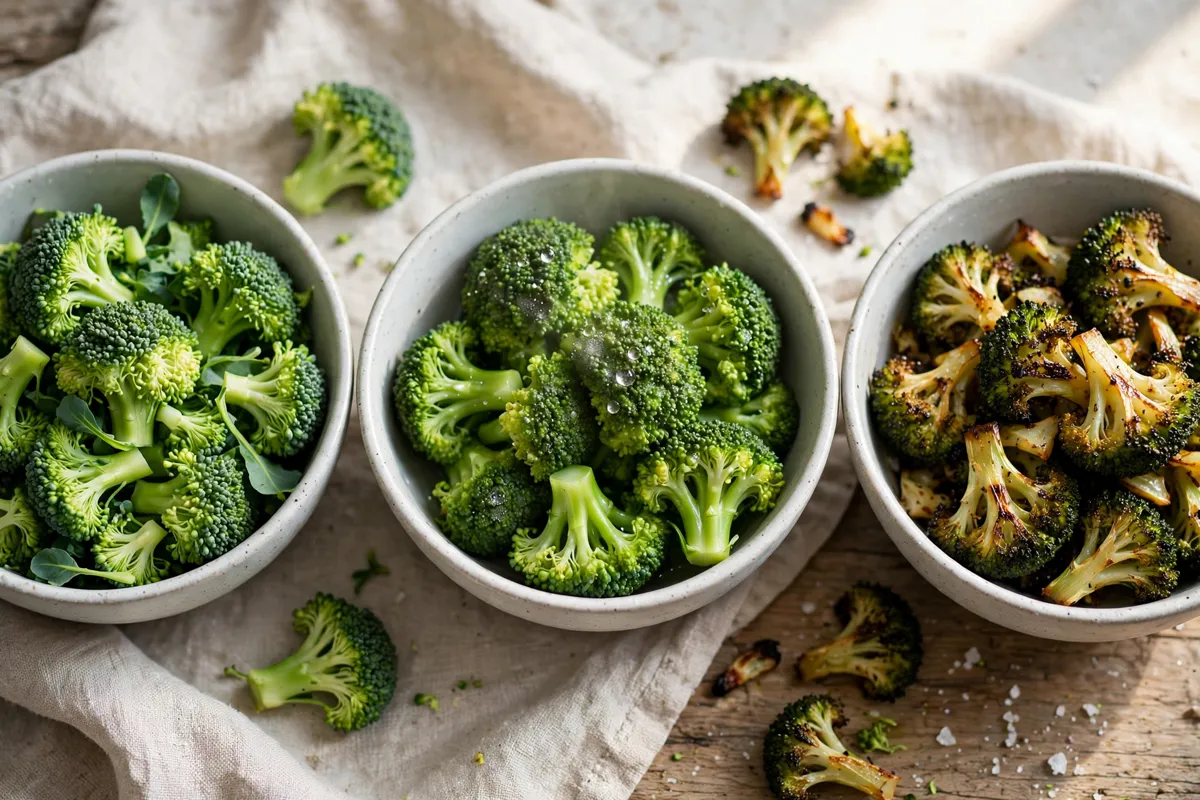
The per-100g gap between raw and cooked is small — 6.64 grams raw against 7.18 grams cooked — and it surprises people, because cooking is often assumed to dilute nutrients. What actually happens is mild water loss: as broccoli cooks, some water leaves the tissue, so each remaining 100 grams is slightly more concentrated in everything, carbohydrate included. The dramatic difference is never the concentration; it is the cup weight, as the section above showed.
One honest caveat belongs here: USDA's cooked entry is the boiled, drained entry, and it stands in for steamed broccoli throughout this site's data because FoodData Central publishes no separate steamed-broccoli entry in this dataset. Boiling and draining leaches a little more into the cooking water than steaming does, so a steamed cup may sit a fraction above these figures rather than below them — but the difference is small next to the raw-versus-cooked cup-weight effect, and the boiled entry remains the verified reference. Sauces, cheese and butter change the plate far more than the cooking method does; the cautionary tale is priced in how many calories are in broccoli cheese soup, where the same vegetable arrives inside a very different dish.
- Raw, per 100g: 6.64g carbs, 2.6g fibre, 1.7g sugar, 34 calories
- Raw, 1 cup chopped (91g): about 6.0g carbs, 2.4g fibre
- Cooked, per 100g: 7.18g carbs, 3.3g fibre, 1.39g sugar, 35 calories
- Cooked, half cup chopped (78g): about 5.6g carbs, 2.6g fibre
- Cooked, 1 cup chopped (156g): about 11.2g carbs, 5.1g fibre
How Should You Log Broccoli on a Low-Carb or Keto-Style Plan?
Log the state you ate, at the weight you ate it, and decide once whether your plan counts total or net carbs — then stay consistent, because broccoli is exactly the food where the two methods diverge. Under total-carb counting, a generous cooked cup costs 11.2 grams of your budget. Under net-carb counting, the same cup costs about 6.1 grams. Both are defensible; mixing them meal by meal is not, because you will double-count the fibre benefit on some days and surrender it on others.
Portion realism helps too. Many plates carry half a cup of broccoli as a side, not a full cup — that is 5.6 grams total, about 3 grams net — while a stir-fry or a broccoli-led main can hold two cooked cups, which is 22.4 grams total and about 12.2 net. The vegetable scales gracefully in both directions, which is why it appears so often in high-volume eating: it is one of the few foods where doubling the portion barely dents the day. Run the whole plate, broccoli included, through the calorie counter rather than pricing the vegetable in isolation, because its role is usually to displace something denser — and the displacement is where the benefit lives.
Common Mistakes to Avoid
- Logging a cooked cup at the raw cup's carb value — the cooked cup weighs 156g against the raw cup's 91g, so this understates carbs by nearly half.
- Quoting the per-100g figure as a per-cup figure; 7.18g is the concentration, not the serving.
- Counting broccoli's fibre twice — once inside total carbs and again as a bonus subtraction on a total-carb plan.
- Assuming steaming versus boiling changes the answer materially; the verified entry is boiled and drained, and the cooking-method gap is small next to portion weight.
- Ignoring what the broccoli is cooked or served in — oil, cheese sauce and creamy dressings add carbs and calories the plain entry never claimed.
Final Thoughts
Broccoli carries 7.18 grams of carbohydrate per 100 grams cooked, which becomes about 11.2 grams in a real 156-gram cup — and roughly 6.1 grams once its 5.1 grams of fibre are set aside. Raw, the same cup measure holds only 91 grams and about 6 grams of carbs. Keep the state and the weight straight, and broccoli is what its reputation says: a high-fibre, low-cost way to fill a plate on almost any carb budget.
People Also Ask
How Many Calories Are in One Cup of Steamed Broccoli?
One cup of steamed broccoli contains about 55 calories. The verified figure behind that answer is USDA FoodData Central's cooked broccoli entry (FDC ID 169967) at 35 calories per 100 grams, applied to a cup of chopped cooked broccoli weighing 156 grams: 156 × 0. 35 = 54.
How Many Grams of Broccoli Are in One Cup?
One cup of cooked broccoli weighs 156 grams, while one cup of raw broccoli weighs 91 grams. Both figures come straight from USDA FoodData Central's portion tables — the cooked entry (FDC ID 169967) lists half a cup of chopped broccoli at 78 grams, and the raw entry (FDC ID 170379) lists a cup of chopped broccoli at 91 grams — so the answer to how many grams of broccoli are in one cup depends entirely on whether the broccoli…
How Much Dairy Should I Have Each Day?
Most adults should have 3 cups of dairy a day — more precisely, 3 cup-equivalents, every day from age 9 onward. Children ages 4 to 8 need 2 1/2 cups, and children ages 2 to 3 need 2 cups. One cup-equivalent is 1 cup of milk, 1 cup of yogurt, 1 1/2 ounces of natural cheese such as cheddar or mozzarella, 2 ounces of processed cheese, or 1 cup of fortified soy beverage.
How Much Dairy Do You Need Per Day?
You need about 1,000 milligrams of calcium a day as an adult, and 3 cups of dairy is the pre-assembled way to get about 900 of them. A cup of milk or yogurt carries about 300 milligrams of calcium, so the dairy arithmetic is simply 3 x 300 = 900 milligrams from dairy, with the remaining roughly 100 milligrams arriving incidentally from the rest of the diet — 900 + 100 = 1,000 milligrams, the requirement met. The 3-cup recommendation…