Chicken Protein Calculator: The Short Answer
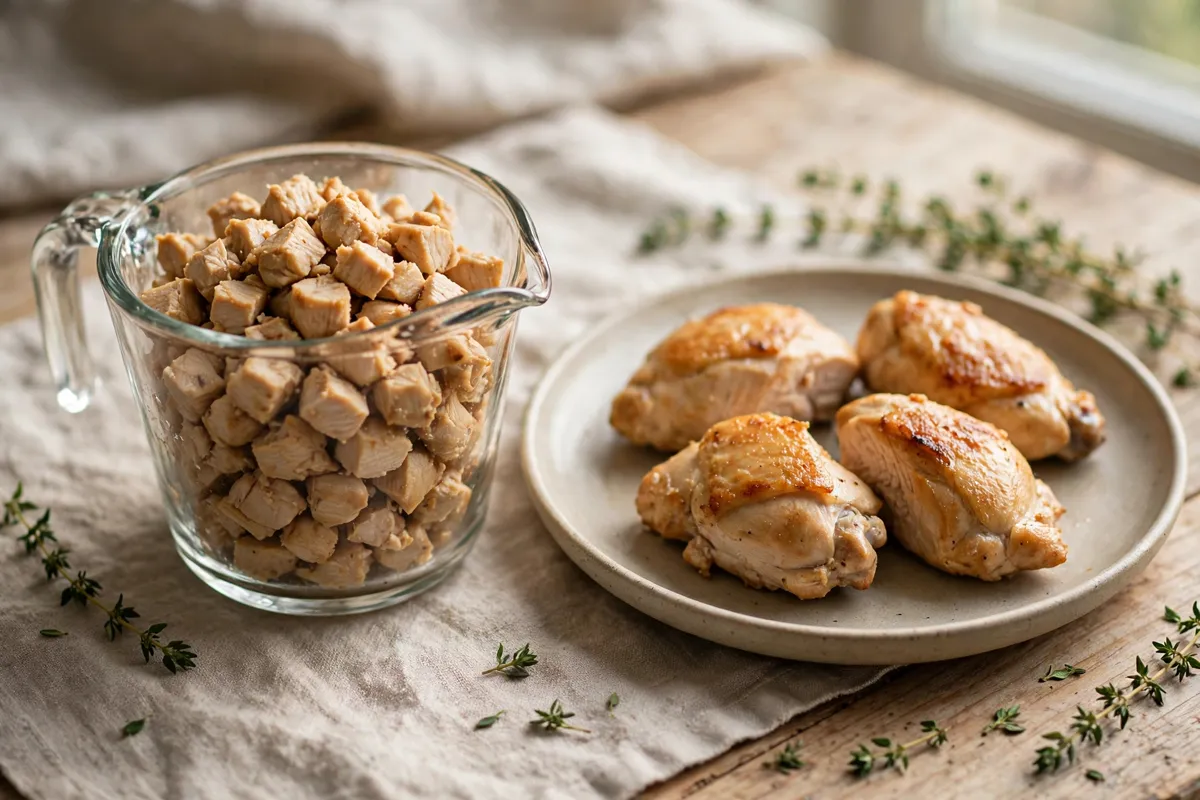
One cup of cooked chicken breast contains 231 calories. That is USDA FoodData Central's own portion doing the work: the roasted chicken breast entry (FDC ID 171477) lists one cup, chopped or diced, at 140 grams, and at 165 calories per 100 grams the cup works out to 231 calories in one cup of chicken — along with 43.4 grams of protein, which is why this particular cup is a fixture of meal-prep culture.
"A cup of chicken" sounds like a single food and is actually a family of them: breast or mixed meat, roasted or stewed, diced fine or chunked — and each choice moves the number. The verified spread runs from about 211 calories for a cup of stewed breast to about 266 for a cup of mixed meat-only chicken, with the 231 breast figure as the standard answer because breast is what most people mean and what most meal prep contains. This article gives each version its own number and shows the weighing logic, so the cup in your log is the cup on your plate. The chicken protein calculator prices chicken by weight and cut; this page handles the cup.
Short Answer
231 calories in one cup of chopped or diced cooked chicken breast (140g, USDA FDC ID 171477), with 43.4g protein, 0g carbs and about 5.0g fat. A cup of stewed breast (140g) is about 211 calories; a cup of meat-only mixed chicken (140g) is about 266.
Why Is the Cup 140 Grams, and Why Does It Matter?
Because chicken is dense, and a cup of it holds more food than a cup of almost any vegetable. USDA's portion table for the roasted breast entry sets one cup, chopped or diced, at 140 grams — compare broccoli's raw cup at 91 grams or a chopped carrot cup at 128 — and every cup figure is just that weight multiplied by the cut's per-100g profile. For roasted breast the profile is 165 calories, 31.02 grams of protein, 3.57 grams of fat and zero carbohydrate per 100 grams, so the cup lands at 231 calories, 43.4 grams of protein and about 5 grams of fat.
The 140-gram standard also quietly corrects a common logging habit: treating a cup of chicken as if it were the 100-gram unit the databases lead with. A cup is 40% more than 100 grams, and logging 165 for a true cup understates lunch by 66 calories and 12 grams of protein, daily, in the direction dieters least want — the protein they actually ate goes uncredited. The ounce-side of the same correction fills an entire series on this site; the cup's version of it — how many ounces of chicken are in one cup, among the new drafts — converts it directly: 140 grams is just under 5 ounces, which is why a cup of chicken breast and a 5-ounce portion carry nearly identical numbers (about 231 versus about 234 calories).
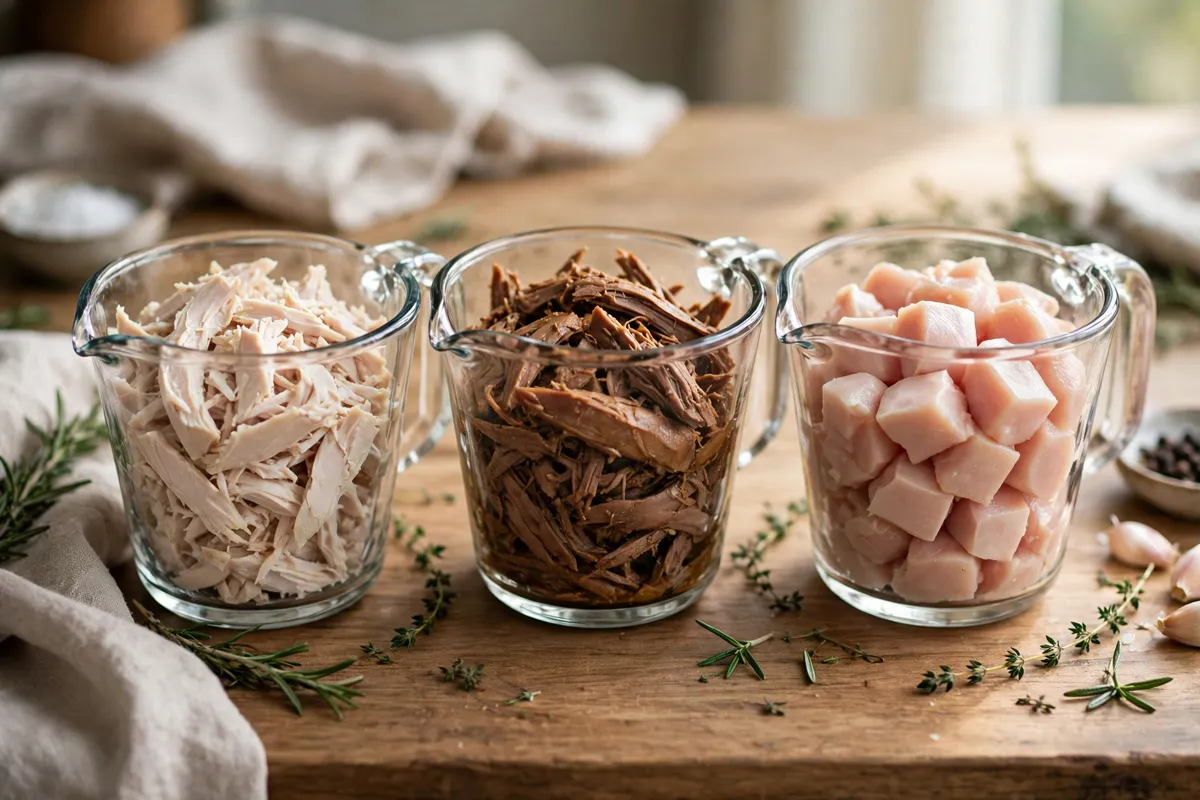
Dicing style nudges the real cup a little. Fine dice packs tighter than chunky cubes; shredded chicken packs looser still, with air between strands, so a cup of shreds can weigh meaningfully less than 140 grams. The standard is a chopped-or-diced cup, level-filled. If your prep is shreds, weigh your usual cup once and adopt your own figure — the per-100g profile does not change, only the weight you multiply it by.
How Do Other Kinds of Chicken Change the Cup?
Three honest variants, all from logged entries. Stewed breast — the moist-heat entry (FDC ID 171478) used for boiled and poached chicken — runs 151 calories per 100 grams, so its 140-gram cup is about 211 calories with 40.6 grams of protein: the lightest cup, because moist cooking leaves the meat holding more water. Mixed meat-only chicken, roasted (FDC ID 171054) — the entry for chicken taken from a whole bird, white and dark meat together, no skin — runs 190 calories per 100 grams, making its cup about 266 calories with 40.5 grams of protein and about 10.4 grams of fat. Meat-and-skin chicken (FDC ID 171450) at 239 per 100 grams would put a cup near 335 calories, and while its table lists a cup portion of diced at 140 grams too, a skin-on cup is a different food from the meal-prep standard and should be logged as itself.
The pattern to notice: protein per cup stays in a tight band — 40 to 43 grams — across every version, while calories swing by 55 between the lightest and the standard mixed cup. The swing is fat, and the fat is dark meat and its higher fat share. A reader choosing between cups is really choosing a fat level; the protein takes care of itself, which is one reason chicken dominates the protein-planning literature this site draws on, including how much protein is in 100 grams of chicken breast.
- Roasted breast, 1 cup diced (140g): 231 calories, 43.4g protein, ~5.0g fat
- Stewed breast, 1 cup diced (140g): about 211 calories, 40.6g protein, ~4.2g fat
- Mixed meat only, 1 cup (140g): about 266 calories, 40.5g protein, ~10.4g fat
- Roasted breast, per 100g: 165 calories, 31.02g protein — the figure a cup is NOT
- Half a cup of roasted breast (70g): about 116 calories, 21.7g protein
How Does a Cup of Chicken Fit a Day's Eating?
As a main course's worth of protein in a single scoop. At 231 calories and 43.4 grams of protein, the cup covers the per-meal protein target most frameworks aim at — the 25-to-40-gram meal range — in one ingredient, leaving the rest of the plate free for vegetables, grains and flavour. Two cups across a day, lunch and dinner, deliver nearly 87 grams of protein before any other food is counted, which is why chicken-breast meal prep is the default architecture of high-protein eating: the arithmetic is almost unfairly convenient.
The cup also scales recipes gracefully. A soup or casserole calling for "2 cups cooked chicken" is calling for 280 grams — about 462 calories and 87 grams of protein distributed through the whole pot — and the cook who knows the cup's weight can buy the raw chicken for it accurately, since two FDC whole-breast portions (172g cooked each) yield a little over the two cups once diced. The raw-to-cooked conversion for your own kitchen is worked through in how to calculate protein in raw vs cooked chicken.
For smaller appetites and children's portions, the half cup at about 116 calories and 21.7 grams of protein is the natural unit — still a serious protein serving, at half the commitment. And for anyone building the day in the chicken protein calculator, remember the cup is a 140-gram input: enter the weight, not the volume, and the calculator and this article will agree to the decimal.
Raw or Cooked — Which Cup Does the Number Describe?
Cooked, always, in this dataset — and the distinction is worth a section because raw chicken is almost never measured by the cup in practice, which tempts people to log a cooked cup at values they found beside a raw weight. The 231-calorie cup is chopped or diced cooked breast. Raw breast, diced into a cup for a marinade, weighs differently and carries a raw profile (lower per 100 grams, because the water that cooking will expel is still in it); when it cooks down into the pan it becomes, approximately, the cooked entry's food.
The safe rule, repeated across this site's chicken series: log the state you weighed. Cooked cup on the plate — cooked entry, 140 grams, 231 calories. If you weighed the raw chicken before cooking, log the raw weight against raw values, or convert using your own kitchen's yield measured once. Mixing states — raw weight, cooked profile — manufactures errors of a fifth or more in either direction, and chicken is eaten too often for a fifth to stay trivial.
Common Mistakes to Avoid
- Logging a cup as 165 calories — that is the per-100g value; the cup is 140g and 231 calories.
- Treating shredded chicken's cup as the diced standard; shreds pack looser and weigh less per cup — weigh your style once.
- Using the breast figure for mixed or dark meat chicken; a cup of meat-only mixed chicken is about 266 calories.
- Logging a cooked cup with raw-state numbers, or the reverse; match the entry to the state you weighed.
- Forgetting sauces and cooking fats: the 231 belongs to plain roasted breast, and a sauced cup is a built dish, not an entry.
Final Thoughts
One cup of chicken breast, chopped or diced, is 140 grams and 231 calories, with 43.4 grams of protein — the standard cup, from USDA's own portion table. Stewed, the cup is about 211; mixed-meat, about 266; the protein barely moves while the fat does. Weigh the cup once in your own dicing style, and the number is yours for every meal prep that follows.
People Also Ask
How Much Chicken Should You Prepare Per Person?
Prepare about 4 ounces of cooked chicken per person for a main course — roughly 113 grams — which means one standard chicken breast portion for every two people, or about half a pound of raw boneless chicken per person once cooking shrinkage is counted. Scaled up, how much chicken you should prepare per person is: one USDA whole-breast portion (172 grams cooked) generously serves one hungry adult or covers one adult plus a child; two breasts cover three to…
Should I Weigh Chicken Raw or Cooked?
Weigh it either way — raw or cooked both work — but the Chicken Protein Calculator on this site uses cooked weight, and the entry you look up must match the state on your scale. Chicken loses roughly a quarter of its weight in cooking, so about 130g raw becomes about 100g cooked, and cooked skinless breast reads about 31g of protein per 100g against about 23g per 100g raw. Match the states and the two weighings agree almost exactly;…
How Many Calories in a Ribeye?
A Ribeye (10 oz) at Outback Steakhouse has 760 calories, with 62g of protein, 2g of carbs, 56g of fat and 980mg of sodium. That is the short answer — the standard build, exactly as the Outback Steakhouse calculator lists it.
How Many Calories in a Chicken Caesar Salad?
At Papa Murphy's, the Chicken Caesar Salad is 330 calories per portion, with 22 grams of protein, 12 grams of carbohydrates, 21 grams of fat, 2 grams of fiber, 3 grams of sugar and 760 milligrams of sodium. That figure is per portion as listed in this site's data — not per family bowl and not a small side scoop. It makes the Chicken Caesar, perhaps surprisingly, heavier in calories than the Cheese Pizza Slice (Large, original crust) at 290,…