Chicken Protein Calculator: The Short Answer
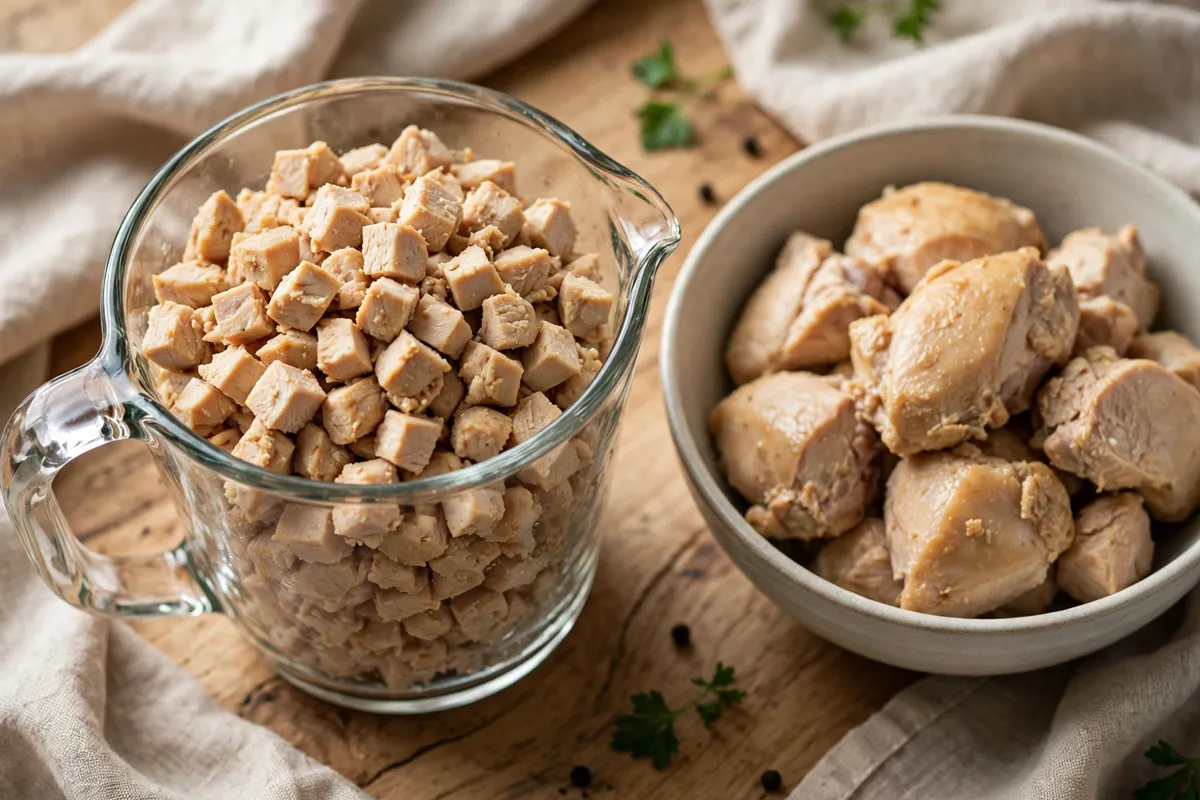
One cup of chicken holds about 4.9 ounces — the USDA roasted breast entry (FDC ID 171477) sets 1 cup, chopped or diced, at 140 grams, and 140 grams is 4.94 ounces. That cup derives to 231.0 calories and 43.4g protein. This article shows the conversion, why diced and shredded cups differ, and how to price any cup of chicken from the verified 140-gram anchor.
Cups are volume and chicken is sold by weight, so this conversion is the one meal preppers actually live by: recipes call in cups, labels and entries price in grams and ounces, and the 140-gram cup is the bridge the dataset itself provides. It applies to chopped or diced cooked breast as the entry defines it — other cuts and shred styles sit near it, with the differences explained below. Any weight the cup turns out to hold converts in the chicken protein calculator.
Short Answer
About 4.9 ounces (140g) of chopped or diced cooked chicken breast fill one cup (FDC 171477's own portion), deriving to 231.0 calories, 43.4g protein, about 5.0g fat, 0g carbohydrate and 0g fiber. In ounces of protein terms: the cup is roughly a serving and a half — one standard serving is 3 to 4 ounces — and it is the portion most meal-prep recipes silently assume.
Where Does the 140-Gram Cup Come From?
From the entry's portion table itself. FoodData Central's cooked roasted breast entry (171477) lists two household portions: 0.5 breast at 86 grams, and 1 cup, chopped or diced, at 140 grams. The cup figure is therefore a measured property of diced cooked breast — the size of the dice and the way pieces settle in the cup are baked into the number by the dataset, not estimated by this article. Dividing 140 grams by 28.35 grams per ounce gives 4.94 ounces, which is why "about 5 ounces" is the honest rounding and "4 ounces" — a common diary default — understates a true cup by about a fifth.
The cup's nutrition derives in one step: 140 × 1.65 = 231.0 calories, 140 × 0.3102 = 43.4g protein, 140 × 0.0357 = about 5.0g fat, 140 × 0.74 = about 104mg sodium. Compare the cup with the other household anchor, the half breast (86g, 141.9 calories, 26.7g protein): a cup is about 1.63 half breasts. Recipes alternating between "a cup of chicken" and "a chicken breast" are therefore not describing the same amount, and logs that swap them freely drift by roughly 90 calories and 17 grams of protein per swap. How many calories are in 4 ounces of chicken breast prices the ounce side of this same bridge. Ground beef by the cup gets the same treatment for protein, with its grams worked out in full.
Do Shredded, Sliced and Dark-Meat Cups Weigh the Same?
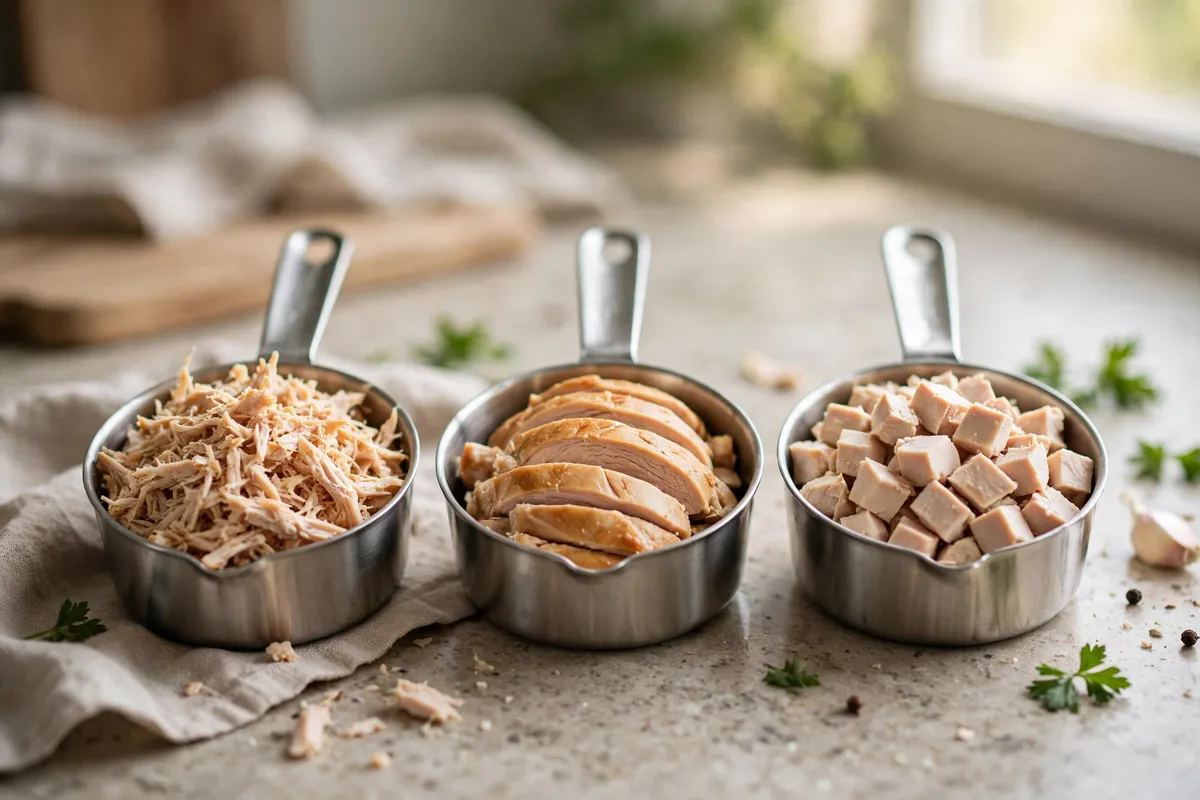
Near it, not on it — and the dataset only certifies the diced breast figure. Shredded chicken packs with more air between strands when loose and compresses more when pressed, so a shredded cup can sit either side of 140 grams depending on the hand that filled it. Sliced chicken settles differently again. Dark meat changes the nutrition rate even where the weight matches: a 140-gram cup of thigh meat, priced on the thigh entry (FDC 172388), would derive to about 250.6 calories and 34.7g protein (140 × 1.79 and 140 × 0.2476) — more calories and less protein than the breast cup, because the rate differs, whatever the cup weighs.
The whole-chicken entries show the cup convention holding across preparations: meat-only whole chicken (FDC 171054) also lists 1 cup chopped or diced at 140 grams, deriving to 266.0 calories and 40.5g protein; the stewed breast entry (171478) lists its cup at the same 140 grams, deriving to 211.4 calories and 40.6g protein. So the 140-gram cup is a robust volume anchor for chopped cooked chicken generally — while the nutrition it carries depends entirely on which entry's rate you multiply it by. The method that survives every variation: weigh the filled cup once, in grams, and apply your cut's rate. Your shred, your dice, your packing — measured once, priced forever.
How Do You Convert Recipes Between Cups and Ounces?
The working conversions, all from the 140-gram anchor:
Recipe scaling follows directly: a casserole calling for 3 cups of chicken wants 420 grams — about 14.8 ounces, just under a pound — of cooked diced breast, carrying about 693 calories and 130.2g protein from the chicken alone. A meal-prep plan dividing a pound of cooked breast into four containers gives each container about 113 grams — just under a cup — which is the 4-ounce serving (187.1 calories, 35.2g protein) wearing a cup's clothing. Knowing the two units describe the same food at a fixed exchange rate is what makes a recipe collection and a nutrition log agree with each other. How much protein is in 200 grams of chicken covers the metric midpoint of the same ladder.
One more conversion covers the in-between recipe quantity. A dish calling for two and a half cups of chicken wants 350 grams of cooked diced breast (2.5 × 140g) — about 12.3 ounces — deriving to 577.5 calories and about 108.6g protein (350 × 1.65 and 350 × 0.3102). Priced at the diary default of 4 ounces per cup instead, the same dish would be logged at 10 ounces and understated by roughly 110 calories and about 21 grams of protein.
- 1 cup diced cooked breast = 140g = about 4.9 oz = 231.0 calories and 43.4g protein
- Half a cup = 70g = about 2.5 oz = about 115.5 calories and 21.7g protein (derived by halving)
- Two cups = 280g = about 9.9 oz = 462.0 calories and 86.8g protein (derived by doubling)
- One ounce of diced breast = about 28.35g = roughly one-fifth of a cup (140 ÷ 28.35 ≈ 4.94, so an ounce is about 0.20 cup)
- A pound of diced breast (453.6g) = about 3.24 cups (453.6 ÷ 140), deriving to 748.4 calories and 140.7g protein in total
Common Mistakes When Measuring Chicken by the Cup
The errors are all packing and basis errors. A heaped cup holds more than the level cup the portion describes; a pressed cup of shreds can exceed 140 grams substantially; a cup of large chunks holds more air and less meat. Raw chicken measured by the cup and logged at cooked rates overstates everything by the cooking loss. And the diary default of "1 cup chicken = 4 ounces" builds in a 20% understatement against the dataset's 4.94-ounce cup — small per meal, systematic across every meal-prepped week.
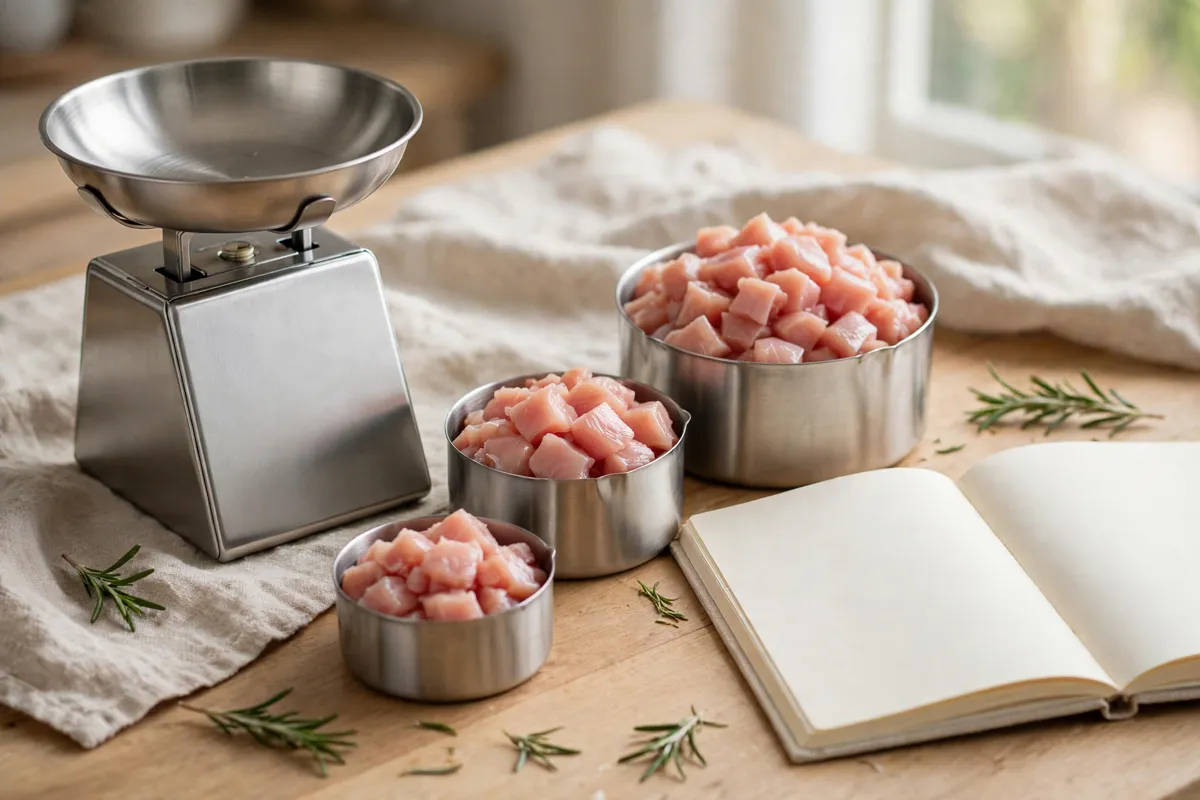
The fixes are one weighing and one note. Weigh your filled cup in the style you actually prepare — your dice, your shred, your packing — and write the gram weight on the container or the recipe. From that day forward your cup is a verified unit, and the generic 140-gram anchor only serves for other people's recipes. The scale settles what the cup argues about, in this article's subject as in all the portion questions in this series.
Common Mistakes to Avoid
- Logging a cup as 4 ounces — the dataset's cup is 140g, about 4.9 ounces, and the default understates protein by about 8 grams per cup
- Measuring the cup raw and pricing it cooked: the 140g anchor describes cooked, diced meat
- Assuming shredded and diced cups weigh identically — packing changes the weight, so weigh your own style once
- Pricing a thigh-meat cup at breast rates: the same 140g derives to 34.7g protein from thigh against 43.4g from breast
- Heaping the cup and logging the level-cup figure — the portion is a level cup as the dataset defines it
Final Thoughts
One cup of chicken is about 4.9 ounces — 140 grams of chopped or diced cooked breast by the USDA's own portion, carrying 231.0 calories and 43.4g protein. Treat the cup as a weight in disguise, verify your own packing once on a scale, and the conversion never argues with you again. Any weight the cup holds converts fully in the chicken protein calculator.
People Also Ask
What Does 3 Ounces of Chicken Look Like?
Three ounces of chicken looks like a deck of playing cards — a portion of cooked meat (85. 1 grams) about the size and thickness of a card deck, or the palm of an average hand without the fingers, deriving to 140. 3 calories and 26.
How Many Calories Are in One Cup of Chicken?
One cup of cooked chicken breast contains 231 calories. That is USDA FoodData Central's own portion doing the work: the roasted chicken breast entry (FDC ID 171477) lists one cup, chopped or diced, at 140 grams, and at 165 calories per 100 grams the cup works out to 231 calories in one cup of chicken — along with 43. 4 grams of protein, which is why this particular cup is a fixture of meal-prep culture.
How Many Grams of Broccoli Are in One Cup?
One cup of cooked broccoli weighs 156 grams, while one cup of raw broccoli weighs 91 grams. Both figures come straight from USDA FoodData Central's portion tables — the cooked entry (FDC ID 169967) lists half a cup of chopped broccoli at 78 grams, and the raw entry (FDC ID 170379) lists a cup of chopped broccoli at 91 grams — so the answer to how many grams of broccoli are in one cup depends entirely on whether the broccoli…
How Many Carrots Are in One Pound?
There are about 7 medium carrots in one pound. The arithmetic is USDA's: FoodData Central's raw carrot entry (FDC ID 170393) lists one medium carrot at 61 grams, and a pound is 453. 6 grams — so 453.