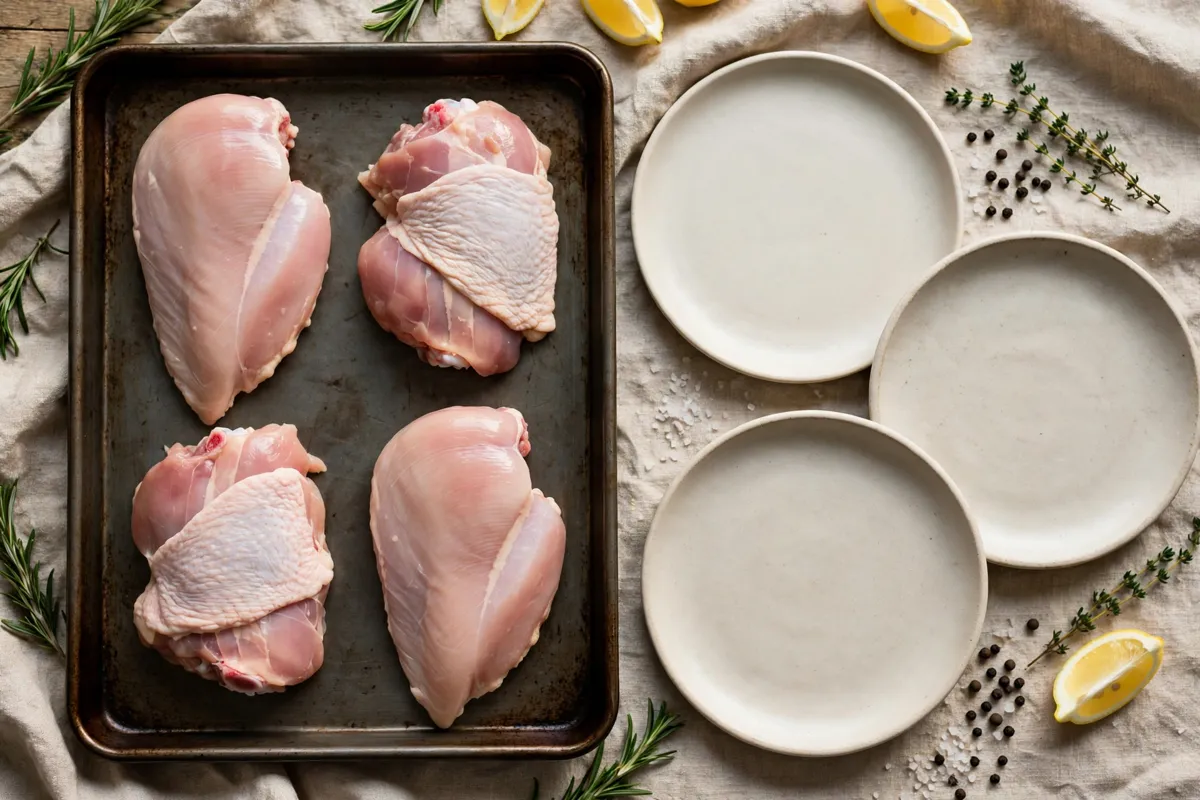
Chicken Protein Calculator: The Short Answer
Prepare about 4 ounces of cooked chicken per person for a main course — roughly 113 grams — which means one standard chicken breast portion for every two people, or about half a pound of raw boneless chicken per person once cooking shrinkage is counted. Scaled up, how much chicken you should prepare per person is: one USDA whole-breast portion (172 grams cooked) generously serves one hungry adult or covers one adult plus a child; two breasts cover three to four adults at the standard serving; and a pound of cooked chicken serves four.
That answer needs its assumptions on the table, because "per person" hides three variables: appetite, the chicken's role (centrepiece or one dish among many), and whether you are weighing raw purchases or cooked servings. This article works in cooked servings — the amount that should land on each plate — and converts back to the raw quantities you actually buy, for groups from two to twelve, with the site's verified chicken weights throughout. The chicken protein calculator prices each person's portion in protein terms; this page gets the chicken bought and cooked in the right amount.
Short Answer
Plan on about 4 oz (113g) of cooked chicken per adult for a main course — 3 oz for a light serving or a supporting dish, 6 oz for big appetites. In whole breasts (172g cooked each), that is roughly 1 breast per 1½ adults at the standard serving. Buy about ½ lb raw boneless chicken per person to land there after cooking.
What Is a Standard Serving, in the Database's Own Units?
USDA's roasted breast entry (FDC ID 171477) gives the units this whole plan is built from: half a breast portion at 86 grams cooked, and therefore a whole breast portion at 172 grams (two halves), carrying 283.8 calories and 53.4 grams of protein. Against those anchors, the standard 4-ounce serving — 113.4 grams, about 187 calories and 35.2 grams of protein — sits between the half breast and the whole: one whole breast portion is one generous serving, or one standard serving plus most of a second.
Frame the appetites against the anchors and the planning gets concrete:
The serving framework behind the 3-to-4-ounce standard is the same one used in how many ounces of chicken make one serving in the new drafts, and the per-person logic for a specific cut — thighs, at their own 116-gram portion — is worked separately in how many chicken thighs should you serve per person. Breasts are the planning default because they are the hosting default: uniform, sliceable, and easy to divide across a table fairly.
- Light serving (a salad topper, a child's plate, chicken as one dish of several): about 3 oz cooked (85g) — essentially the FDC half-breast portion at 86g
- Standard main-course serving: about 4 oz cooked (113.4g) — 187 calories, 35.2g protein as breast
- Generous serving (hungry adults, chicken as the unquestioned centrepiece): about 6 oz cooked (170g) — essentially a whole FDC breast portion, 281 calories, 52.8g protein
- Two standard servings for a very large appetite or an athlete's plate: 8 oz cooked (227g) — about 374 calories, 70.4g protein
How Much Raw Chicken Do You Buy Per Person?
Cooking removes water, so the purchase is always heavier than the plate. Boneless chicken shrinks in the oven or pan as moisture cooks out — the exact yield is your kitchen's to measure once (weigh a batch raw, cook it your way, weigh again), but the working relationship most cooks use, and the one consistent with the raw-to-cooked conversions in how to calculate protein in raw vs cooked chicken, is that a pound of raw boneless chicken yields roughly three-quarters of a pound cooked. Planned backwards from the servings above:
That half-pound-per-person rule for a chicken main course is the one to memorise; it lands the generous serving and covers the standard serving with the leftovers most hosts secretly want. For bone-in pieces and whole birds, the purchase weight must also cover bone: USDA's whole-chicken entry lists a bone-removed edible portion of 299 grams from a roasted bird, a reminder that a whole chicken's cooked meat is only part of its purchase weight — for a whole-bird plan, the long-standing cook's allowance of roughly a pound of whole chicken per person exists precisely because bone and shrinkage take their shares before the plate does.
- Per standard serving (4 oz cooked): buy about 5½–6 oz raw boneless
- Per generous serving (6 oz cooked): buy about 8 oz raw boneless — the familiar half pound per person
- Per light serving (3 oz cooked): buy about 4 oz raw boneless
How Does the Plan Scale for Groups?
Linearly, with one host's adjustment at each end. The table below uses the standard 4-ounce cooked serving and the half-pound raw purchase rule at the generous end, expressed in whole FDC breast portions (172g cooked) for the cooked column:
The adjustments: for groups heavy with children, count each child under ten as half a person and the arithmetic holds. For a buffet where chicken is one of two mains, drop to the light serving and buy accordingly — people take less of each when two centrepieces compete. For a single-dish chicken event (a roast chicken dinner, a chicken curry with rice), hold the standard-to-generous line; the dish is the meal. And always decide your leftover policy before shopping: chicken cooked for tonight that is also tomorrow's lunch is not overbuying — it is two plans sharing one cooking session, and the per-person figure for the second meal is already paid. What is true waste is cooking the generous column for a light-serving occasion; the table exists to prevent exactly that. Price any of these plans person by person in the chicken protein calculator when protein targets, rather than appetites, are setting the menu — as they should be for the training-table version of this dinner, where how much chicken do i need for 100g of protein takes over the planning.
- 2 people: 8 oz cooked (227g) — about 1⅓ breast portions; buy about 1 lb raw boneless for comfort
- 4 people: 16 oz cooked (454g) — about 2⅔ breast portions; buy about 2 lb raw boneless
- 6 people: 24 oz cooked (680g) — about 4 breast portions; buy about 3 lb raw boneless
- 8 people: 32 oz cooked (907g) — about 5⅓ breast portions; buy about 4 lb raw boneless
- 12 people: 48 oz cooked (1.36 kg) — about 8 breast portions; buy about 6 lb raw boneless
What About Thighs, Drumsticks and Whole Chickens Per Person?
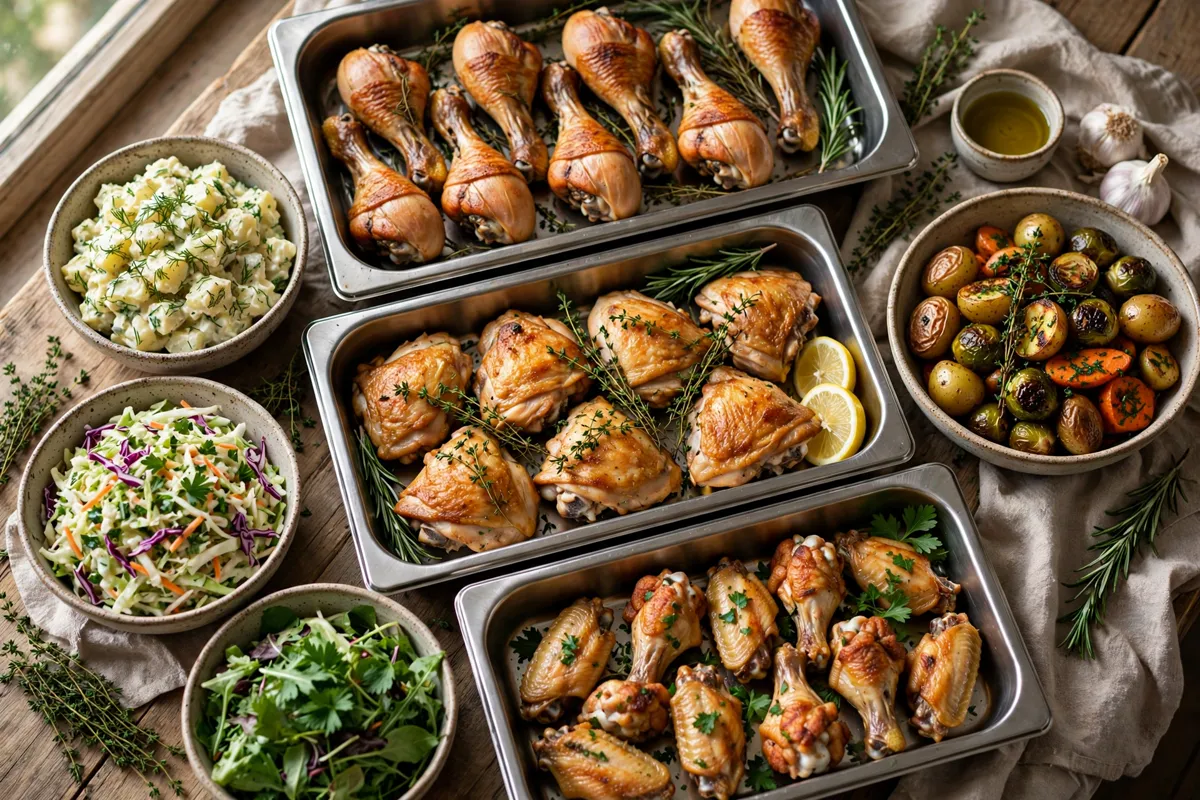
Pieces plan by count as much as by weight, using the logged portions. A skinless roasted thigh portion is 116 grams (FDC ID 172388) — almost exactly the standard 4-ounce serving in a single piece, which is why one thigh per person is the tidy plan for a standard meal and two thighs (232g, about 415 calories) is the generous one. A drumstick portion is 96 grams (FDC ID 172376), a little under the standard serving: two drumsticks per adult is the realistic main-course plan, one per child. A whole leg portion (199g) overshoots the standard serving by itself and suits the generous column solo.
For whole birds, think in edible yield: the roasted meat-and-skin entry's bone-removed portion is 299 grams of edible chicken — roughly two and a half standard servings from that reference amount of bird — and a typical retail whole chicken yields more than that reference portion, in proportion to its size. The host's rule that survives contact with reality: one ordinary whole chicken comfortably serves three to four adults as a main, fewer if the appetites are the generous kind. Mixed-piece planning — a tray of thighs and drumsticks — usually lands best at about half a pound of cooked pieces per standard adult, counted in pieces from the portions above rather than by the tray's raw weight.
Common Mistakes to Avoid
- Planning in raw weight and serving in cooked — the missing quarter is water, and it is the difference between enough chicken and a quiet shortage.
- Giving every occasion the generous serving; buffets with two mains and salad-topper lunches belong in the light column.
- Counting children as full adults in the shopping maths, or forgetting them entirely at the table.
- Assuming one breast equals one serving in both directions: a whole FDC breast portion (172g) is a generous serving, while small retail breasts may fall short of the standard alone.
- Ignoring the leftover policy — decide whether tomorrow's lunch is part of the plan before you buy, not after you cook.
Final Thoughts
Four ounces of cooked chicken per person is the standard plan — a third of a pound's worth of plate, from about half a pound of raw boneless chicken per person bought. Light occasions take 3 ounces, generous ones 6, and the breast, thigh and drumstick portions in the database turn those ounces into pieces you can count at the counter. Buy by the plan, cook by the plan, and the only surprise at the table will be that there is exactly enough.
People Also Ask
Should I Weigh Chicken Raw or Cooked?
Weigh it either way — raw or cooked both work — but the Chicken Protein Calculator on this site uses cooked weight, and the entry you look up must match the state on your scale. Chicken loses roughly a quarter of its weight in cooking, so about 130g raw becomes about 100g cooked, and cooked skinless breast reads about 31g of protein per 100g against about 23g per 100g raw. Match the states and the two weighings agree almost exactly;…
Does Dark Meat Have Less Protein?
Yes, but only a little: cooked skinless thigh provides about 26g of protein per 100g against about 31g for cooked skinless breast — a gap of 31 − 26 = 5g per 100g. Drumstick meat sits just above thigh at about 27g per 100g. The bigger difference is not the protein but what travels with it: thigh carries about 209 calories per 100g against the breast's 165, because its fat runs about 10.
How to Calculate Total Fluid Requirements for TPN?
Adult fluid requirements are estimated at about 30–35 mL per kg of body weight per day — 70 × 30 = 2,100 mL to 70 × 35 = 2,450 mL, roughly 2. 1–2. 45 liters for a 70kg patient — and TPN volume is planned inside that budget.
How to Calculate Daily Net Carbs?
You calculate daily net carbs one food at a time: for each food, take its total carbohydrate and subtract its fiber — that is the food's net carbs — then add every food's net figure into a running total against your daily budget. A worked day below comes to 3 + 8 + 9 + 11 = 31 grams net against a 50-gram budget. There is no other machinery.