Chicken Protein Calculator: The Short Answer
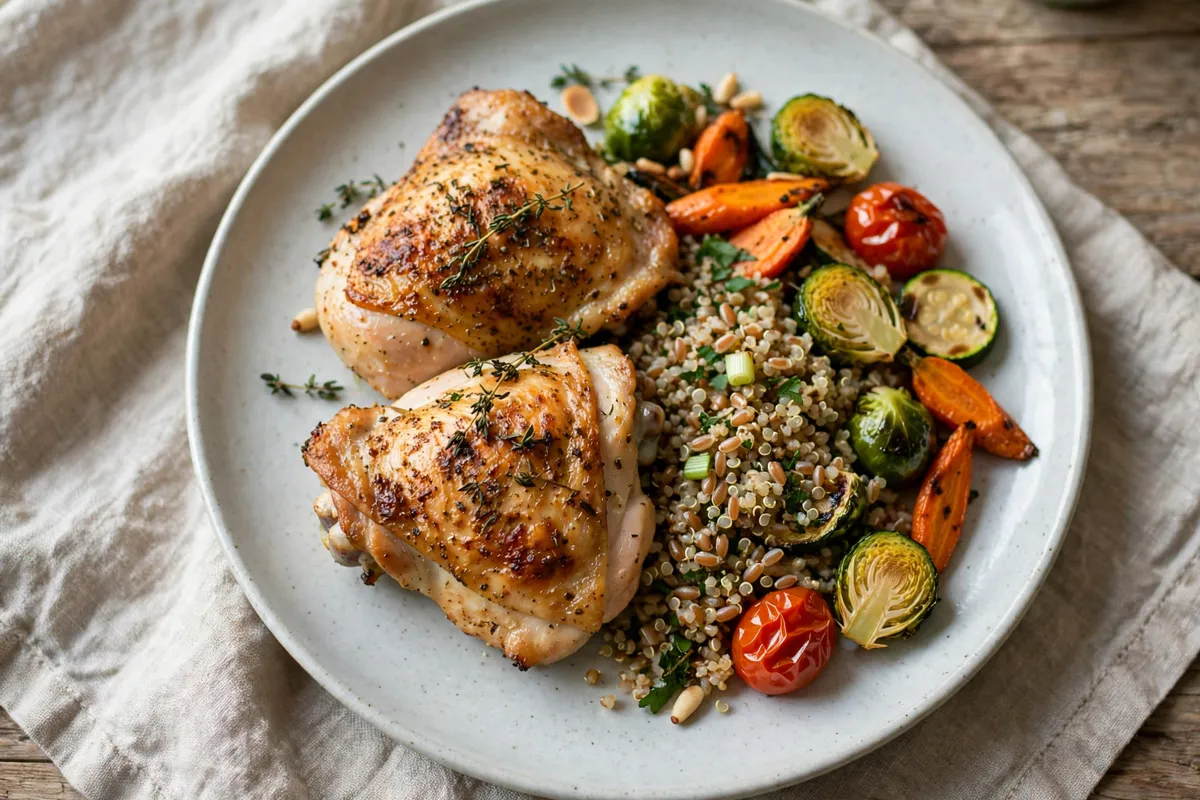
Serve 2 chicken thighs per person for a main course — one skinless thigh at the USDA portion of 116 grams delivers 28.7 grams of protein at 207.6 calories (derived from FDC ID 172388), so one thigh suits a light plate or a lunch portion, while two thighs deliver 57.4g protein at 415.3 calories, a full dinner anchor. This article prices both plans, adjusts for bone-in pieces and appetites, and shows the raw quantities to buy for a group.
The thigh is a fortunate unit for hosts: unlike a breast fillet, which must be weighed and divided, a thigh arrives pre-portioned by the bird. The planning questions are therefore count questions — how many pieces, of what size, for which eaters — and they can be answered from the verified portion: 116 grams of skinless meat per thigh, 179 calories and 24.76g protein per 100g. Mixed-part and whole-bird portions convert in the chicken protein calculator.
Short Answer
Plan on 2 thighs per adult for a main course (232g of meat: 415.3 calories, 57.4g protein) and 1 thigh for a light meal, a child-sized portion, or a plate where other proteins share the load (116g: 207.6 calories, 28.7g protein). Bone-in, skin-on thighs carry less meat per piece than the 116g skinless portion, so count 2 as the floor for those and expect to serve some guests a third.
What Does One Thigh Actually Provide?
The entry is thigh, meat only, cooked roasted (FDC 172388): per 100 grams, 179 calories, 24.76g protein, 8.15g fat, 0g carbohydrate, 106mg sodium and 269mg potassium. Its FDC portions are 3 ounces (85g) and one thigh without skin at 116 grams — the piece this article counts. That piece derives to 207.6 calories (116 × 1.79), 28.7g protein (116 × 0.2476), about 9.5g fat and about 123mg sodium. Against a typical per-meal protein target of 30 to 40 grams, one thigh lands at the target's doorstep: enough for a moderate meal, short of a generous one.
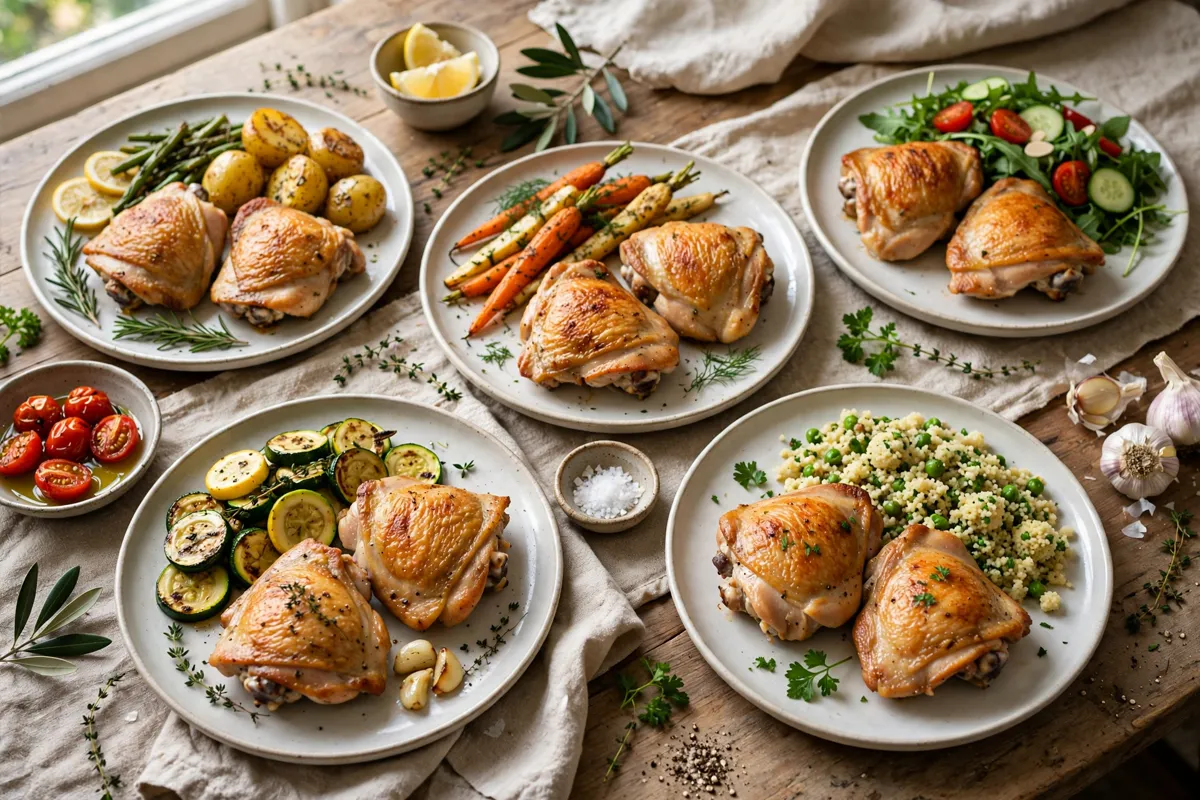
Two thighs (232g) derive to 415.3 calories and 57.4g protein — comfortably past any standard per-meal target and into athlete territory — with about 18.9g fat. The two-thigh dinner is therefore the full-anchor plan: sides can be chosen for pleasure and fiber rather than protein rescue. The one-thigh plan asks the plate to contribute: beans, grains, cheese or a second protein carrying the remaining grams. How much protein is in chicken thigh vs chicken breast shows why two thighs roughly equal one large breast portion in protein while costing more calories — useful when the shop substitutes one cut for the other. Fiber in chicken gets the same treatment, with the amount worked out in full.
How Does the Count Change for Bone-In and Skin-On Thighs?
The 116-gram portion is skinless meat. The same entry lists one thigh with skin at 137 grams of total piece weight — and that piece's meat is still roughly the skinless portion, with skin and its fat making up the difference in character rather than in meat. Bone-in thighs complicate the count differently: the bone is part of the piece's purchase weight but none of its eating, so a tray of bone-in thighs delivers less meat per piece than the same count of boneless thighs, and small bone-in pieces can run well under the reference size.
Host rules that hold up in practice:
None of these rules invents a new number; each is the 116-gram reference applied with the direction of the adjustment stated. When precision matters — a tracked meal rather than a family dinner — weigh the cooked meat once and let the chicken protein calculator price what was actually served.
- Boneless skinless thighs near the reference size: 2 per adult main, 1 per light plate — the priced plan above
- Bone-in thighs: keep 2 per person as the plan, buy about a quarter extra pieces, because per-piece meat runs lower and appetites vary
- Small thighs from a value pack: treat 3 small pieces as the main-course serving for hearty eaters — piece size, not piece count, is the variable
- Mixed trays with drumsticks: a drumstick portion (96g, 23.3g protein, FDC 172376) counts as slightly less than a thigh in protein terms
How Many Thighs Should You Buy for a Group?
Work backwards from pieces per person, then translate to purchase weight with the cooking reality that raw meat loses about a quarter to a third of its weight. For eight adults at two thighs each, the table needs 16 thighs; buying 18 to 20 covers small pieces and second helpings. In raw weight, 16 skinless thighs' worth of cooked meat (16 × 116g = 1,856g cooked) means purchasing roughly 2.5 kilograms of raw boneless thigh meat — about 5.5 pounds — using the quarter-to-third loss band. Bone-in purchases need more total weight for the same meat, since bone rides along in every kilo bought.
Appetite adjustments are cheaper than leftovers arithmetic suggests. Teenagers and very active guests reliably eat the third thigh the plan holds in reserve; smaller eaters and children settle at one. A host who buys at the two-per-person plan plus a quarter extra, and serves family-style, almost never runs short — and thigh meat reheats better than any other chicken part, so the surplus is tomorrow's lunch at the same verified numbers (207.6 calories and 28.7g protein per reheated piece) rather than waste. How many calories are in 3 ounces of chicken helps translate when a guest's portion gets weighed instead of counted.
A smaller group shows the same plan at household scale. Four adults at two thighs each need 8 thighs on the table — 928 grams of cooked skinless meat (8 × 116g), carrying 229.6g protein and about 1,661 calories from the meat alone (8 × 28.7g and 8 × 207.6). Buying for that table means roughly 1.25 kilograms of raw boneless thigh meat — half the eight-adult purchase above, by the same quarter-to-third cooking-loss band — plus one or two spare pieces if any of the four eats heartily.
What Should the Rest of the Plate Do at Each Count?
At one thigh per person (28.7g protein), the plate should carry a supporting protein or accept a lighter meal: a cup of cooked black beans alongside adds 15.2g protein and 15.0g fiber (FDC 173735, 172g cup) and turns the light plan into a full one for about 227 additional calories. Grains, cheese-bearing sides and salads with their own protein all play the same supporting role at their own entries' values. At two thighs per person (57.4g protein), the plate is free: vegetables for fiber and volume — a cup of cooked broccoli adds 5.1g fiber at 54.6 calories — and starches for energy, with no protein debt to settle.
This is the real serving decision, stated plainly: thigh count and side selection are one choice, not two. The host who decides the sides first knows the thigh count immediately — rich, protein-bearing sides mean one thigh; light vegetable sides mean two. Either plan is nutritionally complete at the verified figures; they differ in calories (207.6 against 415.3 for the meat) and in where the meal's protein lives.
Common Mistakes to Avoid
- Counting pieces without a size reference — the plan is built on the 116g skinless portion, and small pieces under-deliver it
- Serving one bone-in thigh as a main and expecting 28.7g protein — bone and skin are part of the piece, not the meat
- Buying exactly the cooked weight needed in raw meat: raw thighs lose about a quarter to a third in cooking
- Planning two thighs plus protein-heavy sides and wondering why the meal overshot — at 57.4g, two thighs need no protein support
- Forgetting second helpings for hearty eaters: the quarter-extra purchase rule exists because thighs invite them
Final Thoughts
Serve 2 chicken thighs per person for a main course — 415.3 calories and 57.4g protein across the two 116-gram skinless portions — and 1 per person for light plates or protein-supported meals. Adjust upward for small or bone-in pieces, buy with the cooking loss in mind, and let the sides decide which plan the dinner is. Any thigh weight, counted or weighed, prices in the chicken protein calculator.

People Also Ask
How Many Ounces of Chicken Are in One Cup?
One cup of chicken holds about 4. 9 ounces — the USDA roasted breast entry (FDC ID 171477) sets 1 cup, chopped or diced, at 140 grams, and 140 grams is 4. 94 ounces.
What Does 3 Ounces of Chicken Look Like?
Three ounces of chicken looks like a deck of playing cards — a portion of cooked meat (85. 1 grams) about the size and thickness of a card deck, or the palm of an average hand without the fingers, deriving to 140. 3 calories and 26.
How Many Carbs Are in Broccoli?
One cup of cooked broccoli contains about 11. 2 grams of carbs. That figure comes from USDA FoodData Central's cooked broccoli entry (FDC ID 169967), which lists 7.
How Many Grams of Broccoli Are in One Cup?
One cup of cooked broccoli weighs 156 grams, while one cup of raw broccoli weighs 91 grams. Both figures come straight from USDA FoodData Central's portion tables — the cooked entry (FDC ID 169967) lists half a cup of chopped broccoli at 78 grams, and the raw entry (FDC ID 170379) lists a cup of chopped broccoli at 91 grams — so the answer to how many grams of broccoli are in one cup depends entirely on whether the broccoli…