Chicken Protein Calculator: The Short Answer
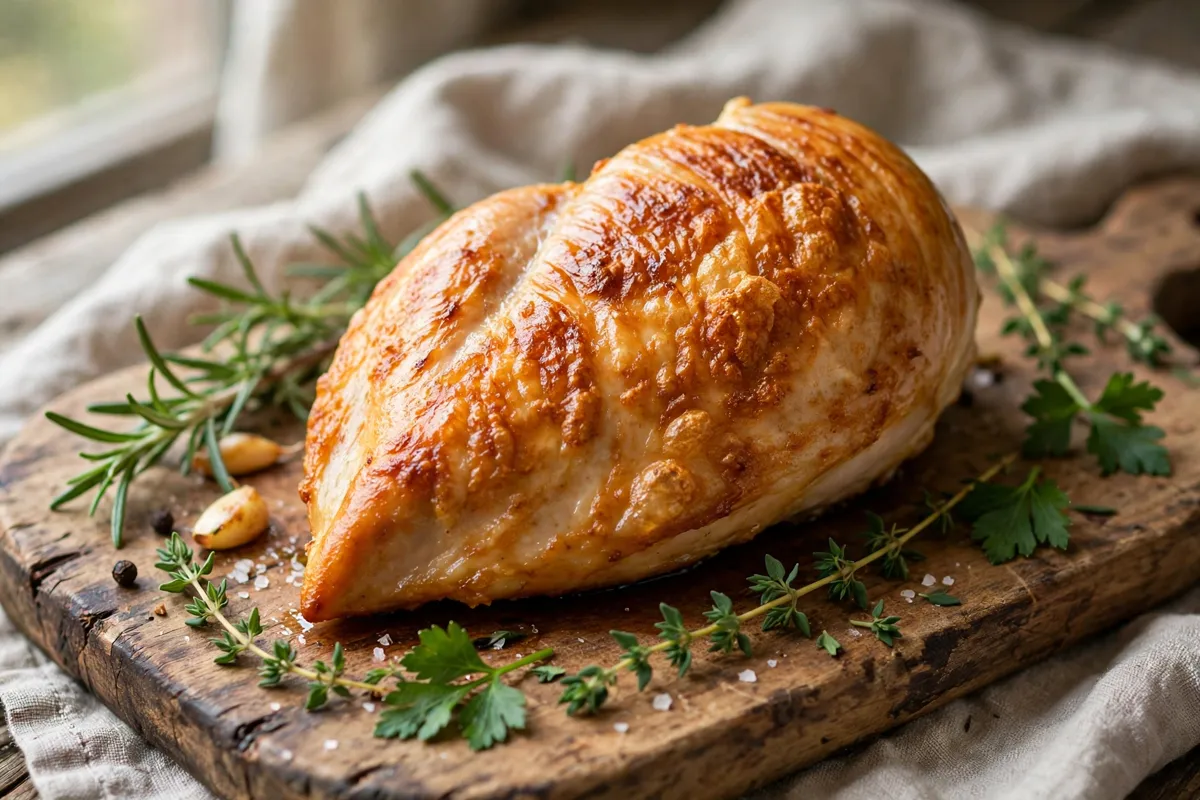
A roasted chicken breast has 283.8 calories at the standard size — a 172-gram cooked, boneless, skinless breast. This is the one chicken-breast answer that needs no stand-in or substitute entry: USDA FoodData Central's roasted breast entry (FDC ID 171477) lists the meat itself at 165 calories per 100 grams, so the calories in a roasted chicken breast are read straight from the source entry that anchors this whole series.
Because the roasted entry is the reference point for grilled and baked answers too, it is worth understanding on its own terms: what "meat only, cooked, roasted" means in the entry's name, how its published portions are built, and where roasting sits against the stewed and fried treatments of the same cut. This article takes the entry apart piece by piece. Any weight of roasted breast can then be priced in the chicken protein calculator from the same foundation.
Short Answer
A standard roasted chicken breast (172g cooked, bone and skin removed) contains 283.8 calories, 53.4g of protein, about 6.1g of fat and 0g of carbohydrate. A half breast (86g) contains 141.9 calories. The underlying rate is 165 calories per 100g — the exact figure USDA publishes for breast meat, cooked and roasted, with nothing added and nothing taken away.
What Does the Roasted Entry Actually Describe?
The full name of FDC ID 171477 is "Chicken, broilers or fryers, breast, meat only, cooked, roasted," and every qualifier earns its place. Broilers or fryers names the class of bird. Breast names the cut. Meat only means the analysis covers the edible meat with skin removed — this is the skinless entry, not a with-skin average. Cooked, roasted means the meat was analysed after dry-heat cooking, in the state you actually eat it. Per 100g of that meat: 165 calories, 31.02g protein, 0g carbohydrate, 3.57g fat, 0g fibre, 74mg sodium and 256mg potassium. Potassium in chicken breast gets the same treatment, with the amount worked out in full.
Hold that profile in mind and several familiar claims resolve themselves. Roasted breast is not "about 200 calories" or "basically pure protein" — it is a specific food with a small, real fat content (about 6.1g across a whole standard breast, 172 × 0.0357) and a sodium content that is low precisely because nothing has been done to the meat beyond cooking it. The entry is also the reason this site can answer so many neighbouring questions from one source: the deep-dive treatment of the entry and its sister cuts is in the chicken protein deep-dive guide.
How Are the Roasted Portions Built?
USDA publishes two weighed portions for this entry, and everything else is scaling. The portions are 0.5 breast, bone and skin removed, at 86g, and 1 cup of chopped or diced meat at 140g. From those anchors:
Notice that the whole breast is itself a derived portion — USDA weighs the half, and the whole is two halves. That is a useful reminder of how database answers are constructed: a small number of carefully weighed reference portions, and honest multiplication for everything else. When your roasted breast weighs 195g instead of 172g, the answer is not a new lookup but the same multiplication, 195 × 1.65 = 321.8 calories. The method, more than any single figure, is what this article is really handing over.
- Half a breast, 86g = 141.9 calories and 26.7g protein
- 1 cup chopped or diced, 140g = 231.0 calories and 43.4g protein
- A whole breast, 172g (two half portions, derived) = 283.8 calories and 53.4g protein
- 4 ounces, 113.4g = 187.1 calories and 35.2g protein
- 8 ounces, 226.8g = 374.2 calories and 70.4g protein
- 1 pound, 453.6g = 748.4 calories and 140.7g protein
How Does Roasting Compare With the Other Two Treatments?
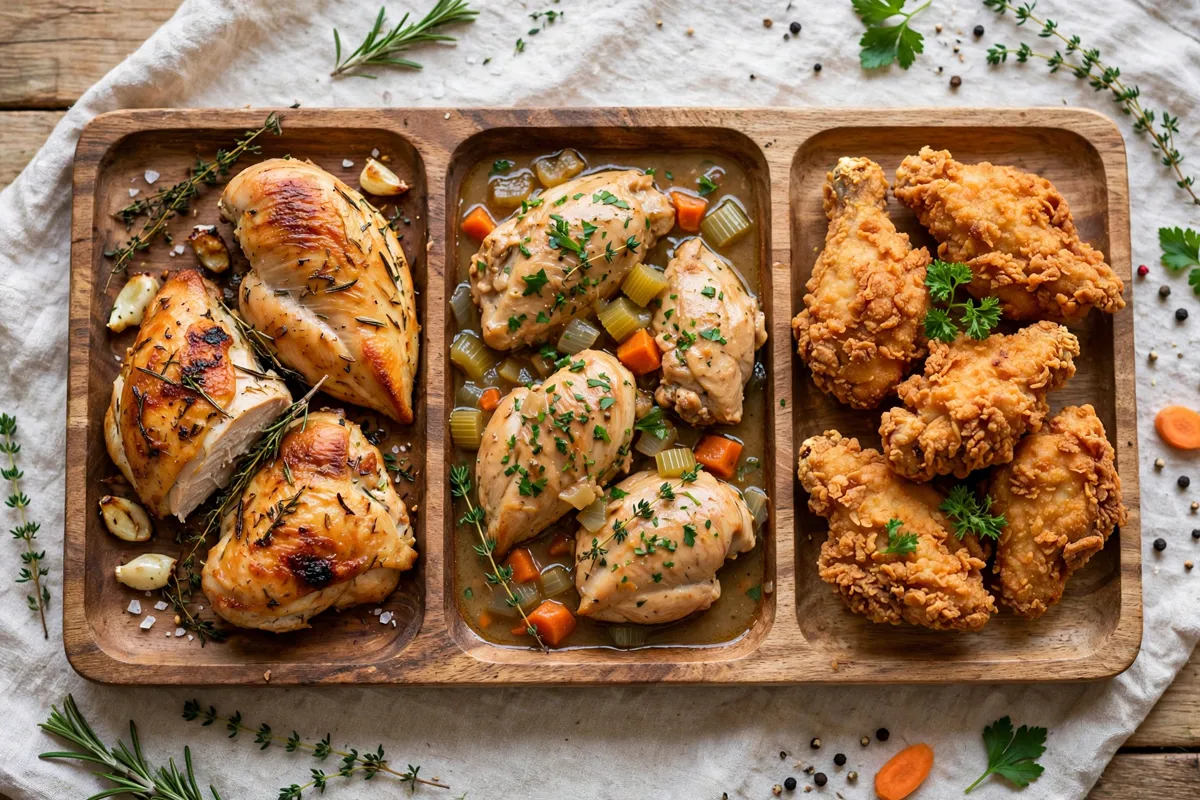
USDA analyses the same cut three ways, and the roasted value is the middle one. Stewed breast (FDC ID 171478) reads 151 calories per 100g: simmered meat holds absorbed water, diluting its energy per gram, and its protein reads 28.98g per 100g for the same reason. Fried breast (FDC ID 171078), meat only with no breading, reads 187 calories per 100g: the pan drives off water and adds fat contact, concentrating energy to 33.44g of protein per 100g alongside 4.71g of fat.
Roasting's position between them is the profile of dry heat with nothing added — water leaves, nothing caloric arrives. That is why the roasted entry does double duty across this site as the pricing basis for grilled and baked breast, which are the same physical process in different appliances. It is also why a roasted breast's numbers should never be borrowed for a poached or a fried one: the three entries differ by up to 36 calories per 100g, which across a whole breast is a gap of more than 60 calories. Choosing the right entry is the whole skill; protein in raw versus cooked chicken covers the companion skill of matching the entry to the meat's weighed state.
When Does a Roasted Breast Stop Matching the Entry?
Three ordinary kitchen events move a real roasted breast away from 165 per 100g. The first is skin: roast and eat the breast with its skin and the correct entry becomes the with-skin one (FDC ID 171075) at 197 calories per 100g. The second is a coating or glaze: the plain entry carries 0g of carbohydrate, so a breadcrumb crust or a sugary glaze is an added food that must be priced separately. The third is enhanced or brined meat — breast sold pre-injected with a salt solution weighs more raw and carries more sodium than the plain entry's 74mg per 100g suggests, though its calorie rate stays close to the plain meat's because the injection is mostly water and salt.
None of these invalidates the entry; they define its borders. Plain meat, skin off, dry heat, weighed cooked — inside those borders the roasted answer is as solid as food data gets. Outside them, adjust the specific border you crossed rather than discarding the whole framework.
What Else Does the Roasted Entry Tell You?
Beyond the headline macros, the entry prices the meat's mineral profile: 74mg of sodium and 256mg of potassium per 100g. Across a whole standard breast those become about 127mg of sodium (172 × 0.74) and about 440mg of potassium (172 × 2.56). The sodium figure is the one to notice — it is low for a full serving of meat, because this entry describes plain, unprocessed chicken with nothing injected, brined or seasoned. A roasted breast that has been enhanced with a salt solution will carry more sodium than 127mg in the finished serving while its calories stay close to this entry's; the calorie answer travels well across plain preparations, the sodium answer is the one that assumes the meat was left alone.
Common Mistakes to Avoid
Do not quote the roasted figure for skin-on meat; the skin-on entry is 197 per 100g, a fifth higher. Do not treat 283.8 as the calories of any breast regardless of size — it belongs to 172g, and larger roasted breasts scale at 46.8 calories per ounce. Do not log the raw weight of a breast against this cooked entry, the error the entry's "cooked" qualifier exists to prevent. Do not add the cup portion and the piece portion together when the same meat is logged twice — diced leftovers are the same chicken, re-measured. And do not average the roasted, stewed and fried entries into a generic "cooked chicken" number; each describes a real, different plate of food.
Final Thoughts
A roasted chicken breast is 283.8 calories at the standard 172g, 141.9 at the half, and 165 per 100g at any size — the direct reading of USDA's own entry for this cut, this treatment, this state. It is the reference answer from which the grilled and baked answers are borrowed, and the middle value of the three treatments USDA publishes. Keep the qualifiers attached (meat only, cooked, roasted, weighed after cooking) and the figure will serve you for every roasted breast you meet; the chicken protein calculator handles the scaling when the bird runs bigger or smaller than standard.
People Also Ask
How Many Calories Are in a Boiled Chicken Breast?
A boiled chicken breast has about 143 calories for a half-breast portion. The figure comes from USDA's stewed breast entry (FDC ID 171478) — 143. 4 calories for its 95-gram half-breast portion — because USDA publishes no entry literally named "boiled": its stewed entry is the moist-heat entry, and boiling is moist-heat cooking.
How Many Calories Are in a Chicken Thigh?
A chicken thigh has about 208 calories. The precise figure is 207. 6 calories for one skinless thigh of 116 grams, from USDA's roasted thigh entry (FDC ID 172388), which lists 179 calories per 100 grams of cooked meat.
How Many Calories Should Breakfast Contain?
Breakfast should contain roughly 20 to 25% of your daily calories — about 400 to 500 calories on a 2,000-calorie day, about 350 to 400 on a 1,600-calorie weight-loss target, and about 500 to 625 on a 2,500-calorie day. The right breakfast is a share of your total, not a fixed number, which is why the same eggs-and-toast plate can be perfect for one person and half a diet day for another.
How Many Calories Should Lunch Contain?
Lunch should contain roughly 30 to 35% of your daily calories — about 600 to 700 calories on a 2,000-calorie day, about 480 to 560 on a 1,600-calorie weight-loss budget, and about 750 to 875 on a 2,500-calorie day. For most people lunch is either the largest meal or a close second to dinner, and sizing it deliberately is what stops the afternoon slump-and-snack cycle.