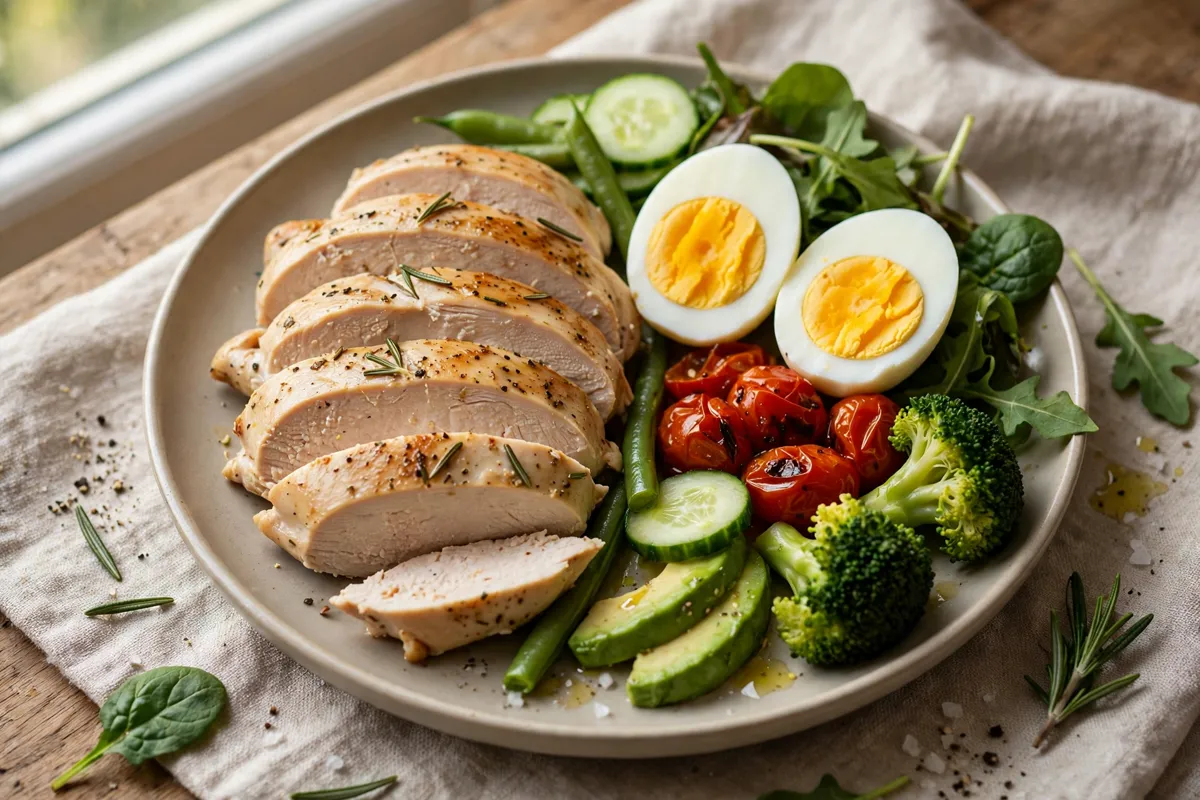
Chicken Protein Calculator: The Short Answer
Four ounces of chicken breast contain 35.2 grams of protein. That is the derived USDA figure for 113.4 grams of cooked, boneless, skinless breast, worked from the roasted breast entry in USDA FoodData Central (FDC ID 171477) at 31.02 grams of protein per 100 grams. So the protein in 4 ounces of chicken breast is 35.2 grams, alongside 187.1 calories — the pair of numbers that make this the most-logged portion in the chicken world.
Four ounces is the default serving of meal plans, diet templates and restaurant nutrition charts, which means this one figure does more work than any other in the series. This article shows the multiplication behind it, sets the 4-ounce portion against the breast's other standard measures, and explains the two ways the answer quietly changes — raw weighing, and a different cut wearing the same weight. The chicken protein calculator exists to run exactly this calculation at any weight you enter.
Short Answer
In 4 ounces (113.4g) of cooked, skinless chicken breast there are 35.2g of protein and 187.1 calories, with 0g of carbohydrate and about 4.0g of fat. The protein comes from the entry's rate of 31.02g per 100g: 113.4 × 0.3102 = 35.2. Weighed raw, or swapped for thigh meat, 4 ounces delivers less protein — both cases are covered below.
How Is the 4-Ounce Figure Calculated?
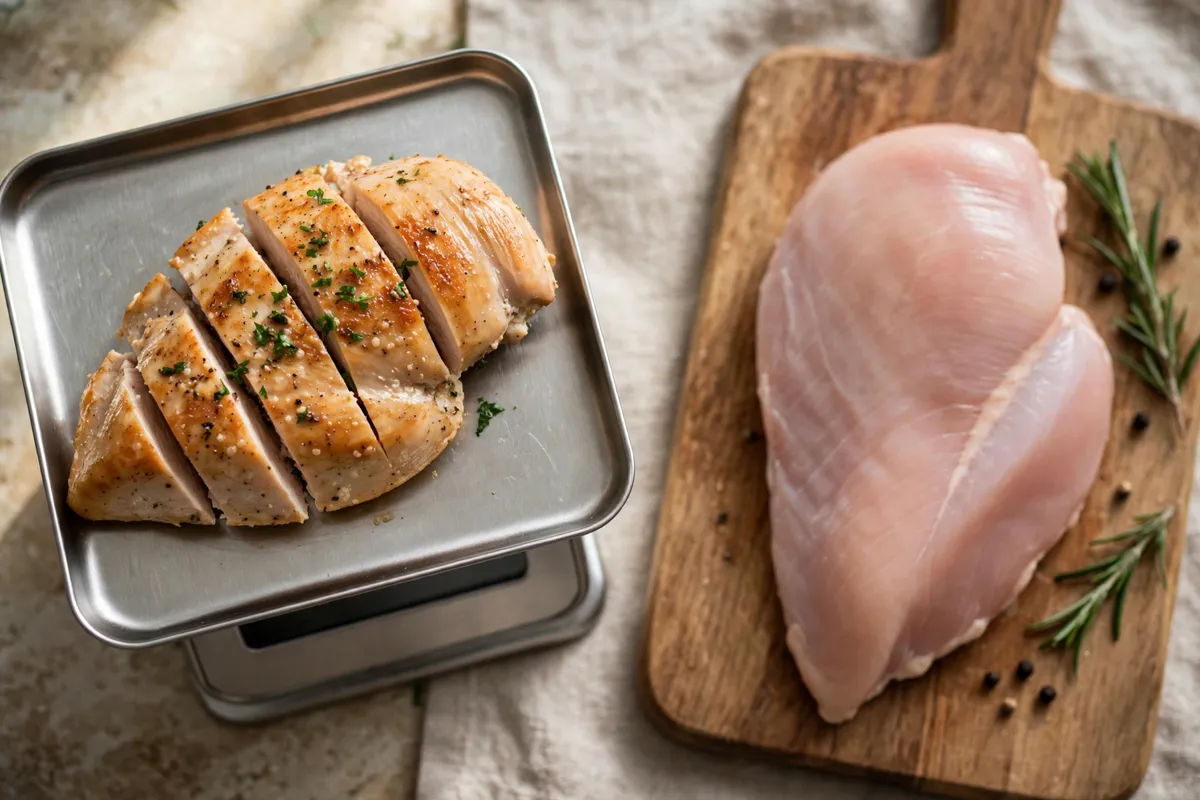
Everything starts from the per-100g analysis of cooked roasted breast (FDC ID 171477): 31.02g of protein, 165 calories, 3.57g of fat, 0g of carbohydrate. An ounce is 28.35g, so 4 ounces is 113.4g — a conversion worth memorising, because it is where the metric and imperial answers meet. Multiply the weight by the rate: 113.4 × 0.3102 = 35.2g of protein, and 113.4 × 1.65 = 187.1 calories. The fat follows the same way, 113.4 × 0.0357 = about 4.0g.
Because the method is one multiplication, every neighbouring answer is already visible. Each ounce of cooked breast carries 8.8g of protein (28.35 × 0.3102), so 3 ounces gives 26.4g, 5 ounces gives 44.0g and 6 ounces gives 52.8g — the full ladder is set out in how much protein is in 100 grams of chicken breast, where the 100g starting point (31.02g, rounded to 31g in most logs) is examined on its own. If your scale reads grams and your plan reads ounces, the ladder is the bridge: find the gram weight, and the protein follows the 0.3102 rate wherever it lands. 8 ounces of chicken breast gets the same treatment for protein, with its grams worked out in full.
How Does 4 Ounces Compare With a Half or Whole Breast?
The breast's own portions frame the 4-ounce serving from both sides. The USDA half-breast portion is 86g — a little over 3 ounces — and provides 26.7g of protein. The whole standard breast is 172g, a little over 6 ounces, and provides 53.4g. Four ounces, at 113.4g and 35.2g of protein, sits between them: about a third more protein than the half portion, about two-thirds of the whole breast.
That in-between position is why the 4-ounce serving became the template standard. It is large enough to anchor a meal's protein — 35.2g is a serious contribution toward any daily target — and modest enough, at 187.1 calories, to leave most of a plate's budget for everything else. Two such servings across a day deliver 70.4g of protein for 374.2 calories, which happens to be exactly the 8-ounce line: the day's chicken, priced two ways, agrees with itself because the rate never changes. Meal plans that prescribe "4 ounces of chicken" twice a day are prescribing that 70.4g, whether or not they say so.
What If the 4 Ounces Were Weighed Raw?
Then the cooked meat on the plate weighs less than 4 ounces, and its protein is less than 35.2g. Raw breast loses water as it cooks; the cooked yield from 113.4g of raw meat is a smaller pile of meat, and the USDA rate of 31.02g per 100g describes the cooked pile. Logging raw weight against the cooked rate systematically overstates protein — the most common protein-tracking error with chicken, and the reason this site repeats the rule in every article: match the entry to the state you weighed.
If raw weighing is your habit (portioning a raw batch before cooking, for instance), the honest route is to weigh the whole cooked batch once, learn what your cooking produces from a known raw weight, and portion the cooked meat by the scale thereafter. The full conversion discussion, including why no single raw-to-cooked factor is printed here, is in protein in raw versus cooked chicken. What can be said without inventing a factor is the direction and the discipline: cooked weight in, cooked rate applied, and 35.2g is earned only by 113.4g of cooked meat.
What If the 4 Ounces Are Thigh Meat Instead?
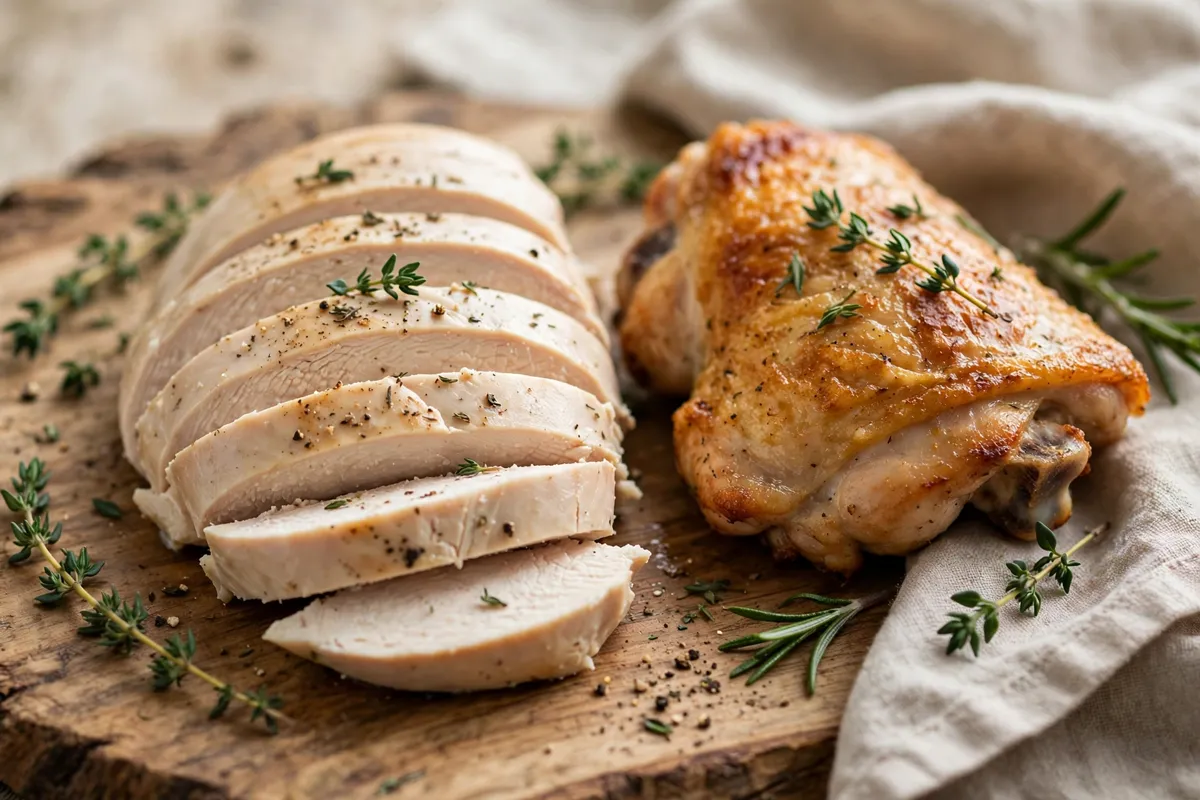
The weight is the same; the answer is not. Thigh meat (FDC ID 172388) carries 24.76g of protein per 100g against the breast's 31.02g, so 4 ounces of cooked thigh meat provides about 28.1g of protein (113.4 × 0.2476) — roughly 7g less than the same weight of breast — while its calories rise to about 203 (113.4 × 1.79) from the thigh's higher fat rate. "Four ounces of chicken" is therefore an incomplete instruction; the cut completes it.
The same check applies to the whole bird's other parts at this weight: drumstick meat at 24.24g per 100g and whole-leg meat at 24.22g sit with the thigh in the dark-meat band, while wing meat, at 30.46g per 100g, nearly matches the breast — though assembling 4 ounces of wing meat is a project in itself, since one wing yields only 21g. The breast's lead in this comparison is the reason it is the default protein food of templates everywhere, a lead the chicken protein calculator guide quantifies across all the cuts the tool carries.
How Does a 4-Ounce Serving Sit Inside a Whole Breast?
One more piece of portion geometry makes the 4-ounce serving easier to use at the carving board. A whole standard breast is 172g. Cut a 4-ounce portion (113.4g) from it and the remainder is 58.6g of meat, which provides 18.2g of protein (58.6 × 0.3102) — and the two pieces reconcile exactly with the whole: 35.2 + 18.2 = 53.4g. So a single standard breast is a 4-ounce serving plus a 2-ounce top-up, a division that suits households where one eater's portion is the template serving and another's is a lighter one. The same breast also yields the mineral lines of the entry at serving scale: about 84mg of sodium (113.4 × 0.74) and about 290mg of potassium (113.4 × 2.56) ride along with the 35.2g of protein, both unremarkable for a serving of plain meat, and both part of the complete picture the entry gives for this portion.
Common Mistakes to Avoid
Do not log 4 ounces weighed raw as 35.2g of protein; the cooked meat weighs less and delivers less. Do not transfer the figure to thigh or leg meat, where the same weight returns about 28g. Do not round an ounce to 30g in your head and then also round the protein — small courtesies compound; 4 true ounces are 113.4g. Do not forget that a breaded or sauced 4 ounces is no longer the plain entry, whose 0g carbohydrate is the tell that nothing was added. And do not double-count a portion weighed before cooking and again after: one weighing, in one state, matched to its entry, is the whole system.
Final Thoughts
Four ounces of cooked chicken breast provide 35.2g of protein and 187.1 calories — 113.4 grams priced at the USDA rate of 31.02g per 100g. It is the template serving for a reason: a third more protein than a half breast, two-thirds of a whole one, at under 200 calories. Keep the weighing cooked, keep the cut as breast, and the figure is exact; vary either and the chicken protein calculator reprices the portion in front of you rather than the one in the template.
People Also Ask
How Much Protein Is in 8 Ounces of Chicken Breast?
Eight ounces of chicken breast contain 70. 4 grams of protein. That is the derived figure for 226.
How Much Protein Is in 10 Ounces of Chicken Breast?
Ten ounces of chicken breast contain 87. 9 grams of protein. That is the derived USDA figure for 283.
How to Build a High-Protein Grain Bowl?
To build a high-protein grain bowl at Fresh Kitchen, start with Grilled Chicken at 190 calories and 28 grams of protein, set it on Brown Rice at 210 calories and 4 grams of protein, and add Parmesan Broccoli at 110 calories and 5 grams of protein — a bowl of 210 + 190 + 110 = 510 calories with 37 grams of protein. For the leaner version, swap the rice for Kale Slaw: 90 + 190 + 110 = 390…
Which Steak Has the Most Protein?
The Ribeye (10 oz) has the most protein of any steak in this site's Outback Steakhouse calculator: 62 grams of protein, in a 760-calorie steak with 2 grams of carbohydrates and 56 grams of fat. Second is the New York Strip (10 oz) with 58 grams of protein at 640 calories. If you judge protein per ounce instead of per steak, the ranking flips — Victoria's Filet (6 oz) leads at 47 grams in only 6 ounces — and this…