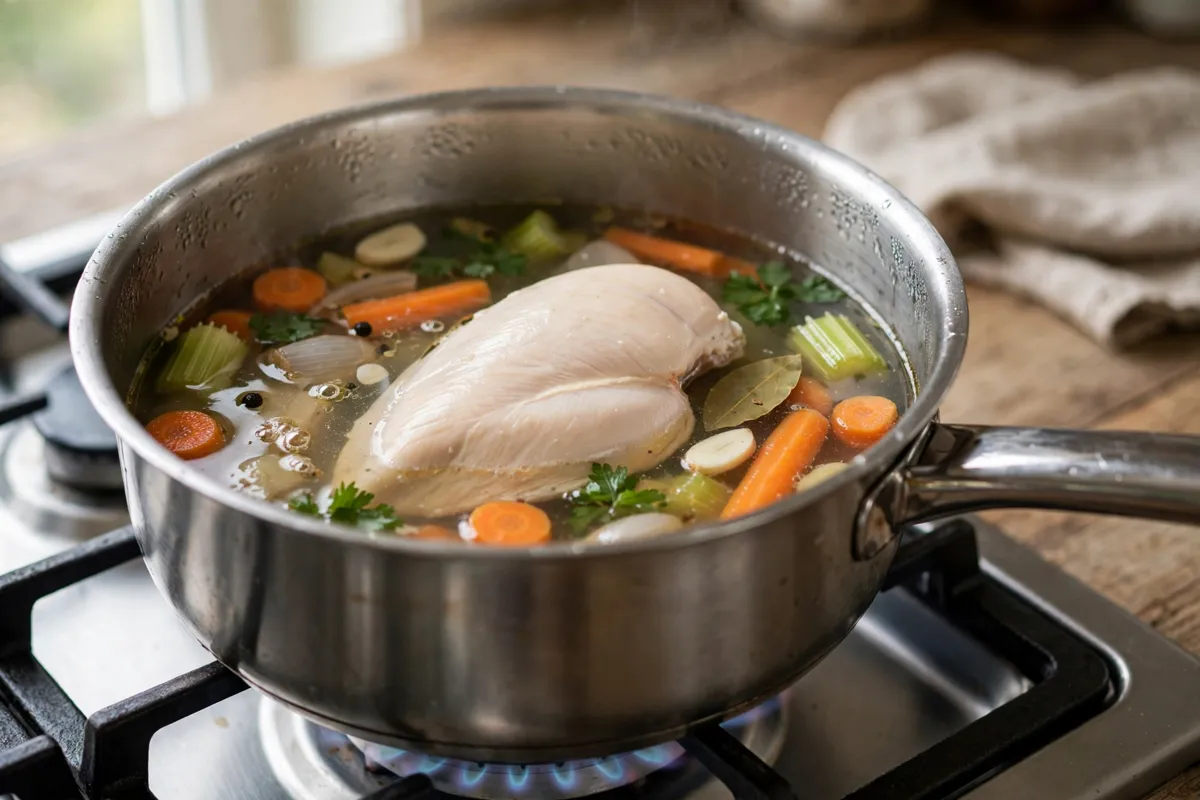
Chicken Protein Calculator: The Short Answer
A boiled chicken breast has about 143 calories for a half-breast portion. The figure comes from USDA's stewed breast entry (FDC ID 171478) — 143.4 calories for its 95-gram half-breast portion — because USDA publishes no entry literally named "boiled": its stewed entry is the moist-heat entry, and boiling is moist-heat cooking. Per 100 grams the stewed meat lists 151 calories, against 165 for roasted. The calories in a boiled chicken breast are therefore priced on the stewed basis, named openly so you know exactly which measurement you are using.
That naming matters more than it might seem, because boiled chicken behaves differently from roasted in a way that surprises people: the boiled portion weighs more, not less, than its roasted twin. This article explains the water exchange behind that, prices the common portions, and shows when the stewed basis is and is not the right one for what simmered in your pot. The chicken protein calculator prices breast by weight; for boiled meat, use it with the stewed rate described here.
Short Answer
Boiled (stewed) chicken breast contains 151 calories and 28.98g of protein per 100g of cooked meat. The USDA half-breast portion for this entry is 95g — heavier than the roasted half's 86g — and contains 143.4 calories and 27.5g of protein. A cup of diced stewed breast (140g) contains 211.4 calories. The boiled meat is lighter per gram but heavier per piece, and the two effects nearly cancel.
Why Is the Boiled Entry Called "Stewed"?
USDA's treatment names describe cooking families. Its breast entries are roasted for dry heat, fried for the pan, and stewed for meat cooked in liquid. A breast boiled in water, poached in stock, or simmered in a soup is, by that classification, stewed — the surrounding medium is liquid, the temperature is the liquid's, and the meat's exchange with the pot is the same exchange the stewed analysis measured. The full entry name is "Chicken, broilers or fryers, breast, meat only, cooked, stewed" (FDC ID 171478), listing per 100g: 151 calories, 28.98g protein, 0g carbohydrate, 3.03g fat, 63mg sodium and 187mg potassium.
Insisting on the label is not pedantry. A reader who knows the number came from the stewed entry can judge its fit for their own pot — plain water, salted stock, a soup where the liquid is also eaten — whereas a number labelled simply "boiled" pretends to a measurement nobody made. The same honesty governs the dry-heat side of the family, where grilled and baked answers are priced from the roasted entry and say so; the full method map is in does cooking method change chicken protein.
Why Does the Boiled Portion Weigh More Than the Roasted One?
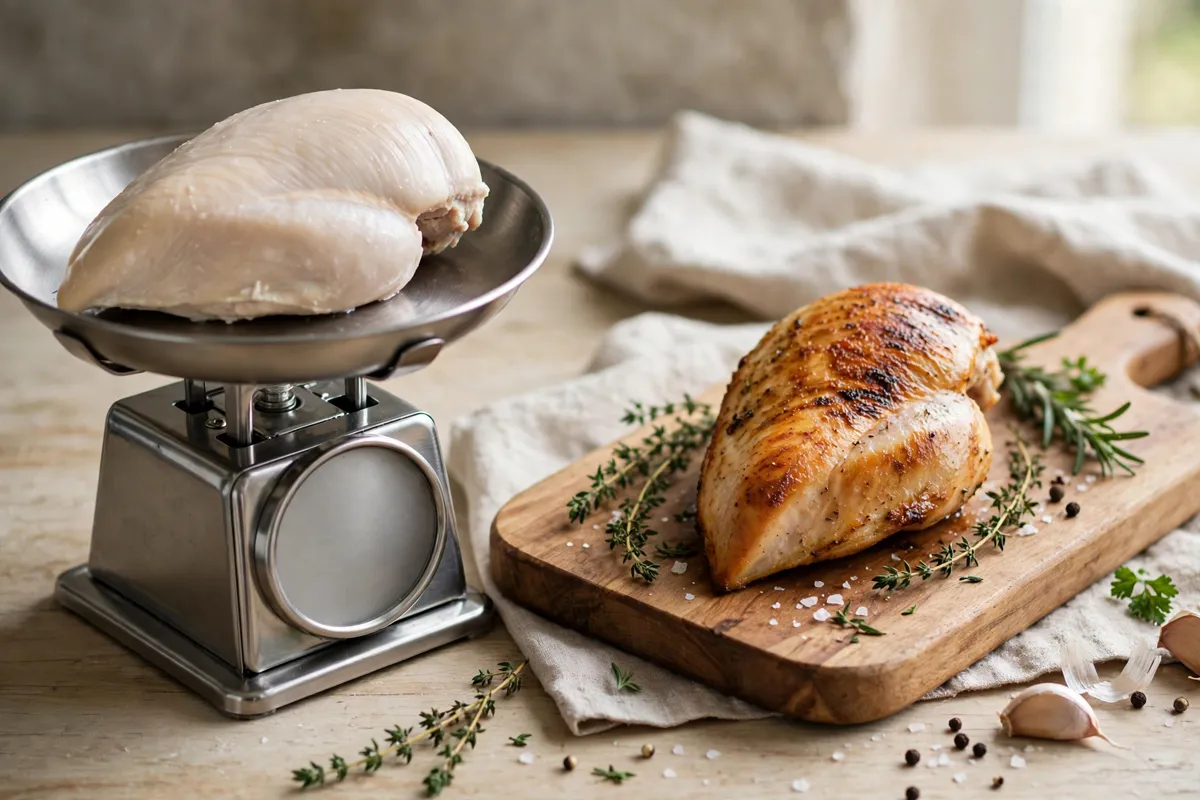
Compare the two half-breast portions side by side. Roasted: 86g, 141.9 calories. Stewed: 95g, 143.4 calories. The stewed portion is 9 grams heavier and only 1.5 calories dearer. The explanation is water moving in opposite directions. Roasting drives moisture out of the meat and keeps going, so the roasted piece shrinks and concentrates. Simmering surrounds the meat with liquid; the meat still loses some juice to the pot, but it also takes up water, and it finishes heavier and more dilute — 151 calories per 100g instead of 165, 28.98g of protein per 100g instead of 31.02g.
This is the single most counterintuitive fact in chicken logging, and it is worth internalising: cooking method changes the water content of the finished meat, and since calories are priced per gram of finished meat, water management is calorie management at the per-gram level. Nothing was added to the boiled breast and nothing nutritional was "boiled away" in quantity — the protein that leaves the meat flavours the liquid, which is why the cooking broth of a boiled breast is worth keeping for soups and grains if the meal will drink it anyway.
What Are the Calories at Each Boiled Portion?
Working from the stewed entry's own portions and rate:
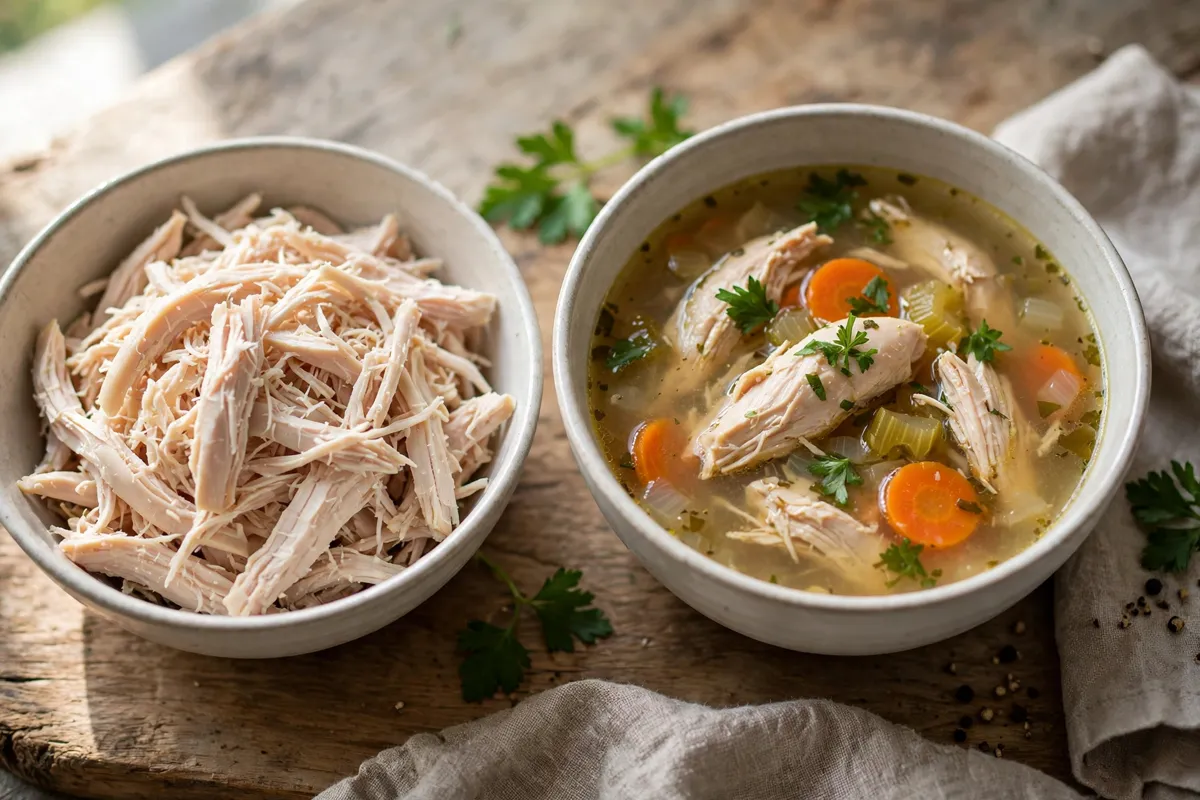
That last line rewards a second look. A whole stewed breast (286.8 calories) and a whole roasted breast (283.8) land within 3 calories of each other. The methods produce nearly identical whole-piece totals; they just distribute them across different finished weights — 190g of milder, juicier meat versus 172g of denser meat. Anyone choosing between boiling and roasting for calorie reasons is choosing texture and convenience, not a meaningfully different bill, provided the whole piece is what gets eaten. The divergence appears only when portions are cut by weight: 100g of the stewed meat genuinely is lighter than 100g of the roasted, because nine of those grams are water the roasted piece lost. Shredded boiled chicken, the form this meat most often takes in salads and sandwiches, is logged by the cup — 211.4 calories — and that cup figure assumes the shreds are drained, not dripping; meat weighed straight from the pot carries surface liquid the entry does not price.
- Half a breast, 95g = 143.4 calories and 27.5g protein
- 1 cup diced, 140g = 211.4 calories and 40.6g protein
- Per 100g = 151 calories and 28.98g protein, the rate to scale any other weight
- A whole breast on the stewed basis, two half portions at 190g = 286.8 calories (2 × 143.4) and 55.0g protein (2 × 27.5)
When Is the Stewed Basis the Wrong Choice?
Three situations call for a different entry. If the breast simmered in a sauce you eat in full — a curry, a stew with its gravy — the meat's figure is only part of the plate; the sauce is a separate food, and the meat itself is still priced fairly by the stewed rate. If the breast was poached just to firm it and then finished on a grill or in a pan, the final dry-heat step drives the water back out, and the roasted basis (165 per 100g) describes the finished meat better. And if the boiled meat was skin-on, neither skinless entry applies directly: the skin's fat travels with the meat, and the honest approach is the skin decision — eat it and price nearer the skin-on logic, discard it and the skinless stewed rate is the fair approximation.
Salt in the pot deserves a word too. The stewed entry's sodium is 63mg per 100g, lower than the roasted 74mg, because the analysis meat was not salted. A breast boiled in well-salted water will carry more sodium than that in the finished dish — calories unaffected, but worth knowing for anyone tracking sodium, a distinction the chicken protein essentials guide returns to when it separates the numbers that change from the numbers that do not.
Common Mistakes to Avoid
Do not price boiled breast at the roasted rate of 165 per 100g; the stewed rate is 151, and the 14-calorie gap per 100g is real money across a big batch. Do not conclude boiled chicken is "lower calorie" per piece — the whole-piece totals are 286.8 stewed versus 283.8 roasted, a virtual tie. Do not weigh shredded meat dripping with cooking liquid and log the wet weight as meat. Do not throw the protein-enriched cooking liquid into a calorie-free mental category and then also log the meat as if nothing left it; the entry already reflects plain cooked meat, so simply log the meat and enjoy the broth without double-counting worries. And do not use the stewed basis for a breast that was boiled briefly then roasted or grilled to finish — the last heat sets the final water content.
Final Thoughts
A boiled chicken breast is a stewed chicken breast in USDA's language: 151 calories per 100g, 143.4 calories for its 95-gram half portion, 211.4 for a drained cup of shreds. It is lighter per gram than roasted breast only because it carries more water per gram, and per whole piece the two methods finish in a dead heat. Name the basis, drain the meat before weighing, and the number is dependable — with the chicken protein calculator ready to scale the stewed rate to whatever your pot produced.
People Also Ask
How Many Calories Are in a Chicken Thigh?
A chicken thigh has about 208 calories. The precise figure is 207. 6 calories for one skinless thigh of 116 grams, from USDA's roasted thigh entry (FDC ID 172388), which lists 179 calories per 100 grams of cooked meat.
How Many Calories Are in a Chicken Leg?
A chicken leg has either about 149 calories or about 346 calories, depending on what you mean by "leg" — and this article will not pretend otherwise. A drumstick alone, the familiar hand-held piece at 96 grams of meat, contains 148. 8 calories; a whole leg — drumstick, thigh and back joined, at 199 grams of meat — contains 346.
How Many Calories Should Lunch Contain?
Lunch should contain roughly 30 to 35% of your daily calories — about 600 to 700 calories on a 2,000-calorie day, about 480 to 560 on a 1,600-calorie weight-loss budget, and about 750 to 875 on a 2,500-calorie day. For most people lunch is either the largest meal or a close second to dinner, and sizing it deliberately is what stops the afternoon slump-and-snack cycle.
How Many Calories Should a Meal Contain?
A meal should contain roughly a quarter to a third of your daily calories if you eat three meals a day — about 500 to 650 calories per meal on a 1,800-calorie day and about 600 to 800 on a 2,400-calorie day. The calculation is simply your daily target divided by your meal pattern, with snacks and drinks subtracted first if you have them.