Chicken Protein Calculator: The Short Answer
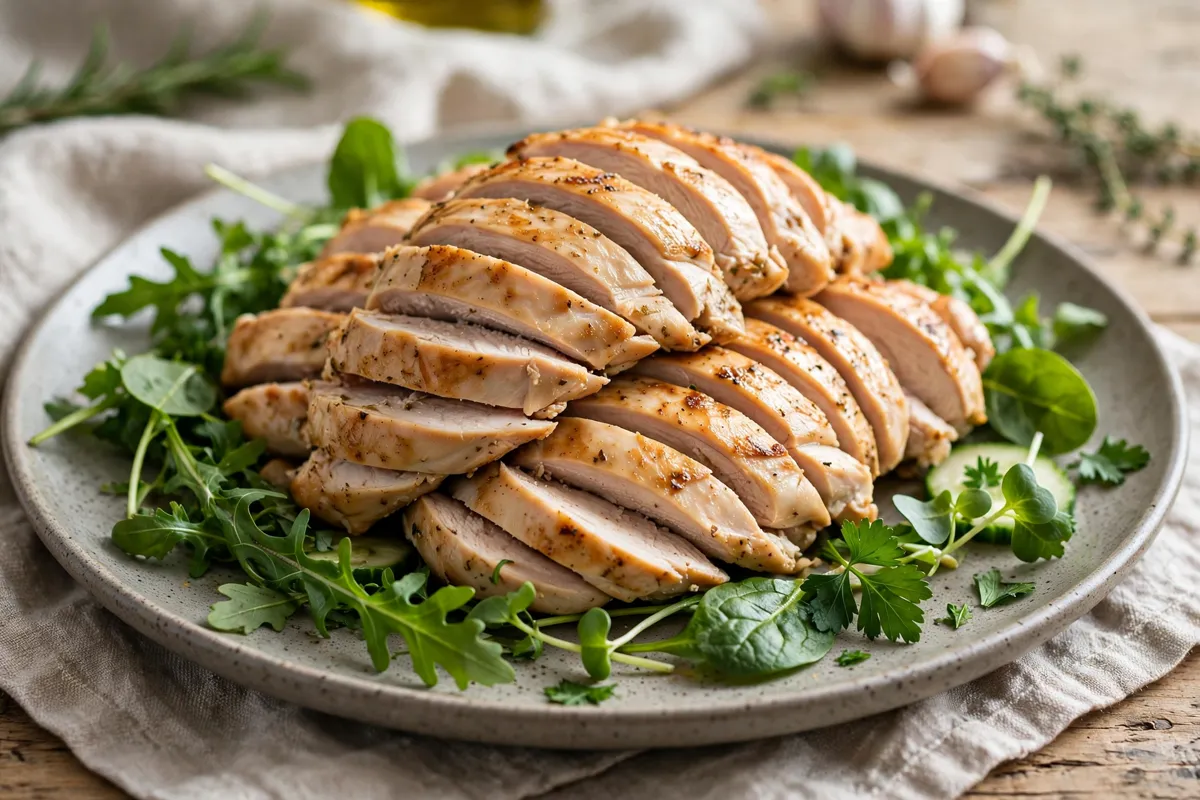
Eight ounces of chicken breast contain 70.4 grams of protein. That is the derived figure for 226.8 grams of cooked, boneless, skinless breast, from USDA's roasted breast entry (FDC ID 171477) at 31.02 grams of protein per 100 grams. The protein in 8 ounces of chicken breast — 70.4 grams, with 374.2 calories — is roughly what one very large breast, or two standard 4-ounce servings, put on the plate.
Eight ounces is the portion of people who eat protein deliberately: the double serving at one meal, or the day's chicken eaten at once. This article builds the figure from the base rate, compares it with the standard whole breast it so often gets confused with, and works through what 70.4g means inside a day's eating — including the comparison with a 6-ounce steak, where the chicken's quiet advantage surprises most people. Scale any other weight in the chicken protein calculator.
Short Answer
In 8 ounces (226.8g) of cooked, skinless chicken breast there are 70.4g of protein and 374.2 calories. The maths is the base rate applied once: 226.8 × 0.3102 = 70.4g of protein, 226.8 × 1.65 = 374.2 calories. It is exactly double the 4-ounce serving (35.2g), because both are the same meat at the same rate.
How Does 8 Ounces Relate to a Whole Breast?
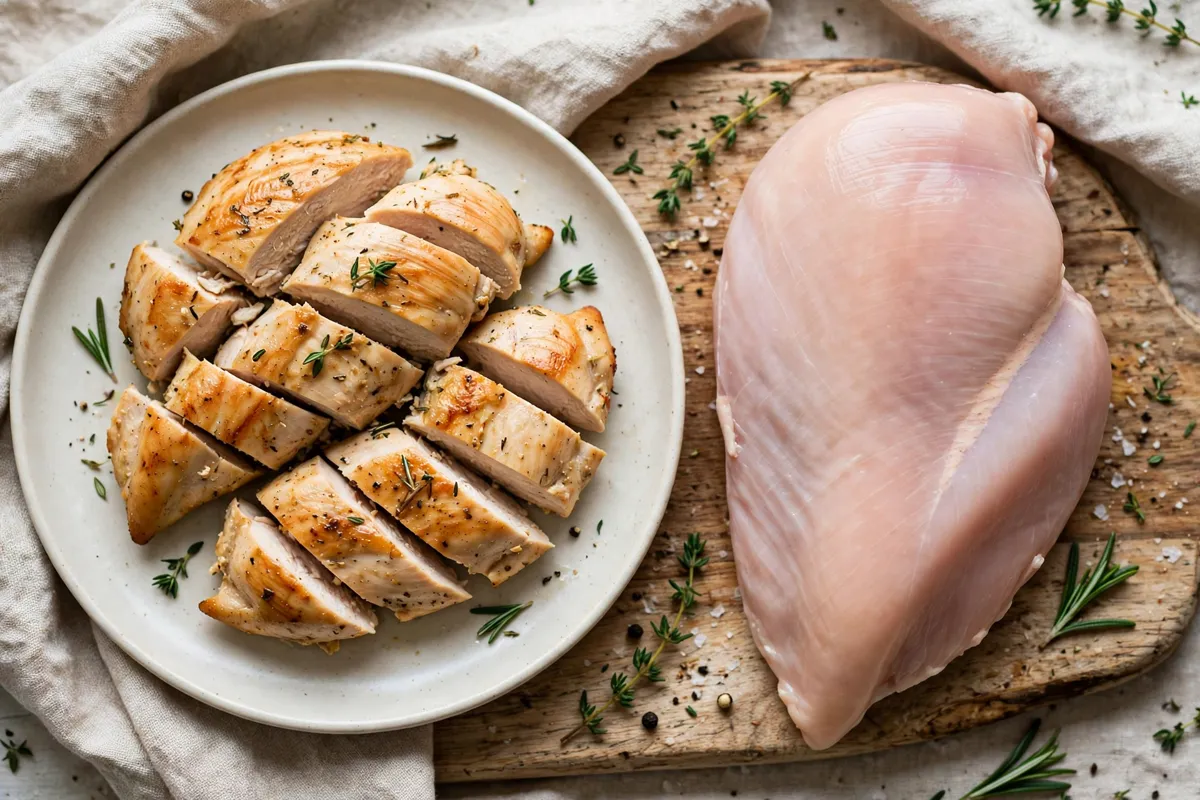
This is the comparison that organises the whole topic. A standard whole breast, on the USDA portion basis, is 172g — about 6 ounces — and provides 53.4g of protein. Eight ounces is 226.8g, which is the standard breast plus another half breast or so: roughly a breast and a third. Its protein, 70.4g, exceeds the whole standard breast's by 17.0g.
Where does an 8-ounce portion come from in real life? From the large retail breasts that modern shops sell — the subject of the large-breast calorie question, where a single big piece can carry 8 ounces of cooked meat on its own — or from deliberately doubling the 4-ounce template serving. Either way, the eater should know which situation they are in: logging an 8-ounce breast as "one chicken breast, 53.4g" understates the meal by 17g of protein and about 90 calories (374.2 against 283.8). The piece name hides the weight again, and the weight is the answer. The standard breast's own protein story, including why its listed portion is a half at 86g, is told in full in how much protein is in one chicken breast. 4 ounces of chicken breast gets the same treatment for protein, with its grams worked out in full.
What Does 70.4 Grams of Protein Do in a Day?
Frame it against the milestones people actually use. A 50g protein target for a meal or a day segment is passed by this portion with 20.4g to spare. The 100g daily milestone is 70% covered by this single portion — the remaining 29.6g is roughly one more half breast (26.7g) plus a small contribution from anything else in the day. Spread as two 4-ounce servings, the same meat delivers its 70.4g in two sittings of 35.2g; eaten at once, it front-loads the day.
Both patterns are legitimate, and the arithmetic does not prefer one. What the number rules out is vagueness: a person whose plan says "chicken breast for dinner" and whose breast is 8 ounces is eating a 70.4g-protein, 374.2-calorie dinner centrepiece, and the rest of the day should be planned against those figures, not against the 53.4g standard breast. Planning tools make this concrete — the chicken protein portions guide builds whole days around portions of exactly this size, showing what 8 ounces does to the meals around it.
- One 8-ounce portion: 70.4g protein, 374.2 calories, in one sitting
- Two 4-ounce portions: 35.2g protein each, 187.1 calories each, same totals across the day
- Standard whole breast for contrast: 53.4g protein, 283.8 calories
- Remaining distance to 100g after one 8-ounce portion: 29.6g
How Does 8 Ounces of Chicken Compare With Steak?
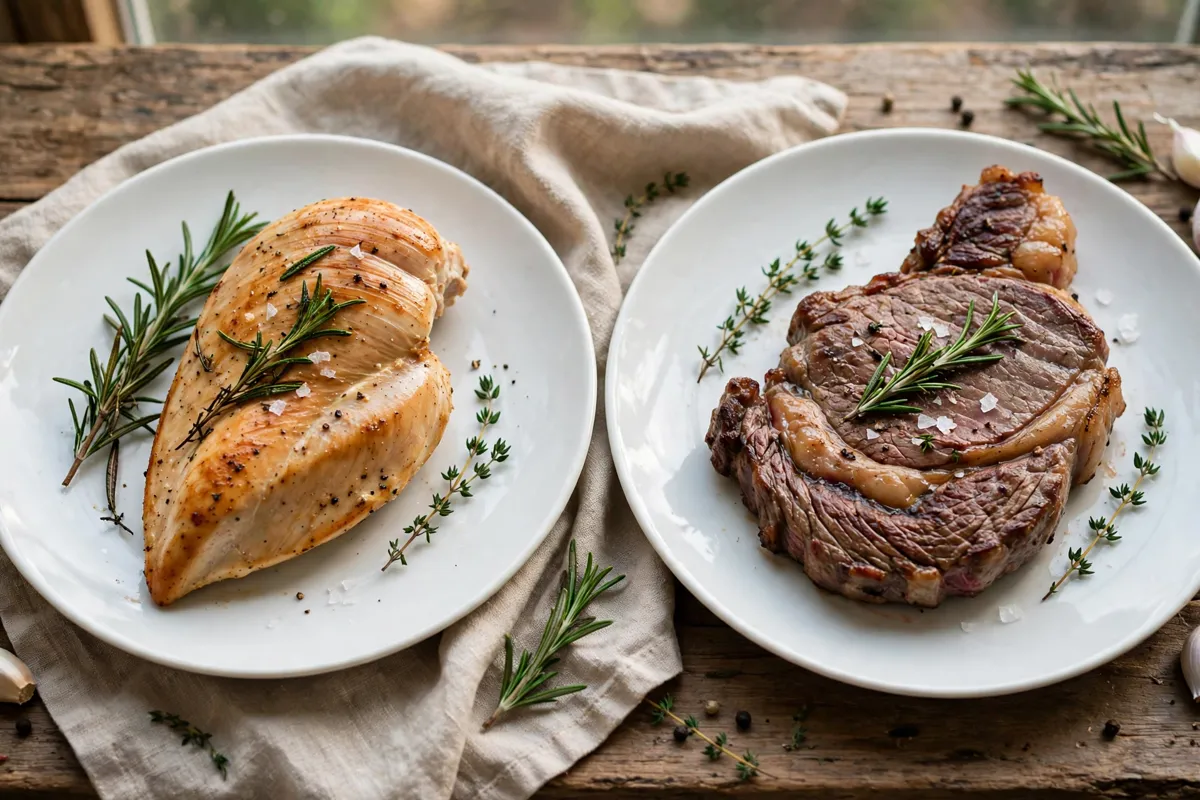
The natural rival at this size is a steak, and USDA's sirloin entry (FDC ID 168634) makes the comparison precise. Top sirloin, broiled, carries 30.55g of protein per 100g — just under the breast's 31.02g. A 6-ounce steak (170.1g) provides 52.0g of protein at 311.3 calories. Set the chicken's 8 ounces beside it fairly and the chicken leads on protein (70.4g against 52.0g) mostly because it is the larger portion; set them at equal weight and the chicken still edges it, gram for gram, at every size — at 6 ounces the breast provides 52.8g against the steak's 52.0g.
The calorie side separates them more. Sirloin runs at 183 calories per 100g against the breast's 165, so equal weights of steak cost more energy for marginally less protein. None of this makes steak a poor protein food — 52.0g in a 6-ounce serving is excellent by any standard — but it does mean the chicken's reputation as the default high-protein choice is earned in the data, not just in habit. At 8 ounces the breast is simply the largest plain-protein portion most people will meet, and its numbers behave exactly as the base rate predicts.
Does the Cooking Method Move the 8-Ounce Figure?
At the margins, yes, and the direction depends on water. The 70.4g belongs to the roasted, dry-heat basis. Stewed breast (FDC ID 171478) carries 28.98g of protein per 100g, so 8 ounces of stewed meat provides about 65.7g (226.8 × 0.2898) — less per gram because each gram holds more water. Fried breast (FDC ID 171078) carries 33.44g per 100g, so the same 8 ounces fried provides about 75.8g (226.8 × 0.3344), its protein concentrated by water loss even as its calories climb to 187 per 100g.
Notice the pattern: the total protein in the meat you started with barely changes; the finished weight changes around it. Eight ounces is a finished-weight measure, so the method that finishes drier packs more protein into those ounces. For the grilled breast on your plate — dry heat, like roasting — the headline 70.4g is the figure, and the deeper treatment of this concentration effect lives in does cooking method change chicken protein.
What Rides Along With 70.4 Grams of Protein?
The full entry at this weight: about 8.1g of fat (226.8 × 0.0357), about 168mg of sodium (226.8 × 0.74) and about 581mg of potassium (226.8 × 2.56). The fat line is the one that keeps this portion remarkable — over 70g of protein delivered with barely 8g of fat is a ratio no other common portion in this series matches, and it is the mechanical reason the 8-ounce breast can anchor a high-protein day without quietly becoming a high-fat one.
Common Mistakes to Avoid
Do not log an 8-ounce breast as a standard breast; the standard is 172g and 53.4g, and the error is 17g of protein. Do not weigh 8 ounces raw and claim 70.4g — the cooked yield is smaller, and the rate belongs to cooked meat. Do not assume a restaurant's "chicken breast" entrée is 4 ounces because the template says so; at this end of the size range, asking or weighing is the only way to know. Do not apply the breast figure to 8 ounces of mixed chicken pieces, where dark meat's lower rate pulls the total down. And do not let the protein headline make the calories invisible: 374.2 is a substantial meal foundation, and it belongs in the day's total alongside the 70.4g.
Final Thoughts
Eight ounces of cooked chicken breast deliver 70.4g of protein for 374.2 calories — a breast and a third by USDA's portion basis, double the template serving, and more protein than a 6-ounce sirloin steak provides. It is a deliberate eater's portion, and it rewards deliberate logging: cooked weight, breast only, dry-heat basis. For any other weight out of the same packet, the chicken protein calculator scales the identical rate.
People Also Ask
How Much Protein Is in 10 Ounces of Chicken Breast?
Ten ounces of chicken breast contain 87. 9 grams of protein. That is the derived USDA figure for 283.
How Much Protein Is in One Chicken Thigh?
One chicken thigh contains 28. 7 grams of protein. That is the derived figure for the standard skinless thigh — 116 grams of cooked meat — from USDA's roasted thigh entry (FDC ID 172388) at 24.
Which Steak Has the Most Protein?
The Ribeye (10 oz) has the most protein of any steak in this site's Outback Steakhouse calculator: 62 grams of protein, in a 760-calorie steak with 2 grams of carbohydrates and 56 grams of fat. Second is the New York Strip (10 oz) with 58 grams of protein at 640 calories. If you judge protein per ounce instead of per steak, the ranking flips — Victoria's Filet (6 oz) leads at 47 grams in only 6 ounces — and this…
Which Breakfast Meal Has the Most Protein?
The Healthy Turkey Omelette has the most protein of any breakfast plate at First Watch: 38 grams of protein for 540 calories. That answer needs no honest footnote about another section, because the omelette is also the single highest-protein item in the whole First Watch data on this site — nothing in Bowls & Salads or anywhere else in the tracked set reaches 38 grams. Among the dishes First Watch serves, the turkey omelette wins outright, and it wins efficiently:…