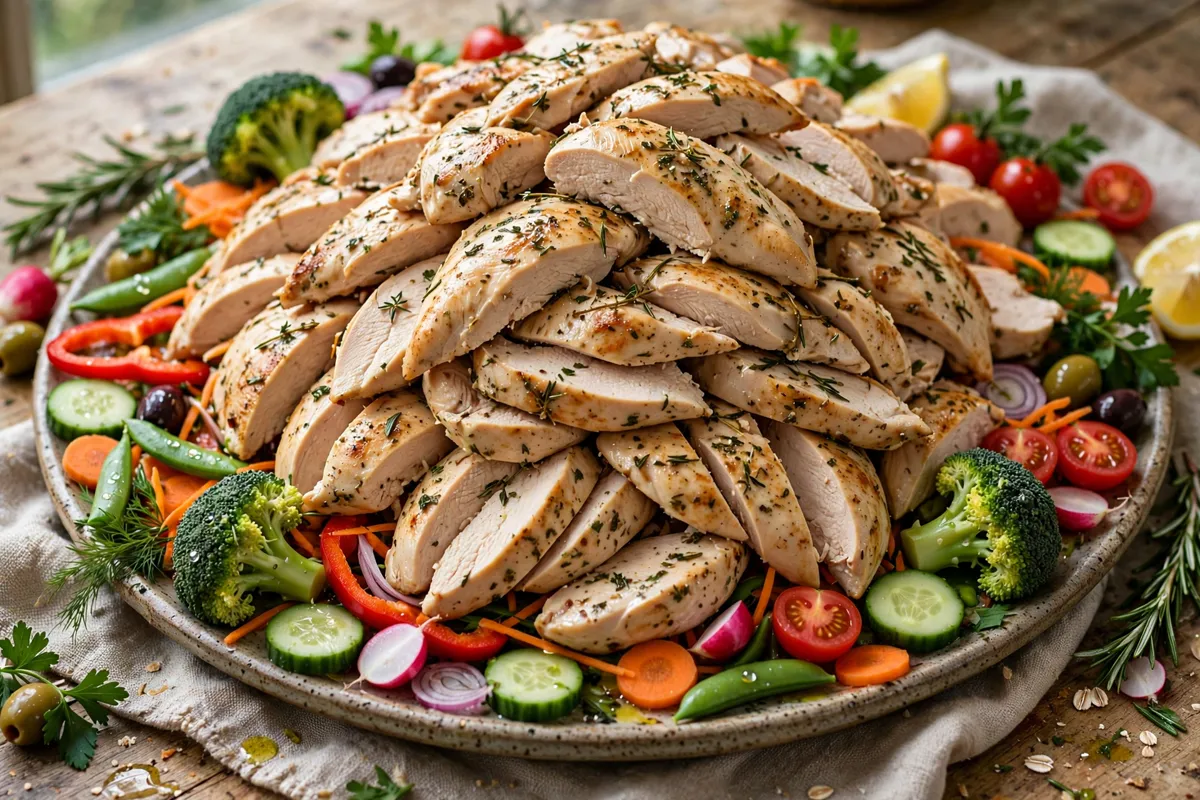
Chicken Protein Calculator: The Short Answer
Ten ounces of chicken breast contain 87.9 grams of protein. That is the derived USDA figure for 283.5 grams of cooked, boneless, skinless breast, from the roasted breast entry in USDA FoodData Central (FDC ID 171477) at 31.02 grams of protein per 100 grams. The protein in 10 ounces of chicken breast — 87.9 grams, with 467.8 calories — is the largest single-portion answer in this series, and it belongs to the deliberate end of chicken eating.
Nobody arrives at 10 ounces by accident. It is the portion of a large eater concentrating protein into one meal, a shared breast-and-a-half split unevenly, or a meal-prep container packed by weight rather than by piece. This article builds the number, places it against the day's common targets, and shows how it divides — because a portion this size is almost always a decision, and decisions deserve exact figures. The chicken protein calculator will scale the same rate to any weight beyond it.
Short Answer
In 10 ounces (283.5g) of cooked, skinless chicken breast there are 87.9g of protein and 467.8 calories. The calculation is the standard rate applied once: 283.5 × 0.3102 = 87.9g of protein; 283.5 × 1.65 = 467.8 calories. It equals a standard whole breast (53.4g) plus another 4 ounces and change — or, more usefully, it is five 2-ounce units of 17.6g each.
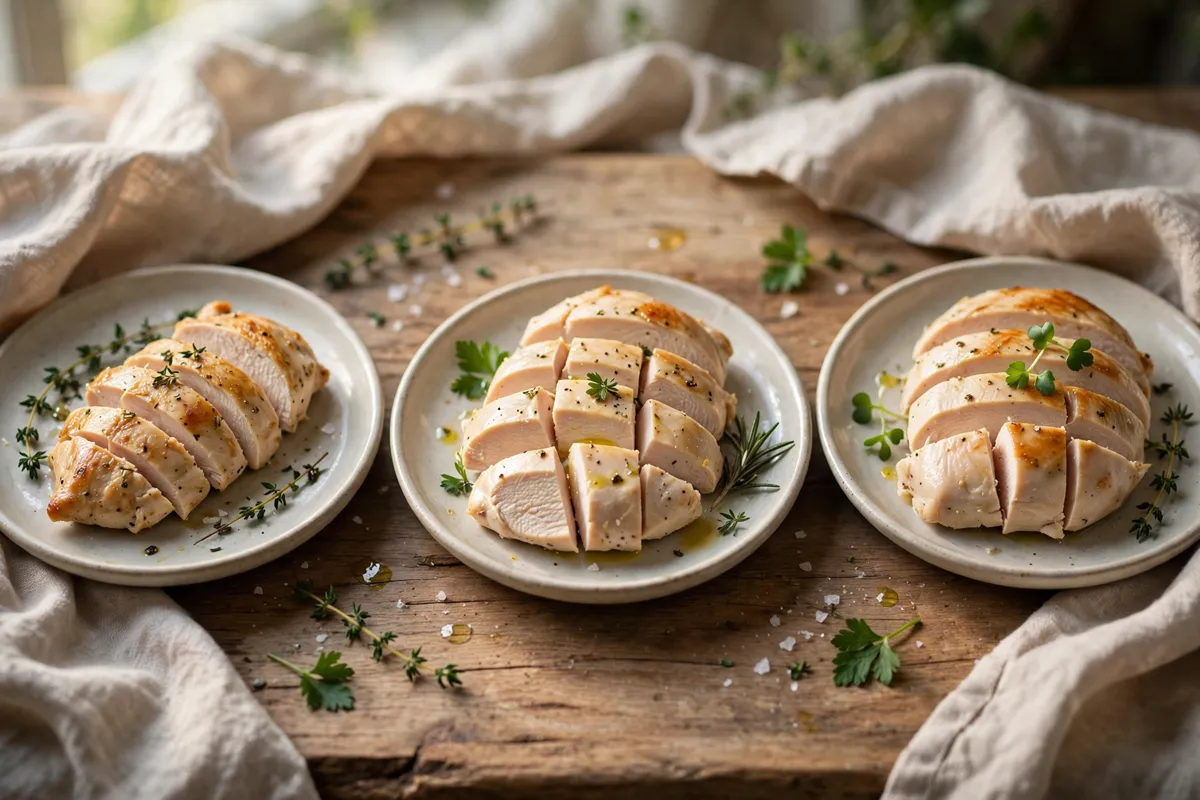
How Is the 10-Ounce Figure Built From the Base Rate?
The base rate never changes across this series: cooked roasted breast carries 31.02g of protein per 100g (FDC ID 171477). An ounce is 28.35g, so ten ounces are 283.5g, and 283.5 × 0.3102 = 87.9g. The ladder beneath the headline confirms it: each ounce contributes 8.8g of protein, so 10 ounces contribute 88g before rounding — the precise multiplication gives 87.9g, and the ladder's small rounding is why the exact figure, not the ladder, is the one to log.
Set the portion in the breast's own units and its size becomes vivid. A whole standard breast is 172g and 53.4g of protein; 10 ounces is 283.5g — one whole breast plus another 111.5g, which is within a gram or two of a further 4-ounce serving (113.4g, 35.2g). And indeed the totals reconcile: 53.4 + 35.2 = 88.6, a whisker above 87.9 because the standard breast is a shade under the exact ounce sum. The lesson hidden in that near-miss is the series' refrain — portions defined by pieces and portions defined by weight are two languages, and the scale is the only exact translator. The 100g anchor that both languages translate from is examined in how much protein is in 100 grams of chicken breast. Grilled chicken breast gets the same treatment for protein, with its grams worked out in full.
What Does 87.9 Grams Mean Against Daily Targets?
This portion exists to serve targets, so price it against them. Against a 100g daily protein milestone, 10 ounces covers 87.9% of the day in one food — the remaining 12.1g is less than a half breast provides (26.7g), less than 2 ounces of breast (17.6g), the sort of gap the rest of a normal day's eating closes without trying. Against a 50g meal target, it overshoots by 37.9g. Against the protein in a full pound of breast (140.7g), it is exactly five-eighths — 10 of the pound's 16 ounces.
The flip side is the calorie account: 467.8 calories is a full meal's worth of energy in the protein component alone, before anything accompanies it. For the eater who planned it — a large meal in a two-meal day, a high target in a high-demand training block — that is the design. For anyone else it is a number to notice. The chicken protein portions guide is built for this planning level, assembling days in which portions of this size do the heavy lifting and smaller foods complete the pattern around them.
- Share of a 100g daily milestone covered by 10 ounces: 87.9g of the 100g
- Overshoot beyond a 50g target: 37.9g
- Equivalent in whole standard breasts: one breast (53.4g) plus about 4 more ounces (35.2g)
- Calories travelling with the protein: 467.8
How Does 10 Ounces Divide If It Is Not Eaten at Once?
Meal-prepped by weight, 283.5g splits cleanly because the rate is uniform:
The five-way split deserves a note, because it reverses the portion's character entirely: the same meat that is a maximalist single serving becomes, diced at 2 ounces a time, a week's worth of modest protein additions to other dishes. Nothing about the chicken changed — only the portioning decision, which is where nearly all practical nutrition with this food is actually decided. Weigh once while packing, and each container's protein is known without another thought.
- Two containers of 5 ounces (141.8g): 44.0g of protein and 233.9 calories each
- Five portions of 2 ounces (56.7g): 17.6g of protein and 93.6 calories each — salad-topping and wrap-filling size
- A 6-ounce dinner portion plus a 4-ounce lunch portion: 52.8g + 35.2g = 88.0g across the day, reconciling with the 87.9g whole to within rounding
How Does the Figure Move With Cut and Method?
Ten ounces is a weight, and weights inherit the rate of whatever fills them. Filled with stewed breast (FDC ID 171478, 28.98g of protein per 100g), 10 ounces provides about 82.1g (283.5 × 0.2898); filled with fried breast (FDC ID 171078, 33.44g per 100g), about 94.8g (283.5 × 0.3344) — with the fried version's calories at 187 per 100g, far above the roasted 467.8 total. Filled with thigh meat (24.76g per 100g), the same scale reading returns about 70.2g of protein — close to what 8 ounces of breast provide, which is the cut difference expressed as a two-ounce penalty.
The pattern across all four is the series' recurring one: water and cut move the rate, the rate moves the total, and the scale only ever reports grams. A 10-ounce claim is meaningless until its meat is named. For plain roasted or grilled breast — the subject of this article — 87.9g is the figure, and the method questions behind the variants are worked through in does cooking method change chicken protein.
What Rides Along With 87.9 Grams of Protein?
Completing the entry at this weight: about 10.1g of fat (283.5 × 0.0357), about 210mg of sodium (283.5 × 0.74) and about 726mg of potassium (283.5 × 2.56). Even at the series' largest portion, the fat stays near 10g — the total grows by protein and water-weight of meat, not by richness — which is why this portion, unlike most very large servings of a single food, does not distort the rest of the day's fat budget while it dominates the protein one.
Common Mistakes to Avoid
Do not build 10 ounces from two "large breasts" by count and log 87.9g unchecked — two large pieces can total well over or under 283.5g of cooked meat, and at this portion size every 28.35g of error is 8.8g of protein. Do not weigh the 10 ounces raw; the cooked yield will be smaller and the protein lower than the headline. Do not carry the figure to a mixed-meat portion of the same weight. Do not add the calories of a sauce or a breading into invisibility — the plain entry has 0g of carbohydrate, so anything sweet or crumbed on the meat is a second food. And do not sanity-check the portion against a standard breast and "fix" it downward: 10 ounces genuinely is nearly two standard breasts' worth of meat, and the log should say so.
Final Thoughts
Ten ounces of cooked chicken breast provide 87.9g of protein and 467.8 calories — 283.5 grams priced once at USDA's rate of 31.02g per 100g. It covers most of a 100g day by itself, splits into five modest 2-ounce additions without changing its totals, and stands or falls on the same discipline as every smaller portion: cooked weight, named cut, plain meat. Whatever weight your own portion lands on, the chicken protein calculator returns its protein from the identical rate.
People Also Ask
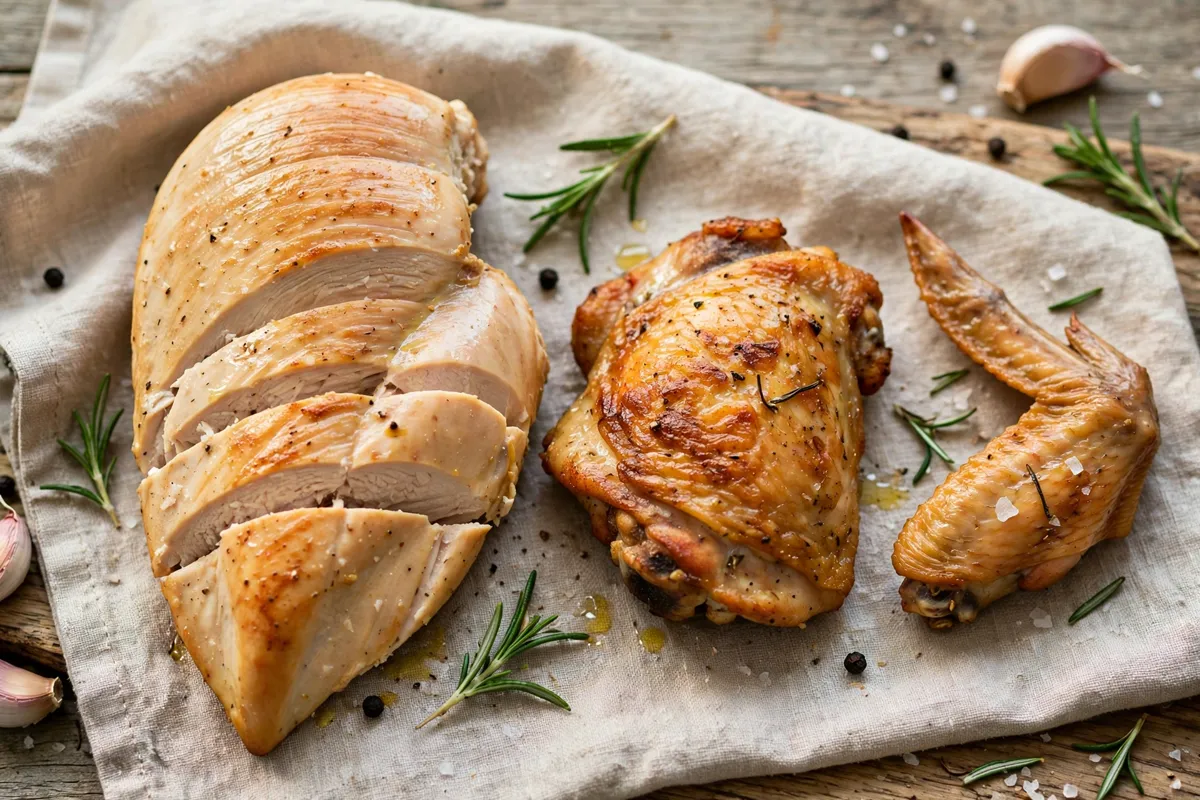
How Much Protein Is in One Chicken Thigh?
One chicken thigh contains 28. 7 grams of protein. That is the derived figure for the standard skinless thigh — 116 grams of cooked meat — from USDA's roasted thigh entry (FDC ID 172388) at 24.
How Much Protein Is in One Chicken Leg or Drumstick?
One chicken leg contains 48. 2 grams of protein — and one drumstick contains 23. 3 grams.
Which Breakfast Meal Has the Most Protein?
The Healthy Turkey Omelette has the most protein of any breakfast plate at First Watch: 38 grams of protein for 540 calories. That answer needs no honest footnote about another section, because the omelette is also the single highest-protein item in the whole First Watch data on this site — nothing in Bowls & Salads or anywhere else in the tracked set reaches 38 grams. Among the dishes First Watch serves, the turkey omelette wins outright, and it wins efficiently:…
Which Hawaiian Meal Has the Most Protein?
The Honolulu Chicken Plate as served has the most protein of any tracked Hawaiian Bros meal: 50 grams of protein in a 1,460-calorie plate, with 185 grams of carbohydrates, 57 grams of fat, 42 grams of sugar and 3,620 milligrams of sodium. Nothing else recorded on the menu reaches it as a single served item — the next plate, the Molokai Chicken Plate, carries 48 grams. If the question means a single order exactly as the kitchen serves it, the…