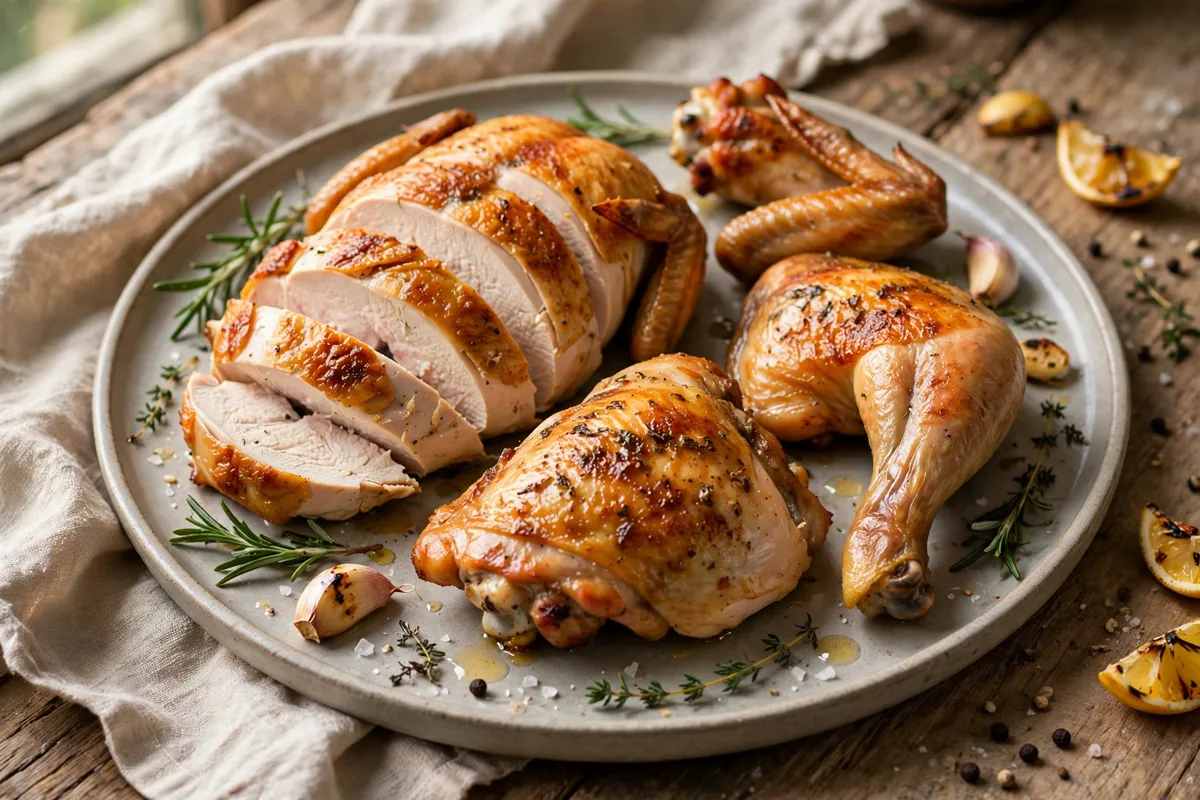
Chicken Protein Calculator: The Short Answer
The breast is the part of the chicken with the most protein — 31.02 grams per 100 grams, cooked, meat only (USDA FDC ID 171477) — ahead of the wing at 30.46g, whole meat-only chicken at 28.93g, the thigh at 24.76g, the drumstick at 24.24g and the whole leg at 24.22g per 100g. The ranking is per 100 grams, which is the only fair way to compare parts, and this article also shows the per-piece ranking, where portion size reshuffles the order.
The per-piece view matters because nobody eats 100 grams of wing meat the way they eat 100 grams of breast. A wing's edible meat-only portion is just 21 grams, so its excellent density still delivers only 6.4g protein per wing, while one skinless thigh at 116 grams delivers 28.7g despite its lower density. Density decides efficiency; portion decides dinner. Both rankings are priced below, and every part converts at any weight in the chicken protein calculator.
Short Answer
Per 100 grams, cooked and meat only: breast 31.02g protein (FDC 171477), wing 30.46g (172392), thigh 24.76g (172388), drumstick 24.24g (172376), leg 24.22g (172380). The breast wins on density and, at its 86g half-breast portion (26.7g protein), on the plate as well. The wing is the surprise runner-up on density and the weakest per piece, at 6.4g.
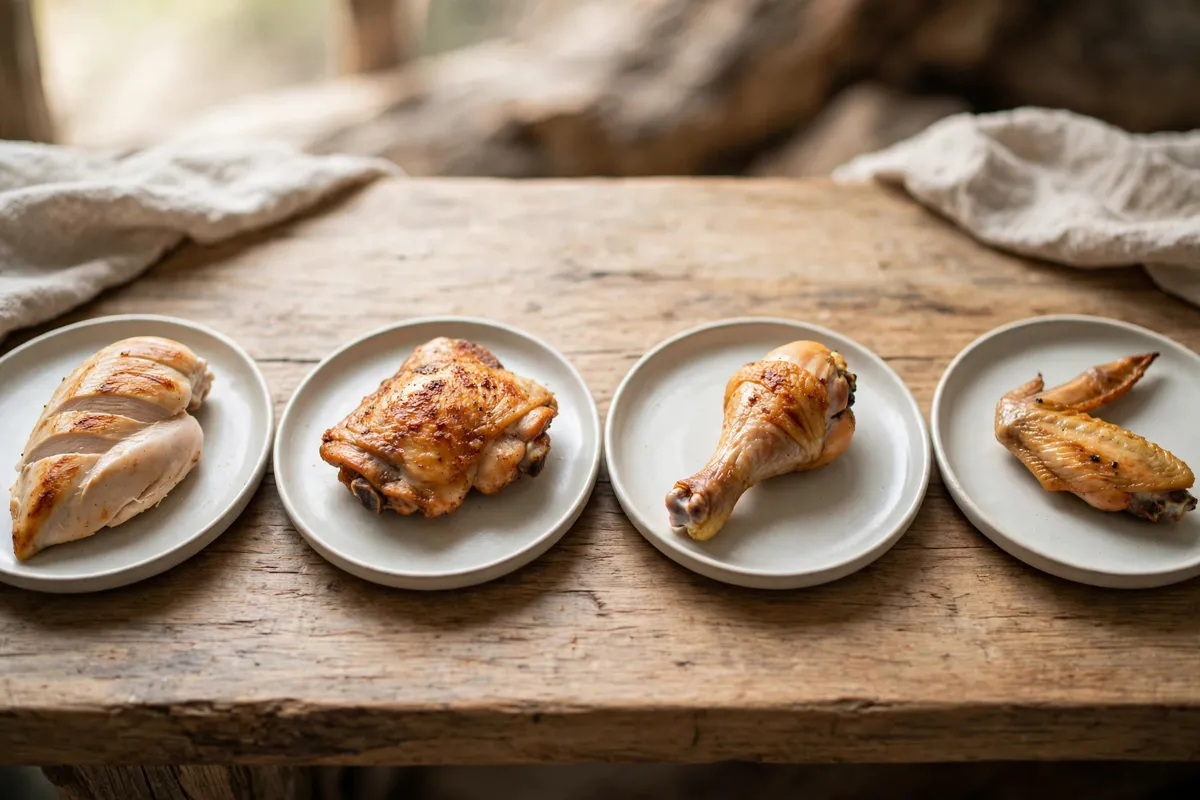
What Is the Full Per-100g Ranking?
Every entry is chicken, meat only, cooked roasted, from USDA FoodData Central. Breast (171477): 165 calories, 31.02g protein, 3.57g fat, 74mg sodium, 256mg potassium per 100g. Wing (172392): 203 calories, 30.46g protein, 8.13g fat, 92mg sodium, 210mg potassium. Thigh (172388): 179 calories, 24.76g protein, 8.15g fat, 106mg sodium, 269mg potassium. Drumstick (172376): 155 calories, 24.24g protein, 5.7g fat, 128mg sodium, 256mg potassium. Whole leg (172380): 174 calories, 24.22g protein, 7.8g fat, 99mg sodium, 269mg potassium. Whole chicken, meat only (171054), sits between wing and thigh at 190 calories and 28.93g protein per 100g — exactly what a blend of the parts should give.
Two patterns organise the table. First, the white-meat parts (breast, wing) cluster near 31g while the dark-meat parts (thigh, drumstick, leg) cluster near 24g: a gap of about 6 to 7 grams per 100g separates the two families, a finding does dark meat have less protein examines on its own. Second, density and leanness do not travel together inside the white family: the wing matches the breast's protein but carries more than double its fat (8.13g against 3.57g), so the breast's protein-per-calorie rate (about 18.8g per 100 calories) far exceeds the wing's (about 15.0g). The breast is not merely first — it is first on both axes at once.
How Does the Ranking Change Per Piece?
The USDA portion for each part, with protein derived from its per-100g rate:
Per piece, the thigh quietly beats the half breast (28.7g against 26.7g) simply by weighing 30 grams more — while costing 65.7 more calories for those extra 2 grams of protein. Wings invert the lesson: five wings' worth of meat (105g) would derive to about 32.0g protein, rivalling a breast portion, but five wings arrive with their bones, their skin decisions and about 213 calories at meat-only values. Portion arithmetic like this is the daily work of the chicken protein calculator, and how much protein is in chicken thigh vs chicken breast prices the two most-eaten parts against each other in full.
- Half breast, bone and skin removed, 86g: 141.9 calories, 26.7g protein — the largest standard piece protein of any single part
- One thigh without skin, 116g: 207.6 calories, 28.7g protein — actually the per-piece leader, because the portion is bigger
- One whole leg (drumstick plus thigh plus back), 199g: 346.3 calories, 48.2g protein — a meal in itself, but a composite piece, not a single cut
- One drumstick without skin, 96g: 148.8 calories, 23.3g protein
- One wing, bone and skin removed, 21g: 42.6 calories, 6.4g protein — excellent density, tiny delivery
Why Does the Breast Carry the Most Protein?
Because breast meat is the leanest muscle on the bird, and in a fixed 100 grams, whatever is not fat or water is mostly protein. The breast's 3.57g fat per 100g leaves more of the weight for protein than the thigh's 8.15g or the wing's 8.13g do. Dark meat's fat is not filler — it carries the flavour and moisture that make thighs forgiving to cook — but arithmetically it displaces protein gram for gram, which is the whole mechanism behind the ranking. The drumstick adds a second effect: at 5.7g fat it is the leanest dark part, yet its protein (24.24g) still sits with the dark cluster, showing that muscle type, not fat alone, sets the ceiling. That comparison is ranked in chicken or steak for protein.
Skin, where it is eaten, blurs every figure in this article in the same direction. All entries here are meat only. Whole chicken roasted with skin (FDC 171450) runs 239 calories and 27.3g protein per 100g against the meat-only whole bird's 190 calories and 28.93g — the skin adds fat faster than protein and pulls density down. A skin-on thigh or wing slides similarly. The ranking among parts survives the skin adjustment; the gaps narrow.
Which Part Should You Choose for a Protein Goal?
For maximum protein per calorie and per 100 grams, the breast, unambiguously: 31.02g density, 141.9 calories for a 26.7g half-breast portion. For maximum protein per piece at a relaxed calorie budget, the skinless thigh's 28.7g at 207.6 calories is a legitimate rival, and its flavour keeps a high-protein week sustainable in a way breast-only eating often does not. For gatherings and slow cooking, the whole leg's 48.2g per piece covers a full meal target in one portion at 346.3 calories.
The blended answer most kitchens land on is a whole bird used across days: breast portions for the strictest meals, thighs and drumsticks for the flavour-led ones, wings as the small-protein extra they are. The bird-level totals for that strategy are priced in the whole-chicken articles in this series, and the part-level message stays constant — the breast leads on density, the thigh competes per piece, and no part is a poor protein food.
How Does a Whole Bird Distribute Its Protein Across a Week?
A roasted bird eaten across several days is the ranking turned into a schedule. The breast portions come first in a protein-led week — 26.7g per half breast at 141.9 calories, the strictest numbers the bird offers — served on the days the target is tightest. The thighs follow at 28.7g per piece, anchoring the flavour-led meals where their 207.6 calories fit the day. Drumsticks (23.3g per piece) and the picked meat from the frame fill soups, salads and wraps at the whole-bird meat-only rate of 28.93g per 100g, a blended figure that exists precisely because picked meat mixes the parts this article ranks. Wings, at 6.4g each, are the snack and starter they portion like. Planned this way, no part is wasted and no day is mislogged: each meal prices at its own part's verified rate, and the bird's total protein is simply the sum of its ranked parts.
Common Mistakes to Avoid
- Comparing parts per piece when the question is density — a 21g wing and a 116g thigh cannot be ranked without the per-100g rate
- Quoting wing protein per 100g (30.46g) as what a wing delivers — one wing delivers 6.4g
- Using skin-on values and meat-only values in the same comparison — skin lowers every part's density
- Assuming dark meat is low-protein in absolute terms: a skinless thigh delivers 28.7g per piece, more than a half breast
- Forgetting the leg is a composite: its 199g portion includes drumstick, thigh and back, which is why its per-piece protein dwarfs single cuts
Final Thoughts
The breast has the most protein of any chicken part — 31.02g per 100g, with the wing a close second at 30.46g and the dark parts clustered near 24g. Per piece, a skinless thigh's larger portion edges the half breast, which is why both rankings belong in the answer. Pick the axis that matches your goal, weigh the portion, and convert any part at any weight in the chicken protein calculator.
People Also Ask
Does Chicken Contain Carbohydrates?
No — plain chicken contains no carbohydrates: the USDA entry for chicken breast, meat only, cooked roasted (FDC ID 171477), lists 0 grams of carbohydrate per 100 grams, and the thigh, drumstick, leg and wing entries all list 0g as well. Carbohydrates enter chicken dishes only through what is added to the bird — breading, batter, sugary glazes and sauces — never from the meat itself. This article shows the zero across every part, then prices the additions that change…
How Much Fiber Is in Chicken?
Chicken has 0 grams of fiber — the USDA entry for chicken breast, meat only, cooked roasted (FDC ID 171477), lists 0g fiber per 100 grams, and every other part entry logged here reads the same zero. Fiber is a plant structure, and no cut of chicken, prepared any plain way, contains it. This article explains why the zero is permanent, what it means for planning a day's fiber, and where the fiber in a chicken meal actually comes from.
What Is a Good Protein-to-Calorie Ratio?
A good protein-to-calorie ratio means getting at least 10g of protein per 100 calories — a 10:1 score, as in chicken breast at about 31g protein per 165 calories. Foods above that line deliver protein efficiently; foods far below it spend most of their calories on carbs or fat.
How Many Calories Does One Gram of Protein Provide?
One gram of protein provides 4 calories. That is the Atwater factor used on every nutrition label: multiply a food's protein grams by 4 and you have the calories that protein contributes. A portion with 25 grams of protein, for example, gets 100 of its calories from protein, whatever else the food contains.