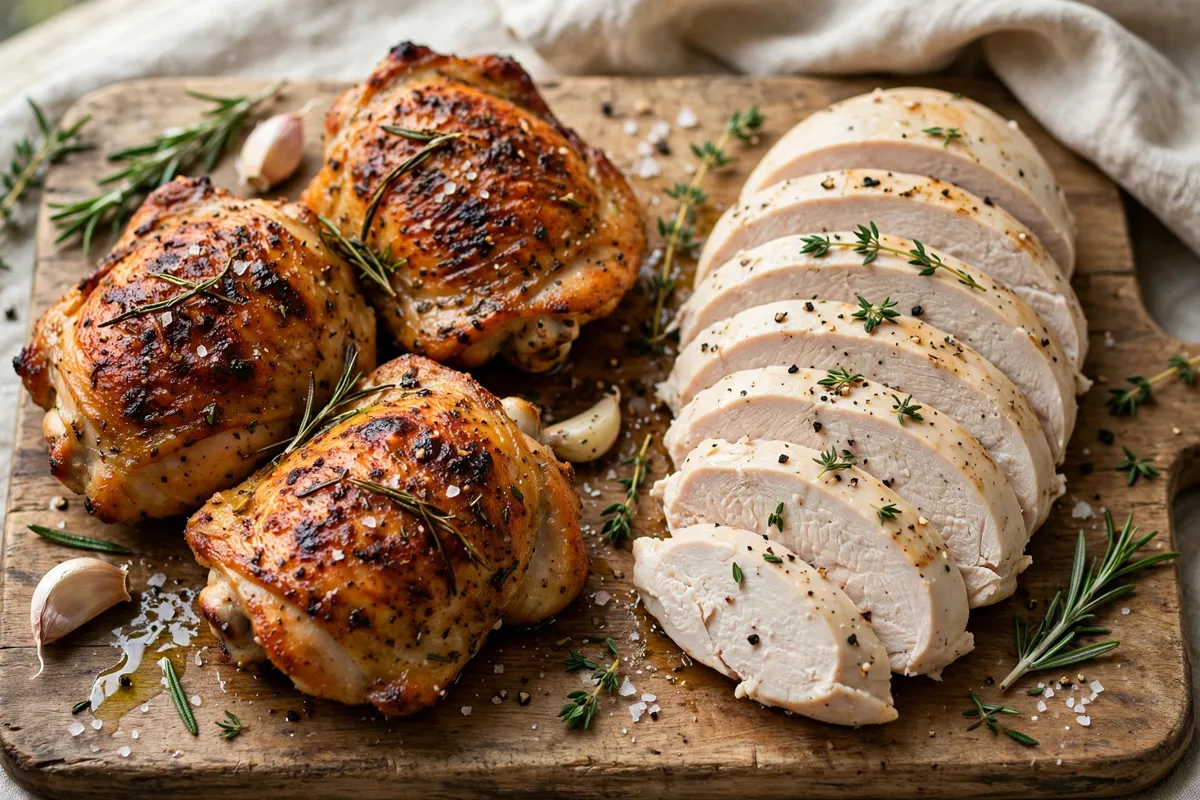
Chicken Protein Calculator: The Short Answer
Yes — chicken thighs are good for you on the logged numbers: a skinless roasted thigh (USDA FDC ID 172388) carries 24.76 grams of protein per 100 grams at 179 calories, with 8.15g fat and 0g carbohydrate, and one 116-gram thigh delivers 28.7g protein at 207.6 calories. Thighs trail the breast on protein density and calories, and this article shows exactly by how much — and what the thigh returns in flavour, moisture and potassium (269mg per 100g, above the breast's 256mg) for that difference.
The thigh's reputation suffers from being judged as a failed breast. It is a different cut with a different balance: more fat, slightly less protein, more forgiving cooking, and a richness that keeps people eating protein-rich home cooking week after week. A food that sustains a good pattern can be better for a person than a theoretically superior food they abandon. The numbers decide what the thigh is; the pattern decides what it does. Both cuts price at any weight in the chicken protein calculator.
Short Answer
Yes, on the data. Skinless thigh per 100g: 179 calories, 24.76g protein, 8.15g fat, 0g carbs, 0g fiber, 106mg sodium, 269mg potassium (FDC 172388). Against breast (165 calories, 31.02g protein, 3.57g fat), the thigh trades about 6.3g protein and 14 calories per 100g for more fat and flavour. One skinless thigh (116g): 207.6 calories, 28.7g protein — a complete meal anchor.
How Do Thighs Compare With Breast, Number for Number?
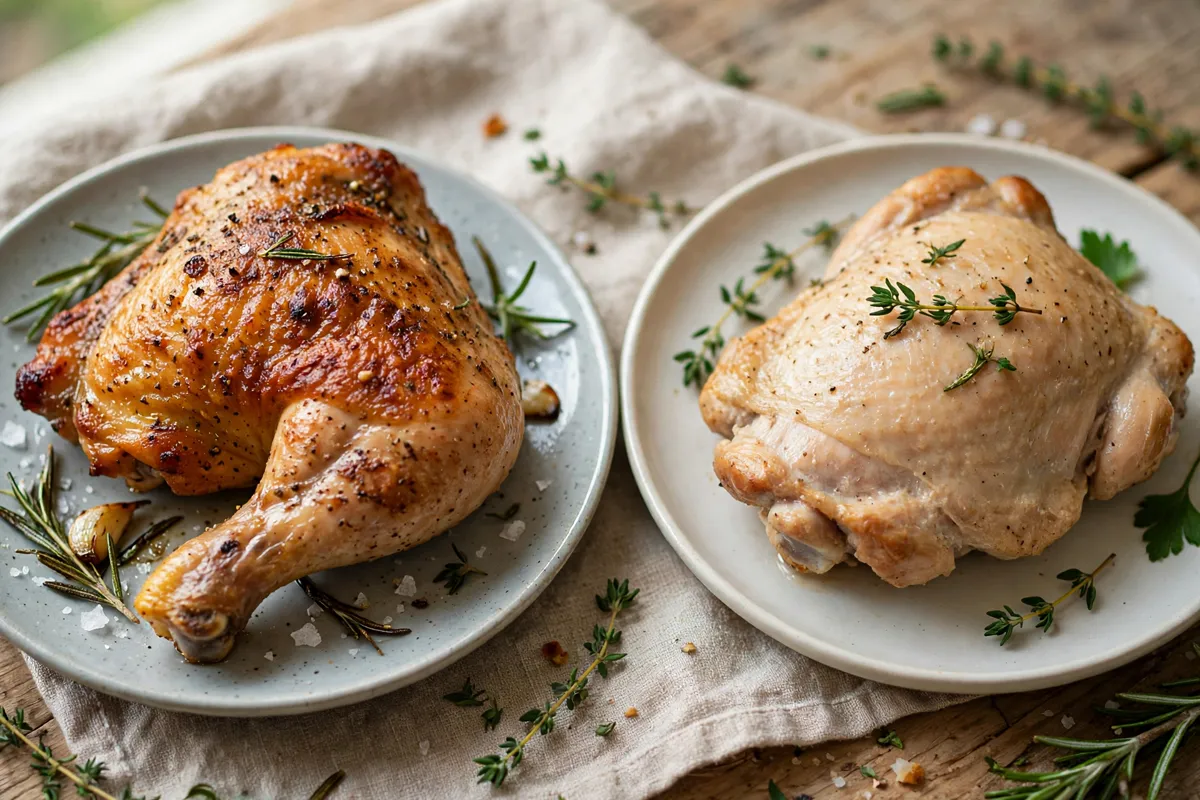
Per 100 grams, meat only, cooked roasted. Thigh (FDC 172388): 179 calories, 24.76g protein, 8.15g fat, 106mg sodium, 269mg potassium. Breast (FDC 171477): 165 calories, 31.02g protein, 3.57g fat, 74mg sodium, 256mg potassium. The gaps: protein −6.26g for the thigh, fat +4.58g, calories +14, sodium +32mg, potassium +13mg. Protein per calorie is the sharpest summary — the breast delivers about 18.8g protein per 100 calories, the thigh about 13.8g — because it prices the thigh's fat honestly: you pay roughly five protein grams per 100 calories for the thigh's richness.
Per piece, the comparison softens considerably. The standard skinless thigh portion (116g) derives to 207.6 calories and 28.7g protein; the standard half-breast portion (86g) derives to 141.9 calories and 26.7g protein. The thigh portion actually delivers 2 grams more protein — it is simply a bigger portion — at 65.7 more calories. A cook choosing between one of each is not choosing between a good and a bad food; they are choosing between two portion profiles that both clear a meal's protein bar. How much protein is in chicken thigh vs chicken breast prices this rivalry at every standard weight.
What Does the Thigh's Fat Actually Mean?
The thigh's 8.15g fat per 100g is the entire basis of the case against it, so it deserves proportion. At the 116-gram portion, that fat derives to about 9.5 grams — roughly 85 calories of the portion's 207.6. In a 2,000-calorie day, one thigh's fat is a modest line item, and it buys concrete things: moisture that survives reheating, flavour that needs no sauce to be satisfying, and a texture that tolerates the cooking range of real kitchens. Breast meat's leanness (3.57g per 100g) is a genuine advantage for strict calorie budgets, and a genuine liability for dryness when overcooked — which is a leading reason home protein plans quietly collapse.
Skin is where the thigh's fat story can genuinely change. Every figure in this article is meat only, skin removed. Skin-on preparations shift the balance toward fat across the whole bird — whole chicken with skin runs 239 calories per 100g against 190 meat-only — and a skin-on thigh priced at skinless values understates its calories. The good-for-you verdict belongs to the skinless (or skin-removed) thigh; eat the skin and the portion should be logged as a different, richer food. Does dark meat have less protein covers the wider dark-meat family the thigh belongs to.
Where Do Thighs Win Outright?
On potassium, narrowly: 269mg per 100g against the breast's 256mg — a small but real edge, shared with the leg (269mg). On satiety per portion, plausibly: a 207.6-calorie portion with 9.5g fat and 28.7g protein is a substantial plate centre that most eaters experience as a full meal, where an 86g breast portion at 141.9 calories can leave a large appetite looking for a second act — which then gets priced separately. On adherence, decisively for many households: thighs are the cut people willingly cook on a wet Tuesday in February, and a protein pattern eaten beats a perfect pattern abandoned.
Thighs also win the batch-cooking formats — braises, curries, tray bakes — where breast meat dries and thigh meat improves. A meal-prep week built on thighs holds its quality to day four in a way breast-based prep often does not, and food that gets eaten as planned is the only food whose numbers count. None of this overturns the breast's efficiency crown; it establishes that "good for you" has a behavioural column the nutrient table cannot print. The chicken protein calculator holds both cuts' entries so the choice can be priced rather than argued.
When Should You Choose Breast Instead?
When calories are the binding constraint of a strict deficit, the breast's numbers are simply better: 14 fewer calories per 100g, 6.26g more protein, and a protein-per-calorie rate about a third higher. When a very large protein target must fit a fixed plate — an athlete chasing 50 grams in one portion — breast reaches it at about 161 grams and roughly 266 calories, where thighs need about 202 grams (50 ÷ 0.2476 × 100) and roughly 362 calories. And when the rest of the plate is already rich — creamy sauces, cheese, oily grains — the lean cut keeps the meal's fat total where the plan put it.
The mature position the data supports is rotation, not allegiance. Breast for the strictest days and the biggest targets; thighs for flavour-led meals, batch cooking and the days when enjoyment is what keeps the pattern alive. Both are zero-carbohydrate, zero-fiber, low-sodium plain proteins; they differ by degrees inside one good category, not by kind.
How Do Thighs Perform in Meal Prep?
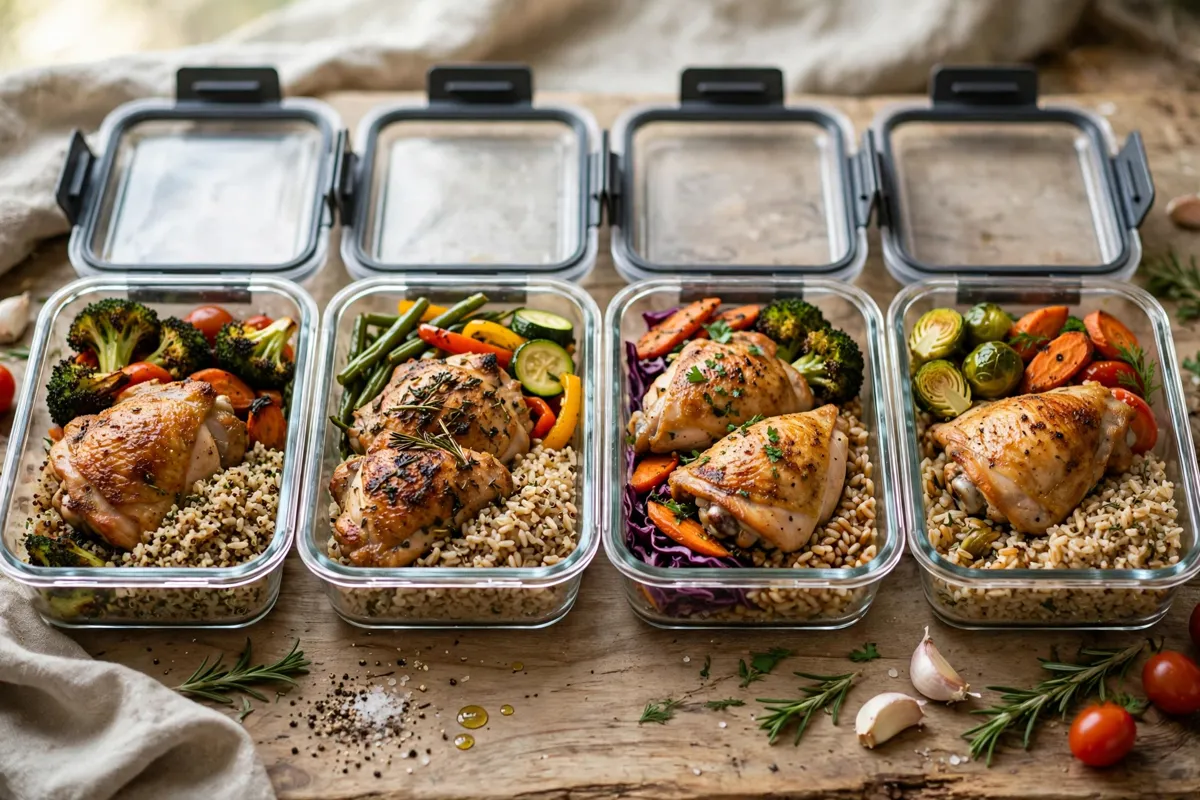
Meal prep is where the thigh's profile converts from acceptable to advantageous. A batch of six skinless thighs derives in total to about 1,245.6 calories and 172.2g protein (6 × 207.6 and 6 × 28.7) — six days of dinner anchors, or three days of pairs, at numbers that divide cleanly by the piece. Reheated on day three or four, thigh meat's 8.15g fat per 100g keeps it moist where reheated breast dries toward its 3.57g leanness, and food that survives the week palatably is food whose planned numbers actually happen. For prep-led eaters, that reliability is a nutritional property in its own right.
Common Mistakes to Avoid
- Judging the thigh by breast standards alone — it trades efficiency for flavour and moisture, a trade the numbers price but do not forbid
- Logging skin-on thighs at skinless values: every figure here is meat only, and skin moves calories sharply upward
- Comparing per 100g when the portions differ — one thigh (116g, 28.7g protein) out-delivers one half breast (86g, 26.7g) on protein per piece
- Treating 8.15g fat per 100g as a large number out of context — it is about 9.5g across a whole thigh portion
- Saucing thighs heavily and blaming the cut: the sauce is a separate food with its own line
Final Thoughts
Chicken thighs are good for you on the verified numbers: 24.76g protein per 100g, 28.7g in a skinless portion, zero carbohydrate, low sodium, and the bird's best potassium figure among the common cuts. They are less protein-efficient than breast — that is the whole of the case against them — and more sustainable on the plate, which is the case for them. Price either cut at any weight in the chicken protein calculator and rotate with intent.
People Also Ask
Is Baked Chicken Fattening?
No — baked chicken is not fattening on the verified numbers: plain baked chicken breast prices on USDA's roasted dry-heat entry (FDC ID 171477) at 165 calories per 100 grams with just 3. 57g fat, and a 4-ounce portion derives to 187. 1 calories with 35.
How Much Does an Average Chicken Breast Weigh?
An average chicken breast weighs 172 grams on the USDA's reference basis — the FoodData Central roasted breast entry (FDC ID 171477) sets one half breast, bone and skin removed, at 86 grams, so a whole breast portion is 172g (derived, 2 × 86g), deriving to 283. 8 calories and 53. 4g protein cooked.
Is Poke Healthy?
Yes — a well-built poke bowl is genuinely healthy, with 35 to 45 grams of protein, omega-3 fats from its fish, and a moderate calorie bill; a standard two-scoop bowl in this site's analysis delivers meal-grade protein at roughly 450 to 600 calories. Its weaknesses are specific rather than general: sodium that can reach about 1,100 milligrams in a shop bowl once marinades and soy-based sauces are counted, modest fibre at 3 to 6 grams, and a sauce line that…
Is a Lettuce-Wrapped Sandwich Healthier Than Bread?
It should be — removing the roll removes its calories and carbohydrates — but the Jersey Mike's data tracked on this site cannot prove it, because the data contains no lettuce-wrapped sandwich and no standalone bread or roll figure. Every tracked sub is a complete Regular on its standard bread, from 720 to 1,040 calories, and every tracked wrap is a tortilla wrap, from 610 to 880 calories. So the honest short answer is: a lettuce wrap is healthier in…