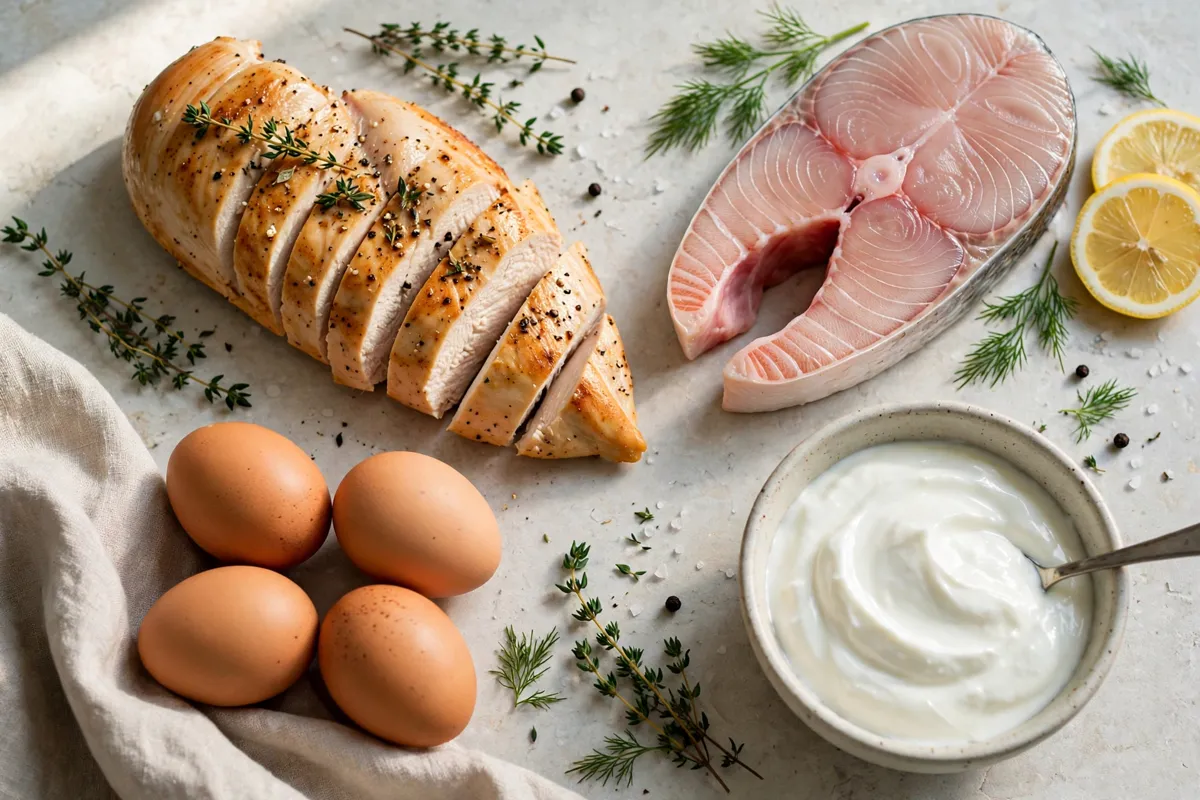
Macro Calculator: The Short Answer
A good protein-to-calorie ratio means getting at least 10g of protein per 100 calories — a 10:1 score, as in chicken breast at about 31g protein per 165 calories. Foods above that line deliver protein efficiently; foods far below it spend most of their calories on carbs or fat.
The ratio is a quick quality test you can run on any label in seconds: divide protein grams by calories and multiply by 100. It matters because most people have a fixed calorie budget and a protein target to reach inside it. If your target is 150g of protein on 2,000 calories, your whole day must average 7.5g per 100 calories — so every food far below that average has to be balanced by a food far above it. This article explains the scale, scores the common foods in this site's own database, shows how to use the ratio without letting it distort your diet, and covers the situations where a lower ratio is perfectly fine. The totals behind any full day can be checked in the macro calculator.
Short Answer
Aim for 10g of protein per 100 calories or better in your main protein foods. Cooked chicken breast scores about 19g per 100 calories (31g per 165 kcal), canned tuna about 22g (26g per 116 kcal) and plain non-fat Greek yogurt about 17g (17g per 100 kcal). A whole day averaging 7–8g per 100 calories reaches 140–160g protein on 2,000 calories.
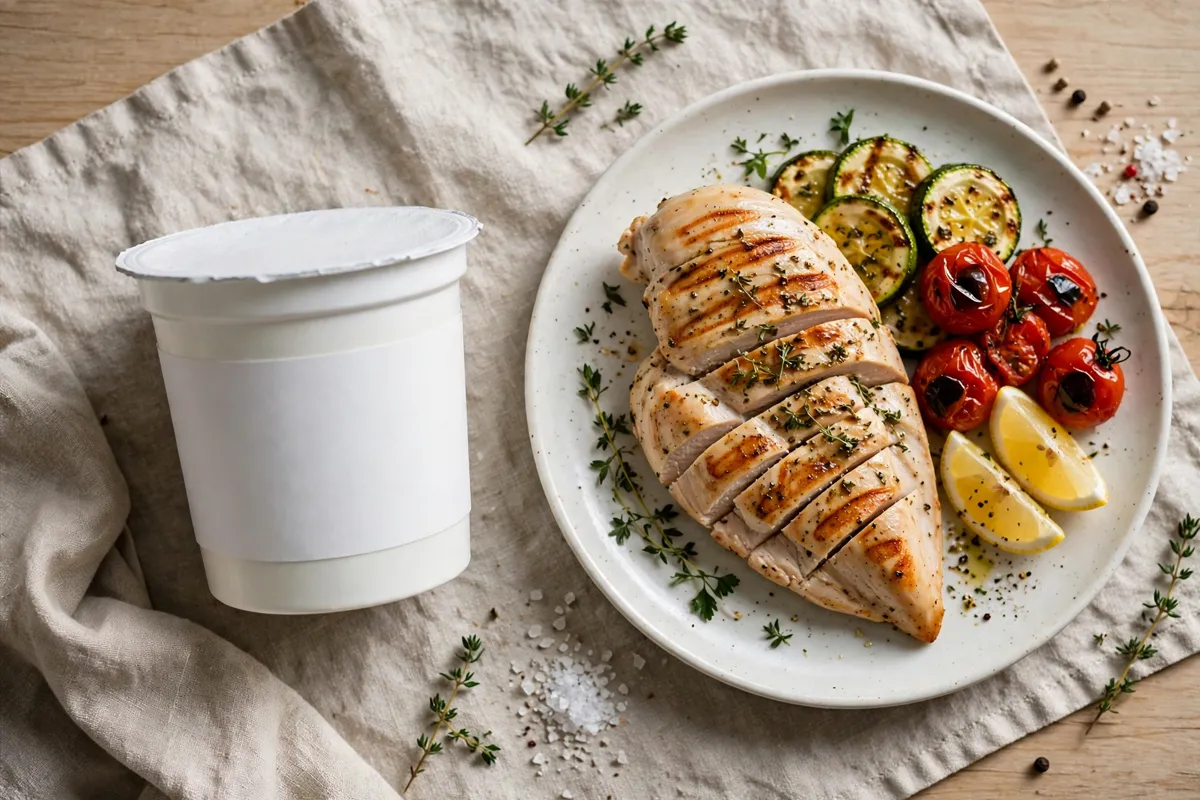
How Do You Calculate a Protein-to-Calorie Ratio From a Label?
Take the protein grams, divide by the calories, multiply by 100. A food with 20g protein and 250 calories scores 8g per 100 calories. A food with 20g protein and 150 calories scores about 13. The same figure is sometimes expressed as the percentage of calories coming from protein: multiply protein grams by 4 (protein provides 4 calories per gram) and divide by total calories. Chicken breast: 31 × 4 = 124 of its 165 calories from protein, about 75%. Tuna in water: 26 × 4 = 104 of 116, about 90%. The two methods rank foods identically; grams per 100 calories is simply easier to do mentally while shopping. Practice on the foods compared in calculating total calories from macronutrients and the test becomes automatic.
Which Common Foods Score Highest — and Which Score Lowest?
From this site's food database, per standard servings: canned tuna in water leads at about 22g protein per 100 calories (26g protein, 116 kcal per 100g). Cooked chicken breast follows at about 19 (31g, 165 kcal per 100g). Firm tofu is respectable at about 11 (8g, 76 kcal per 100g), and salmon scores about 10 (20g, 208 kcal per 100g) — its healthy fats cost ratio points without making it a poor choice. A large egg scores about 8 (6g, 78 kcal). Whole milk scores about 5 (8g, 149 kcal per cup). At the bottom, almonds score under 4 (6g protein, 162 kcal per ounce) and peanut butter about 4 (4g, 95 kcal per tablespoon) — both nutritious, both fat-dense, neither a protein strategy. Cola scores zero: 140 calories and no protein at all. The full protein-per-calorie thinking is also behind the site's guide to macro ratios for weight loss, applied there to whole diets rather than single foods.
- Elite (15g+ per 100 kcal): tuna in water, chicken breast, non-fat Greek yogurt
- Good (10–14g): tofu, salmon, cottage cheese
- Moderate (6–9g): eggs, ground beef, milk-based foods
- Low (under 5g): nuts, nut butters, cheese — enjoy them, but not as protein sources
How Should You Use the Ratio Across a Whole Day?
Use it as a recruiting rule for your protein anchors, not as a law for every bite. If each meal is anchored by a food scoring 10 or better, and the rest of the plate is vegetables, grains and flavour, the day almost assembles itself: three anchors of roughly 30g protein each, plus the incidental protein in grains, dairy and vegetables, reaches most targets. The ratio also explains classic diet failures. Someone "eating high protein" via cheese (about 6g per 100 calories), nuts and protein bars (often 5–8 once sugar and fat are counted) can spend 1,200 calories and still be 60g short of target. Swapping just the anchors — tuna or chicken at lunch, yogurt at breakfast — fixes the day without changing its size. Checking a planned day takes a minute in the macro calculator.
When Is a Lower Ratio Actually Fine?
Often. The ratio measures one thing — protein efficiency — and food does more than deliver protein. Salmon's score of about 10 comes with fats that chicken lacks; olive oil scores zero and still belongs in a healthy kitchen; vegetables score oddly because their calories are so low that tiny protein amounts produce inflated ratios, and they earn their place through fibre and micronutrients instead. Fruit, grains and the occasional dessert are not failed protein foods; they are foods doing other jobs. The ratio should govern how you choose the protein-bearing centre of each meal, and stay silent about the rest of the plate. Diets built only from top-scoring foods become joyless and narrow very quickly, and narrow diets rarely survive contact with real life — a caution the macro deep dive guide develops from the numbers side.
Two worked shopping comparisons show the ratio doing its job. First, breakfast proteins: two large eggs give about 12g of protein for 156 calories — a ratio near 8 — while a 170g tub of plain non-fat Greek yogurt gives about 17g for 100 calories, a ratio of 17; swapping the anchor more than doubles the protein efficiency of the meal before anything else changes. Second, sandwich fillings: cheddar at about 7g of protein for 113 calories per ounce scores near 6, while the same weight of canned tuna scores near 22 — so a tuna sandwich and a cheese sandwich of equal size can differ by 15g of protein at similar calories. Keep a short mental list of your own five highest-ratio staples and build weekday meals around them; the ratio then works silently, without daily arithmetic, because the ingredients were chosen once, well.
The ratio also explains a puzzle many trackers meet: eating 'a lot of protein foods' yet missing the target. Protein foods is a category, not a guarantee — nuts, cheese, fatty meats and many protein-branded snacks sit inside it at ratios of 4 to 8, while the category's leaders sit at 17 to 22. A day assembled from the middle of the category needs either very large portions or very few other calories to reach a high target, and it usually achieves neither. The fix is rarely to eat more; it is to recruit two or three genuinely high-ratio anchors and let the mid-ratio foods return to their proper job of making meals enjoyable.
Common Mistakes to Avoid
Mistake one is judging a food's health entirely by this ratio — it says nothing about fibre, sodium, micronutrients or processing. Mistake two is using the ratio per 100g for some foods and per serving for others; servings differ, so pick grams per 100 calories and apply it consistently from label figures for the amount you will actually eat. Mistake three is chasing ratio with protein supplements while ignoring that whole foods scoring 15+ exist in every supermarket. Mistake four is rejecting fatty fish and dairy outright for mid-range scores, losing nutrients the ratio does not measure. Mistake five is forgetting the day-level maths: a single low-ratio favourite is harmless if the day's average still lands at 7–8g per 100 calories — it is averages, not individual foods, that reach or miss a protein target.
Final Thoughts
A good protein-to-calorie ratio is 10g of protein per 100 calories or better in the foods you rely on for protein — chicken breast, tuna and Greek yogurt clear it easily, while nuts, cheese and nut butters should be enjoyed as fat sources instead. Run the two-second division on labels for a week and your shopping retrains itself. Then check the whole day adds up in the macro calculator.
People Also Ask
Where Are Macronutrients Listed on a Nutrition Label?
Macronutrients are listed in the main body of the Nutrition Facts label: total fat near the top under total calories, then total carbohydrate — with fibre and sugars indented beneath it — and protein directly below carbohydrate. All three are given in grams per serving, with a % Daily Value column on the right.
What Are Monounsaturated Fats?
Monounsaturated fats are fats built from fatty acids that contain exactly one double bond in their carbon chain — the "mono" in their name — and they are the dominant fat in olive oil, avocados, and most nuts and seeds. Like every fat they provide 9 calories per gram, and olive oil is about 73 percent monounsaturated by USDA data, which is why it serves as the standard example of this fat family.
How Much Protein Is in a Chicken Quesadilla?
The Chicken Quesadilla at Taco Bell has 27 grams of protein — the highest protein count of any single item in the Taco Bell data tracked on this site. It also costs 520 calories to get it, with 41 grams of carbohydrates, 27 grams of fat, 3 grams of fiber, 3 grams of sugar, and 1,250 milligrams of sodium, so the full answer is two numbers at once: 27 grams of protein, at 520 calories. Whether that is a good…
How Much Protein Is in an Original Double Steakburger?
The Original Double Steakburger has 48g of protein — the most of any item at Freddy's Frozen Custard & Steakburgers — for 670 calories, with 33g of carbs and 38g of fat. For most adults that is roughly a third to a half of a day's protein in one menu item.