Chicken Protein Calculator: The Short Answer
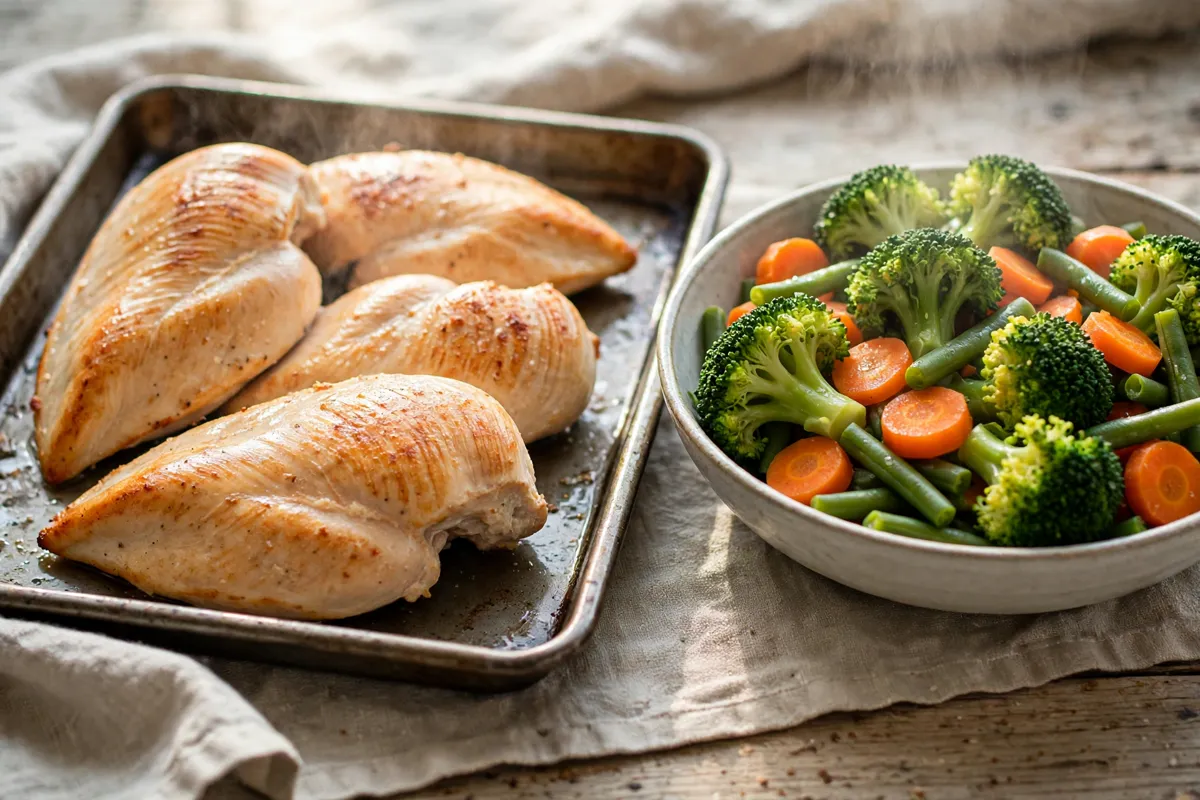
No — baked chicken is not fattening on the verified numbers: plain baked chicken breast prices on USDA's roasted dry-heat entry (FDC ID 171477) at 165 calories per 100 grams with just 3.57g fat, and a 4-ounce portion derives to 187.1 calories with 35.2g protein. "Fattening" describes a calorie surplus over days, not a lean protein at 165 calories per 100g, and this article shows the full arithmetic — plus the additions (skin, oil, breading) that can turn the same chicken into a genuinely rich dish.
A note on the entry itself keeps the pricing honest: FoodData Central publishes no separate "baked" breast entry. Its dry-heat reference is the roasted entry, and baking, roasting and grilling to the same doneness are priced on it throughout this site — the stewed entry covers moist heat, the fried entry covers the pan. What changes a baked chicken's calories is never the oven; it is what goes into the dish with the bird. Portions at any weight convert in the chicken protein calculator.
Short Answer
No. Plain baked (roasted-entry) chicken breast: 165 calories, 31.02g protein, 3.57g fat, 0g carbohydrate per 100g (FDC 171477). Four ounces derive to 187.1 calories; a whole 172g reference breast to 283.8 calories. That is one of the leanest protein profiles in the dataset — the opposite end of the field from genuinely fattening foods. Skin (197 calories per 100g) and breading are what move it.
What Does "Fattening" Actually Mean in Numbers?
A food earns the label in practice by packing many calories into portions people eat without noticing — high calorie density plus low satiety. Baked chicken breast fails both tests in the eater's favour. Its density is 165 calories per 100g, low for a protein food (sirloin steak runs 183, whole chicken with skin 239, cheddar 403 per 100g in the logged entries), and its satiety is carried by 31.02g protein per 100g, the highest density of any plain meat here. A 4-ounce portion at 187.1 calories occupies about 9% of a 2,000-calorie day while covering a full meal's protein target of 30 to 40 grams — the profile diet plans are built around, not warned against.
Weight gain is a surplus phenomenon: it happens when total intake exceeds total expenditure across days, whatever the foods. Inside any sane budget, a food delivering 35.2g protein for 187.1 calories makes the budget easier to keep, because protein-rich meals are the ones that leave people satisfied until the next meal. The chicken is not merely "not fattening" in the neutral sense; at these numbers it is one of the standard tools against the surplus. How many calories are in a baked chicken breast prices the baked portion ladder in full for readers planning around it.
How Do Skin, Oil and Breading Change the Dish?
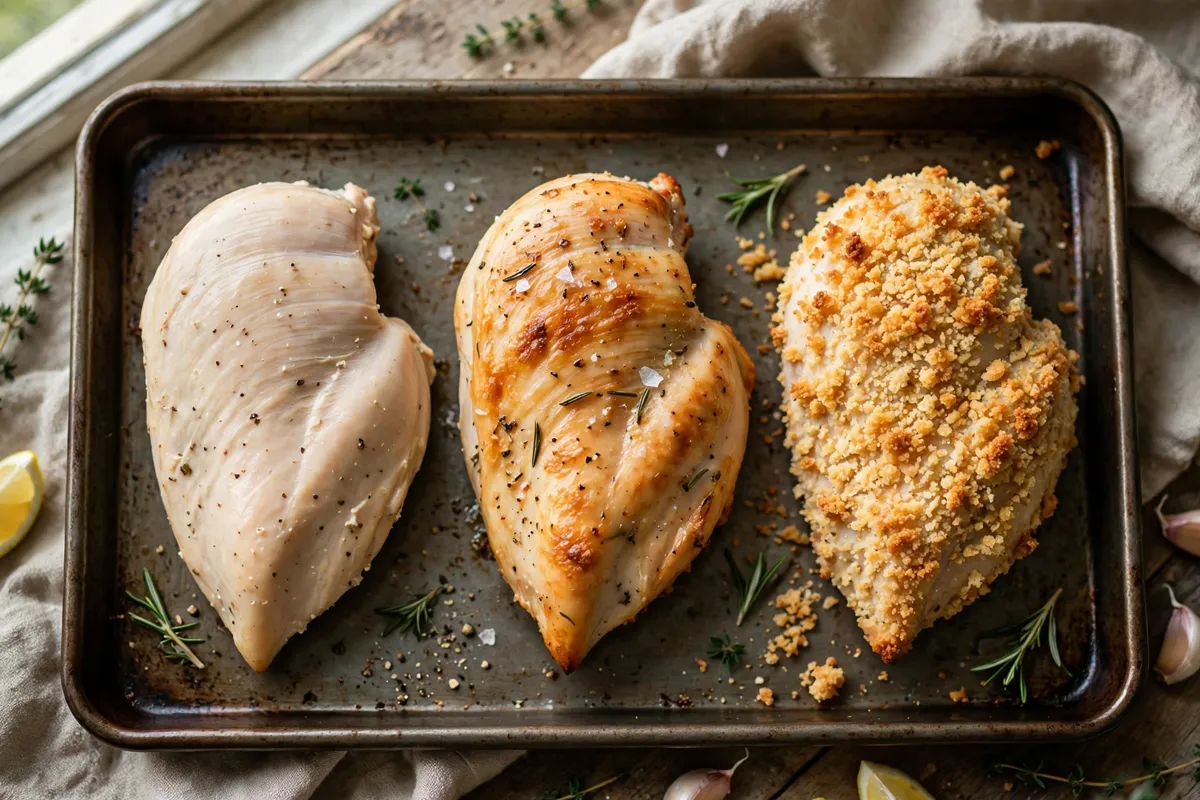
Three additions move baked chicken toward genuinely rich territory, each priced separately. Skin: breast roasted with skin (FDC 171075) runs 197 calories, 29.8g protein and 7.78g fat per 100g — the skin more than doubles the fat and adds about 32 calories per 100g, so a 4-ounce skin-on portion derives to about 223.4 calories. Breading: a coated product is a different food whose flour layer adds carbohydrate (plain chicken has 0g) and absorbs fat in cooking; it prices from its own entry or label, never from 165. Oil: fat used generously in the roasting dish is an ingredient with its own calories, and it clings to the portion in proportion to how generously it was poured.
Fried chicken meat without breading (FDC 171078) shows the pan's own effect cleanly: 187 calories per 100g — 22 above the roasted entry, from fat taken up in frying, with protein actually rising slightly to 33.44g as water leaves. Even that figure is not "fattening" territory; it is the breaded, skin-on, oil-heavy end of the chicken family, assembled from all three additions at once, that earns the description — and each addition was a choice priced separately, not a property of baked chicken. Does cooking method change chicken protein separates the method effects from the addition effects across the whole family.
How Does Baked Chicken Compare With Other Dinner Proteins?
Per 100 grams cooked, from the logged entries: cod 105 calories, turkey breast 147, chicken breast 165, sirloin 183, ground beef crumbles (90% lean) 230, salmon 182 with 25.44g protein, whole chicken with skin 239. Baked chicken breast sits in the lean third of the dinner field while leading it on protein — a combination only turkey breast rivals, at 147 calories and 30.13g protein per 100g. Per calorie of protein delivered, chicken breast gives about 18.8g protein per 100 calories; ground beef gives about 12.4g; the thigh gives about 13.8g.
Portion realism completes the picture. Dinners are eaten at 4 to 6 ounces of meat, where baked breast derives to 187.1 to 280.7 calories — leaving most of a meal's budget for the vegetables, grains and fats that make the plate a meal. A food that anchors dinner for under 300 calories at its largest common portion, while supplying 35 to 53 grams of protein, is structurally incapable of being the fattening part of a normal diet. The surplus, where one exists, lives in the extras, the portions beyond the plate, and the days around the dinner — all priced elsewhere in this series, including the deficit arithmetic in the chicken protein calculator portions themselves.
The same arithmetic, run as a weekly comparison, shows where the skin decision lands. A 4-ounce skinless portion at 187.1 calories against the same portion skin-on at about 223.4 is a difference of about 36 calories a day — trivial once, but about 254 calories across a week of chicken dinners (36.3 × 7), roughly a whole extra portion of the skinless breast. Habits, not single meals, are where "fattening" is decided, and this is the size of the habit the skin represents.
When Can Baked Chicken Still Overshoot a Budget?
Honestly: when the portion stops being a portion. A very large retail breast can weigh twice the 172g reference — an 8-ounce cooked breast derives to 374.2 calories — and two of them, eaten as "a chicken dinner" with rich sides, build a meal well past 1,000 calories in which the chicken is the largest single line. The chicken remains lean per 100g throughout; the budget failure is a quantity failure, and it is exactly the failure a kitchen scale prevents in one weighing. The second route is the company chicken keeps: creamy sauces, cheese blankets and oily grains can each add more calories than the chicken itself carries, and the log should charge them, not the bird.
Neither route rescues the word "fattening" for the food itself. Both describe eating patterns around a lean food — which is the correct level for the whole question. Foods are priced per 100g and per portion; patterns are judged across days. Baked chicken passes at both of its own levels.
Common Mistakes to Avoid
- Calling a 165-calorie-per-100g protein "fattening" while the meal's sauce, cheese and sides each out-calorie the chicken
- Logging skin-on baked chicken at skinless values: skin raises the entry to 197 calories and 7.78g fat per 100g
- Assuming "baked" on a menu means plain — baked dishes arrive oiled, stuffed and sauced, and the additions price separately
- Judging by one dinner instead of the week's surplus, which is where weight change actually happens
- Weighing raw and logging cooked values, overstating the portion by about a third either way the error runs
Final Thoughts
Baked chicken is not fattening: 165 calories and 3.57g fat per 100g, 187.1 calories for a 4-ounce portion with 35.2g protein, is the profile weight management is built on. Skin, breading, oil and sheer portion size can build a rich dish around it — price those honestly and the chicken itself stays what the data says it is. Any portion of it converts in the chicken protein calculator.
People Also Ask
How Much Does an Average Chicken Breast Weigh?
An average chicken breast weighs 172 grams on the USDA's reference basis — the FoodData Central roasted breast entry (FDC ID 171477) sets one half breast, bone and skin removed, at 86 grams, so a whole breast portion is 172g (derived, 2 × 86g), deriving to 283. 8 calories and 53. 4g protein cooked.
How Many Ounces of Chicken Make One Serving?
One serving of chicken is 3 to 4 ounces cooked — the standard guidance range, and the USDA's own reference portions land inside it: the half-breast portion is 86 grams, about 3 ounces, deriving to 141. 9 calories and 26. 7g protein (FDC ID 171477).
What Is the Difference Between TPN and PPN?
The difference is the vein — and everything follows from it. TPN, total parenteral nutrition, goes through a central line into a large vein, so it can be concentrated, complete, and used for weeks to months as a patient's sole nutrition. PPN, peripheral parenteral nutrition, uses a peripheral vein in the arm, which limits osmolarity to roughly 900 mOsm/L: formulas must be more dilute, volumes larger, and fat relied on for more of the calories, and it suits short-term support,…
What Is the Healthiest Poke Bowl to Order?
The healthiest poke bowl to order is a half-rice bowl with a plain tuna scoop, edamame, cucumber, seaweed salad and ponzu: half rice, half greens (130 calories) + ahi tuna (110) + edamame (60) + cucumber (8) + seaweed salad (25) + ponzu (15) = 348 calories, with 3 + 26 + 5 + 0 + 1 + 1 = 36 grams of protein. It keeps everything that makes poke worth eating — raw fish, real protein, fresh toppings —…