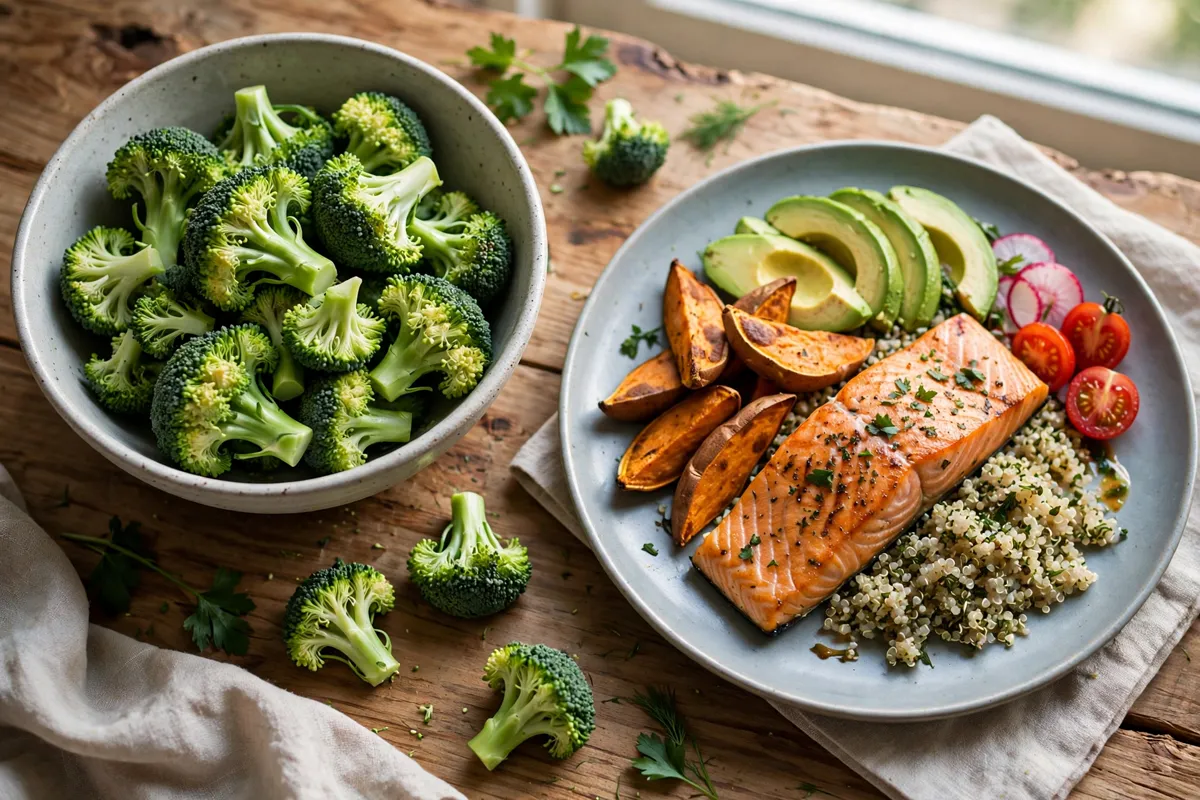
Calorie Counter: The Short Answer
A serving size of broccoli is one cup raw or half a cup cooked by the database's own portion — USDA lists half a cup of chopped cooked broccoli at 78 grams and a cup of chopped raw broccoli at 91 grams — and in MyPlate terms, one cup of raw or cooked broccoli counts as a full one-cup serving of vegetables. So the serving size of broccoli most people should picture is a cup of florets on the plate, whether it arrived there raw from a crudité tray or cooked down from a larger raw pile.
The confusion around this serving is not really about broccoli; it is about the word "serving" doing three jobs at once. There is the database portion USDA weighed, the cup-equivalent the dietary guidelines count, and the portion a person actually serves themselves at dinner — three different quantities that share one noun. This article separates them, gives each its verified weight, and shows how they reconcile, so the serving you log, the serving the guidelines intend and the serving on your plate stop contradicting each other. The calorie counter uses the same portions; this page explains them.
Short Answer
USDA's listed cooked portion is ½ cup chopped (78g, about 27 calories); its raw portion is 1 cup chopped (91g, about 31 calories). One cup of broccoli — raw or cooked — counts as a one-cup vegetable serving in MyPlate terms. A five-inch raw spear (31g) is roughly a third of a cup-equivalent.
What Portions Does USDA Actually List for Broccoli?
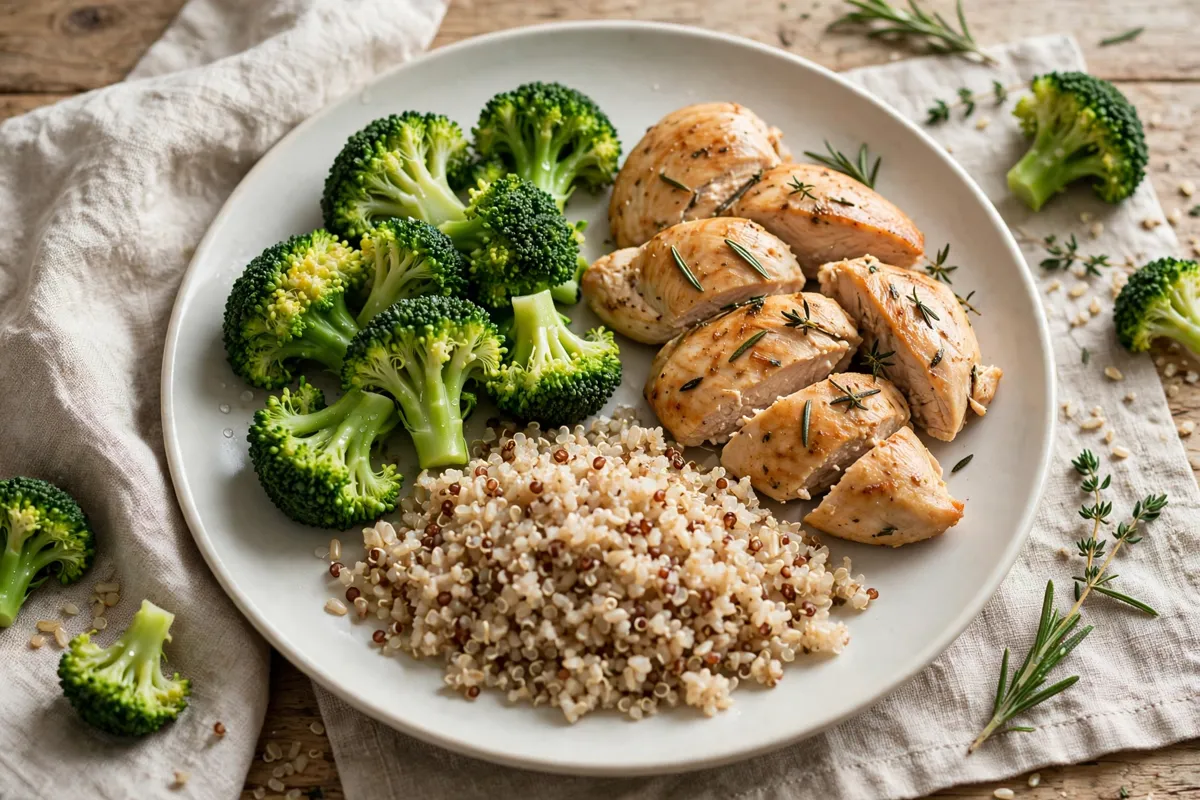
The portion tables of the two broccoli entries are the ground truth every other definition builds on. The cooked entry (FDC ID 169967, boiled and drained) lists one portion: half a cup, chopped, 78 grams. The raw entry (FDC ID 170379) lists three: a cup chopped at 91 grams, a spear of about five inches at 31 grams, and a stalk at 151 grams. Between those four anchors, nearly any real-world quantity of broccoli can be expressed in grams without guessing.
Read as servings, the anchors describe modest amounts. The cooked half cup at 78 grams delivers about 27 calories, 5.6 grams of carbohydrate and 2.6 grams of fibre. The raw cup at 91 grams delivers about 31 calories, 6.0 grams of carbohydrate and 2.4 grams of fibre. Neither is a large quantity of food — a dinner plate's worth of broccoli is typically two of these portions — and that is by design: database portions are measuring units, not recommendations about how much to eat. The full weight picture, including why the cooked cup doubles to 156 grams, is set out in how many grams of broccoli are in one cup.
Where labels are involved, a packaged frozen broccoli label declares its own serving — commonly around a cup — and that declared serving, not the database's, governs the label's numbers. The two systems agree closely because both trace back to the same reference amounts, but when you log from a package, log the package.
How Does a Serving of Broccoli Count in MyPlate Terms?
MyPlate counts vegetables in cup-equivalents, and broccoli is one of the straightforward cases: one cup of raw broccoli equals one cup-equivalent, and one cup of cooked broccoli also equals one cup-equivalent. The weight difference between those cups — 91 grams raw, 156 grams cooked — does not change the count, because the cup-equivalent is a volume standard for this vegetable, not a weight standard. The system is explained in the framework of what is the recommended serving size for each food group, and broccoli sits in the dark-green vegetable subgroup, the category the guidelines single out for a weekly share of the total vegetable amount.
Adults' daily vegetable targets in the guidelines run in the range of two to three cup-equivalents depending on calorie level, so one cup of broccoli — a generous side — covers roughly a third to a half of a day's vegetable goal in a single food, and it covers the dark-green subgroup contribution handsomely. A half-cup cooked portion, USDA's database serving, counts as half a cup-equivalent: a genuine contribution, but half of what most people picture when they hear "a serving of vegetables."
The planning view in how much of your plate should be fruits and vegetables puts this on the plate: vegetables fill a large share of the MyPlate icon, and broccoli is one of the easiest ways to fill it, because a cup is a satisfying physical amount of food for about 31 to 55 calories depending on preparation.
How Much Broccoli Do People Actually Serve Themselves?
More than the database portion, usually — and with broccoli, that is mostly fine. A typical home serving, the florets someone spoons beside a main course without measuring, lands around a cup cooked: 156 grams, about 55 calories, 5.1 grams of fibre. Restaurant sides run similar or larger. Against the database's 78-gram half cup, real servings are routinely double — the reverse of the usual portion problem, where real servings dwarf the label on energy-dense foods.
The arithmetic of the error explains why it matters so little here and so much elsewhere. Doubling a broccoli portion adds about 27 calories. Doubling a portion of a dense side adds hundreds. Broccoli's forgiveness is a property of its 35-calories-per-100-grams density, not of your estimating skill — which is why the weighing habit is best built on forgiving foods and then carried over to the unforgiving ones. The carb consequences of the two portion sizes are worked in how many carbs are in broccoli: 5.6 grams for the database half cup cooked, 11.2 for the real-world full cup.
For children, the database half cup is a realistic plate portion, and spears — 31 grams each, built by nature with a handle — are the practical unit: two spears are about 62 grams, a third of a cup-equivalent shy of the raw cup, and a sensible child's serving without a single measurement.
How Should You Measure a Serving Without a Scale?
Three reliable routes, in descending order of precision. First, the scale: weigh once in the state you eat — 78 grams cooked for the database serving, 91 grams raw for the cup — and note what that pile looks like in your usual bowl. Second, the cup: chopped florets, levelled, not heaped; a cooked cup is two database servings, a raw cup is one cup-equivalent. Third, the count: raw spears at about 31 grams each, so three spears approximate a raw cup, and a stalk at 151 grams chops down to roughly a cup and two-thirds raw.
Whichever route you choose, consistency beats precision: a serving definition you actually use every day outperforms a perfect one you abandon by Thursday. Log the meal as a whole in the calorie counter with your chosen portion, and broccoli will never be the line that breaks the budget.
- Database serving, cooked: ½ cup chopped, 78g, about 27 calories
- Database portion, raw: 1 cup chopped, 91g, about 31 calories
- MyPlate serving: 1 cup raw or cooked = 1 cup-equivalent of vegetables
- Typical adult plate serving: about 1 cup cooked, 156g, about 55 calories
- Spear unit: about 31g each; three spears ≈ one raw cup
Common Mistakes to Avoid
- Treating the database's 78g half cup as the recommended amount to eat — it is a measuring unit, not a prescription.
- Counting a cooked cup as half a vegetable serving; in MyPlate terms a full cup, raw or cooked, is a full cup-equivalent.
- Logging restaurant or home portions at the database weight when your actual pile is roughly double.
- Mixing states: weighing raw, logging cooked, or the reverse — the two entries differ in both weight per cup and profile per 100g.
- Assuming packaged frozen broccoli uses the database serving; its label declares its own, and the label governs its numbers.
Final Thoughts
A serving of broccoli is 78 grams cooked as the database measures it, 91 grams raw as a cup, and one full cup-equivalent in the guidelines' counting — three statements that only sound contradictory until the weights are attached. Know which serving a given number refers to, measure yours once, and broccoli becomes one of the simplest foods in your log: generous in volume, modest in calories, and honest in every system that counts it.
People Also Ask
Is Steamed Broccoli Good for You?
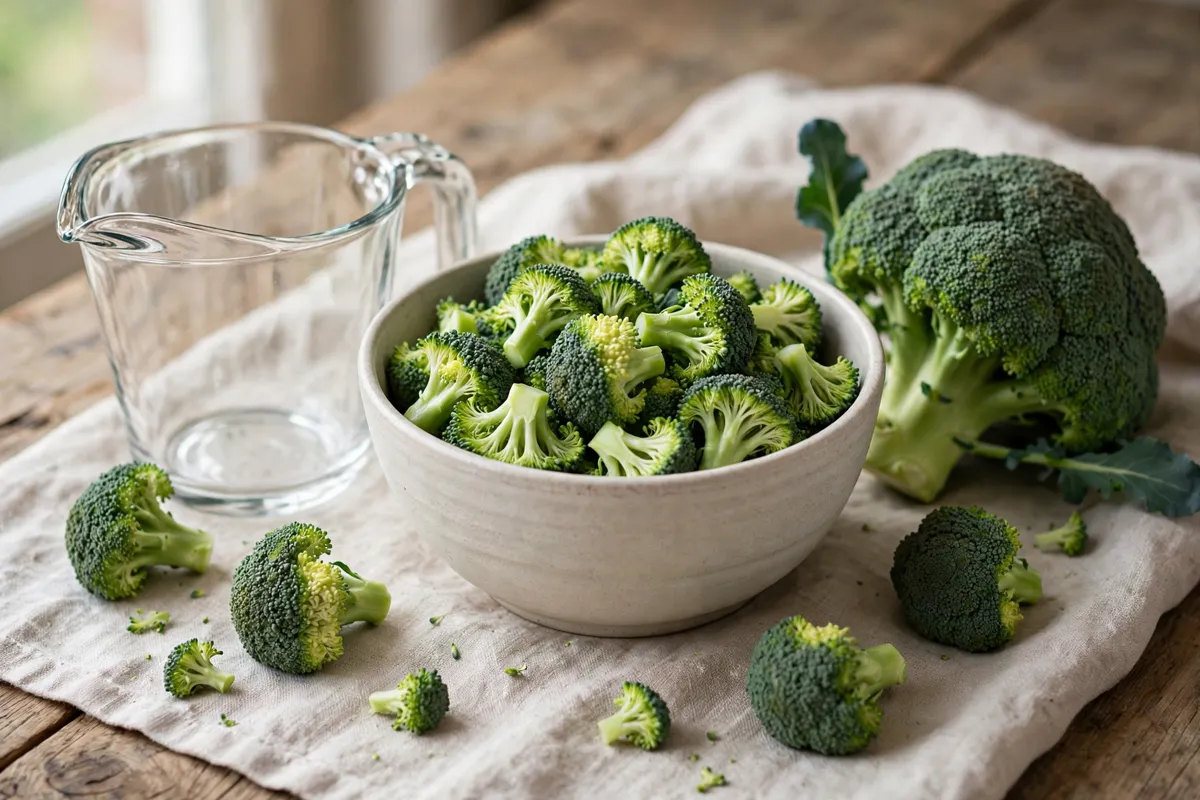
Yes — steamed broccoli is good for you, and the logged numbers show why: a full cup (156 grams) provides about 55 calories, 5. 1 grams of fibre, 3. 7 grams of protein and about 457 milligrams of potassium, with only about 64 milligrams of sodium when it is cooked without salt.
How Many Carrots Are in One Pound?
There are about 7 medium carrots in one pound. The arithmetic is USDA's: FoodData Central's raw carrot entry (FDC ID 170393) lists one medium carrot at 61 grams, and a pound is 453. 6 grams — so 453.
What Is the Healthiest Breakfast to Order?
On the IHOP menu tracked in this site's calculator, the strongest all-round breakfast order is the Spinach & Mushroom Omelette at 911 calories with 47 grams of protein, 22 grams of carbohydrates, 71 grams of fat and only 6 grams of sugar, paired with Seasonal Fresh Fruit at 60 calories — a combined 911 + 60 = 971 calories with 49 grams of protein and just 6 + 11 = 17 grams of sugar. If "healthiest" for you means fewest…
What Is the Healthiest Chicken Wing Flavor?
The healthiest chicken wing flavor at Wingstop is Plain. Classic Wings, Plain (5 pc) are 450 calories with 50 grams of protein, 0 grams of carbohydrates, 0 grams of sugar, 25 grams of fat, and just 150 milligrams of sodium — the lowest sodium figure of any wing flavor in the data by a very wide margin, tied for the lowest calories, and the only flavor with no carbs and no sugar at all. No other flavor matches that full…