Calorie Counter: The Short Answer
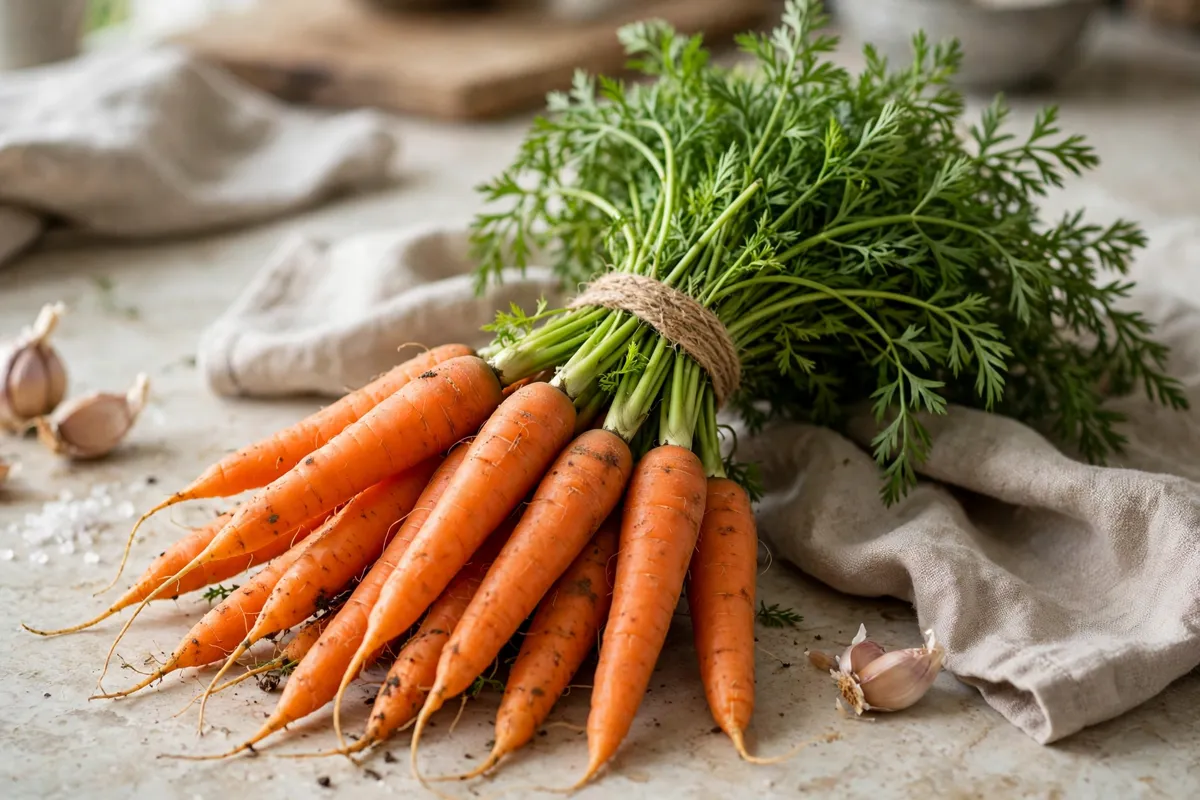
There are about 7 medium carrots in one pound. The arithmetic is USDA's: FoodData Central's raw carrot entry (FDC ID 170393) lists one medium carrot at 61 grams, and a pound is 453.6 grams — so 453.6 ÷ 61 = about 7.4, meaning roughly 7 medium carrots make one pound of carrots, or about 6 if your carrots are the large size the same entry lists at 72 grams.
This is a question that only exists because carrots refuse to be uniform. A pound is a weight; a carrot count is a guess layered on top of a weight, and the guess only holds if the size assumption holds. Bagged carrots at a supermarket are graded to be fairly consistent, which is why "about seven to the pound" works as shopping arithmetic — but a bunch of farmers-market carrots can run from thumb-thick to genuinely hefty in the same bundle. This article gives you the count for each USDA size, the weights behind them, and the situations where counting is fine versus where only the scale tells the truth. The calorie counter works in grams and calories; this page handles the counting.
Short Answer
About 7 medium carrots per pound (453.6g ÷ 61g per medium carrot ≈ 7.4). About 6 large carrots (72g each ≈ 6.3 per pound), and about 9 small carrots (50g each ≈ 9.1 per pound). Baby carrots run about 45 to the pound at 10g each.
What Weights Does USDA Assign to a Single Carrot?
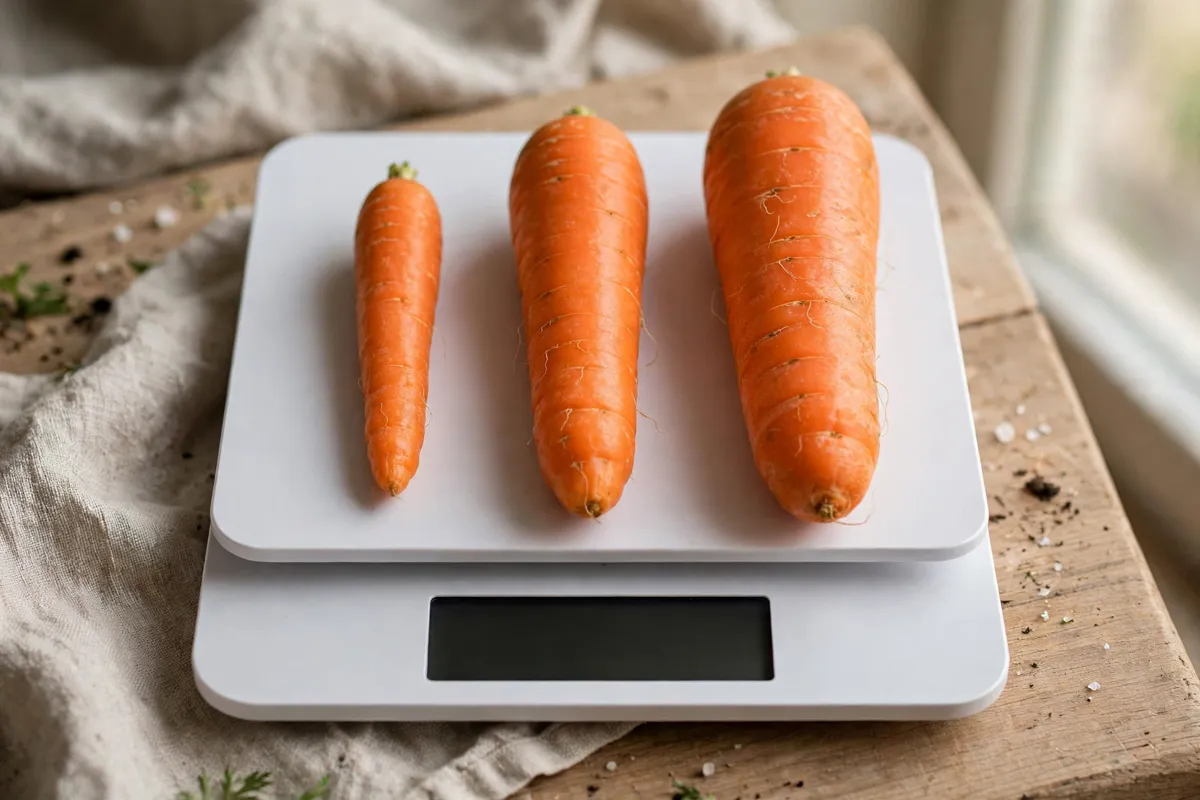
The raw entry's portion table is the whole foundation, and it lists four portions worth knowing. A medium carrot is 61 grams. A large carrot is 72 grams. A small carrot is 50 grams. And a cup of chopped carrots is 128 grams — a portion that matters when a recipe switches units mid-stream. Those are the weights of the whole, unpeeled-style reference carrot the database weighed, and at 41 calories per 100 grams, a medium carrot carries about 25 calories, a large about 29.5, and a small about 20.5.
Set beside each other, the sizes are closer than the names suggest. The gap between a "small" and a "large" carrot is 22 grams — about a third of a carrot — which is why counts per pound only swing between about 6 and about 9 across the whole retail range. Carrots are more standardised than, say, chicken breasts or onions, because grading machinery sorts them by diameter before bagging. The count question is therefore unusually answerable for a vegetable, as long as you know which size your bag holds — and most bags of whole carrots sit right at the medium grade the database leads with.
Baby carrots belong to a separate entry (FDC ID 168568) with their own portions: a medium baby carrot is 10 grams, a large one 15 grams. They are not small whole carrots but pieces cut from larger ones, and their per-pound count — around 45 — belongs to a different conversation, picked up in how many baby carrots are in 3 ounces.
How Do You Count Carrots for a Recipe That Says One Pound?
Read the recipe's intent before you reach for the bag. When a recipe says "one pound of carrots," it is asking for a weight, and the count is only your shopping method. Seven medium carrots gets you to about 427 grams — a touch under; eight gets you to 488 — a touch over. For soups, stews and roasts, either side of the line is invisible in the finished dish. For pickling, fermenting or any recipe where carrot is the structural main ingredient, weigh: produce scales exist in most supermarkets precisely because counts are approximations wearing a uniform.
When the recipe instead says "six carrots," the direction reverses: it wants a count, and the weight will land wherever the size puts it — six mediums are about 366 grams, six larges about 432. A recipe written by someone cooking with large carrots, followed by someone holding small ones, quietly loses a fifth of its carrot. That is rarely fatal, but it explains the occasional "this tasted thin" review.
The juicing and soup case deserves one extra line, because there the pound is often peeled weight in the writer's mind. Peeling and topping removes a modest share of each carrot; if your recipe's pound is post-prep, buy about eight mediums and trim down. The figures in how much does one carrot weigh break the single-carrot weights down further for exactly these conversions.
- Shopping for a pound: pick up 7 medium carrots (about 427g) or 6 large (about 432g)
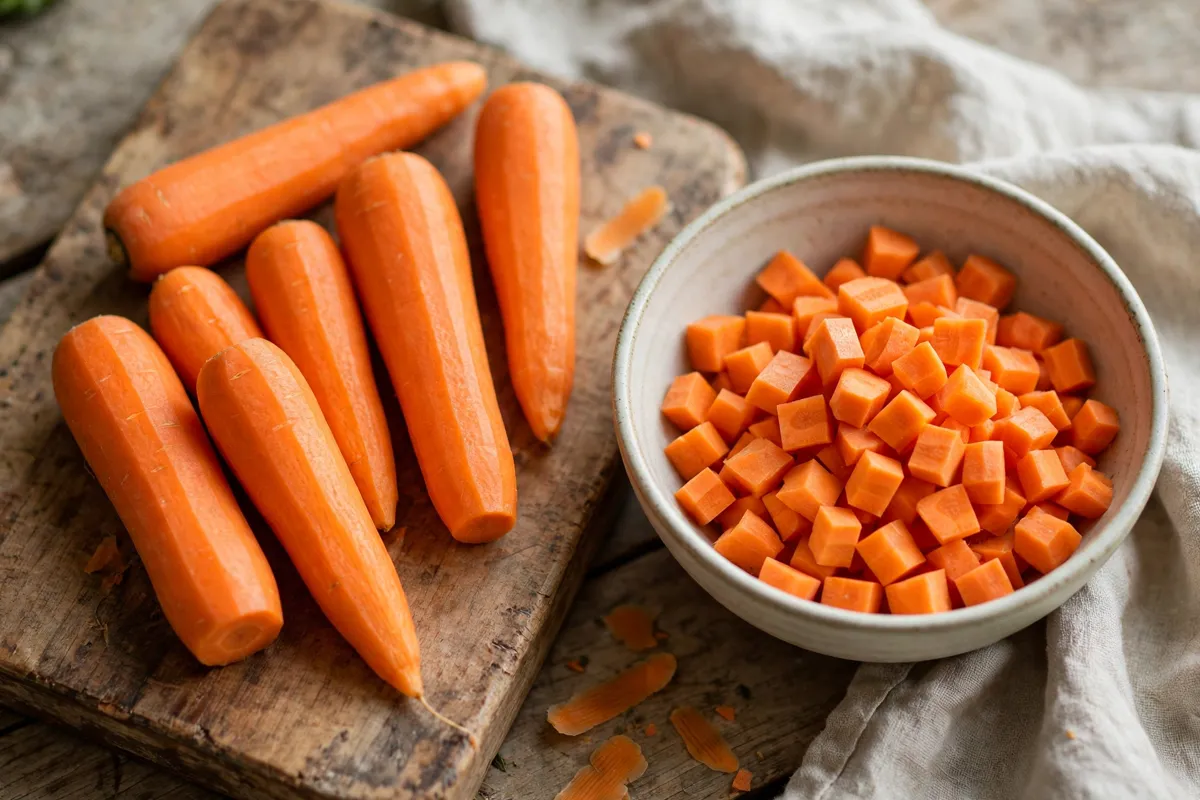
- A recipe's "1 lb carrots, chopped" becomes about 3½ cups chopped (a chopped cup is 128g)
- One pound of mediums yields about 7 × 25 = 175 calories of carrot, before anything is added to them
- A 2 lb bag of mediums holds roughly 14 to 15 carrots — the standard bag maths
Why Do Counts per Pound Vary Between Bags?
Grading, variety and water. Commercial carrots are sorted by diameter and length, but the grades are bands, not points: a "medium" bag can hold carrots from just above the small boundary to just below the large one, and a bag that happens to draw from the top of the band will hold six to the pound while its neighbour holds eight. Variety matters too — shorter, thicker varieties pack more grams per centimetre than long, tapered ones, so the same count weighs differently.
Water is the quiet variable. A carrot is mostly water, and a freshly harvested, well-stored carrot is denser with it than one that has sat in a dry cold-room losing moisture for weeks. Two carrots of identical dimensions can differ by several grams on water alone. None of this makes the count useless — it makes it a shopping estimate with an honest margin of about one carrot either way, which is all it was ever meant to be. Where the margin matters — calorie tracking of a carrot-heavy dish, a ferment where ratios drive safety and flavour — the scale replaces the count, and the dish's full profile can be built in the calorie counter from the weighed grams.
There is also the bunch question: carrots sold with tops carry the tops' weight in a by-the-pound price but not in your recipe. If you are buying bunched carrots by weight for a recipe that wants a pound of carrot, the tops come off before the count starts — weigh after trimming, or add an extra carrot to the bunch and stop worrying.
How Many Carrots Do You Need for Common Kitchen Jobs?
Translating the pound into the jobs people actually assign carrots to makes the count practical. For a family soup or stew, a pound — about seven mediums — is the standard unit most recipes are built around, chopped into roughly three and a half cups, and portion planning of this kind is systematised in how to calculate daily food portions using myplate. For roasting as a side for four people, a pound is again the working quantity: seven mediums halved lengthways cover a tray without crowding. For a week's snacking supply of sticks, a pound gives you roughly seven mediums' worth of sticks, at about 25 calories a carrot before the dip enters the story.
The pound also carries about 12.7 grams of fibre in total (2.8g per 100g across 453.6g), part of the vegetable's showing in how much fiber is in common fruits and vegetables. For carrot cake and baking, recipes usually specify cups of grated carrot rather than pounds; a cup of chopped carrot is 128 grams, and grated packs similarly by weight, so a pound yields about three and a half cups — measure the grated result rather than trusting the conversion, because grating style changes packing. For a single serving of salad or slaw, one or two mediums (61 to 122 grams) is the realistic range.
The pattern underneath all of these: the pound is the purchase unit, the cup is the recipe unit, the gram is the logging unit, and seven mediums is the bridge between the first and the other two. Keep the bridge in mind and you will never stand in a shop doing arithmetic on your phone again — save the phone for the calorie counter when the carrots meet the rest of the meal.
Common Mistakes to Avoid
- Treating "7 per pound" as exact; it is 453.6 ÷ 61 ≈ 7.4 for mediums, and the honest answer carries a margin of about one carrot.
- Counting large carrots at the medium rate — six larges make the pound, and seven larges overshoot it by about 50 grams.
- Weighing bunched carrots with tops on for a recipe that wants a pound of trimmed carrot.
- Confusing baby carrots with small carrots: baby carrots are a separate entry at 10g each, roughly 45 to the pound.
- Converting a pound to cups by guessing; a chopped cup is a listed 128g, so a pound is about 3½ cups chopped.
Final Thoughts
About seven medium carrots make a pound — 6 large or 9 small if your bag runs to those grades — because USDA weighs a medium carrot at 61 grams and a pound is 453.6. Use the count for shopping, where its small margin is invisible, and the scale for the rare jobs where the margin matters. It is a small piece of arithmetic that quietly organises a lot of recipes.
People Also Ask
How Many Carrots Are in One Cup?
One cup of chopped carrots contains about 2 medium carrots. The cup itself is a weighed portion in USDA FoodData Central's raw carrot entry (FDC ID 170393) — one cup, chopped, is 128 grams — and a medium carrot is 61 grams, so 128 ÷ 61 ≈ 2. 1: roughly two medium carrots, chopped, fill one cup of carrots, carrying about 52.
How Many Baby Carrots Are in 3 Ounces?
There are about 8 to 9 baby carrots in 3 ounces. The count comes from USDA FoodData Central's baby carrot entry (FDC ID 168568), which lists one medium baby carrot at 10 grams: 3 ounces is 85 grams, and 85 ÷ 10 = 8. 5, so 3 ounces of baby carrots is eight or nine pieces — a small handful — providing about 29.
How Much Caffeine Is in Energy Drinks?
This site's Dutch Bros calculator does not track caffeine for any drink — its data covers calories, protein, carbohydrates, fat, fiber, sugar and sodium for the Rebel energy line, and there is no caffeine figure for the Peach Rebel, the Aftershock, the Shark Attack, the blended Double Rainbro or the sugar-free Peach Rebel. So the honest short answer is: no caffeine number can be quoted from this host's data, for any energy drink on the menu, and this article will…
How to Calculate Macros for Muscle Gain?
To calculate macros for muscle gain, add a small surplus of 250–300 calories to your maintenance, set protein at 1. 6–2. 2 grams per kilogram of body weight, set fat at 0.