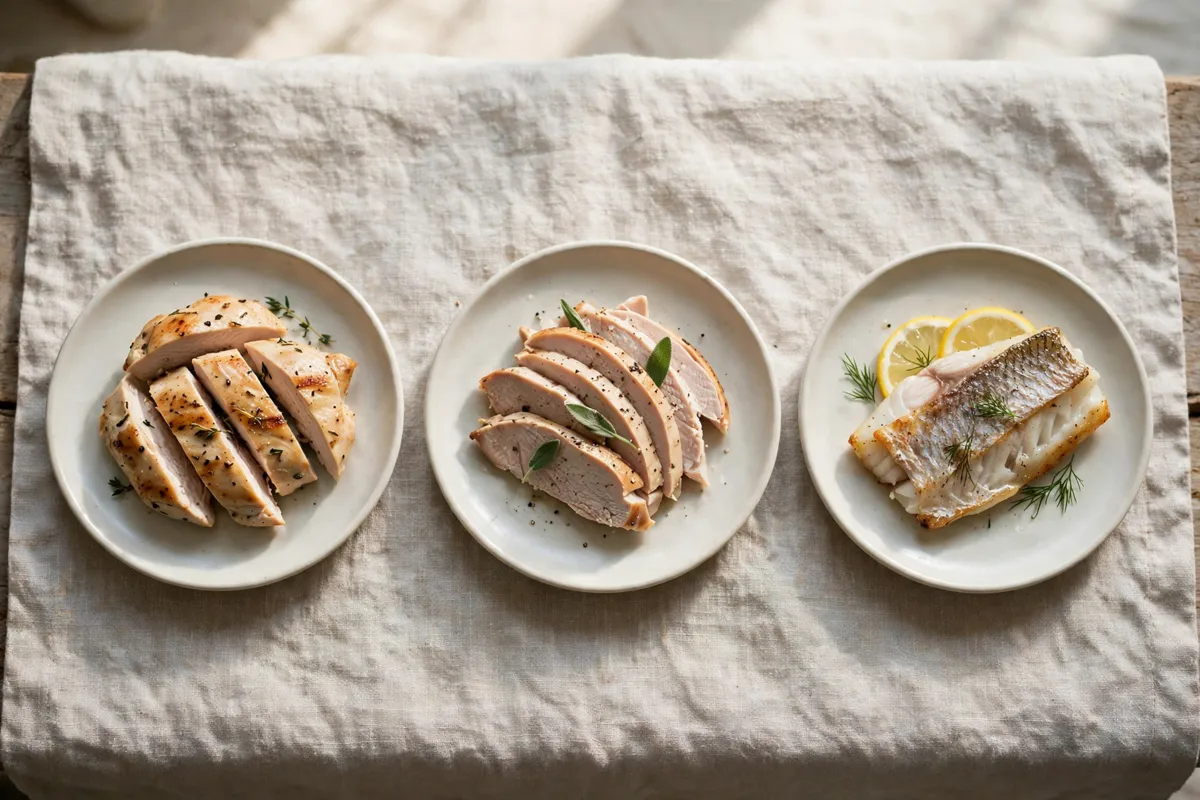
Calorie Counter: The Short Answer
Four ounces of meat looks like a smartphone — a cooked portion of 113.4 grams covering roughly a large phone's footprint, a little larger and thicker than a deck of playing cards, or the whole palm of an average hand including the base of the fingers. For chicken breast that portion derives to 187.1 calories and 35.2g protein (USDA FDC ID 171477); for sirloin steak, to 207.5 calories and 34.6g protein (FDC ID 168634). This article builds the visual across meats and prices what the portion delivers from each.
Four ounces is the working serving of modern meal plans — the size most protein targets are written around — so its visual is the most valuable one to own. It is also the portion where estimation errors cost the most, because 4 ounces misjudged by half is a 2-ounce error: 90-plus calories and 17 grams of protein in either direction. The comparisons below are the standard portion-guide anchors, each tied to the verified 113.4-gram weight. Any meat portion, once estimated or weighed, converts through the site's tools, starting with the calorie counter.
Short Answer
4 ounces of cooked meat is 113.4 grams — visually a smartphone-sized piece, a deck of cards scaled up by a third, or an average palm plus its base. Priced across meats: chicken breast 187.1 calories and 35.2g protein; turkey breast about 166.7 calories and 34.2g protein (derived from FDC 171496); sirloin 207.5 calories and 34.6g protein; 90% lean ground beef crumbles about 260.8 calories and 32.3g protein (derived from FDC 171794).
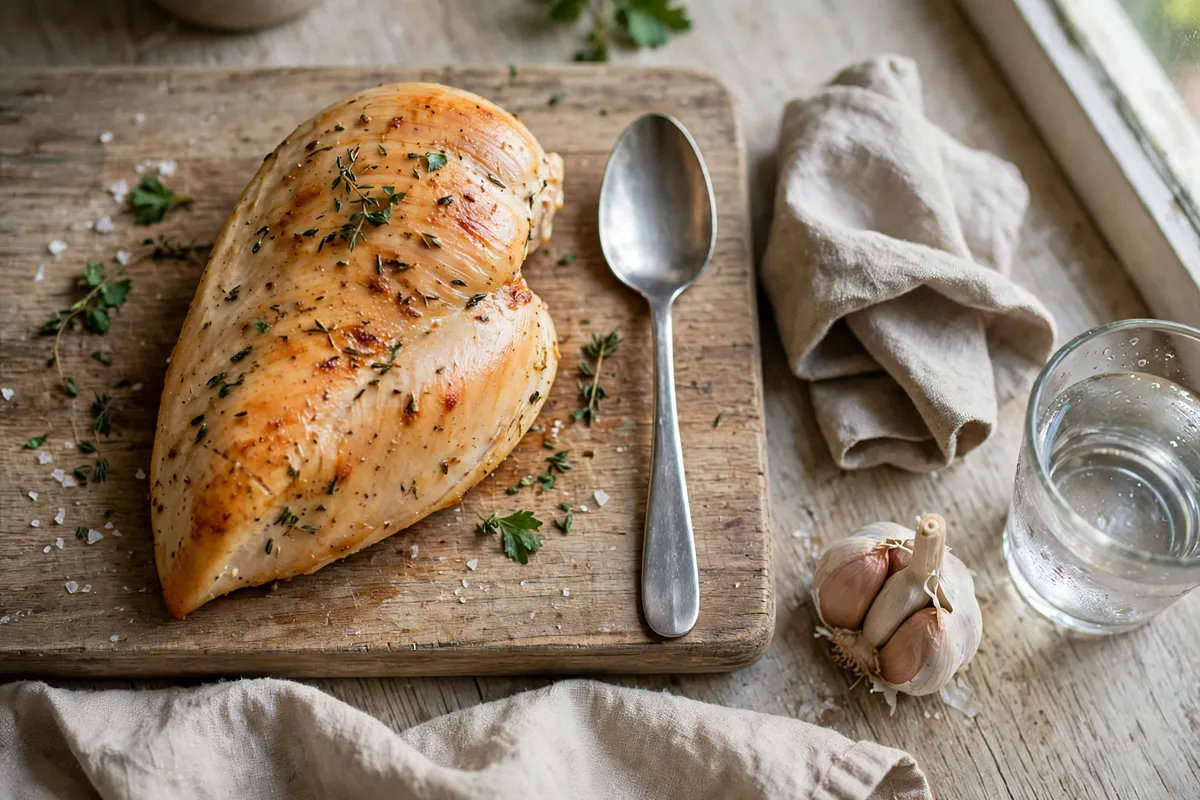
What Are the Best Visual Anchors for 4 Ounces?
The deck-of-cards anchor scales cleanly: 3 ounces is one deck's footprint and thickness, so 4 ounces is that deck plus a third — picture the deck and add a finger's width on the long side and a little height. The smartphone anchor is the modern favourite because the object is on every table: a large phone's screen approximates the footprint of a flat 4-ounce portion of sliced or butterflied meat, at a similar thin profile. The hand anchor completes the set: where 3 ounces is the palm alone, 4 ounces is the palm plus the fleshy base of the fingers — the whole flat of the hand below the knuckles.
Form changes the picture without changing the weight:
The recurring warning of this series applies with force at 4 ounces: thickness is the hidden variable. Two portions with identical footprints can differ by 2 ounces if one is twice as thick. Slice thick pieces, fan them, and judge the full outline — or weigh once at home and memorise what your usual cuts look like at exactly 113.4 grams. Why do portion sizes matter quantifies what that one calibration is worth across a year of lunches. That portion is shown in visual terms in 6 ounces of meat.
- Flat and sliced (deli-style layers, butterflied breast): the phone footprint, thin — the easiest form to judge
- A whole fillet or steak: smaller footprint, greater thickness — judge by both, or the eye under-reads it
- Diced or cubed: about 0.8 of a cup at the breast's cup rate (113.4 ÷ 140g per cup), a scant cup
- Ground meat, cooked: a mound about the size of a tennis ball, loosely held — crumbles settle, so weigh when it matters
What Does 4 Ounces Deliver From Each Meat?
The derived table, all from logged USDA entries at 113.4 grams. Chicken breast (171477, 165 calories and 31.02g protein per 100g): 187.1 calories, 35.2g protein, about 4.0g fat. Turkey breast (171496, 147 and 30.13g): about 166.7 calories, 34.2g protein, about 2.4g fat — the leanest 4 ounces in the set. Sirloin (168634, 183 and 30.55g): 207.5 calories, 34.6g protein, about 6.6g fat. Ground beef crumbles, 90% lean (171794, 230 and 28.45g): about 260.8 calories, 32.3g protein, about 13.7g fat. Chicken thigh meat (172388, 179 and 24.76g): about 203.0 calories, 28.1g protein, about 9.2g fat. Salmon (171998, 182 and 25.44g): about 206.4 calories, 28.9g protein. Cod (171956, 105 and 22.83g): about 119.1 calories, 25.9g protein — the lightest 4 ounces here.
Read the table by your constraint. Protein is remarkably level across the meats — 34 to 35 grams for the poultry breasts and sirloin — while calories spread from 119 to 261. Four ounces is therefore a protein-equalising portion: whatever the meat, a meal anchored on it lands near a full protein target, and the choice among meats is made on calories, fat and preference. That is precisely why meal plans standardised on it, and why the calorie counter prices portions by weight across foods rather than by piece counts that vary by species and cut.
How Do You Estimate 4 Ounces Away From Home?
Use two anchors and average them. At a restaurant, compare the meat against your phone (footprint) and against your palm-plus-base (volume sense); where the two estimates disagree, thickness is the reason — a thick steak over a phone-sized footprint is 5 to 6 ounces, and a thin cutlet under it may be 3. For sliced meats on a sandwich or salad, the coverage test works: slices tiling a phone's outline in a single layer are about 4 ounces; double-stacked coverage is about 8, which is why deli sandwiches so often hide two servings.
Buffets and family-style platters reward the diced measure: a scant cup of diced cooked meat is about 4 ounces by the breast cup rate, and a level cup is about 4.9. Carve-your-own settings reward the piece comparison: the USDA half breast is 86g (about 3 ounces), so 4 ounces is that piece plus a third of another; a skinless thigh is 116g — almost exactly 4 ounces (4.1) in a single piece. When the estimate decides a close budget call, the honest tiebreaker is to log the larger plausible figure: estimation errors by eye run optimistic more often than not, a pattern how many calories should a meal contain builds into its meal budgets.
Raw or Cooked — Which 4 Ounces Does the Visual Describe?
Cooked, matching the entries. Four ounces of raw meat cooks down to roughly 3 ounces — about 140 calories and 26.4g protein of breast instead of 187.1 and 35.2g — so a butcher's 4-ounce raw cutlet is not the 4-ounce portion in this article. Shop labels and menu weights are usually raw; plate weights are cooked; the visual anchors (deck, phone, palm) describe the meat as it sits in front of the eater, which is the cooked state the dataset prices.
Meal preppers meet the distinction in reverse: portioning 4 raw ounces per container yields 3-ounce cooked servings all week, a systematic shortfall of about 9 grams of protein per meal against the plan. Portion cooked, or buy and divide with the quarter-to-third loss priced in — 5.3 raw ounces per intended 4-ounce cooked serving. The visual, once calibrated on cooked meat, never needs the raw conversion at the table, which is its practical virtue.
Common Mistakes to Avoid
- Judging by footprint while ignoring thickness — the same outline can hide 3 or 6 ounces
- Using the 3-ounce deck visual for a 4-ounce portion: the true picture is a deck plus a third
- Pricing raw 4 ounces at cooked values, overstating protein by about a third
- Assuming all meats price alike at 4 ounces: protein is level (about 26 to 35g) but calories run 119 to 261 across the logged set
- Counting double-stacked deli slices as one layer's weight — coverage stacking doubles the portion invisibly
Final Thoughts
Four ounces of meat looks like a smartphone-sized portion — 113.4 grams, a deck of cards plus a third, a palm and its base — and delivers roughly 35 grams of protein from breast meats and sirloin alike, at calories that vary by the meat from about 167 to 261. Learn the picture against a scale once, correct for thickness forever after, and price any portion you plate in the calorie counter.
People Also Ask
What Does 6 Ounces of Meat Look Like?
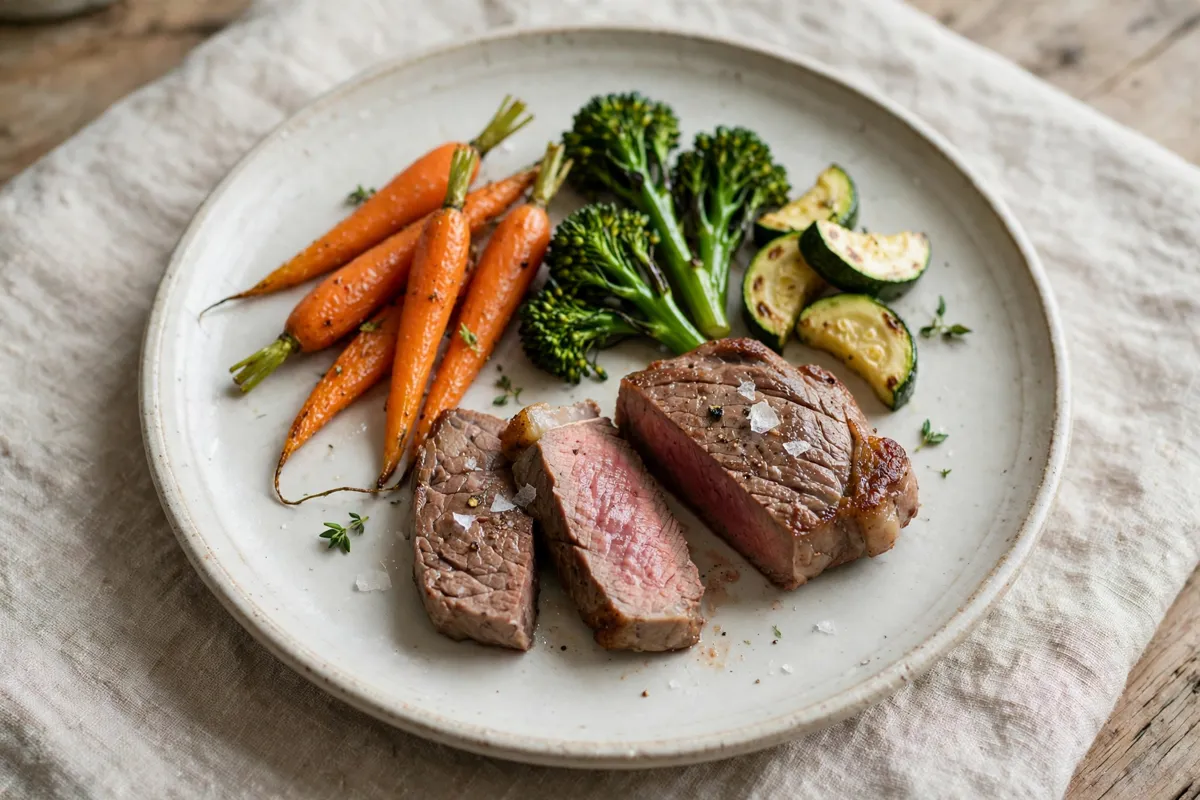
Six ounces of meat looks like two decks of playing cards side by side — a cooked portion of 170. 1 grams, roughly the footprint of two smartphone faces or both palms' flats together, deriving for chicken breast to 280. 7 calories and 52.
How Many Carbs Are in Broccoli?
One cup of cooked broccoli contains about 11. 2 grams of carbs. That figure comes from USDA FoodData Central's cooked broccoli entry (FDC ID 169967), which lists 7.
What Is the Healthiest Sandwich to Order?
On the figures tracked in the Subway calculator on this site, the healthiest sandwich to order is the Rotisserie-Style Chicken 6-inch Sandwich: 310 calories, 23 grams of protein, 44 grams of carbohydrate, just 6 grams of fat, 4 grams of fiber and 760 milligrams of sodium. It is the lowest-calorie meat sandwich on the menu, it carries by far the lowest fat of any meat build, and its protein holds up against sandwiches with nearly twice its calories. The Veggie…
What Is the Healthiest Food to Order at a Convenience Store?
The healthiest full meal in the Wawa data tracked on this site is the Turkey Hoagie (Shorti) at 460 calories, with 25 grams of protein, 17 grams of fat, 3 grams of fiber, and 1,150 milligrams of sodium. It has the most protein per calorie of any hoagie except the cheesesteak, the lowest fat of any sandwich tracked, and fewer calories than every other complete meal on the list. No other tracked item combines that protein, that calorie level, and…