MyPlate Plan Calculator: The Short Answer
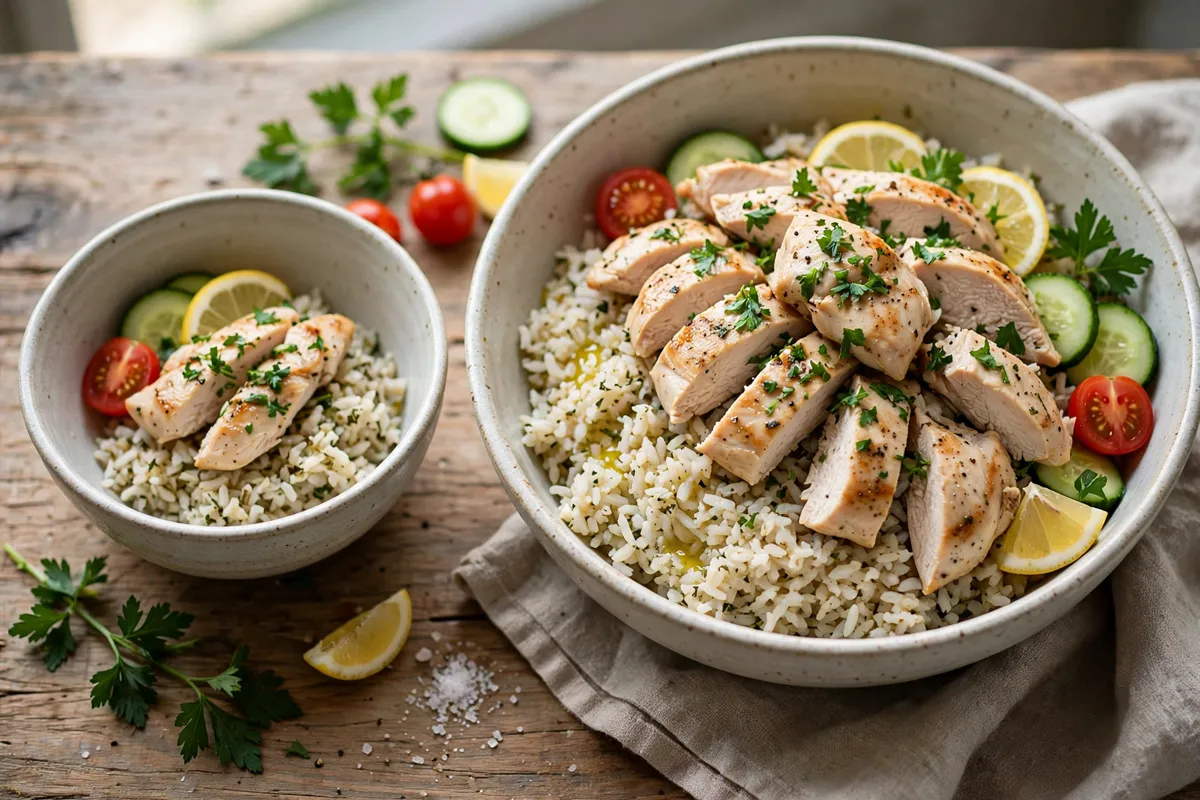
Portion sizes matter because nutrition scales with amount: the same rice is 204 calories at one cooked cup and about 408 at two, the same chicken is 165 calories at 100g and 248 at 150g. Every nutrient — and every calorie — on your plate is the per-serving figure multiplied by the portion you actually serve.
It is the quiet variable in almost every nutrition puzzle. People debate which foods are healthy while the amount on the plate swings the outcome more than the choice did; diets "stop working" when portions creep; restaurant meals shock people whose home cooking is modest. Portion is also where official guidance becomes concrete: MyPlate servings are portion definitions (an ounce-equivalent of grains is one slice of bread or half a cup of cooked rice), and a day at the 2,000-calorie pattern — 6 ounce-equivalents of grains, 5.5 of protein foods, 2.5 cups of vegetables, 3 cups of dairy, 2 cups of fruit — is really a set of portion decisions. This article explains the maths of why portions dominate, how they drift, and how to size them without weighing your life away, using the MyPlate plan calculator amounts as the reference frame.
Short Answer
Because totals are per-portion, portion error is total error: eating a serving and a half of everything turns a 2,000-calorie pattern into a 3,000-calorie day without a single food choice changing. Portions matter for energy balance most of all, but also for protein adequacy, sodium and sugar — every line on the label scales with the amount served.
Why Does Portion Size Outweigh Almost Every Other Variable?
Arithmetic. A food's contribution is its density multiplied by its portion, and portion is the factor people estimate worst. Studies of self-reporting aside, ordinary kitchen experience proves it: the "cup" of rice served from a deep bowl, the "tablespoon" of peanut butter that heaps (a level tablespoon here is about 95 calories and 8g of fat; a heaped one can double both), the restaurant pasta that arrives at three to four cups against the half-cup ounce-equivalent. Compare the swing with a typical "healthy swap": changing white rice to brown changes a cup by about 12 calories and 3g of fibre; serving half a cup more or less changes it by about 100 calories. Food choice matters — for nutrients, satiety and the long term — but when the question is why the totals moved, portion is the first suspect. The worked portion translations in calculating daily food portions using MyPlate exist precisely because this variable needs anchoring.
How Do Portions Drift Bigger Without Anyone Deciding They Should?
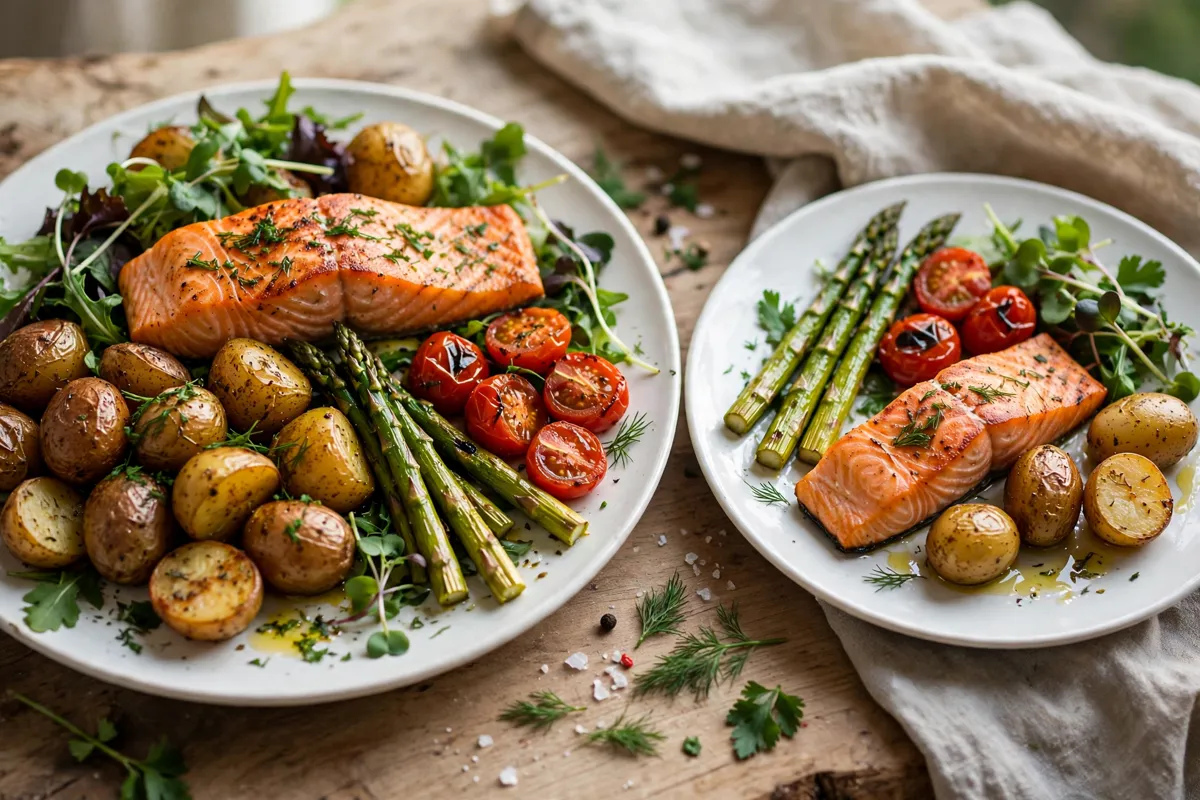
Four forces push portions up. Packaging: sharing bags and large bottles are consumed as units regardless of the servings printed on them (a 12-ounce cola is about 140 calories; the larger bottle beside it is the same drink at roughly double, drunk as one). Tableware: bigger plates and bowls make the same food look smaller, and people serve to the vessel's proportions. Restaurant norms: main courses built to impress deliver two to three home portions — a fact revealed by any comparison with MyPlate ounce-equivalents — and they reset expectations of what "a portion" looks like at home. And distracted eating: screens remove the feedback that a portion is finished. The drift is nobody's moral failure; it is what happens when an unmeasured variable meets an environment engineered to enlarge it. The countermeasures are therefore environmental too: smaller plates, serving from the kitchen rather than the table, packaging re-portioned on arrival home, and the plate visual — half vegetables and fruit, a quarter grains, a quarter protein — which sizes portions relative to each other at every meal without a scale, as shown in building a balanced meal with the MyPlate method.
How Do You Learn True Portion Sizes Without Weighing Forever?
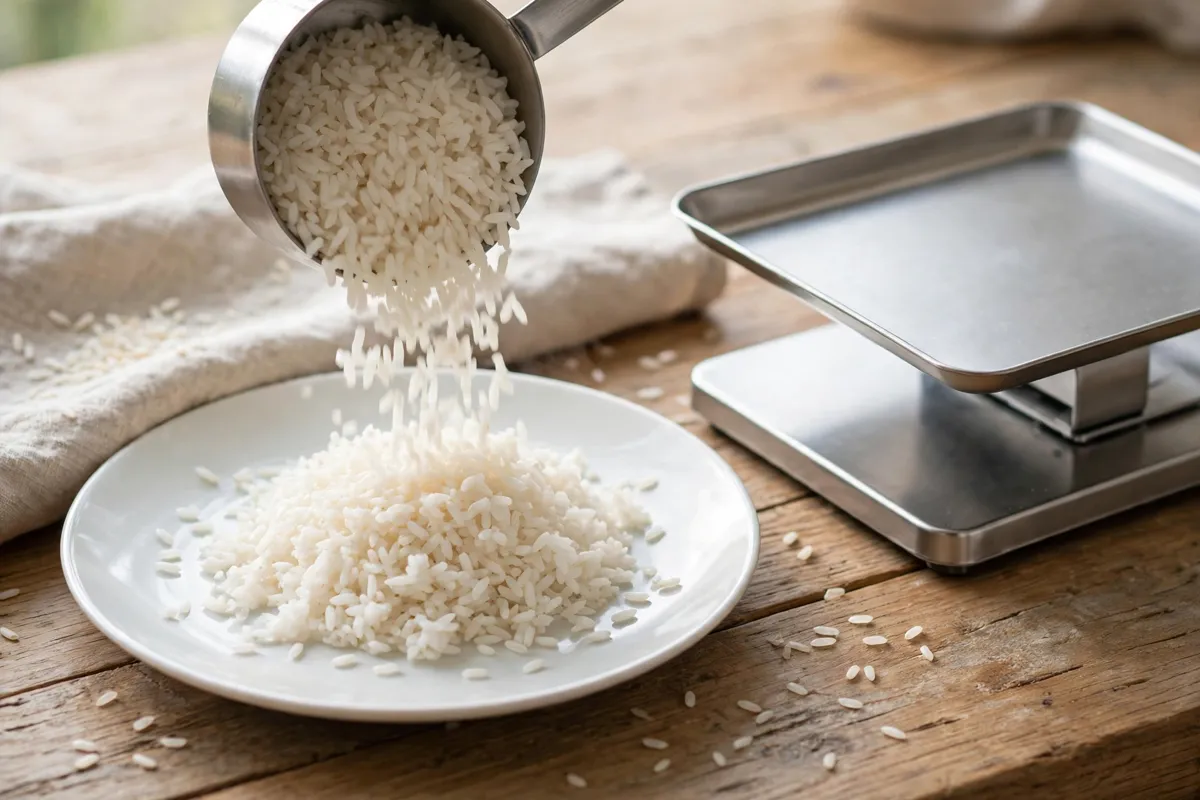
Calibrate once, then use anchors. Weigh and measure your own staples for a week — your rice, your pasta, your cereal pour, your cheese slice — and photograph or note what your target portions look like in your bowls. Most people discover one or two large errors (the cereal and the cooking oil lead the league) and many small ones, and the large ones carry the day. After calibration, hand and object anchors hold the knowledge: an ounce-equivalent of protein foods is an egg or a tablespoon of peanut butter; a cup is roughly a fist; the protein portion on the plate is about a palm for most adults at a meal built to the plate pattern. Re-calibrate when something structural changes — new tableware, a new staple, a new calorie target. For calorie-dense items — oils, nut butters, nuts at about 162 calories an ounce, cheese — periodic weighing stays worth it, because their density punishes small errors: 10g of extra oil is about 90 calories nobody saw.
- Totals = density × portion; portion is the factor estimated worst, so it dominates errors
- Packaging, tableware, restaurant norms and distraction all push portions upward silently
- Calibrate your own staples for one week, then run on plate visuals and hand anchors
- Keep weighing the dense few: oils, nut butters, nuts and cheese
Do Portion Sizes Matter for Nutrients Other Than Calories?
Yes — every nutrient is portion-scaled, which cuts both ways. Too-small portions of the right foods under-deliver protein (a 50g sliver of chicken breast is about 16g of protein, not the 31g of the 100g reference), fibre, calcium and the rest. Too-large portions of salty and sugary foods overshoot sodium and added sugars even when the food itself is unremarkable per serving: a sauce at a modest per-tablespoon figure becomes a major sodium source at the quarter-cup a ladle actually pours. Portion awareness is also how group targets get met in practice — 2.5 cups of vegetables is a portion decision repeated across the day, and how much of your plate should be fruits and vegetables turns it into a visual habit. Even water-rich, low-density foods have a portion story, in reverse: their generous portions are a feature, filling the plate for few calories and making the whole pattern sustainable.
Portions also explain a common experience that confuses people who have 'changed nothing': the diet that worked last year and does not work now. Nothing in the food list changed — but the handful of nuts became two handfuls, the glass of juice became the larger glass the set came with, the Friday takeaway portion grew with the restaurant's new packaging. Because each change is invisible in the language of food choice ('I eat the same things'), the drift hides until someone measures. A one-week portion audit — weighing the staples, checking the vessels, comparing restaurant servings with the ounce-equivalents — finds the drift in almost every case, and it is why this article treats portion as the first variable to check whenever the totals stop making sense.
Common Mistakes to Avoid
Mistake one is confusing a serving (the standardised unit on labels and in guidance) with a portion (what you actually serve) — nutrition maths runs on the portion, and the two differ most on exactly the foods eaten most casually. Mistake two is trusting package fronts: "snack size" and sharing formats describe marketing, not your pattern's ounce-equivalents. Mistake three is portioning by appetite alone after a long gap between meals, when hunger reliably overshoots need; a planned plate eaten slowly gives satiety time to register. Mistake four is cutting portions of the wrong things — shrinking the vegetables and protein while the oil, cheese and sauces, which carry the density, stay unexamined. Mistake five is weighing everything forever and quitting from exhaustion; the sustainable skill is calibration plus anchors, with the scale kept for the dense few.
Final Thoughts
Portion sizes matter because every number in nutrition — calories, protein, sodium, sugar — is a per-amount figure, and the amount is the variable modern life quietly inflates. Anchor your staples once, run meals on the plate visual, and keep a scale for the calorie-dense few. Check the portions your pattern actually calls for in the MyPlate plan calculator, and let amounts — not anxiety — do the work.
People Also Ask
How Many Servings of Vegetables Should You Eat Daily?
You should eat about 2. 5 cups of vegetables a day on a 2,000-calorie pattern — the USDA MyPlate amount — with the exact target scaling from about 2 cups at lower calorie levels to 3 cups or more at higher ones. In practical terms that is a large salad at lunch plus a cooked vegetable side at dinner, most days.
How to Determine Daily Reference Intakes (DRIs)?
You determine your Daily Reference Intakes (DRIs) by finding your age, sex and life-stage group in the tables published by the National Academies and reading off the reference value set for that group for each nutrient. The published DRI values for vitamin C, for example, set the Recommended Dietary Allowance at 90 milligrams a day for adult men and 75 milligrams a day for adult women, so the answer is never one number for everybody.
How Big a Deficit Loses 1 lb a Week?
A deficit of 500 calories a day loses about 1 lb a week. The arithmetic is the famous energy value of body fat: a pound of fat stores about 3,500 calories, and 500 × 7 = 3,500, so eating 500 calories below your maintenance every day accumulates exactly one pound's worth of deficit across a week. In metric terms the twin prescription is 550 calories a day for 0.
Why Doesn't My Label Total Match the 4/4/9 Maths?
Your label total usually does not match the 4/4/9 math because 4/4/9 is the gross approximation and your label was built with refinements. Labels may count fiber at about 2 calories per gram rather than 4, polyol sweeteners at reduced factors — erythritol near 0, others around 2 to 2. 4 — and every printed value is rounded, calories to the nearest 5 or 10.