Chicken Protein Calculator: The Short Answer
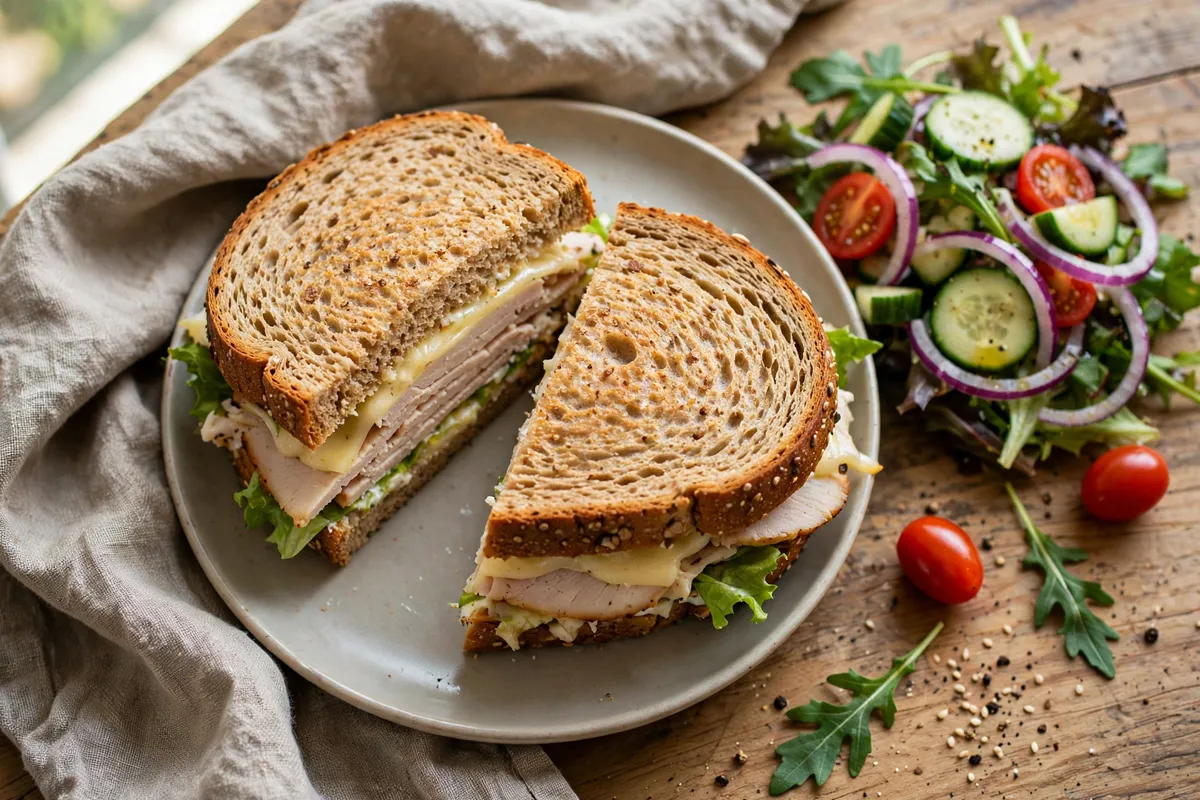
A turkey sandwich has about 16.8 grams of protein in its USDA submarine form — the 6-inch turkey breast sandwich entry (FDC ID 170706) derives to 270.5 calories and 16.8g protein at its 184-gram portion — while a simple home build of two white-bread slices, one cheddar slice and two deli turkey slices derives to 15.5g protein at 279.7 calories, labelled here as a component estimate. There is no single generic "turkey sandwich" in the data, so this article prices both honest routes and shows exactly which ingredient contributes what.
The spread between sandwiches is wider than the spread between these two examples. A sandwich is an assembly, not a food: double the turkey and the protein climbs by slices of 2.4 grams each; swap white bread for whole-wheat and the bread itself adds protein; add cheese and 6.4 grams arrive with 112.8 calories. The component table below lets you price your own build exactly, and the chicken equivalent is priced in how many calories are in a chicken sandwich for the poultry-counter comparison. Portions of the meat alone convert in the chicken protein calculator. Sodium in chicken gets the same treatment, with the amount worked out in full.
Short Answer
About 16.8g protein for a 6-inch turkey submarine sandwich (USDA entry 170706, 184g portion, 270.5 calories), or about 15.5g protein for a labelled home build of 2 white-bread slices + 1 cheddar slice + 2 deli turkey slices (279.7 calories). The turkey itself is the smaller contributor than most expect: two deli slices give 4.7g; the bread gives 4.4g and the cheese 6.4g.
What Does Each Component Contribute?
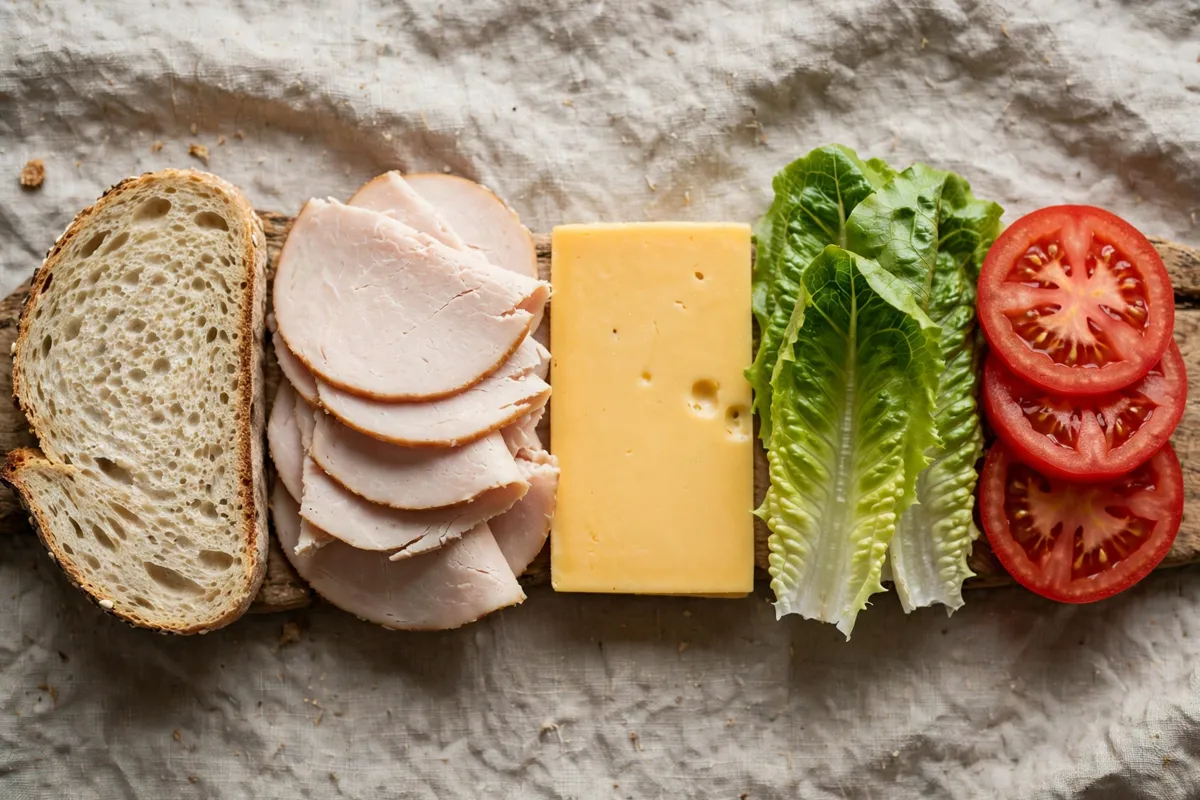
The component entries, all from USDA FoodData Central, price a sandwich from the bottom up. White bread (FDC 174924) carries 266 calories and 8.85g protein per 100g; its 25-gram slice derives to 66.5 calories and 2.2g protein. Whole-wheat bread (FDC 172688) carries 252 calories and 12.45g protein per 100g; its 32-gram slice derives to 80.6 calories and 4.0g protein — nearly double the white slice's protein, because the whole-wheat slice is both denser in protein and heavier. Cheddar (FDC 173414) carries 403 calories and 22.87g protein per 100g; its 28-gram slice derives to 112.8 calories and 6.4g protein. Deli turkey slices (FDC 172941) carry 106 calories and 14.81g protein per 100g; the 16-gram slice derives to 17.0 calories and 2.4g protein.
Add the worked example slowly, because it overturns the usual assumption: two white-bread slices give 133.0 calories and 4.4g protein; one cheddar slice adds 112.8 calories and 6.4g protein; two deli turkey slices add 33.9 calories and 4.7g protein. Total: 279.7 calories and 15.5g protein — before spreads and vegetables, and labelled as a derived estimate, since no generic sandwich entry exists. The turkey, the sandwich's namesake, supplies under a third of its protein. The cheese supplies more, and the bread nearly as much as the turkey. A "turkey sandwich" is really a bread-and-cheese sandwich flavoured with turkey, at deli-slice quantities — which is precisely why its protein disappoints people who log it as a serving of turkey.
How Does the Submarine Entry Compare?
The USDA's own assembled entry — fast-food submarine sandwich, turkey breast on white bread with lettuce and tomato (FDC 170706) — carries per 100 grams: 147 calories, 9.12g protein, 22.42g carbohydrate, 2.31g fat and 317mg sodium. Its 6-inch portion weighs 184 grams, deriving to 270.5 calories and 16.8g protein. Against the home build's 15.5g, the submarine's extra gram of protein comes with lettuce and tomato included and a leaner fat profile (2.31g per 100g), reflecting a sandwich built with more turkey relative to cheese.
The two routes agree closely enough to trust the range: a standard turkey sandwich lands at roughly 15 to 17 grams of protein and 270 to 280 calories. Builds depart from that range in predictable directions — a cheese-free deli build drops toward 9 to 11 grams of protein, while a home build on sliced roast turkey breast instead of deli slices jumps sharply, because roast breast carries 30.13g protein per 100g against the deli product's 14.81g. Fifty grams of home-sliced roast breast in place of two deli slices would add about 15.1g protein (50 × 0.3013) instead of 4.7g, lifting the whole sandwich past 25 grams. The meat format is the lever; the chicken protein calculator prices roast poultry portions for exactly this kind of build.
How Do You Build a Higher-Protein Turkey Sandwich?
The levers, priced from the same component table:
A deliberately built sandwich — whole-wheat bread (8.0g), cheddar (6.4g), and 50 grams of roast turkey breast (about 15.1g) — derives to roughly 29.5 grams of protein before vegetables, nearly double the standard build, at a calorie cost driven mainly by the cheese and the larger bread slices. That is a meal-target sandwich. The standard deli build, at 15.5g, is half of one — which is fine for lunch if the day's other meals know it. How many calories are in a sandwich prices the calorie side of the generic sandwich question the same component way.
One more worked build shows the deli lever travelling in the other direction. Doubling the turkey in the home build — four deli slices instead of two — adds another 4.7g protein and 33.9 calories, taking the sandwich to about 20.2g protein at about 313.6 calories, still short of the roast-breast build's roughly 29.5g. It also adds about 288mg of sodium (two more slices at 144mg each), which is why the slice lever, unlike the roast-meat swap, taxes the sandwich while it feeds it.
- Swap the meat: home-sliced roast turkey breast at 30.13g protein per 100g doubles the deli slice's contribution gram for gram
- Add slices honestly: each extra deli slice adds 2.4g protein, 17.0 calories — and 144mg sodium, which caps how far this lever should travel
- Choose whole-wheat bread: two slices give 8.0g protein against white's 4.4g, a 3.6g gain for about 28 extra calories across the sandwich
- Keep the cheese if protein is the goal: its 6.4g is the largest single non-meat contribution, at 112.8 calories
- Count spreads separately: mayonnaise-style spreads add calories with negligible protein, and no figure in this article includes them
What About the Sodium?
A turkey sandwich's sodium deserves its own paragraph because the deli components stack it quietly. Deli turkey slices carry 898mg sodium per 100g, so the two slices in the home build contribute about 287mg (32 × 8.98) before bread and cheese add theirs. The submarine entry, fully assembled, reads 317mg sodium per 100g — about 583mg across its 184-gram portion (184 × 3.17). Neither figure is extreme for a meal, but both dwarf what the same protein from roast breast would carry: turkey breast meat alone sits at 99mg sodium per 100g.
The practical reading is that a deli turkey sandwich is a moderate-sodium meal built from high-sodium parts, diluted by bread and vegetables. Eaters on a sodium budget get the largest reduction from the same swap that raises protein — home-sliced roast meat — because it attacks the 898mg component directly. Everything else is trimming at the edges.
Common Mistakes to Avoid
- Logging a turkey sandwich as a serving of turkey breast — the sandwich gives 15 to 17g protein; 100g of roast breast alone gives 30.13g
- Crediting the turkey with the whole sandwich's protein, when bread and cheese together supply more of it at deli quantities
- Treating the component build as a USDA entry — it is a labelled estimate from component entries; only the submarine figure is an assembled entry
- Forgetting spreads: the builds here exclude them, and a generous spread adds calories the protein figure does not reflect
- Stacking deli slices without counting sodium — each slice adds 144mg alongside its 2.4g protein
Final Thoughts
A turkey sandwich has about 16.8 grams of protein in its USDA submarine form and about 15.5 grams in a standard home build — respectable, but roughly half what the word "turkey" leads people to log. The components explain why: deli slices contribute 2.4g each, while bread and cheese carry much of the load. Build on roast breast and whole-wheat bread and the same sandwich approaches 30 grams; price any poultry portion for the build in the chicken protein calculator.
People Also Ask
What Part of the Chicken Has the Most Protein?
The breast is the part of the chicken with the most protein — 31. 02 grams per 100 grams, cooked, meat only (USDA FDC ID 171477) — ahead of the wing at 30. 46g, whole meat-only chicken at 28.
Does Chicken Contain Carbohydrates?
No — plain chicken contains no carbohydrates: the USDA entry for chicken breast, meat only, cooked roasted (FDC ID 171477), lists 0 grams of carbohydrate per 100 grams, and the thigh, drumstick, leg and wing entries all list 0g as well. Carbohydrates enter chicken dishes only through what is added to the bird — breading, batter, sugary glazes and sauces — never from the meat itself. This article shows the zero across every part, then prices the additions that change…
How Much Protein Should You Get From a Fast Food Meal?
Get at least 20 grams of protein from a fast food meal, and treat 23 to 30 grams as the range where a McDonald's meal starts to work like a real meal on this menu. That answer comes straight from the tracked items: a 10-piece Chicken McNuggets has 23 grams of protein for 410 calories, a Quarter Pounder with Cheese has 30 grams for 520 calories, and everything below 20 grams on this menu — the McChicken at 14 grams,…
What Is a Good Protein-to-Calorie Ratio?
A good protein-to-calorie ratio means getting at least 10g of protein per 100 calories — a 10:1 score, as in chicken breast at about 31g protein per 165 calories. Foods above that line deliver protein efficiently; foods far below it spend most of their calories on carbs or fat.