Chicken Protein Calculator: The Short Answer
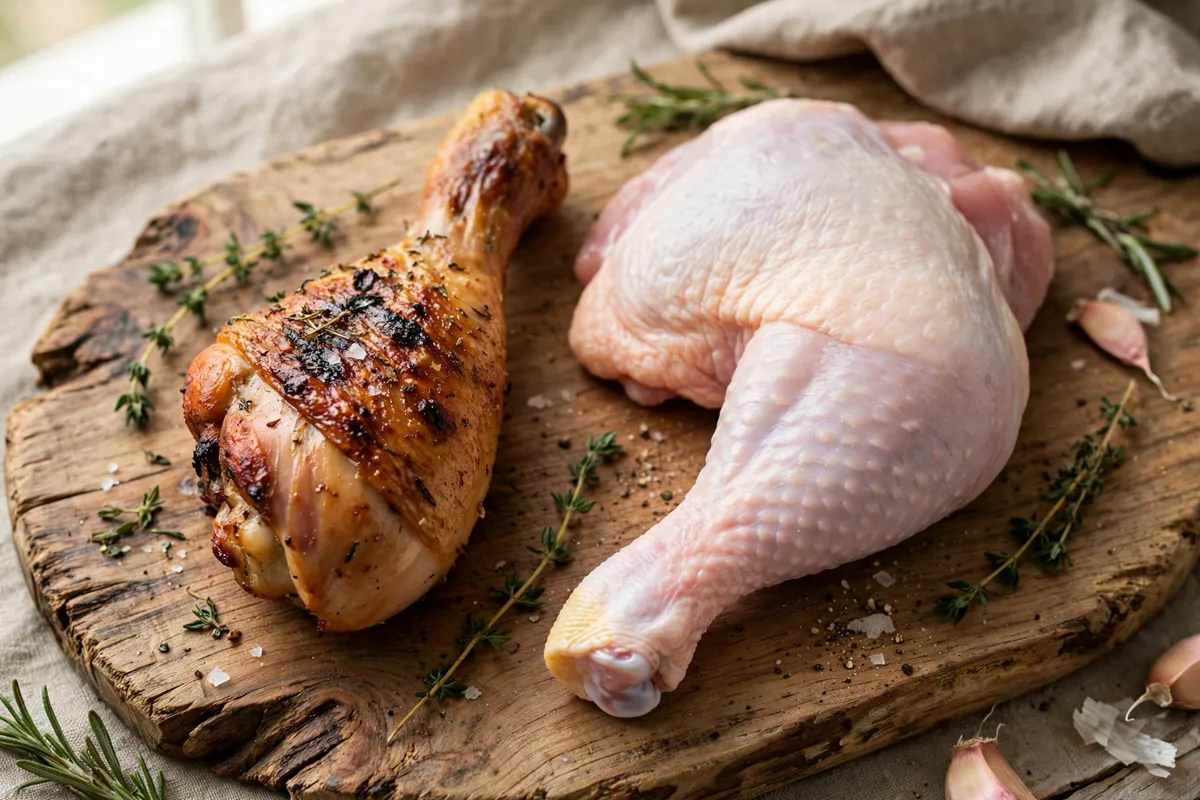
One chicken leg contains 48.2 grams of protein — and one drumstick contains 23.3 grams. Both answers belong in the first breath because the two pieces share a name in everyday speech: the whole leg (drumstick, thigh and back together, 199 grams of meat) provides the 48.2 grams, from USDA's leg entry (FDC ID 172380), while the drumstick alone (96 grams of meat) provides 23.3 grams from its own entry (FDC ID 172376). The protein in one chicken leg or drumstick is therefore two numbers, and choosing between them is a matter of which piece is on your plate.
Remarkably, the two pieces carry protein at almost exactly the same rate per gram — 24.22g per 100g for leg meat, 24.24g for drumstick meat. The entire gap between 48.2 and 23.3 is portion size. This article works through both entries, shows why their rates converge while their totals diverge, and gives you the identification test that tells a leg from a drumstick before the log depends on it. The chicken protein calculator lists the two cuts separately for exactly this reason.
Short Answer
A whole chicken leg (199g of cooked meat) contains 48.2g of protein and 346.3 calories. A drumstick (96g of cooked meat) contains 23.3g of protein and 148.8 calories. Per 100g the two are effectively identical on protein — 24.22g versus 24.24g — so the whole leg's advantage is purely that it carries about twice the meat.

What Are the Two Entries Behind the Two Numbers?
USDA analyses the pieces under separate entries. The leg entry (FDC ID 172380), "leg, meat only, cooked, roasted," covers the full leg as butchered — drumstick plus thigh plus the adjoining back section — and lists per 100g: 174 calories, 24.22g protein, 7.8g fat, 99mg sodium and 269mg potassium. Its weighed portion, one leg with the bone and skin removed, is 199g of meat, giving 199 × 0.2422 = 48.2g of protein and 199 × 1.74 = 346.3 calories.
The drumstick entry (FDC ID 172376), "dark meat, drumstick, meat only, cooked, roasted," covers the lower section only, and lists per 100g: 155 calories, 24.24g protein, 5.7g fat and 128mg sodium. Its portion is one drumstick without skin at 96g of meat, giving 96 × 0.2424 = 23.3g of protein and 96 × 1.55 = 148.8 calories. Two entries, two weighed portions, one shared protein rate — the cleanest illustration in the whole dataset that protein totals are portion stories, not food mysteries. The same portions anchor the calorie version of this question, and the deep-dive guide's ranking of the parts by protein rate, in the chicken protein deep-dive guide, places both pieces side by side with the rest of the bird.
Why Do Their Protein Rates Match While Their Calories Differ?
Protein per 100g: leg 24.22g, drumstick 24.24g — a tie to two decimal places. Calories per 100g: leg 174, drumstick 155 — a real gap of 19. Both facts come from the leg's composition. The whole leg's meat blends drumstick meat with thigh and back meat. The protein density of dark meat is consistent across those sections, so the blend keeps the rate. But thigh meat is fattier — its entry reads 8.15g of fat per 100g against the drumstick's 5.7g — so the blend's fat rate rises to 7.8g, and with it the calories.
This gives the leg pair a useful teaching shape: protein follows the meat, calories follow the fat. Two pieces can be interchangeable for a protein target and noticeably different for a calorie budget at the same time. A person eating legs and drumsticks toward a protein goal can mix them freely by weight; a person watching the calorie side should know that 100g swapped from drumstick meat to whole-leg meat adds 19 calories while adding nothing to the protein line — 24.22g versus 24.24g is, for logging purposes, no change at all.
How Can You Tell a Leg From a Drumstick on the Plate?
The joint test settles it. A drumstick is one section on one bone — the hand-held piece with a knobby end. A whole leg has two sections hinged at a joint: drumstick below, thigh above, often with back meat attached at the top. If the piece bends, it is a leg. If it is a single small baton, it is a drumstick.
Weight backs the test. Meat from a drumstick lands near the 96g standard; a piece yielding well above that — toward the leg's 199g — has the thigh aboard whatever it was called on the menu. Leg quarters, the common retail cut, are whole legs with extra back; price them as whole legs and add any large amount of extra back meat by weight at the leg rate. The errors from skipping this identification are the largest vocabulary errors in chicken logging: logging a whole leg as a drumstick understates protein by 24.9g and calories by about 198. The comparison with the thigh, the leg's other component, is worked in protein in chicken thigh versus chicken breast, where the dark-meat family's rates are set against the breast's.
What Do the Two Pieces Contribute to a Meal?
As eaten, the drumstick is a component and the leg is a centrepiece. One drumstick's 23.3g of protein suits a light plate or a child's serving; two drumsticks provide 46.6g (2 × 23.3) at 297.6 calories — approaching the whole leg's 48.2g of protein at 48.7 fewer calories, because two drumsticks are pure drumstick meat at the leaner fat rate, while the leg spends some of its weight on fattier sections. That is a genuinely useful substitution for a protein-focused eater: swap one whole leg for two drumsticks and the protein barely moves while the calories step down.
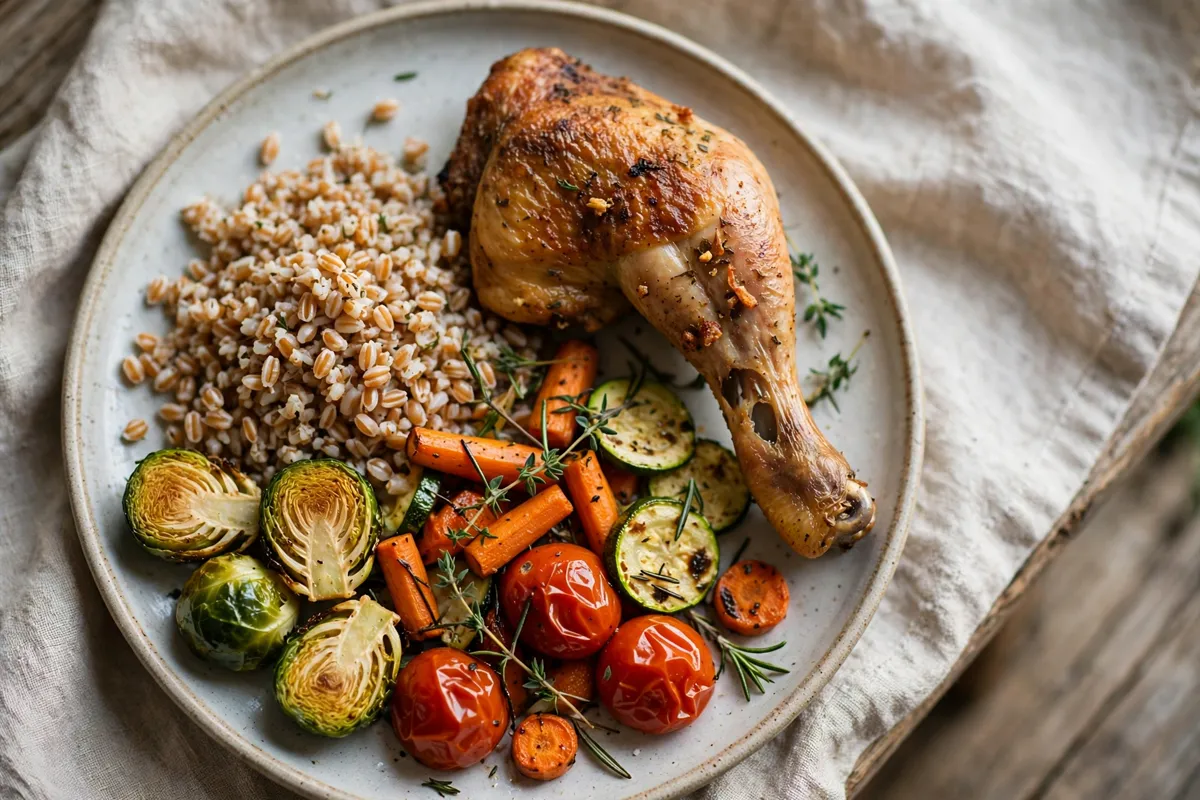
The whole leg, for its part, is a one-piece dinner: 48.2g of protein approaches a whole standard breast's 53.4g, and no other single piece of the bird except the breast itself carries that much. A plate built on it needs only vegetables and a grain to be complete. However the pieces are combined, the accounting stays simple because the protein rate is shared: total the dark-meat grams, multiply by roughly 0.242, and the protein is known — a shortcut that works for legs and drumsticks precisely because their rates converge.
- One drumstick, 96g meat = 23.3g protein, 148.8 calories
- Two drumsticks, 192g meat = 46.6g protein, 297.6 calories
- One whole leg, 199g meat = 48.2g protein, 346.3 calories
- One thigh, for the family's reference, 116g meat = 28.7g protein, 207.6 calories
Common Mistakes to Avoid
Do not answer "leg" with the drumstick's number, or the reverse — it is a 24.9g protein error, the worst in this series. Do not assume the leg's higher calories mean higher protein per gram; the rates are tied, and only the fat and the size differ. Do not weigh either piece bone-in and log the whole weight as meat; the portions here, 96g and 199g, are meat weights with bone and skin removed. Do not price a leg quarter as a drumstick because it was served as one piece. And do not apply the breast's protein rate to dark meat in a mixed portion — a mixed plate is priced cut by cut, or by total dark-meat weight at the shared 0.242 rate for its dark-meat share.
Final Thoughts
One chicken leg contains 48.2g of protein; one drumstick contains 23.3g; and per 100g they are the same food for protein purposes at 24.22g and 24.24g respectively. The question's whole difficulty is vocabulary, and the joint in the piece resolves it: bend means leg, baton means drumstick. Identify the piece, weigh its meat, and either number is exact — with the chicken protein calculator carrying both cuts whenever you need the figure for a non-standard size.
People Also Ask
How Much Protein Is in One Chicken Wing?
One chicken wing contains 6. 4 grams of protein. That is the derived figure for a single wing's edible meat — just 21 grams, bone and skin removed — from USDA's roasted wing entry (FDC ID 172392) at 30.
How Much Protein Is in One Pound of Chicken Breast?
One pound of chicken breast contains 140. 7 grams of protein. That is the derived figure for 453.
Which Deli Sandwich Has the Most Protein?
The Chicken Panini (whole) has the most protein of any deli sandwich tracked at Jason's Deli: 40 grams of protein, in a 660-calorie whole sandwich with 48 grams of carbohydrates, 34 grams of fat, 3 grams of fiber, 5 grams of sugar and 1,440 milligrams of sodium. It beats the Reuben Sandwich (whole) at 36 grams and the Turkey Sandwich (whole) at 32 grams — and it does so at fewer calories than the Reuben.
Which Restaurant Meal Has the Most Protein?
At Portillo's, the meal with the most protein is the Caesar Salad (with chicken) at 36 grams of protein. That is the top figure in the Portillo's calculator on this site, and it comes in a 580-calorie salad with 22 grams of carbohydrates, 39 grams of fat, 3 grams of fiber, 4 grams of sugar and 1,260 milligrams of sodium. The runner-up is not another salad: the Cheeseburger is second at 34 grams of protein for 680 calories, followed by…