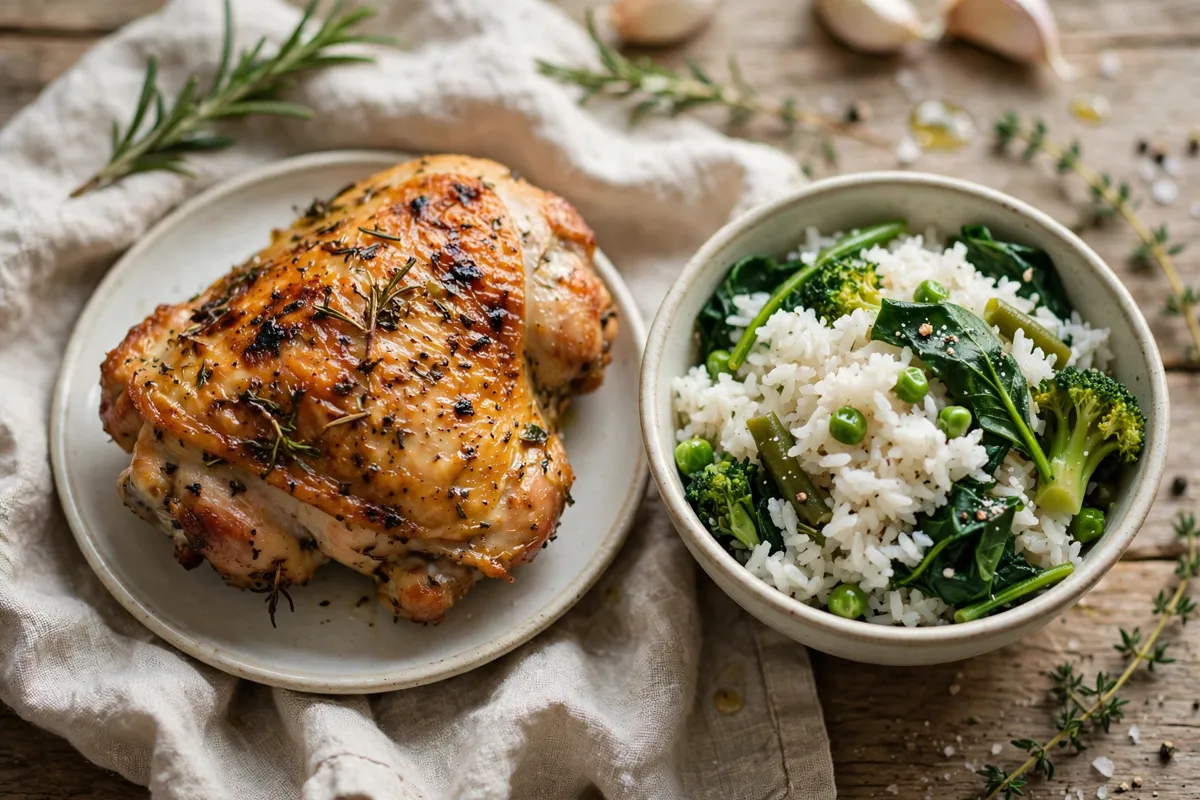
Chicken Protein Calculator: The Short Answer
One chicken thigh contains 28.7 grams of protein. That is the derived figure for the standard skinless thigh — 116 grams of cooked meat — from USDA's roasted thigh entry (FDC ID 172388) at 24.76 grams of protein per 100 grams. The protein in one chicken thigh, 28.7 grams, comes with 207.6 calories, and it holds a small surprise: per piece, the thigh actually out-delivers a half chicken breast, even though its protein rate per gram is lower.
That paradox — lower rate, higher portion total — is the key to every dark-meat question in this series, and the thigh is its clearest example. This article shows the arithmetic, explains why the thigh's bigger standard portion reverses the per-100g ranking, and sets the thigh's protein honestly against the breast's at equal weight, at equal pieces, and across a whole meal. For other weights and cuts, the chicken protein calculator applies each cut's own rate.
Short Answer
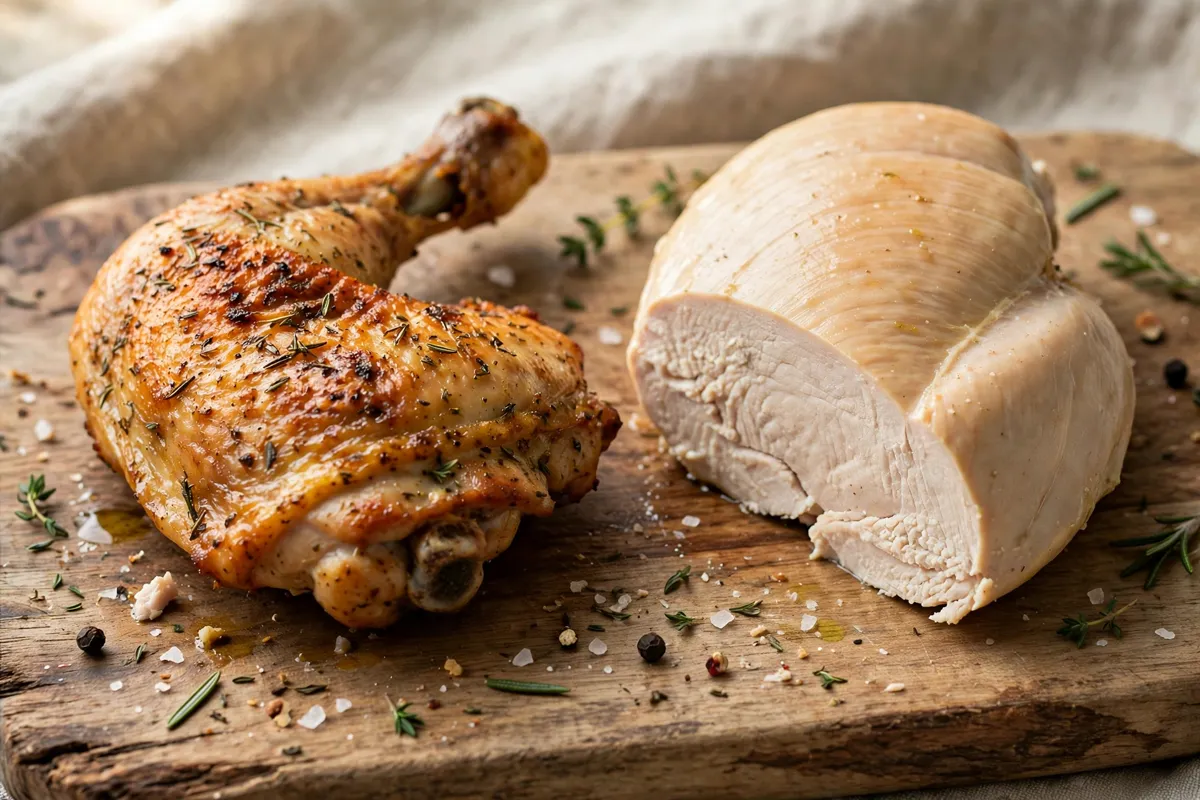
One skinless chicken thigh (116g of cooked meat) contains 28.7g of protein and 207.6 calories. Per 100g, thigh meat contains 24.76g of protein — less than breast meat's 31.02g — but the standard thigh portion is 30g heavier than a half breast (116g against 86g), so per piece the thigh delivers slightly more protein than the half breast's 26.7g.
How Is the Thigh's 28.7 Grams Calculated?
From the thigh entry itself (FDC ID 172388): roasted thigh meat, skin removed, carries 24.76g of protein, 179 calories and 8.15g of fat per 100g. USDA's weighed portion for one thigh without skin is 116g of meat. Multiply: 116 × 0.2476 = 28.7g of protein; 116 × 1.79 = 207.6 calories. That is the whole calculation, and it exposes the two inputs clearly — a rate and a portion weight — because each can be challenged separately. The rate belongs to skinless roasted thigh meat wherever it is found. The portion, 116g, belongs to a standard thigh with bone and skin removed; a thigh from a larger bird yields more meat and proportionally more protein, at the same rate.
It is worth stating what the thigh's meat-only basis excludes. The portion with skin is listed at 137g: the extra 21g is skin and surface fat, whose protein contribution is small and whose calorie contribution is not priced by this skinless entry. If you eat the skin, you ate more than this article's piece, and the honest log adds the skin as extra fatty weight rather than stretching the 28.7g to cover it.
Why Does the Thigh Beat the Half Breast Per Piece?
Because portions are not grams. Ranked by rate, breast wins easily: 31.02g per 100g against the thigh's 24.76g — the comparison made in full in protein in chicken thigh versus chicken breast. But nobody eats "100g" as a piece of chicken; they eat a thigh or a half breast, and the standard pieces weigh different amounts. The half breast is 86g, delivering 86 × 0.3102 = 26.7g. The thigh is 116g, delivering 116 × 0.2476 = 28.7g. The thigh's 35% size advantage outweighs its 20% rate disadvantage, and the piece ranking flips.
The whole breast restores order — at 172g and 53.4g it dwarfs one thigh — but that comparison has its own asymmetry, since a whole breast is two half portions. The fair summary is a table of pieces as eaten:
Read the calorie column with the protein column and the real trade appears: the thigh's extra piece-protein costs calories at a worse rate than the breast's, because the thigh's grams carry fat the breast's do not. Per piece the thigh wins on protein and loses on efficiency — both facts, from the same two entries.
- Half a breast, 86g = 26.7g protein, 141.9 calories
- One thigh, 116g = 28.7g protein, 207.6 calories
- One whole breast, 172g = 53.4g protein, 283.8 calories
- Two thighs, 232g = 57.4g protein, 415.3 calories
What Does a Meal of Thighs Deliver?
Thighs are bought in fours and sixes, so meal-level totals are the working numbers. Two thighs — a common serving — provide 57.4g of protein for 415.3 calories, which is more protein than a whole standard breast (53.4g) at about 132 more calories. Four thighs, the family-pack unit, provide 114.8g of protein (4 × 28.7) across whoever shares them, at 830.4 calories of meat (4 × 207.6) before anything else touches the plate.
For the cook choosing between cuts for a protein-focused dinner, the entries reduce the choice to a preference: breast delivers its protein at 165 calories per 100g with a lean, easily dried texture; thighs deliver theirs at 179 per 100g with fat that forgives an extra ten minutes in the oven. The protein totals per piece are close enough (28.7g versus the half breast's 26.7g) that the decision can be made on cooking grounds without surrendering the meal's protein plan. What should not happen is logging thigh protein at breast rates — the 31.02 figure belongs to a different cut, and borrowing it overstates a two-thigh meal by about 14.5g (232 × 0.3102 = 72.0, against the true 57.4).
How Do Bone-In and Skin-On Thighs Change the Answer?
The 28.7g prices 116g of meat. A bone-in thigh on the plate weighs more than 116g in total — bone is part of the piece's weight but none of its protein — so weighing the whole piece and applying the meat rate overstates the protein. Weigh the meat after the bone is out, or trust the 116g standard for a typical piece and adjust when pieces run visibly large or small.
Skin-on eating adds the 21g difference between the portions, most of it fat with a little protein of its own, at a calorie density the skinless entry does not describe. The clean approach mirrors the breast rule: the entry follows what is eaten. Skin discarded, the 28.7g stands as the price of the meat. Skin eaten, add it as extra — and accept that the meal's protein-per-calorie efficiency, not its protein total, is what mainly changed. The calculator's thigh basis assumes the same meat-only starting point, as the chicken protein mistakes guide notes when it lists skin-blind logging among its recurring errors.
What Else Does One Thigh Provide?
The entry's remaining lines at portion scale: about 123mg of sodium (116 × 1.06) and about 312mg of potassium (116 × 2.69), with the fat already counted at about 9.5g (116 × 0.0815). The thigh is, in other words, a complete little package — protein in the high twenties, fat in the high single digits, and a potassium contribution worth having — which is part of why it satisfies as a single-piece serving in a way the leaner half breast, for all its efficiency, sometimes does not.
Common Mistakes to Avoid
Do not price thigh protein at the breast rate of 31.02g per 100g; the thigh's rate is 24.76g, and the error inflates a two-thigh meal by over 14g. Do not conclude the thigh is "higher protein than breast" without the qualifier — per piece against a half breast, yes; per 100g, no. Do not weigh a bone-in thigh whole and log the full weight as meat. Do not stretch the skinless figure over a skin-on piece eaten whole. And do not average the two cuts into a generic "chicken" rate when a meal mixes them: price the breast grams at the breast rate and the thigh grams at theirs, and add.
Final Thoughts
One chicken thigh contains 28.7g of protein — 116 grams of skinless roasted meat at 24.76g per 100g — with 207.6 calories alongside. It edges out a half breast per piece on the strength of its larger portion, trails the breast clearly per gram, and doubles to 57.4g in the two-thigh serving most people actually eat. Keep the rate with the cut and the scale with the meat, and the chicken protein calculator will price any thigh you bring to it.
People Also Ask
How Much Protein Is in One Chicken Leg or Drumstick?
One chicken leg contains 48. 2 grams of protein — and one drumstick contains 23. 3 grams.
How Much Protein Is in One Chicken Wing?
One chicken wing contains 6. 4 grams of protein. That is the derived figure for a single wing's edible meat — just 21 grams, bone and skin removed — from USDA's roasted wing entry (FDC ID 172392) at 30.
Which Hawaiian Meal Has the Most Protein?
The Honolulu Chicken Plate as served has the most protein of any tracked Hawaiian Bros meal: 50 grams of protein in a 1,460-calorie plate, with 185 grams of carbohydrates, 57 grams of fat, 42 grams of sugar and 3,620 milligrams of sodium. Nothing else recorded on the menu reaches it as a single served item — the next plate, the Molokai Chicken Plate, carries 48 grams. If the question means a single order exactly as the kitchen serves it, the…
Which Deli Sandwich Has the Most Protein?
The Chicken Panini (whole) has the most protein of any deli sandwich tracked at Jason's Deli: 40 grams of protein, in a 660-calorie whole sandwich with 48 grams of carbohydrates, 34 grams of fat, 3 grams of fiber, 5 grams of sugar and 1,440 milligrams of sodium. It beats the Reuben Sandwich (whole) at 36 grams and the Turkey Sandwich (whole) at 32 grams — and it does so at fewer calories than the Reuben.