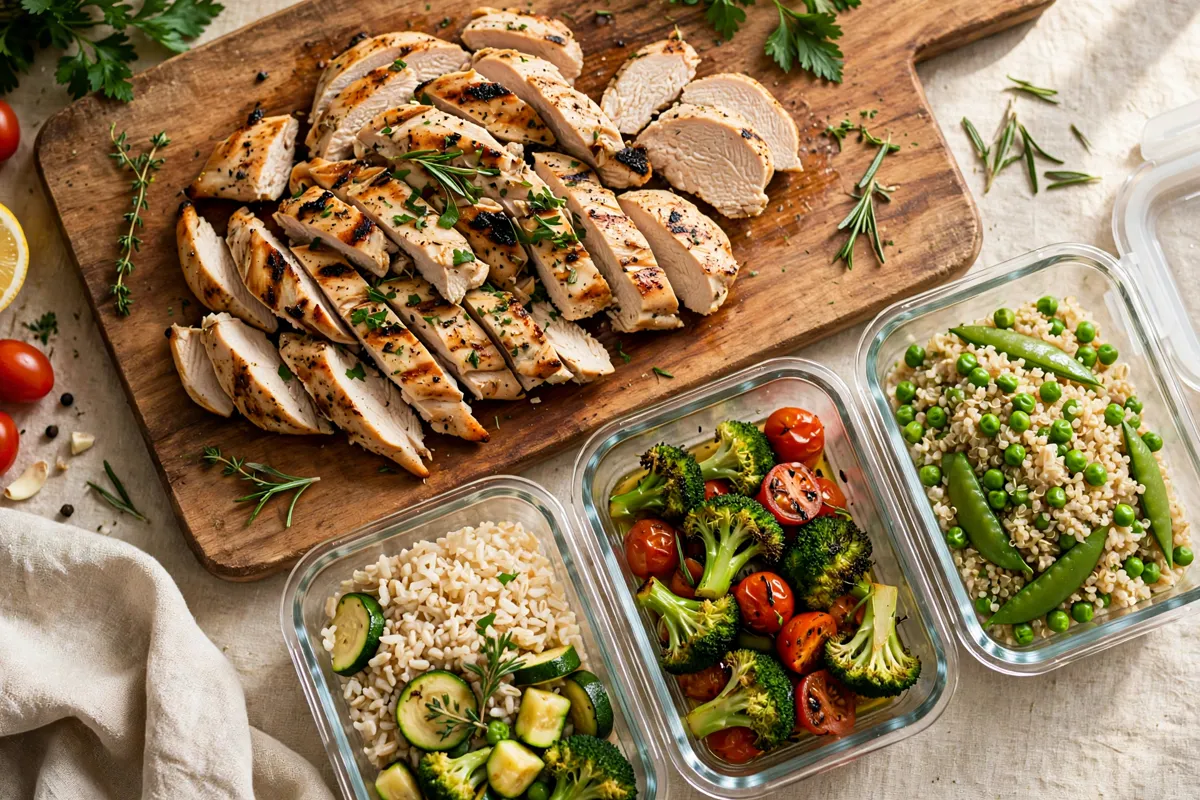
Chicken Protein Calculator: The Short Answer
One pound of chicken breast contains 140.7 grams of protein. That is the derived figure for 453.6 grams of cooked, boneless, skinless breast, from USDA's roasted breast entry (FDC ID 171477) at 31.02 grams of protein per 100 grams. The protein in one pound of chicken breast — 140.7 grams, delivered with 748.4 calories — is the largest protein total in this series, and it is the number meal preppers actually plan their weeks around.
A pound is how chicken breast is bought, so this is the protein question in its shopping form. This article builds the total from the base rate, shows how the pound divides into the week's portions without losing a gram in the arithmetic, and compares the pound with the bird's other cuts bought at the same weight — a comparison that settles, by weight, arguments that portion sizes usually muddy. The chicken protein calculator scales the same rate to any other quantity from the same shop.
Short Answer
One pound (453.6g) of cooked, skinless chicken breast contains 140.7g of protein and 748.4 calories. The maths: 453.6 × 0.3102 = 140.7g of protein; 453.6 × 1.65 = 748.4 calories. It equals four 4-ounce servings of 35.2g each, or about two and two-thirds standard whole breasts.
How Is the Pound's Protein Calculated?
From the same base rate that prices every breast answer on this site: the roasted breast entry lists 31.02g of protein per 100g of cooked meat, with 165 calories, 3.57g of fat and 0g of carbohydrate. A pound is 453.6g, so the pound's protein is 453.6 × 0.3102 = 140.7g, and its fat is 453.6 × 0.0357 = about 16.2g — the total fat in over 450 grams of meat amounting to less than many single servings of fattier foods carry.
The reason the pound figure matters is that it is auditable end to end. Divide it back down and each standard unit reappears: a quarter pound (4 ounces, 113.4g) holds 35.2g; an ounce holds 8.8g; the standard whole breast (172g) holds 53.4g, and 453.6 ÷ 172 confirms the pound is about 2.64 of those breasts. Every protein plan that starts "buy a pound of chicken breast" is, whether it knows it or not, a plan for 140.7g of protein, and the plans that succeed are usually the ones that portion that total deliberately — the exercise the chicken protein portions guide performs for the 100g milestone, which a single pound clears with 40.7g left over.
How Does the Pound Divide Across a Week?
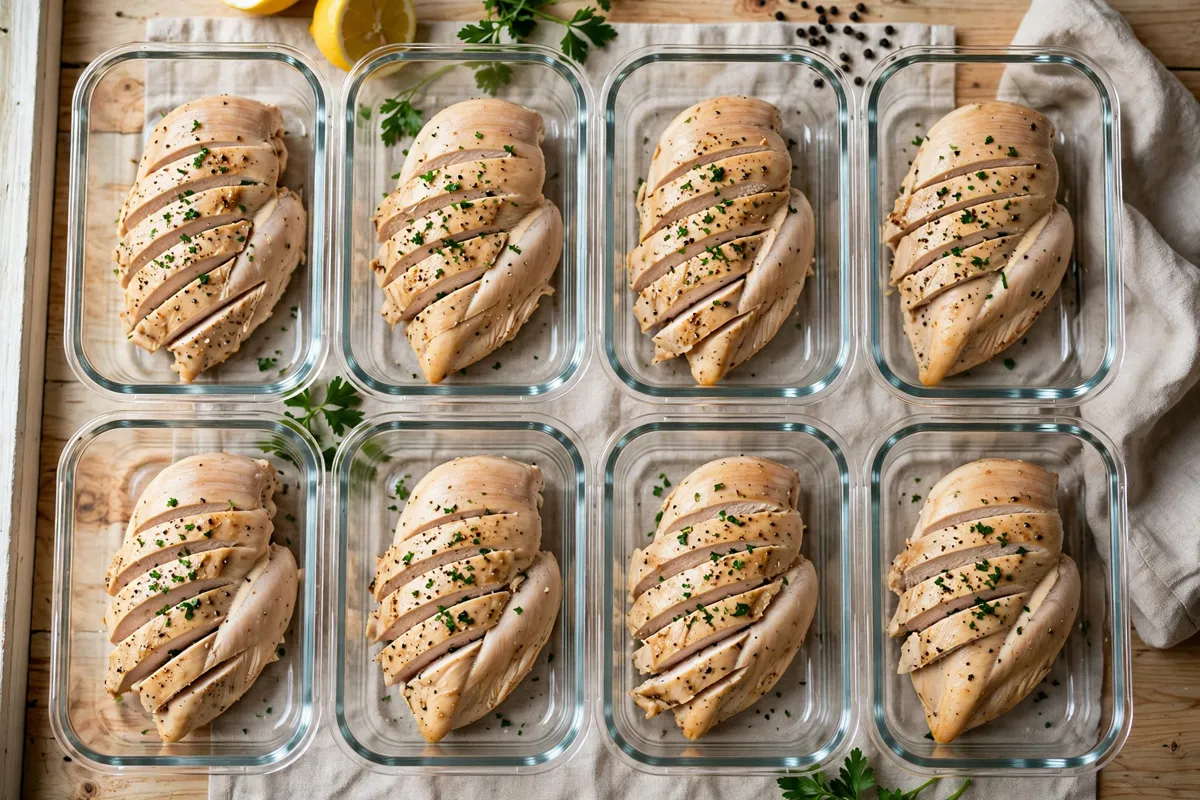
Portion the cooked pound by weight and the divisions are exact:
The five-way division deserves its sentence, because 28.1g is the quiet workhorse portion: neither a template serving nor a breast piece, just an equal fifth of a batch, delivering a solid meal's protein five days running. Meal prep fails more often on arithmetic than on cooking — batches portioned by eye into "fifths" that are really a third and four small remainders. Weigh the batch, divide by the days, weigh the portions: the 140.7g total guarantees the plan if, and only if, the portions are what the plan says they are.
- Four 4-ounce servings (113.4g each): 35.2g protein and 187.1 calories each — four lunches or dinners anchored
- Two 8-ounce servings (226.8g each): 70.4g protein and 374.2 calories each
- Five portions of about 90.7g: 28.1g protein each (453.6 ÷ 5 × 0.3102), a weekday lunch size
- Diced across dishes at 1 cup (140g) a time: 43.4g protein and 231.0 calories per cup, with the pound yielding a little over three cups
How Does a Pound of Breast Compare With a Pound of Other Cuts?
Equal weights strip the portion-size noise out of the cut debate. Per pound of cooked meat, from each cut's own entry:
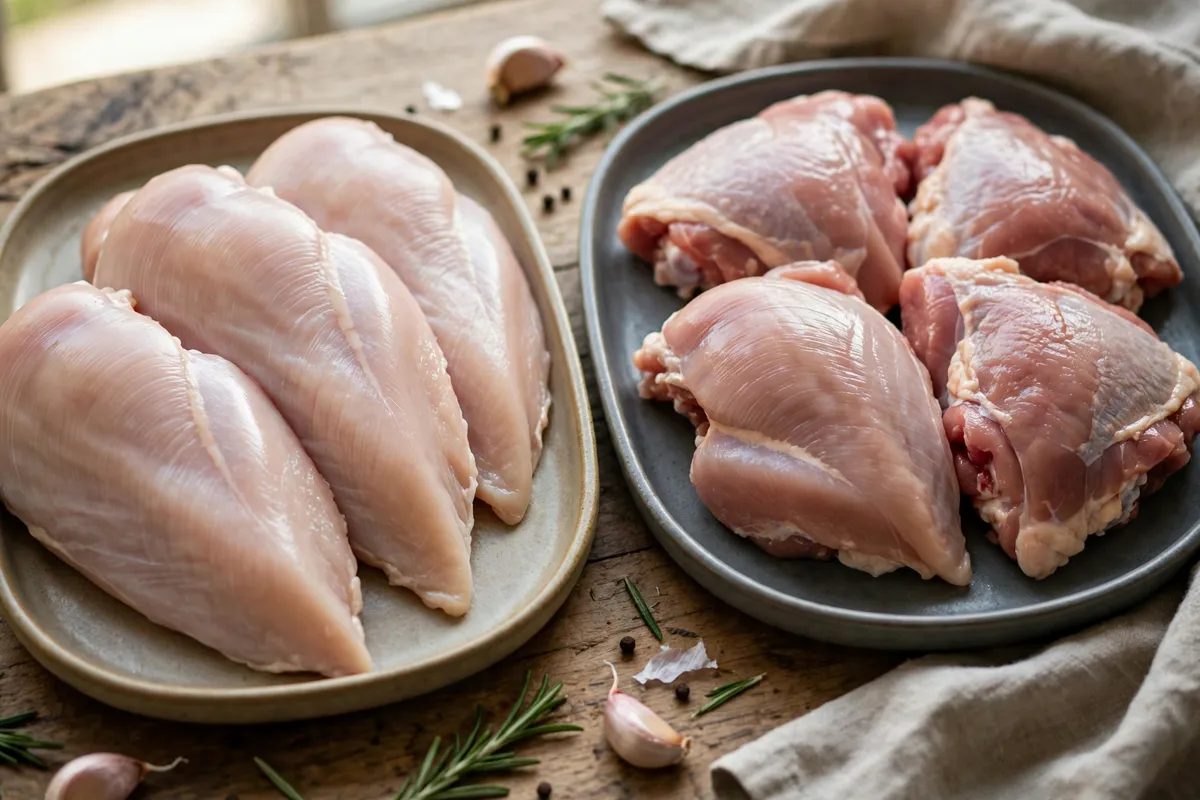
The breast's margin over the dark meats at equal weight is about 28g of protein per pound — the equivalent of an extra half breast hiding in every pound of breast you buy instead of thighs. Over a month of weekly pounds, that margin compounds into a genuinely different protein outcome from the same shopping habit, which is the quantitative core of how much chicken you need for 100g of protein: less breast is required to reach any target, because no other cut packs the rate as densely. Wing meat's near-parity is real but theoretical — deboning twenty-odd wings to prove it is a commitment few kitchens make twice.
- Breast at 31.02g per 100g: 140.7g protein, 748.4 calories
- Wing meat at 30.46g per 100g: about 138.2g protein (453.6 × 0.3046) — nearly level, though a pound of pure wing meat means roughly twenty-two wings' worth of picking
- Thigh meat at 24.76g per 100g: about 112.3g protein (453.6 × 0.2476)
- Drumstick and leg meat near 24.2g per 100g: about 110g protein
What Can Spoil the Pound's Total?
Three things, all familiar. Raw weighing: the pound priced here is a cooked pound, and a raw pound cooks down to less meat and less protein than 140.7g — the raw batch must be weighed after cooking to learn its true total. Skin: a pound of breast roasted and eaten with skin prices from the skin-on entry (FDC ID 171075) at 29.8g of protein per 100g, giving about 135.2g (453.6 × 0.298) with far more fat — a small protein dilution and a large calorie change. And additions: breading, brines with body, and sauces all add weight that is not breast meat, diluting the rate a label will not warn you about.
Notice that the spoilers attack from opposite directions — raw weighing overstates the total, skin and coatings dilute it — which is why "about 140 grams" survives as the honest headline only with its qualifiers attached: cooked, skinless, plain. The chicken protein calculator guide explains how the tool enforces exactly those qualifiers by asking for cut and cooked weight before it multiplies anything.
How Does the Pound Behave in 100-Gram Thinking?
Some kitchens plan in metric even when they shop in pounds, and the conversion is tidy: the pound is 4.536 units of 100g, each unit carrying 31.02g of protein and 165 calories. A plan that thinks in 100g units can therefore treat a pound of breast as four full units plus a half-unit remainder — four days at 31.02g of chicken protein, plus a fifth day at about 16.6g from the remaining 53.6g of meat (53.6 × 0.3102) — and the five days reconcile exactly with the pound's 140.7g total. Shopping units and planning units rarely align this cleanly; here they do, which is one more reason the pound of breast is the meal-prep standard it has become.
Common Mistakes to Avoid
Do not assign 140.7g to a raw pound; it is the cooked pound's total, and the raw batch's cooked yield is the weight that earns it. Do not portion the batch by eye and trust the plan's per-day numbers — the total is guaranteed, the guessed fifths are not. Do not carry the breast pound's figure to a pound of mixed chicken pieces, where dark meat pulls the total toward 110g. Do not forget the skin-on pound prices differently on protein and dramatically differently on calories. And do not log the entire pound on the day it was cooked if it feeds the week: the log should meet the meat on the day it is eaten, portion by portion.
Final Thoughts
One pound of cooked chicken breast contains 140.7g of protein and 748.4 calories — the breast's base rate of 31.02g per 100g at shopping scale. Divided into fours it is four 35.2g servings; left whole in the plan it clears a 100g protein milestone with room to spare; compared cut-for-cut at equal weight, no other part of the bird matches it. Buy it by the pound, weigh it cooked, portion it by the scale, and the chicken protein calculator will keep every division honest.
People Also Ask
How Much Protein Is in Half a Chicken?
Half a chicken contains about 40. 8 grams of protein. That figure is derived openly: USDA's whole-chicken entry (FDC ID 171450, meat and skin, roasted) lists a bone-removed edible portion of 299 grams providing 81.
How Much Protein Is in a Whole Chicken?
A whole chicken contains about 81. 6 grams of protein. That total belongs to USDA's bone-removed reference portion — 299 grams of roasted meat and skin — priced from the whole-chicken entry (FDC ID 171450) at 27.
How to Calculate Your Daily Protein, Carbs and Fat?
You calculate your daily protein, carbs and fat in a set order: pick a calorie target, set protein first, set fat second, and give every remaining calorie to carbohydrate. Worked on 2,500 calories at the balanced 30/40/30 split, that comes to about 188 grams of protein, 250 grams of carbs and 83 grams of fat a day — 2,500 × 0. 30 = 750 calories of protein, and 750 ÷ 4 = 187.
How Many Grams of Protein, Carbs and Fat Should I Eat Daily?
The reference answer is 150 grams of protein, 200 grams of carbs and 67 grams of fat a day — that is the balanced 30/40/30 split at 2,000 calories, worked as 2,000 × 0. 30 = 600 calories of protein and 600 ÷ 4 = 150 grams. But the honest answer is that those grams belong to a reference person who does not exist, and your answer is scaled from your body weight and your calorie target.