Chicken Protein Calculator: The Short Answer
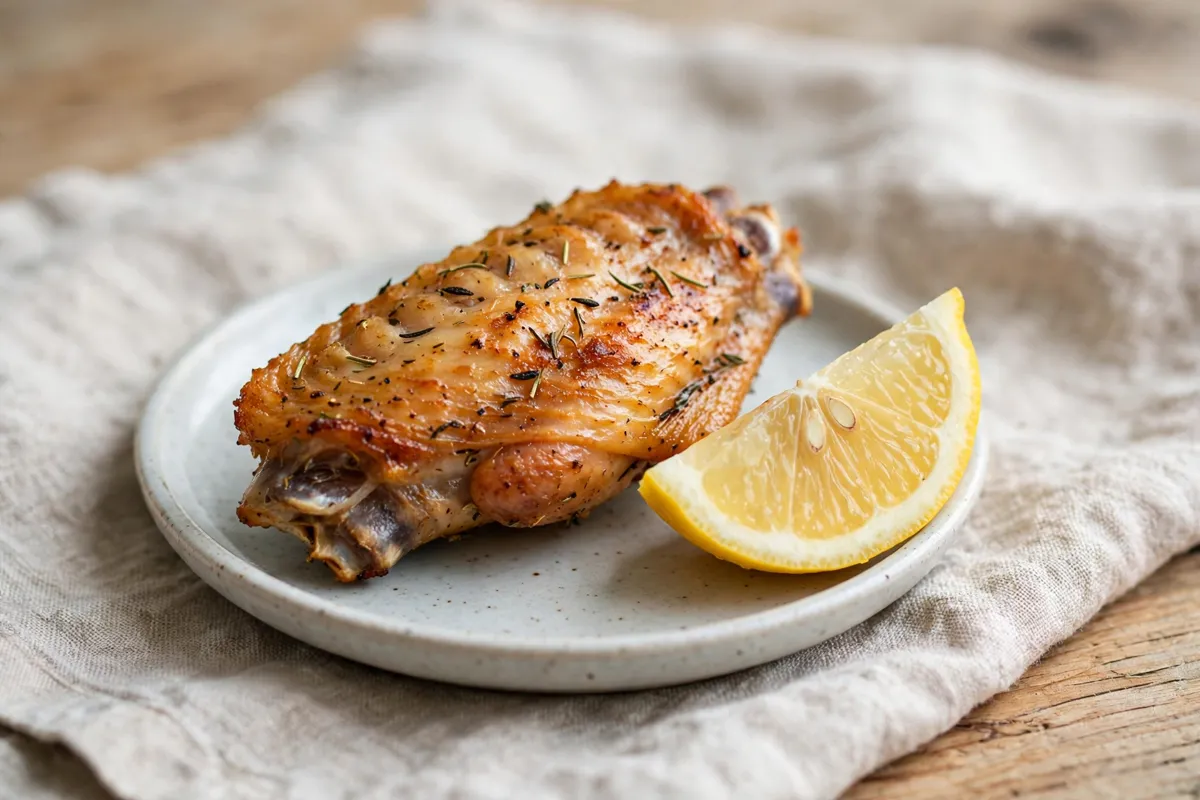
One chicken wing contains 6.4 grams of protein. That is the derived figure for a single wing's edible meat — just 21 grams, bone and skin removed — from USDA's roasted wing entry (FDC ID 172392) at 30.46 grams of protein per 100 grams. The protein in one chicken wing, 6.4 grams with 42.6 calories, looks modest, and yet the wing hides the strangest statistic on the bird: per 100 grams, wing meat is the second most protein-dense part of the chicken.
The wing is where portion size and protein density collide most dramatically. Its rate nearly matches the breast's, while its portion is a seventh of a half breast's weight. This article holds both truths at once — the excellent rate and the tiny yield — and works out what wings can and cannot do for a protein target, including how many wings a 30-gram milestone actually requires. The chicken protein calculator prices wings by meat weight when a pile of them needs a total.
Short Answer
One chicken wing (21g of cooked meat, bone and skin removed) contains 6.4g of protein and 42.6 calories. Per 100g, wing meat contains 30.46g of protein — second only to breast meat's 31.02g among all chicken parts. The wing's protein story is a great rate trapped in a very small portion.
Why Is the Wing's Portion So Small?
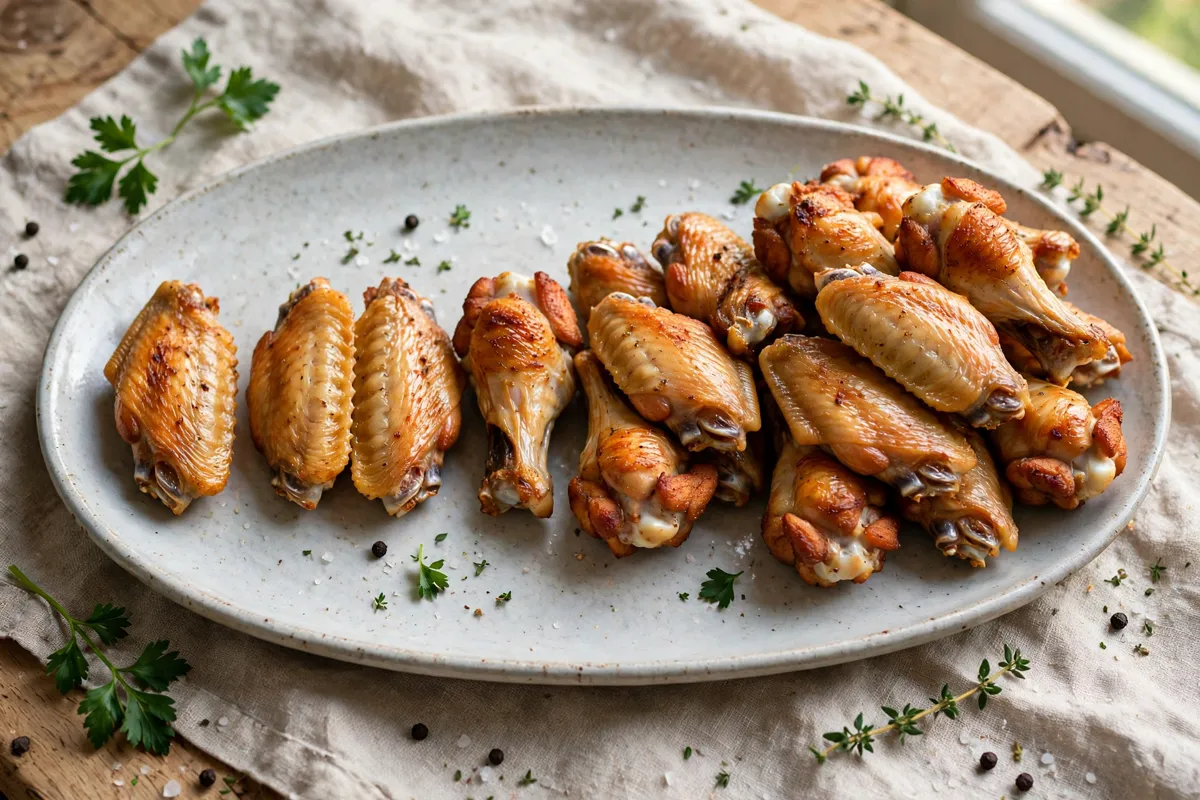
Start with the entry. FDC ID 172392, "wing, meat only, cooked, roasted," lists per 100g: 203 calories, 30.46g protein, 8.13g fat, 92mg sodium and 210mg potassium. Its weighed portion — one wing, bone and skin removed — is 21g of meat. The multiplication is brief: 21 × 0.3046 = 6.4g of protein; 21 × 2.03 = 42.6 calories.
Twenty-one grams is what a wing is: a small frame of bone with two slender sections of meat, much of a whole wing's apparent size being bone and skin rather than meat. The entry's meat-only basis strips both away, and the honest yield of one wing is about a tablespoon-and-a-half of meat by weight. Anyone who has eaten wings knows the experience matches the number — a wing is a few bites. Six wings, a common serving, yield 126g of meat (6 × 21g), which is finally a portion the rest of this series would recognise: about the meat of a 4-ounce breast serving, reached by a much more labour-intensive route.
How Does the Wing Rank Against the Other Parts?
The per-100g protein ranking across the whole bird, all from the same dataset, is the wing's moment of glory:
Wing meat is white-meat-like in density, far above the dark-meat cluster it is usually grouped with on a plate. But the ranking inverts the moment portions replace rates: one wing's 6.4g against a half breast's 26.7g, a thigh's 28.7g, a whole leg's 48.2g. Both rankings are true, and confusing them is the classic wing error — expecting breast-like protein from a food that arrives 21 grams at a time. The full ranking, with the reasoning about why the parts separate this way, is the centrepiece of the chicken protein deep-dive guide.
- Breast meat: 31.02g protein per 100g
- Wing meat: 30.46g per 100g — second place
- Whole chicken, meat only: 28.93g per 100g
- Thigh meat: 24.76g per 100g
- Drumstick meat: 24.24g per 100g
- Whole-leg meat: 24.22g per 100g
How Many Wings Make a Real Protein Portion?
Price the milestones honestly. A 30g protein target needs 30 ÷ 6.4 ≈ 4.7 wings — call it five wings, providing 32.0g of protein (5 × 6.4) and 213.0 calories (5 × 42.6) of plain roasted meat. A 50g target needs about eight wings (8 × 6.4 = 51.2g) at 340.8 calories of meat. Matching a whole standard breast's 53.4g takes between eight and nine wings' worth of meat.
Those calorie figures deserve their context: they price plain roasted wing meat only, on the meat-only entry. Wings as actually served — skin on, often fried, usually sauced — depart from this basis on every axis at once. The skin of a wing is a large share of the piece, the frying adds fat, and sweet sauces add carbohydrate the plain entry's 0g does not carry. The restaurant-wing investigation lives elsewhere on the site, in how many calories are in chicken wings and how much protein is in chicken wings, where specific tracked wing items are priced as served. This article's 6.4g is the plain-meat benchmark those preparations start from — the number to reach for when the wings are roasted at home, skin off, sauce on the side and accounted separately.
When Are Wings the Right Protein Choice?
When the meal's protein is already anchored elsewhere and wings are the enjoyable extra; when they are one item among several in a shared spread, contributing their 6.4g each to a collective total; and when the eater genuinely prefers them and counts the pile honestly by its meat weight. Six plain roasted wings, at 38.4g of protein (6 × 6.4) and 255.6 calories of meat (6 × 42.6), are a respectable protein portion by any measure — the format, not the food, is what makes a single wing look trivial.
Where wings fail is as a planned primary source: hitting a daily target on wings alone means eating them in quantities (sixteen or more for 100g of protein) that nobody sustains, at a fat rate — 8.13g per 100g of meat — that makes the calorie cost per gram of protein far worse than the breast's. The wing is a sprinter's food in a marathon role whenever it is asked to carry a target. Let the breast and the larger pieces do the heavy lifting, and let wings be what they are: the bird's tastiest small print.
What Does a Dozen Wings Add Up To?
The pile arithmetic, completed. Twelve plain roasted wings yield 252g of meat (12 × 21g) providing 76.8g of protein (12 × 6.4) and 511.2 calories of meat (12 × 42.6), with fat at about 20.5g across the pile (252 × 0.0813). Read that total against the series' landmarks and the wing paradox resolves into something practical: a dozen wings, patiently eaten, out-protein a whole standard breast (53.4g) and approach the 8-ounce breast's 70.4g — the density was real all along, and the pile is simply the price of collecting it 21 grams at a time. The same dozen also shows the format's cost: 511.2 calories of plain meat, before skin, frying or sauce enter a real serving, against the breast's 283.8 for its smaller total. Wings reward the eater who enjoys the process; the numbers merely insist the process be counted.
Common Mistakes to Avoid
Do not quote the wing's per-100g protein (30.46g) as if a serving delivers it; a serving is 21g of meat and 6.4g of protein. Do not log a whole wing's gross weight — bone and skin included — as meat weight. Do not price sauced, skin-on restaurant wings from this plain meat-only entry; the preparation has moved too far from the basis. Do not assume a "wing" at every venue is one wing by this article's definition: some servings split the wing into two pieces and count pieces, halving the meat per counted unit. And do not dismiss the wing's protein entirely either — a counted pile of them adds up exactly as the multiplication says.
Final Thoughts
One chicken wing contains 6.4g of protein — a small total built on an excellent rate of 30.46g per 100g, the second-highest on the bird. The wing rewards eaters who count by the pile and punishes anyone who mistakes its density for a serving. Five plain wings make 32.0g of protein; a breast makes its 53.4g in one piece. Choose the format that suits the meal, weigh the meat when the pile matters, and the chicken protein calculator will total whatever lands on the plate.
People Also Ask
How Much Protein Is in One Pound of Chicken Breast?
One pound of chicken breast contains 140. 7 grams of protein. That is the derived figure for 453.
How Much Protein Is in Half a Chicken?
Half a chicken contains about 40. 8 grams of protein. That figure is derived openly: USDA's whole-chicken entry (FDC ID 171450, meat and skin, roasted) lists a bone-removed edible portion of 299 grams providing 81.
Which Restaurant Meal Has the Most Protein?
At Portillo's, the meal with the most protein is the Caesar Salad (with chicken) at 36 grams of protein. That is the top figure in the Portillo's calculator on this site, and it comes in a 580-calorie salad with 22 grams of carbohydrates, 39 grams of fat, 3 grams of fiber, 4 grams of sugar and 1,260 milligrams of sodium. The runner-up is not another salad: the Cheeseburger is second at 34 grams of protein for 680 calories, followed by…
How to Calculate Your Daily Protein, Carbs and Fat?
You calculate your daily protein, carbs and fat in a set order: pick a calorie target, set protein first, set fat second, and give every remaining calorie to carbohydrate. Worked on 2,500 calories at the balanced 30/40/30 split, that comes to about 188 grams of protein, 250 grams of carbs and 83 grams of fat a day — 2,500 × 0. 30 = 750 calories of protein, and 750 ÷ 4 = 187.