Chicken Protein Calculator: The Short Answer
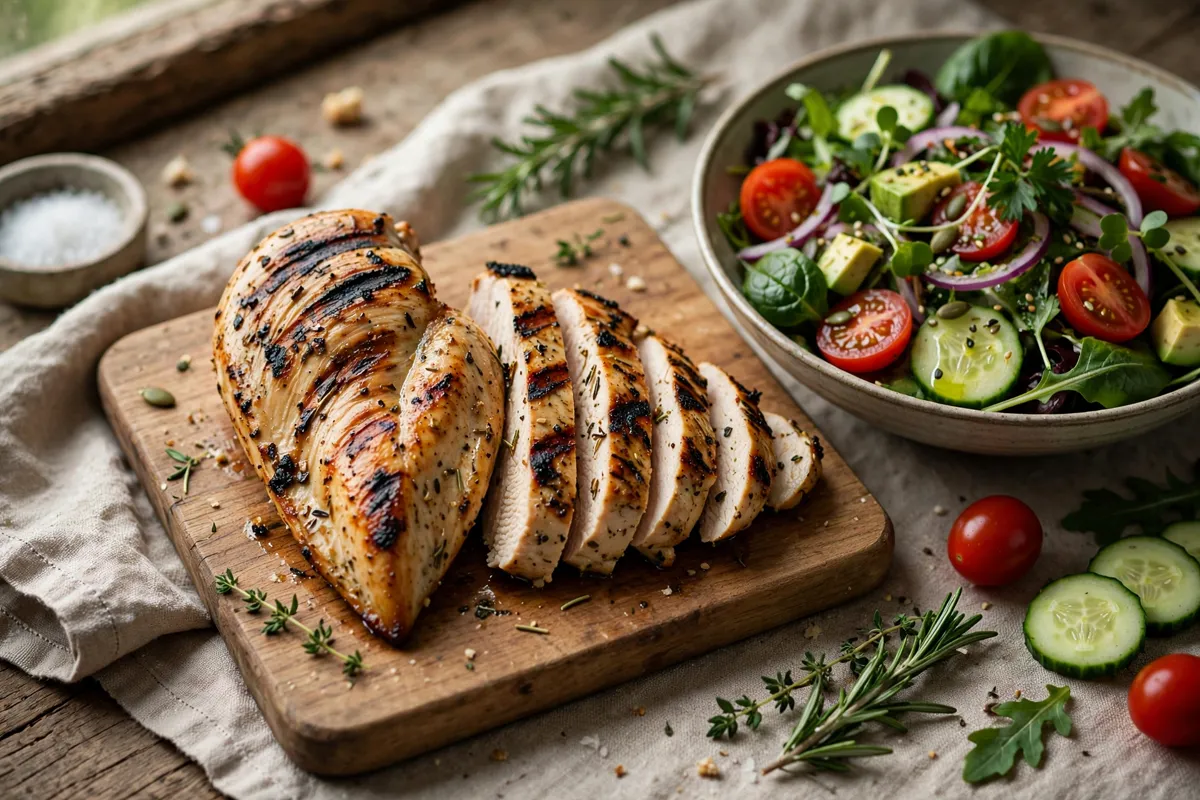
Grilled chicken breast contains 53.4 grams of protein at the standard size. That is the figure for a 172-gram cooked breast, priced from USDA's roasted breast entry (FDC ID 171477) at 31.02 grams of protein per 100 grams — because USDA publishes no separate grilled entry, and its roasted entry is the dry-heat entry to which grilling belongs. The protein in grilled chicken breast is therefore the roasted protein, stated on the record rather than passed off as a distinct measurement.
This matters because grilled chicken is the default protein of restaurants, meal plans and summer cooking, and its protein figure is quoted everywhere with unjustified variety. This article settles the basis, gives the protein at every common grilled portion, and separates the three things that genuinely move it — portion size, skin, and what a marinade does to the meat's company on the log. Any weight off your own grill can be priced in the chicken protein calculator.
Short Answer
A standard grilled chicken breast (172g cooked, boneless, skinless) contains 53.4g of protein and 283.8 calories, on the roasted dry-heat basis of 31.02g of protein per 100g. A half breast (86g) contains 26.7g of protein; 4 ounces contain 35.2g; each cooked ounce contains 8.8g. Grilling itself neither adds nor destroys protein in any amount the data can see.
Why Is Grilled Protein Priced From the Roasted Entry?
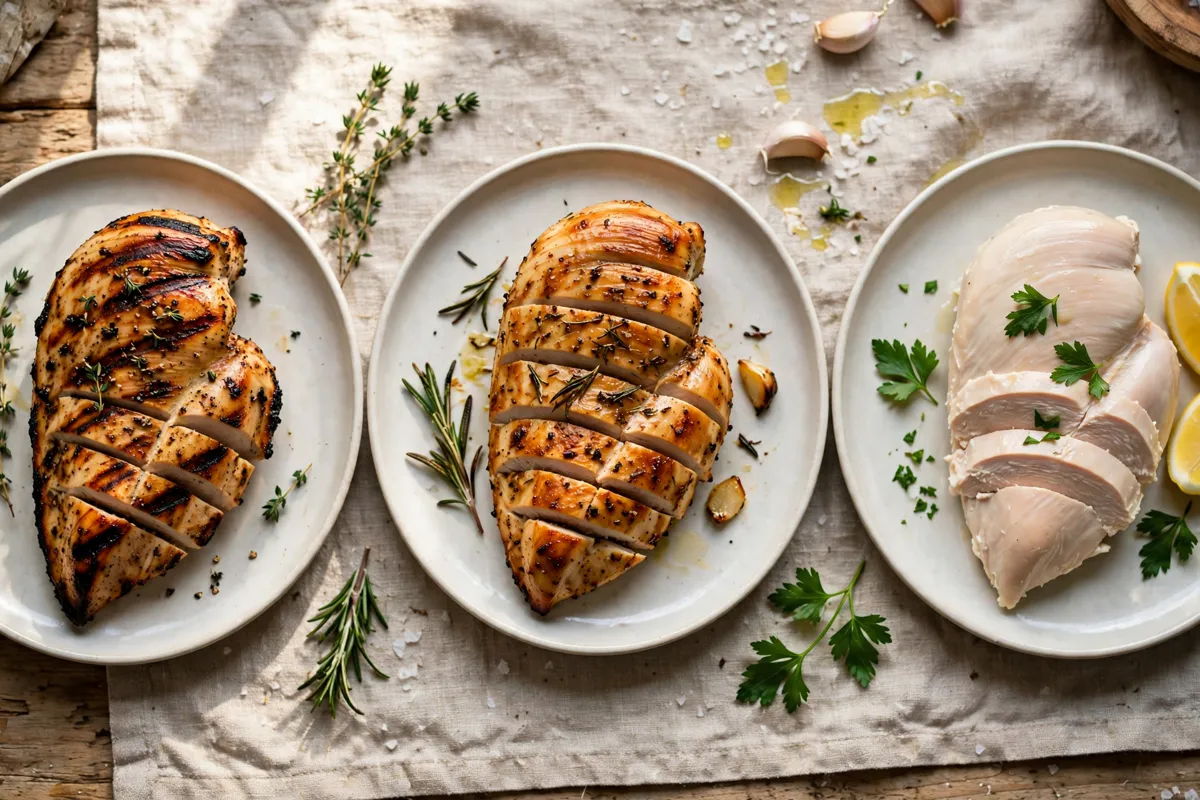
USDA's dataset analyses cooked breast three ways: roasted, stewed and fried. Protein per 100g reads 31.02g roasted, 28.98g stewed, 33.44g fried — a spread created almost entirely by water. Dry heat drives water out and concentrates what remains; moist heat leaves water in and dilutes each gram; the protein in the meat itself is the same protein throughout. Grilling is dry heat over high temperature — the roasted column's process in a different appliance — so the roasted rate is the measurement that describes grilled meat.
Claiming a separate grilled figure would require an analysis that does not exist in the dataset; borrowing one from the stewed column would misprice grilled meat by over 2g of protein per 100g, and the fried column by a similar margin the other way. The defensible answer is the one given here: roasted basis, openly named. The existing site article how much protein is in a grilled chicken prices a particular grilled chicken item from a tracked menu; this article prices the plain cut itself, which is the figure home grilling and plain restaurant breasts should use. The concentration mechanism behind the three columns is examined in does cooking method change chicken protein.
What Is the Protein at Each Grilled Portion?
Grilled breasts are served whole, halved and sliced, and the entry prices every form:
The sliced row is where grilled chicken most often hides. A large salad carrying a full cup of grilled breast has 43.4g of protein before the egg, cheese or grains are counted — it is a high-protein meal wearing a light meal's reputation, and logging it as "some chicken on a salad" understates the day's protein by tens of grams. The reverse error appears in wraps and sandwiches built on half a breast sliced thin: the spread of meat looks generous, but the scale says 86g and 26.7g. Grilled chicken's protein is invisible to the eye in both directions, which is precisely why the weights in this table are worth internalising.
- Half a breast, 86g = 26.7g protein and 141.9 calories
- 4 ounces, 113.4g = 35.2g protein and 187.1 calories
- 6 ounces, 170.1g = 52.8g protein and 280.7 calories — effectively a whole standard breast in ounce language
- A whole standard breast, 172g = 53.4g protein and 283.8 calories
- 8 ounces, 226.8g = 70.4g protein and 374.2 calories
- 1 cup sliced or diced, 140g = 43.4g protein and 231.0 calories — the grilled breast as a salad or wrap topping
What Do Marinades, Skin and Char Actually Do?
A marinade changes the meat's company, not the meat. Plain grilled breast has 0g of carbohydrate; a sugary marinade or glaze adds carbohydrate calories around and on the surface, and an oil-based marinade adds fat — both belong in the log as additions, while the breast's own 31.02g-per-100g protein rate stands underneath them. Brined or injected breasts weigh more raw and carry more sodium than the plain entry's 74mg per 100g, but their protein rate stays close to plain, because the injection is overwhelmingly water and salt.
Skin is the larger lever, as everywhere in this series. Grilled and eaten skin-on, the breast prices from the with-skin roasted entry (FDC ID 171075) at 29.8g of protein and 197 calories per 100g — the skin dilutes protein per gram while raising calories by about a fifth. Skin removed before eating returns the meat to this article's basis. Char, finally, changes flavour and texture at the surface; it does not meaningfully change the protein content of the piece, and no entry in the dataset attempts to price it. If it is blackened to the point of discarding surface meat, weigh what remains and the rate handles the rest.
How Does Grilled Breast Protein Compare With Other Proteins?
At the standard size, the grilled breast's 53.4g stands against the day's usual rivals, all from their USDA entries. A 6-ounce sirloin steak provides 52.0g of protein — the grilled breast matches it with a slightly larger piece, and beats it gram for gram (31.02g against sirloin's 30.55g per 100g). Two chicken thighs provide 57.4g — more protein than the breast, at 415.3 calories against the breast's 283.8. A whole leg provides 48.2g. Two grilled breasts provide 106.7g, passing the 100g daily milestone between them.
The pattern is consistent: the grilled breast is not the largest protein portion available, but it is the most efficient — the highest protein per calorie of any common single serving in this dataset, because its fat rate (3.57g per 100g) is the lowest of the meats compared here. That efficiency, rather than any grilling magic, is why it anchors so many protein plans. The menu-item version of the grilled comparison, priced from tracked restaurant data, is in how many calories in a grilled chicken — a useful reminder that a restaurant's grilled item and a plain grilled breast are cousins, not twins.
Common Mistakes to Avoid
Do not accept a grilled-specific protein figure from a source that cannot name its entry; the dataset has none, and the roasted basis is the honest price. Do not log a brined, glazed or sauced grilled breast as plain meat — the plain entry's 0g carbohydrate exposes anything sweet that went unlogged. Do not price skin-on grilled breast at 31.02g per 100g; the skin-on rate is 29.8g. Do not estimate a sliced grilled breast by its spread across a salad; sliced thin is a presentation, not a portion, and the cup and ounce rows exist for it. And do not weigh the breast raw before it hits the grill and log the result against the cooked rate.
Final Thoughts
Grilled chicken breast contains 53.4g of protein at the standard 172g size, 35.2g at 4 ounces and 26.7g at the half — every figure on the roasted dry-heat basis of 31.02g per 100g, because that is USDA's measurement for this family of cooking and no grilled-specific one exists. The grill contributes heat and flavour; the protein was in the meat, and the entry prices it as served, plain and skinless. Weigh your grilled portions, log marinades as the additions they are, and the chicken protein calculator will price any size your grill produces.
People Also Ask
How Much Chicken Breast Provides 30 Grams of Protein?
About 96. 7 grams of chicken breast provide 30 grams of protein. That is the derived amount — a little under 3.
How Much Chicken Breast Provides 50 Grams of Protein?
About 161. 2 grams of chicken breast provide 50 grams of protein. That is the derived amount — roughly 5.
How to Convert Grams of Protein Into Calories?
To convert grams of protein into calories, multiply the grams by 4. That is the whole method: 30 grams of protein is 30 × 4 = 120 calories, 12 grams is 12 × 4 = 48 calories, and 50 grams is 50 × 4 = 200 calories. Protein converts at 4 calories per gram — the same rate as carbohydrate, and well under fat's 9 — under the Atwater system that food labels use.
How Many Calories Are in 100g of Protein, Carbs and Fat?
Per 100 grams of the pure macronutrient, protein has 400 calories, carbohydrate has 400 calories, and fat has 900 calories. The three conversions are 100 × 4 = 400 for protein, 100 × 4 = 400 for carbohydrate, and 100 × 9 = 900 for fat. Those are the figures for the nutrients themselves — and no ordinary food matches any of them, because real foods are mixtures of macros plus water.