Chicken Protein Calculator: The Short Answer
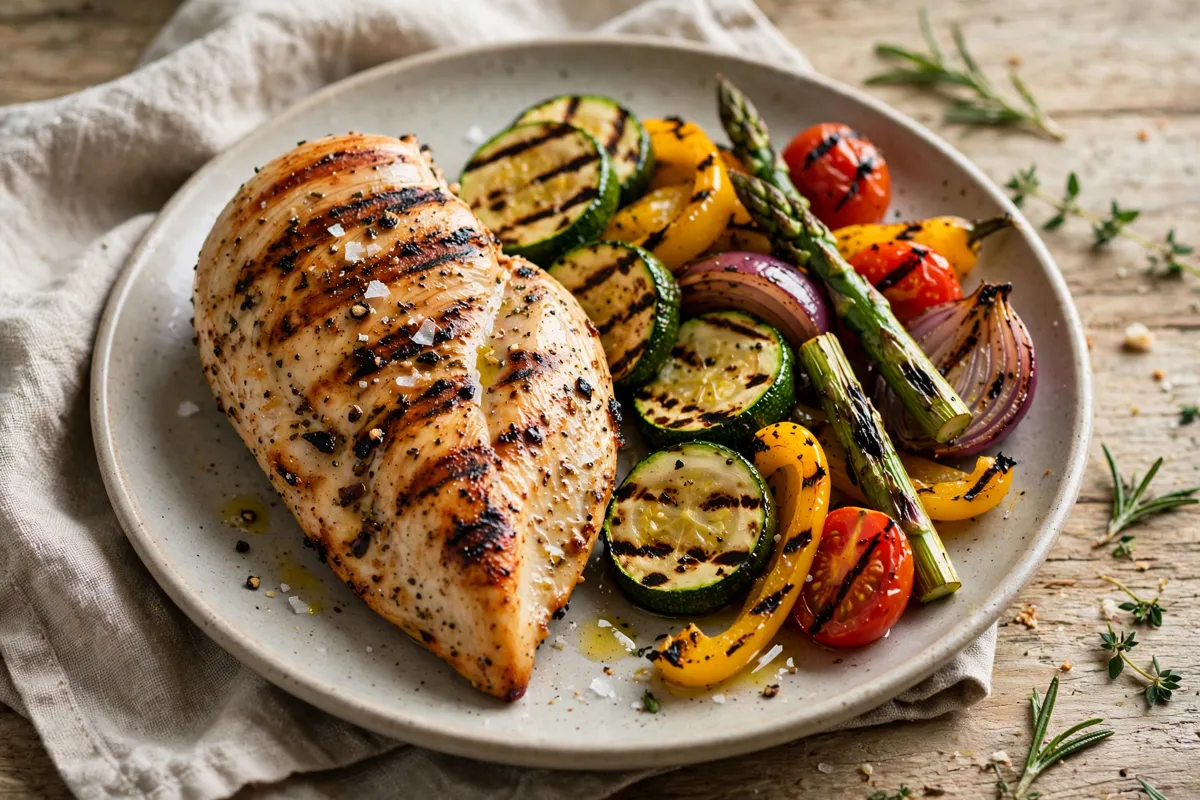
A grilled chicken breast has about 284 calories at the standard size. That figure — 283.8 calories for a 172-gram cooked breast — comes from USDA's roasted breast entry (FDC ID 171477, 165 calories per 100 grams), because USDA publishes no separate grilled entry: its roasted entry is the dry-heat entry, and grilling is dry-heat cooking. So the calories in a grilled chicken breast are priced on the roasted basis, stated openly rather than disguised as a distinct measurement.
This article explains why the roasted entry is the right stand-in, gives the grilled answer at every common portion from a half breast to 8 ounces, and separates what the grill itself does to the meat from what marinades, skin and portion size do around it. Once you have the basis, any weight from your own grill can be priced in the chicken protein calculator.
Short Answer
A standard grilled chicken breast (172g cooked, boneless and skinless) contains 283.8 calories and 53.4g of protein, priced from USDA's roasted dry-heat entry at 165 calories per 100g. A half breast (86g) is 141.9 calories, and each cooked ounce is 46.8 calories. Grilling adds nothing by itself — what changes real-world answers is the size of the breast and anything put on it.
Why Is Grilled Chicken Priced From a Roasted Entry?
USDA's SR Legacy dataset distinguishes chicken breast by three cooked treatments: roasted, stewed and fried. There is no grilled line and no baked line. That is not an oversight to work around quietly; it reflects how the analysis is done. The nutrient profile of cooked breast meat is set mainly by its final water and fat content, and dry-heat methods — roasting, grilling, baking — drive the meat to a similar place: water leaves, protein concentrates, and the finished meat lands at 165 calories and 31.02g of protein per 100g.
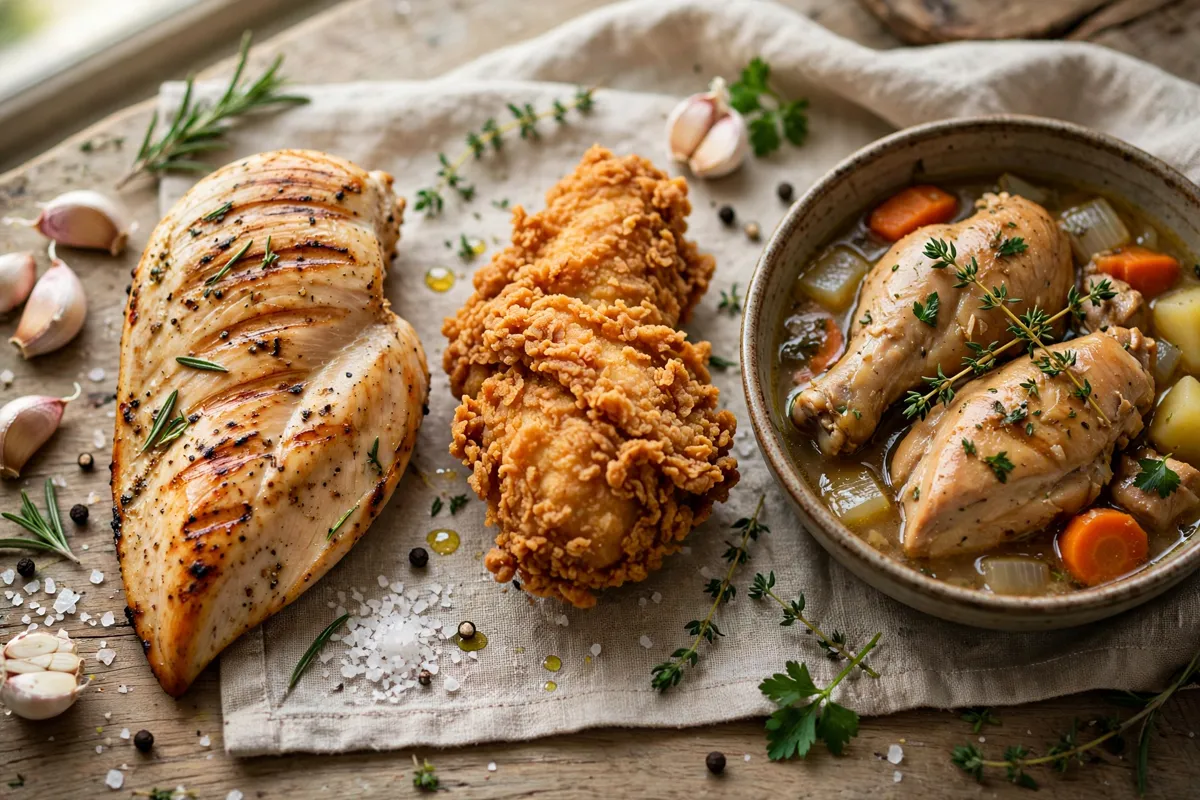
Moist heat is genuinely different, which is why it gets its own entry: stewed breast (FDC ID 171478) holds absorbed water and reads 151 calories per 100g. Frying differs too, at 187 per 100g, because the meat takes up fat. Grilling belongs with the dry-heat family on every measurable that matters here, so the roasted entry is the honest basis — the same reasoning this site applies in does cooking method change chicken protein, where the per-gram shifts between methods are traced to water movement rather than to protein appearing or vanishing.
What Are the Calories at Each Grilled Portion?
With the basis settled, the portion table is the roasted table, and it is worth having in full because grilled breasts are served at every one of these sizes:
The cup row deserves its moment, because grilled chicken is so often a topping rather than a centrepiece. A salad built on a cup of chopped grilled breast starts at 231.0 calories from the chicken alone — before dressing, grains or anything else in the bowl — which surprises people who logged "a grilled chicken salad" as if the chicken were a garnish. It is the meal's protein engine and most of its substance; price it first and build the rest of the bowl around the number.
- Half a breast, 86g = 141.9 calories and 26.7g protein
- 4 ounces, 113.4g = 187.1 calories and 35.2g protein
- 6 ounces, 170.1g = 280.7 calories and 52.8g protein
- A whole standard breast, 172g = 283.8 calories and 53.4g protein
- 8 ounces, 226.8g = 374.2 calories and 70.4g protein
- 1 cup chopped or diced, 140g = 231.0 calories and 43.4g protein — the portion that matters when the grilled breast is sliced over a salad or into a wrap
What Does the Grill Itself Actually Change?
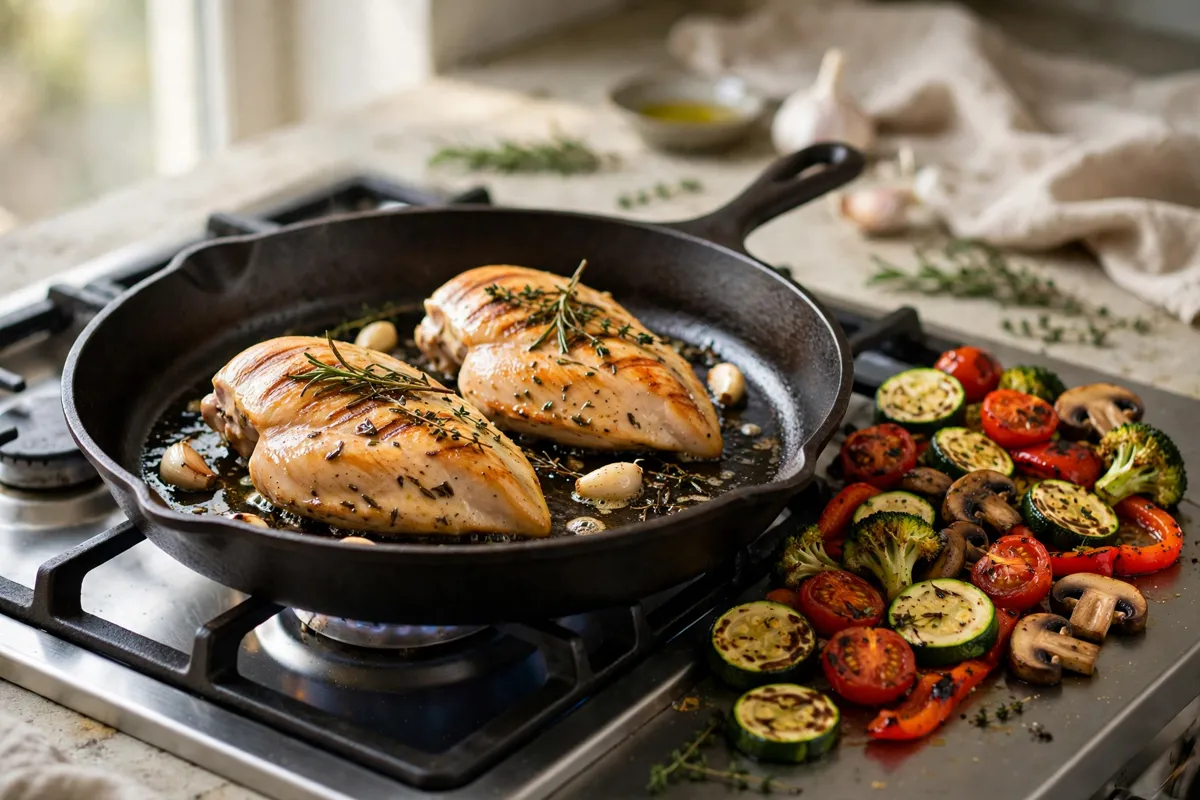
Heat over open flame or a ridged pan does three things to a skinless breast: it drives off surface water, renders the meat's small amount of intramuscular fat (the entry carries 3.57g of fat per 100g, some of which drips away), and browns the surface. None of these creates calories. If anything, a grilled breast that loses a little more water than an oven-roasted one ends a touch more concentrated per gram — but that effect lives inside the difference between individual pieces of meat, not between database entries, and no separate grilled analysis exists to price it. Claiming a precise grilled-only figure would be inventing data.
Where grilling genuinely moves the answer is at the edges. Charred, sugar-bearing marinades add carbohydrate calories the plain entry does not carry — the plain meat itself has 0g of carbohydrate, so any carbs in your log came from what the meat was soaked in or brushed with. Skin left on for the grill and eaten prices from the skin-on entry at 197 calories per 100g instead of 165. And grills encourage large pieces: an 8-ounce grilled breast is 374.2 calories, nearly 100 more than the standard breast, without the grill adding a single calorie of its own. For comparison with the restaurant version of this question, see how many calories in a grilled chicken, which prices a specific grilled chicken item from a tracked menu rather than the plain cut. One cup of chicken gets the same treatment, with its calories counted in full.
How Does Grilled Compare With Fried and Stewed Breast?
The three USDA treatments frame the grilled answer usefully. Per 100g of cooked meat: stewed 151 calories, roasted and therefore grilled 165, fried 187. The grilled breast sits in the middle of the family — above the water-holding stewed meat, well below the fried meat that has taken up cooking fat. Protein per 100g runs stewed 28.98g, roasted 31.02g, fried 33.44g, a ranking that tracks water loss rather than any method creating protein.
That framing answers a common worry directly: grilling does not "add calories" compared with other plain methods, and it is not uniquely virtuous either. It is dry heat, priced like dry heat. The choices that swing a grilled chicken meal's total are portion weight, skin, and what is brushed on the meat — all visible, all loggable, none mysterious.
What About Grilled Dark Meat Instead?
Not every grilled piece is a breast, and the same dry-heat logic prices the rest of the bird from its own entries. A grilled skinless thigh prices from the roasted thigh entry (FDC ID 172388) at 179 calories per 100g, so the standard 116g thigh comes off the grill at 207.6 calories with 28.7g of protein — more calories than a half breast (141.9) despite being a smaller piece than a whole breast, because thigh meat carries 8.15g of fat per 100g against the breast's 3.57g. A grilled drumstick prices from its roasted entry at 155 calories per 100g, 148.8 calories for the standard 96g piece. The grill does not blur the cuts together: each part keeps its own per-100g rate, and a mixed grill plate is priced piece by piece, cut by cut, exactly as the calculator's cut selector assumes.
Common Mistakes to Avoid
Do not hunt for a grilled-specific database entry and settle for an unsourced one from a random app; the authoritative dataset has no such entry, and the roasted dry-heat basis is the defensible price. Do not log a marinated grilled breast as plain meat if the marinade carried sugar or oil — the plain entry's 0g carbohydrate is your tell that extras have gone uncounted. Do not assume the grilled breast at a restaurant matches the standard 172g; weigh or ask, because at 46.8 calories per ounce, two extra ounces are 93.6 calories. Do not price skin-on grilled breast at the skinless rate. And do not weigh the breast raw off the grill-master's tray and multiply by the cooked rate — weigh what comes off the grill.
Final Thoughts
A grilled chicken breast is 283.8 calories at the standard 172g size, 141.9 for a half, and 46.8 per cooked ounce — all from USDA's roasted entry, because that entry is the dataset's dry-heat measurement and grilling is dry-heat cooking. The grill changes water and surface, not the meat's fundamental price. Weigh your portion, account for skin and marinades separately, and the chicken protein calculator will price any grilled weight you bring to it.
People Also Ask
How Many Calories Are in a Baked Chicken Breast?
A baked chicken breast has about 284 calories at the standard size — 283. 8 calories for a 172-gram cooked, boneless, skinless breast. Like grilling, baking has no separate entry in USDA FoodData Central; the figure comes from the roasted breast entry (FDC ID 171477) at 165 calories per 100 grams, because roasting is the dataset's dry-heat measurement and a home oven is dry heat.
How Many Calories Are in a Roasted Chicken Breast?
A roasted chicken breast has 283. 8 calories at the standard size — a 172-gram cooked, boneless, skinless breast. This is the one chicken-breast answer that needs no stand-in or substitute entry: USDA FoodData Central's roasted breast entry (FDC ID 171477) lists the meat itself at 165 calories per 100 grams, so the calories in a roasted chicken breast are read straight from the source entry that anchors this whole series.
Is 2,000 Calories a Day Good?
Two thousand calories a day is good for some people and wrong for others: it is maintenance for a mid-sized, moderately active woman, a sensible weight-loss intake for a larger or active man, and a slow surplus for a small sedentary woman. The figure comes from food labels, where 2,000 calories a day is the reference value used to calculate percentages — a labelling convention, not a health recommendation for your body.
Is 3,000 Calories a Day Too Much?
Three thousand calories a day is too much for most adults — a sedentary woman maintaining on 1,700 would be eating 1,300 calories above her needs, a surplus that predicts well over two pounds of gain a week at first — but it is not too much for a tall, heavily training man whose maintenance genuinely reaches 3,100 to 3,300. As with every round number, the verdict lives in the comparison with your own maintenance.