Chicken Protein Calculator: The Short Answer
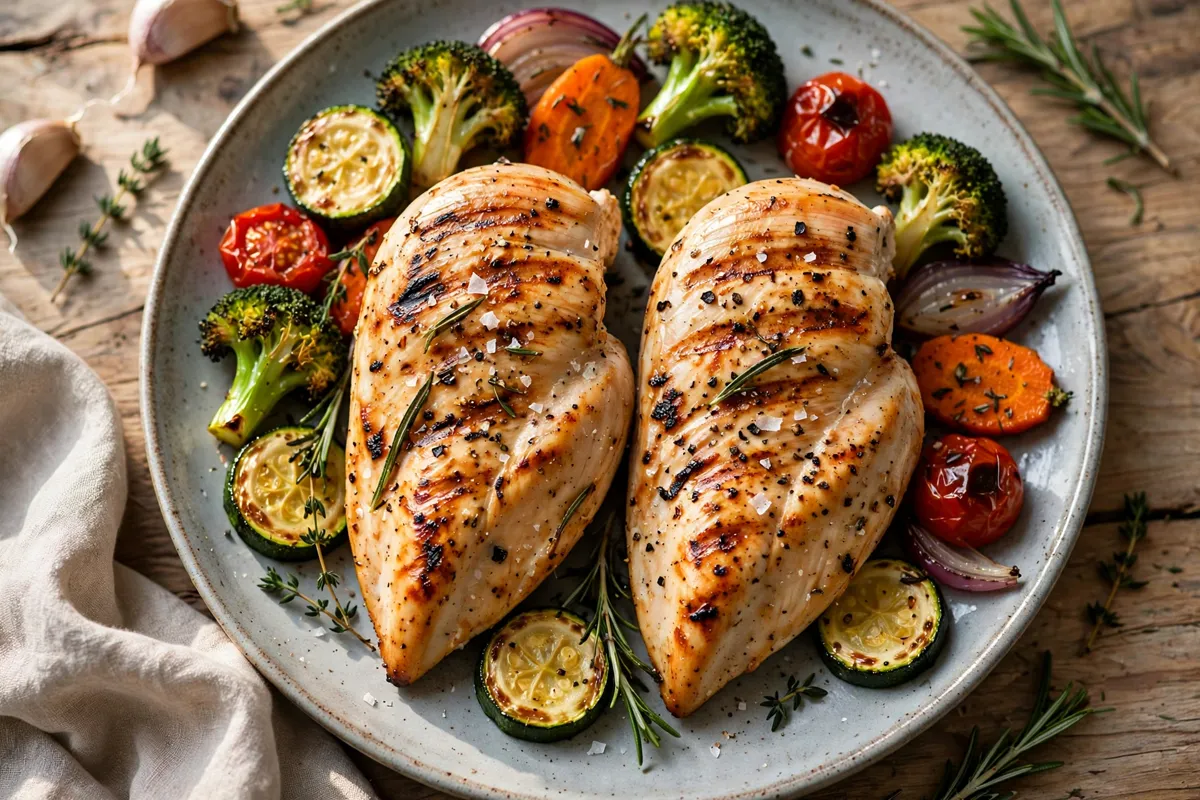
Eight ounces of chicken breast contain about 374 calories — 374.2, derived from USDA FoodData Central's roasted breast entry (FDC ID 171477) — with 70.4 grams of protein. The entry prices boneless, skinless breast, meat only, cooked roasted, at 165 calories and 31.02g protein per 100g; eight ounces is 226.8 grams — exactly half a pound — and 226.8 × 1.65 gives 374.2.
Eight ounces is the double portion: two plan servings in one, the large eater's single fillet, the meal-prep container filled to the top. This closing article of the ounce series prices the double in full — its protein against serious targets, its place beside the pound, and the weighing discipline that a portion this size makes essential. Every smaller size converts from the same entry in the chicken protein calculator.
Short Answer
About 374 calories in 8 ounces of chicken breast (374.2 for 226.8g, half a pound), with 70.4g protein, 0g carbohydrate and about 8.1g fat (from the entry's 3.57g fat per 100g). Served plain, skinless and roasted, it delivers seventy grams of protein for fewer calories than most sandwiches — the double portion is an efficiency play, not an indulgence.
Why Does the Double Portion Exist at All?
Because appetite and arithmetic both sometimes demand it. The single modern breast fillet is the first cause: breasts sold today regularly cook down to eight ounces whole, so the double portion is often just "one chicken breast" at the butcher's counter, eaten entire. The second cause is deliberate design — eaters with high protein targets, from strength athletes to people protecting muscle through a weight-loss phase, find that one large chicken portion closes most of the day's protein account and simplifies everything after it. Two-meals-a-day eaters make the same discovery from the scheduling side.
It helps to see the portion in the series it completes. The scale runs: two ounces 93.6, three 140.3, four 187.1, five 233.9, six 280.7, seven 327.4, eight 374.2 — each ounce adding exactly 46.8 calories and 8.8g protein, because all of them are one entry (165 per 100g, 31.02g protein) multiplied by different weights. Eight ounces is simply the series arriving at half a pound. The pound itself, for the batch cooks, is double again: 748.4 calories and 140.7g of protein at 453.6g. Anyone who has followed the series holds the whole ruler now — one multiplication, every size — and how many calories are in 100 grams of chicken breast supplies the metric version of the same ruler for kitchens that weigh in grams. The weight itself is pinned down in an average chicken breast's weight.
What Does 70.4 Grams of Protein Cover?
Most of a serious day's target, in one portion. Against 100g — a common active-adult goal — it covers 70 percent. Against the 140g target of a larger athlete it covers half. Against a 70kg adult's baseline need of 56g it delivers 126 percent: the entire day's floor, with margin, before breakfast's eggs or dinner's yogurt are counted. And the cost is 374.2 calories — about 19 percent of a 2,000-calorie budget, 13 percent of a 2,800 one.
Place the same 226.8g in other cuts and the breast's case sharpens. Roasted thigh meat at the same weight: about 406.0 calories with about 56.2g protein. The breast gives fourteen more grams of protein for about thirty-two fewer calories — a trade that, at double-portion scale, decides whether the rest of the day needs protein supplements or not. This is why the double portion belongs to the breast specifically: doubling a fattier cut doubles its fat penalty, while doubling the breast doubles only efficiency. The chicken protein calculator runs this comparison for any weight and cut, and how much protein is in one chicken breast shows the same entry at the whole-piece scale, where the reference breast's 53.4g makes this portion look like what it is — a breast and a third.
How Is Eight Ounces Best Weighed and Served?
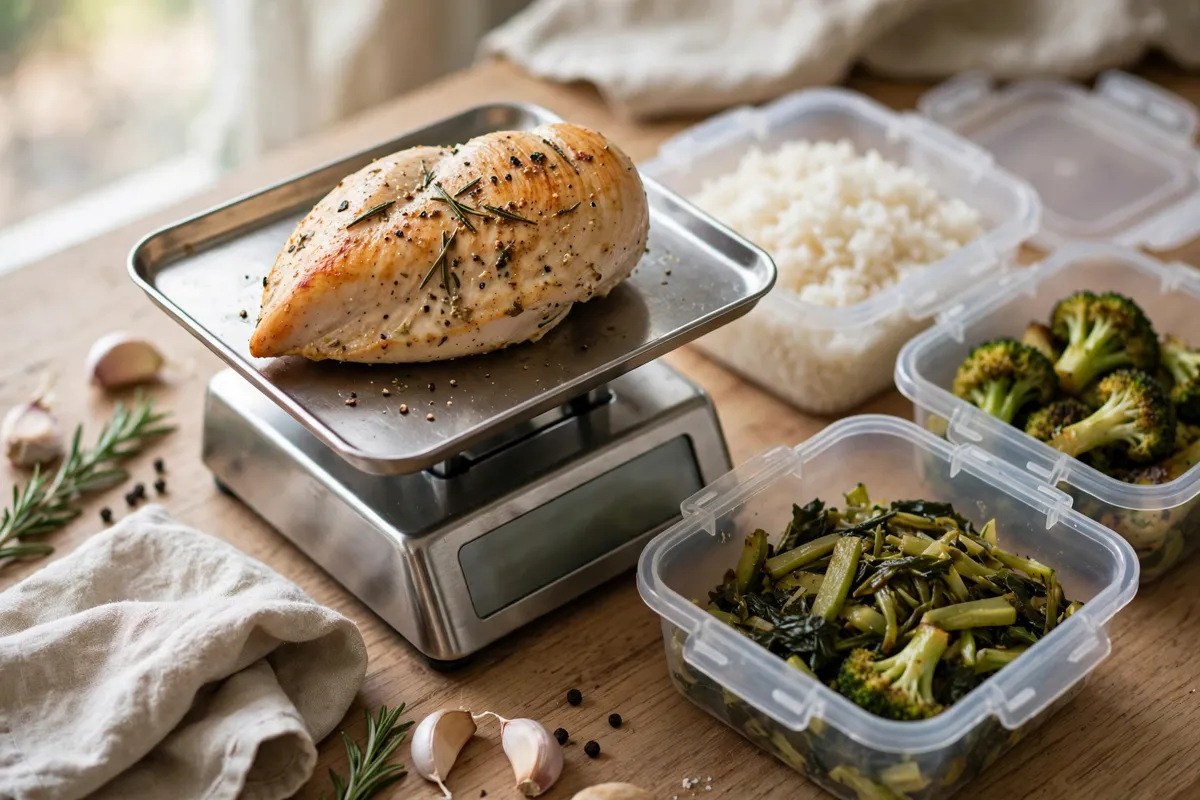
Weighed cooked, with unusual care, because at this size every shortcut doubles too. The portion starts raw at roughly ten and two-thirds ounces (about 302g): roasting surrenders about a quarter of the weight, and a cook who logs the raw 302g against the cooked entry records roughly 498 calories for a 374.2-calorie meal — the largest single-item error available in home chicken tracking. Weigh the cooked batch instead, slice what you serve, and the record is exact. This is the portion size at which the small kitchen scale stops being a diet accessory and becomes ordinary equipment, a transition argued fully in should I weigh chicken raw or cooked.
Serving strategies follow appetite. Whole, as a centrepiece with substantial sides, it suits the two-meal day. Sliced across two plates or two meals, it becomes two four-ounce palm portions of 187.1 — the plan standard — which is how meal preppers actually consume most eight-ounce fillets: cooked as one, eaten as two. Diced, it is about 1.6 of the entry's 140g cups. The portion is a quantity, not a ceremony, and it divides without any change to its price per ounce: 46.8 calories, 8.8g protein, every time.
What Can Push a Real Eight-Ounce Serving Away From 374.2?
The usual three suspects, at double scale. Skin: left on, the entry changes to 197 per 100g and the portion becomes about 446.8 calories — a 72.6-calorie skin, the priciest in the series. Method: stewed breast at 151 per 100g would price the portion at about 342.5, fried meat at 187 per 100g at about 424.1. Additions: oils, butter, marinades and sauces are separate foods whose contributions double with the portion they coat, and a glazed double breast can carry a hundred unlisted calories in its shine.
Restaurant versions deserve the standard caution squared. A chain's published figure governs its own dish; an independent kitchen's "chicken breast" entree may be this portion, may be ten ounces, may arrive sauced. Estimate from the 374.2 anchor, adjust for visible skin and sauce, and accept the estimate as an estimate. At home, where the scale lives, nothing about this portion needs estimating at all — and that asymmetry is the real lesson of the double: the bigger the portion, the more the day's accuracy depends on the meals cooked at home.
The Double Portion and the Rest of the Plate
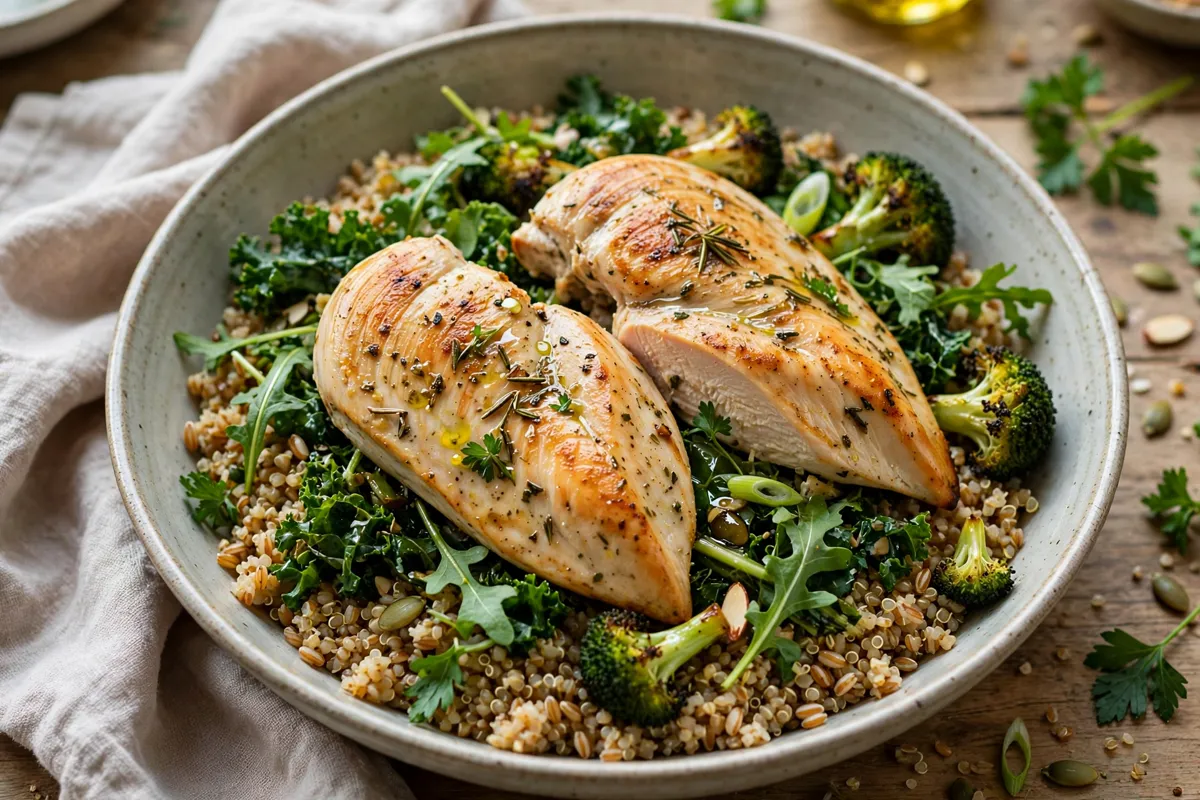
A portion carrying 70.4g of protein changes what the rest of the meal is for. Nothing else on the plate needs to chase protein, so the cook is free: vegetables for volume and fibre, grains or potatoes for the energy the day still owes, a sauce chosen for pleasure rather than protein content. That freedom is the double portion's hidden dividend — it converts the main course into a settled question and lets dinner be designed, for once, around everything protein is not.
Common Mistakes to Avoid
Do not log the raw fillet's weight against the cooked figure: the ten-and-two-thirds-ounce raw start of this portion is the series' biggest trap, worth about 124 phantom calories. Do not call eight ounces "one breast, so about 280" — the reference whole breast is six ounces at 280.7, and this portion is a third larger again. Do not price it with skin at the skinless rate (446.8, not 374.2). Do not let the double portion's protein halo exempt its calories from the day: 374.2 is a real claim on the budget, honestly earned. And do not split a cooked fillet by eye into "two fours" for meal prep — halves eyeballed are routinely five and three, so weigh the halves if the plan depends on them being equal.
Final Thoughts
Eight ounces of chicken breast — half a pound, the double portion — contain about 374 calories: 374.2 for 226.8 cooked grams on USDA's roasted, skinless basis, with 70.4g protein, about 8.1g fat and no carbohydrate. It closes most protein targets in a single serving at the most efficient rate in the whole-food world, and it completes a series in which every ounce costs the same honest 46.8 calories. Weigh it cooked, divide it as appetite dictates, and run any in-between size through the chicken protein calculator.
People Also Ask
How Many Calories Are in 1 Pound of Chicken Breast?
One pound of cooked, boneless, skinless chicken breast has about 748 calories. The exact USDA-derived figure is 748. 4 calories for 453.
How Many Calories Are in Half a Chicken Breast?
Half a chicken breast has about 142 calories. Precisely, the USDA portion for half a breast — 86 grams of cooked, boneless, skinless meat — works out to 141. 9 calories, from the roasted breast entry in USDA FoodData Central (FDC ID 171477) at 165 calories per 100 grams.
How to Find Your Maintenance Calories?
You find your maintenance calories two ways, and the reliable answer uses both: estimate them with the Mifflin-St Jeor equation multiplied by your activity factor, then confirm or correct that estimate by eating at it for two to three weeks and watching your weekly average weight. Maintenance — also called your TDEE, total daily energy expenditure — is the intake at which your weight holds steady, and everything else in calorie control is measured from it.
What Is a Calorie Deficit?
A calorie deficit is the state of eating fewer calories than your body burns — your intake sits below your maintenance calories, so your body covers the gap from stored energy, mostly body fat. A typical working deficit is 300 to 500 calories a day: eat 2,000 while burning 2,400 and the 400-calorie daily gap, repeated, is what produces weight loss at roughly 0. 8 pounds a week.