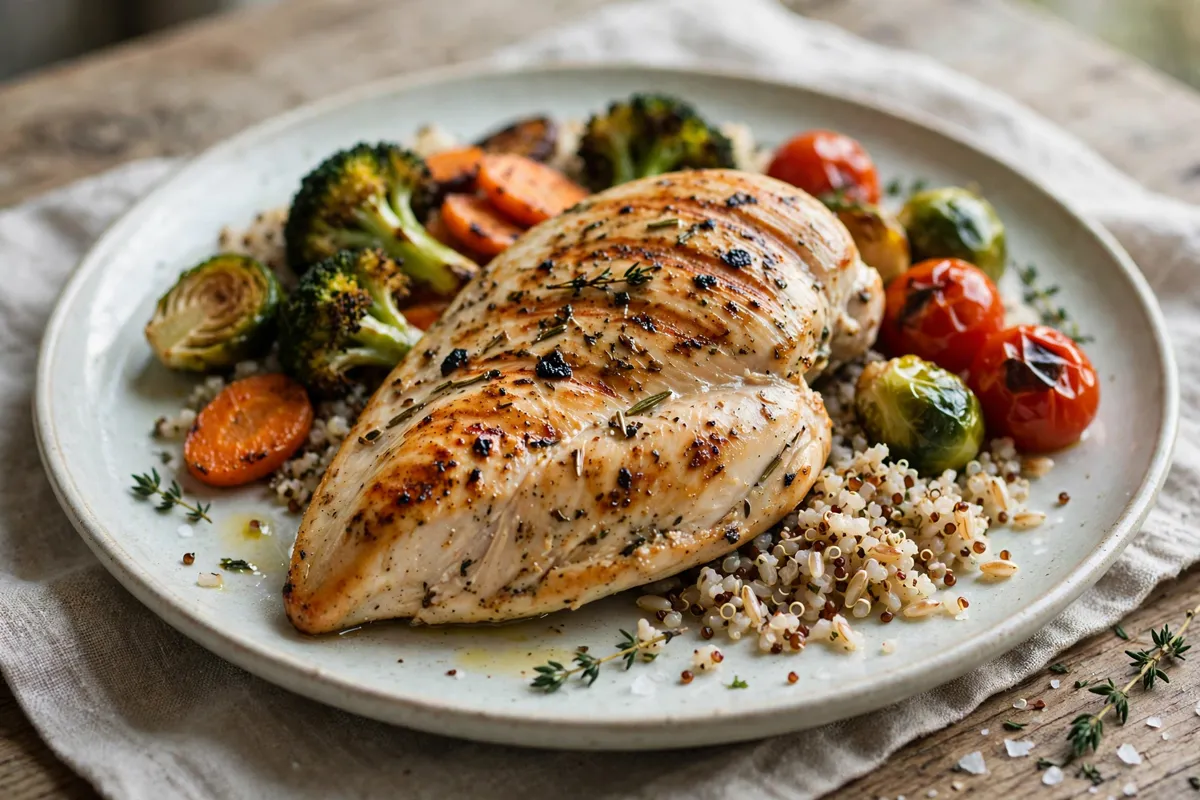
Chicken Protein Calculator: The Short Answer
Six ounces of chicken breast contain about 281 calories — 280.7, derived from USDA FoodData Central's roasted breast entry (FDC ID 171477) — with 52.8 grams of protein. The entry prices boneless, skinless breast, meat only, cooked roasted, at 165 calories and 31.02g protein per 100g; six ounces is 170.1 grams, and 170.1 × 1.65 gives 280.7.
Six ounces is the restaurant portion: the size a single modern breast fillet most often reaches the plate at, and — not coincidentally — almost exactly the USDA's own reference whole breast. This article prices the restaurant standard in full, from its 52.8 grams of protein to its 435mg of potassium, and shows how it anchors a day's eating. The chicken protein calculator scales down to plan-sized portions from the same entry.
Short Answer
About 281 calories in 6 ounces of chicken breast (280.7 for 170.1g), with 52.8g protein, 0g carbohydrate, about 6.1g fat (from 3.57g per 100g) and about 435mg potassium (from 256mg per 100g) — all on the plain roasted, skinless basis. It is, within two grams, the USDA's reference whole breast portion of 172g.
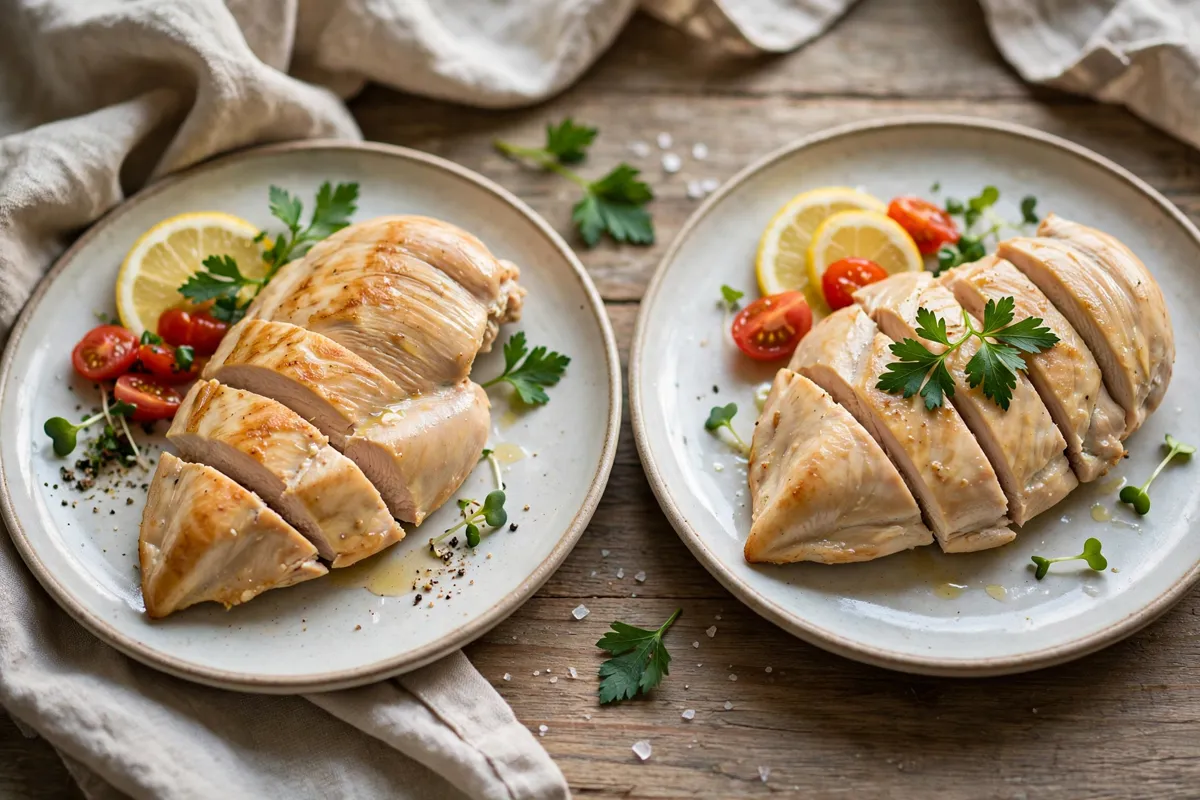
Why Is Six Ounces the Restaurant Portion?
Because the modern chicken made it so. Breasts are bred and sold larger than they were a generation ago, and a single fillet — cooked whole, served whole — now commonly lands between five and seven ounces, with six the centre of the distribution. Restaurants serve the piece as it comes rather than trimming it to a textbook serving, so the restaurant portion and the reference portion converged: USDA's standard whole breast for the roasted entry is 172g (two of its 86g half-breast portions), just 1.9 grams above the 170.1g in this article's title. When you order "a chicken breast," six ounces and about 281 calories is the most defensible default assumption in the absence of a published figure.
That default has consequences for diaries. Logging a restaurant breast as a four-ounce plan portion understates it by about 94 calories and 17.6g of protein — the single most common chicken error in eating-out records. Logging it as this article's six ounces, then adjusting if the piece was visibly small or vast, keeps the day honest. Chains that publish their own nutrition override the estimate, as chain figures always do; independent restaurants, which publish nothing, are where the 280.7 earns its keep. The protein this portion carries is put in daily context in how much protein is in one chicken breast, whose whole-breast figure — 53.4g at 172g — is the same meal seen from the protein side. 7 ounces of chicken breast gets the same treatment, with its calories counted in full.
What Does a 52.8-Gram Protein Portion Do to a Day?
It can carry the day almost alone. A 70kg adult's baseline protein need at 0.8g per kilogram is 56g — this portion covers about 94 percent of it. At a 100g training target it covers over half, in one item, for 280.7 calories: an eighth of a 2,200-calorie day buying half its protein. That is the arithmetic that makes the chicken-breast dinner the default architecture of high-protein eating — the main course settles the protein question, and everything else on the plate can be chosen for fibre, micronutrients and pleasure.
The supporting nutrients scale with the portion in ways worth noticing at this size. Potassium reaches about 435mg (170.1g at the entry's 256mg per 100g), a meaningful contribution from a single food. Sodium stays modest at about 126mg for the plain meat — restaurant preparations with brines and seasonings will exceed it, sometimes severalfold, and the gap belongs to the preparation, not the breast. Fat at about 6.1g remains small enough that the portion's calories are, to a first approximation, protein calories: 52.8g × 4 = 211 of the 280.7, with fat's 6.1 × 9 ≈ 55 accounting for most of the rest. The chicken protein calculator shows the same ledger for a portion of any weight, which is how competition between cuts — breast at this size against thigh's roughly 304 calories and 42.1g protein for six ounces — gets settled with numbers instead of loyalties.
How Should a Six-Ounce Portion Be Divided Across a Day?
Often, it should not arrive in one sitting at all — and the figures explain the options. Split across two meals, it becomes two three-ounce servings of 140.3 calories and 26.4g protein each, the classic textbook pattern that spreads protein through the day. Eaten whole at dinner, it front-loads the evening and frees lunch to be lighter. Meal preppers exploit the same arithmetic in reverse: a batch built on six-ounce portions needs no subdivision, one container per meal, protein settled.
There is no metabolic cliff between these arrangements — total daily protein and total daily calories do most of the work in the evidence — but there is a practical one: satiety. A 280.7-calorie portion with 52.8g of protein is deeply filling for its cost, and many people find a whole restaurant breast at lunch ends afternoon snacking more reliably than two half-portions do. Plan by appetite and schedule, log by weight, and the portion serves either pattern exactly. For the raw starting weight behind a six-ounce cooked portion (about eight raw ounces, at the usual quarter-weight cooking loss), the method in should I weigh chicken raw or cooked gives the full conversion table.
What Changes the 280.7 on a Real Restaurant Plate?
Preparation, in three layers. The chicken itself can shift method: stewed breast would price six ounces at about 256.9 calories (151 per 100g), grilled tracks the roasted figure, and skin — if the restaurant leaves it — lifts the portion to about 335.1 (197 per 100g). Then come the pan and the sauce: oil, butter and glazes are separate foods with separate prices, and a rich pan sauce can add a hundred calories that have nothing to do with the bird. Finally, brining and injected solutions, common in commercial preparation, add weight that is mostly water and salt — the calories barely move, the sodium climbs, and the cooked weight slightly overstates the chicken it represents.
None of this makes restaurant logging futile; it makes it estimative, which is the correct mode for eating out. Use 280.7 as the anchor for a plain grilled or roasted skinless breast of typical size, adjust visibly for sauce and skin, and let home-cooked weighed portions carry the precision of the week's record. An estimate with stated assumptions beats a guess with none, every day of the week.
Common Mistakes to Avoid
Do not log a restaurant breast as four ounces by habit — at six ounces the piece carries about 94 more calories and 17.6g more protein than the plan portion, and repetition turns the gap into a stalled diet. Do not assume the whole raw fillet's weight is the cooked weight: an eight-ounce raw breast cooks down to about six ounces, which is this article's portion, so weigh after cooking for this figure. Do not price skin-on restaurant chicken at 280.7; the skin takes it to about 335. Do not ignore a glossy sauce because the chicken was "plain" — the sauce is a food too. And do not split the difference with five ounces out of indecision: if the piece matches the reference breast, call it six, and let the record be as accurate as the evidence allows.
Final Thoughts
Six ounces of chicken breast contain about 281 calories — 280.7 for 170.1 cooked grams on USDA's roasted, skinless basis — with 52.8g protein, about 6.1g fat, no carbohydrate and about 435mg potassium. It is the restaurant portion and the reference breast in one: the size life most often serves, priced exactly. Recognise it on the plate, adjust only for skin and sauce, and record it in the chicken protein calculator or your diary at its true, useful weight.
People Also Ask
How Many Calories Are in 7 Ounces of Chicken Breast?
Seven ounces of chicken breast contain about 327 calories — 327. 4, derived from USDA FoodData Central's roasted breast entry (FDC ID 171477) — with 61. 6 grams of protein.
How Many Calories Are in 8 Ounces of Chicken Breast?
Eight ounces of chicken breast contain about 374 calories — 374. 2, derived from USDA FoodData Central's roasted breast entry (FDC ID 171477) — with 70. 4 grams of protein.
How Many Calories Should a Man Eat Per Day?
Most men need about 2,000 to 3,000 calories per day to maintain their weight, calculated with the Mifflin-St Jeor equation for men — (10 × weight in kg) + (6. 25 × height in cm) − (5 × age) + 5 — multiplied by an activity factor from 1. 2 for sedentary days up to 1.
How Many Calories Should I Eat to Gain Weight?
To gain weight steadily, eat 300 to 500 calories above your maintenance level every day — the surplus a typical adult needs to add roughly half a pound to a pound a week — with maintenance itself worked out from the Mifflin-St Jeor equation times your activity factor. Gaining is the mirror image of losing: same anchor number, opposite adjustment, and the same need to keep the pace slow enough that most of what you add is muscle and healthy…