MyPlate Plan Calculator: The Short Answer
There is no single official list of three dietary principles — but the trio most often taught is balance, variety and moderation: eat the food groups in the right proportions, eat widely within them, and keep portions and energy matched to your needs. On the MyPlate pattern, balance alone looks like 2.5 cups of vegetables and 5.5 ounce-equivalents of protein foods in a 2,000-calorie day.
Honesty first, since this question attracts confident nonsense: different textbooks, courses and health agencies phrase the principles differently. Some name adequacy, balance and moderation; some add nutrient density or calorie control; the USDA Dietary Guidelines for Americans themselves are organised around broader recommendations — follow a healthy pattern across the lifespan, customise nutrient-dense choices, meet food-group needs within calorie limits, and limit added sugars, saturated fat, sodium and sugary drinks. Balance, variety and moderation (or proportion) is the classic teaching trio because between them they summarise those guidelines in three words a person can actually use at a market stall. This article explains each principle, what it looks like in servings, and where the three support or correct each other, anchored to the MyPlate plan calculator.
Short Answer
Balance = the right proportions of the five food groups for your calorie level. Variety = different foods within each group across the week, because no food covers everything. Moderation (or proportion) = portion sizes and total energy matched to needs, with energy-dense extras kept occasional. Together they describe a complete pattern; omitting any one breaks the other two.
What Does Balance Mean as a Dietary Principle?
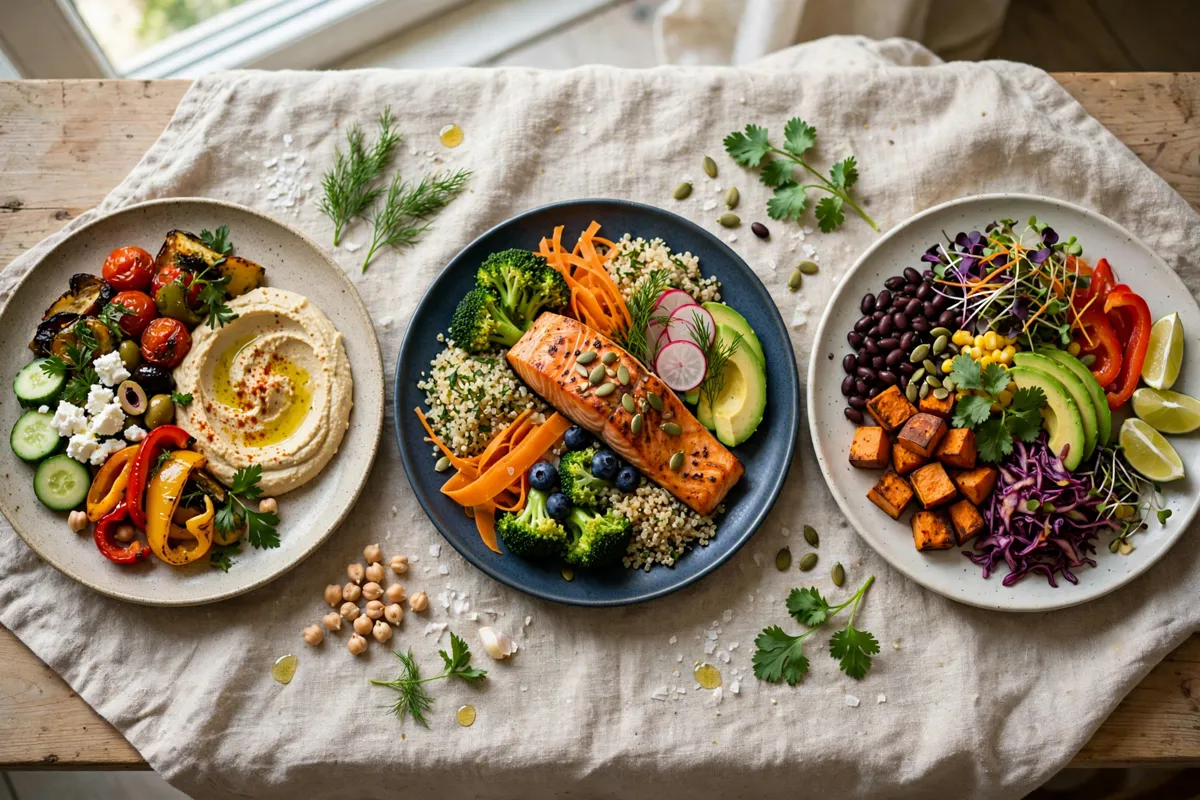
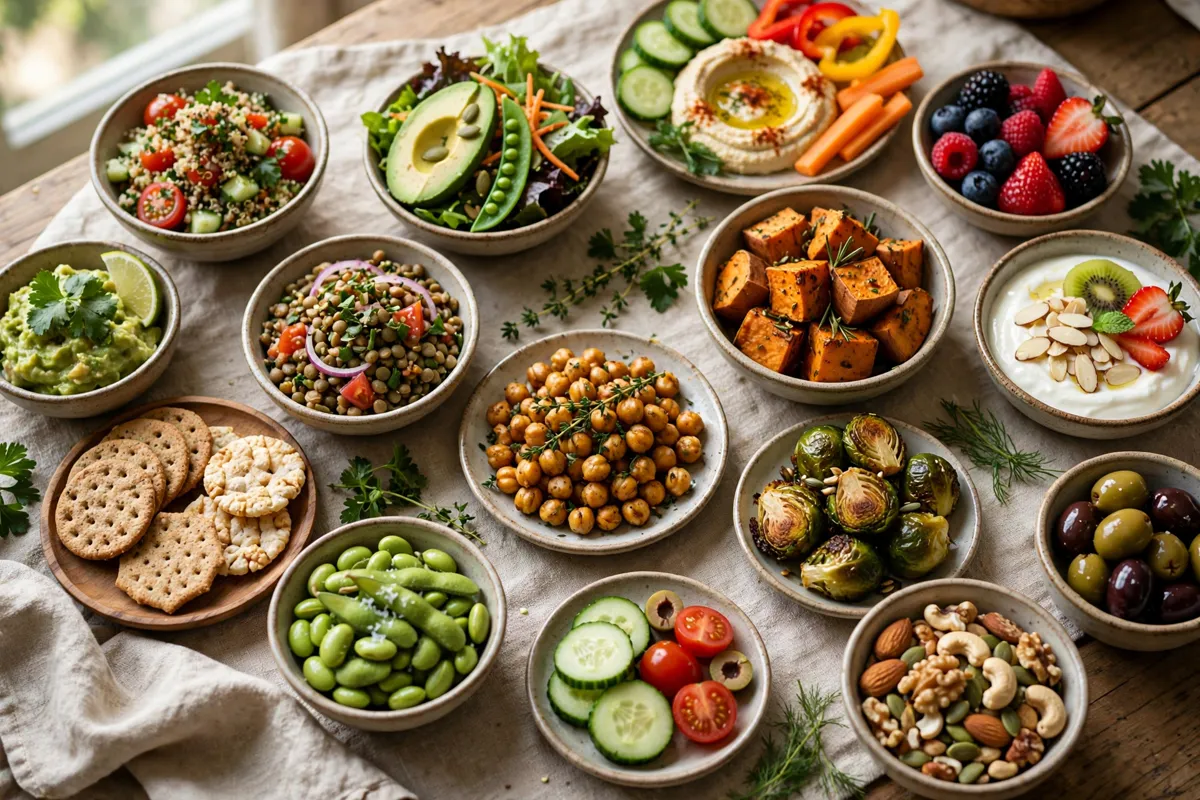
Balance is proportion between the groups. The MyPlate plate is its official portrait: half fruits and vegetables, half grains and protein foods, dairy alongside — at 2,000 calories, 2 cups of fruit, 2.5 cups of vegetables, 6 ounce-equivalents of grains, 5.5 ounce-equivalents of protein foods and 3 cups of dairy per day. Balanced does not mean equal: the groups are deliberately unequal because their jobs are unequal — vegetables sprawl across half the plate jointly with fruit because they deliver the most micronutrients per calorie, while protein foods, though vital, are energy-denser per nutrient and portioned accordingly. A day can be composed entirely of nutritious foods and still be unbalanced — all protein and grains, no vegetables — just as a meal of only salad is unbalanced in the other direction. The test is coverage in proportion, and building a balanced meal with the MyPlate method demonstrates it plate by plate.
What Does Variety Mean as a Dietary Principle?
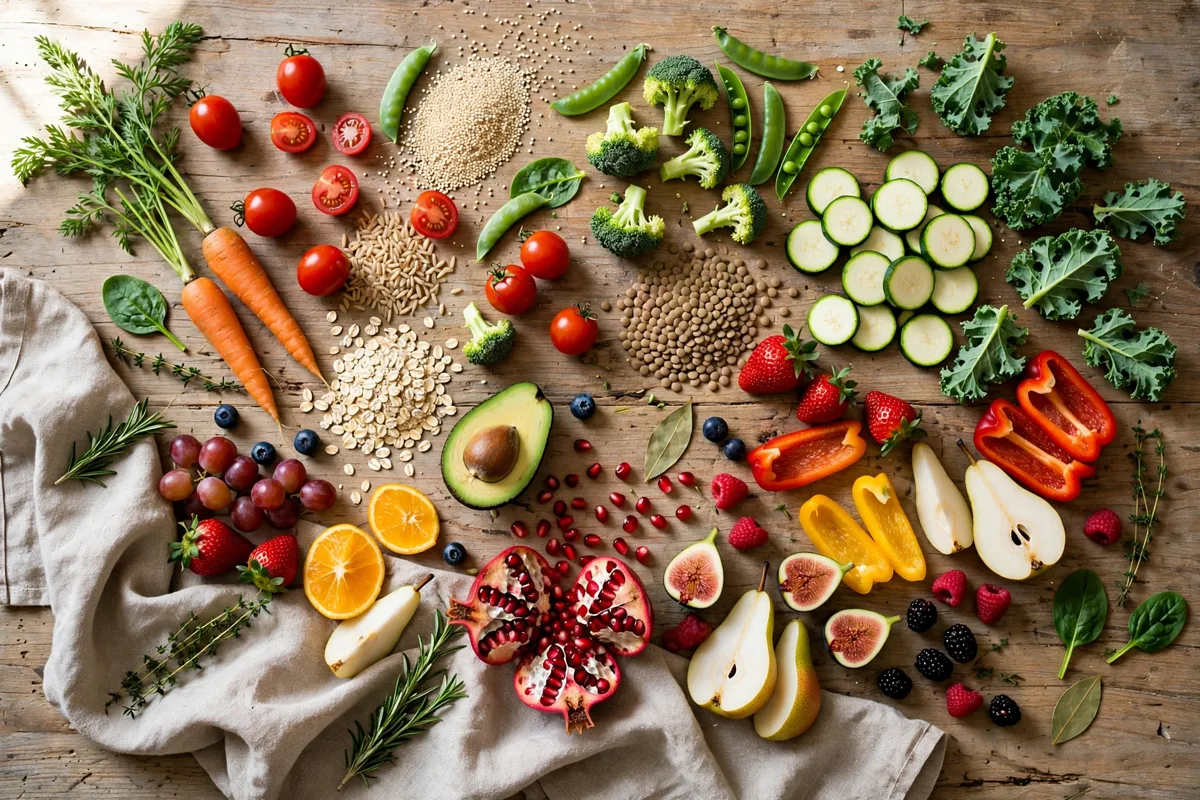
Variety operates within groups. Each food carries a partial nutrient profile: spinach brings folate and iron, carrots bring beta-carotene, broccoli brings vitamin C and fibre (about 5g per cooked cup in this site's listings) — the vegetable group only delivers its full promise when its subgroups rotate. The same logic runs through protein foods (oily fish, eggs, beans and chicken each contribute differently), grains (oats, rice, wheat, quinoa) and fruits by colour. Variety has a second, practical function: it protects the pattern socially and psychologically. People abandon monotonous "perfect" diets; a varied pattern is renewable indefinitely. Practically, variety is a weekly habit — shop for different vegetables than last week, rotate two or three protein anchors, change the fruit — not a daily performance. Its absence is invisible day to day and obvious in a fortnight's shopping receipts.
What Does Moderation — or Proportion — Mean as a Dietary Principle?
Moderation governs amounts: total energy matched to expenditure, and portion sizes that let energy-dense foods exist in the pattern without dominating it. It is the principle that speaks to the foods outside and between the groups — sweets, fried snacks, sugary drinks, rich sauces. A 12-ounce cola at about 140 calories and 39g of sugar is the textbook moderation case: not poisonous, not a food group, and easily the difference between a day inside its calorie pattern and outside it when it becomes a daily habit. Moderation is also portion literacy within the groups themselves: knowing that an ounce-equivalent of grains is one slice of bread or half a cup of cooked rice stops a restaurant pasta portion — several cups — from silently becoming a whole day's grains at lunch. The calorie side of moderation is personal: the MyPlate patterns span roughly 2,000 calories for a sedentary adult woman to about 3,000 for an active man, so "a moderate amount" is anchored to your level, not a universal plate size. Tools for judging your level include the MyPlate plan calculator itself, and the detailed portion method in calculating daily food portions using MyPlate.
- Balance: proportions between the five groups — the MyPlate plate
- Variety: rotation within each group across the week — coverage and sustainability
- Moderation: total energy and portions matched to your needs — extras stay occasional
- The trio is a teaching summary of the Dietary Guidelines, not a quotation from them
How Do the Three Principles Correct Each Other?
Each principle prevents the others' characteristic failure. Balance without variety becomes a technically complete diet of the same six foods, covering nutrients narrowly and boring its eater into quitting. Variety without balance becomes enthusiastic grazing across everything, with protein foods and grains quietly crowding the vegetables off the plate. Moderation without balance and variety becomes mere restriction — smaller amounts of the same narrow pattern, deficient at lower volume. Balance and variety without moderation produce the "healthy but enormous" pattern: impeccable foods, energy well above needs, weight drifting up anyway. When a real diet is going wrong, one of the three is almost always the missing leg, and naming it tells you the fix: restore a group's proportion, rotate the shopping, or resize the portions. That diagnostic use is why the trio has survived a century of dietary fashion — it describes a pattern's structure the way three legs describe a stool.
It is worth seeing the trio fail and succeed in one concrete pattern. Consider a day of grilled chicken, white rice and a protein shake, repeated daily at exactly the right calories for its eater. Moderation, in the energy sense, is satisfied; balance is not (vegetables, fruits and dairy are absent), and variety is zero — and over months the pattern's gaps in fibre, potassium and a dozen micronutrients are predictable. Now add a rotation of vegetables at both meals, fruit and yogurt across the day, and whole grains swapped in at some meals, keeping the same calories: all three principles are now visibly at work, and nothing about the day became more complicated than a better shopping list. The principles are cheap to apply and expensive to ignore, which is the practical reason teachers keep returning to them.
Common Mistakes to Avoid
Mistake one is expecting an official, universal "three principles" list and being confused by differing versions — as this article states openly, the trio is a teaching convention summarising the Dietary Guidelines, not a regulation; the substance is consistent even where the labels vary. Mistake two is interpreting moderation as "never" — the principle is proportion, and occasional foods inside an overall pattern are compatible with it by design. Mistake three is counting variety across brands of the same food — three kinds of white bread is not grain variety in any nutritional sense. Mistake four is practising balance per meal and abandoning it as impossible, when the pattern is judged over days. Mistake five is using the principles as a substitute for medical guidance where a condition sets its own rules; principles organise general eating, they do not prescribe for individuals.
Final Thoughts
Balance, variety and moderation: proportions between the groups, rotation within them, and portions matched to your energy needs. No single official document hands down exactly these three words — but together they faithfully summarise what the Dietary Guidelines and MyPlate actually ask, in a form you can apply at the next shop. Translate them into your own servings with the MyPlate plan calculator.
People Also Ask
Why Is Nutrition Important?
Nutrition is important because food supplies everything the body is built from and runs on: energy at 4, 4 and 9 calories per gram of protein, carbohydrate and fat, plus the vitamins, minerals and water that regulate every system. Growth, immunity, brain function, repair and long-term disease risk are all, in part, nutrition outcomes.
What Are Healthy Foods?
Healthy foods are nutrient-dense foods — those that deliver a lot of protein, fibre, vitamins and minerals for their calories — drawn from all five food groups: vegetables, fruits, whole grains, protein foods and dairy. A cup of cooked broccoli, at about 55 calories with 5g of fibre and 4g of protein, is the archetype: a great deal of nutrition in a small energy footprint.
What Does 3 Ounces of Chicken Look Like?
Three ounces of chicken looks like a deck of playing cards — a portion of cooked meat (85. 1 grams) about the size and thickness of a card deck, or the palm of an average hand without the fingers, deriving to 140. 3 calories and 26.
What Does 4 Ounces of Meat Look Like?
Four ounces of meat looks like a smartphone — a cooked portion of 113. 4 grams covering roughly a large phone's footprint, a little larger and thicker than a deck of playing cards, or the whole palm of an average hand including the base of the fingers. For chicken breast that portion derives to 187.