MyPlate Plan Calculator: The Short Answer
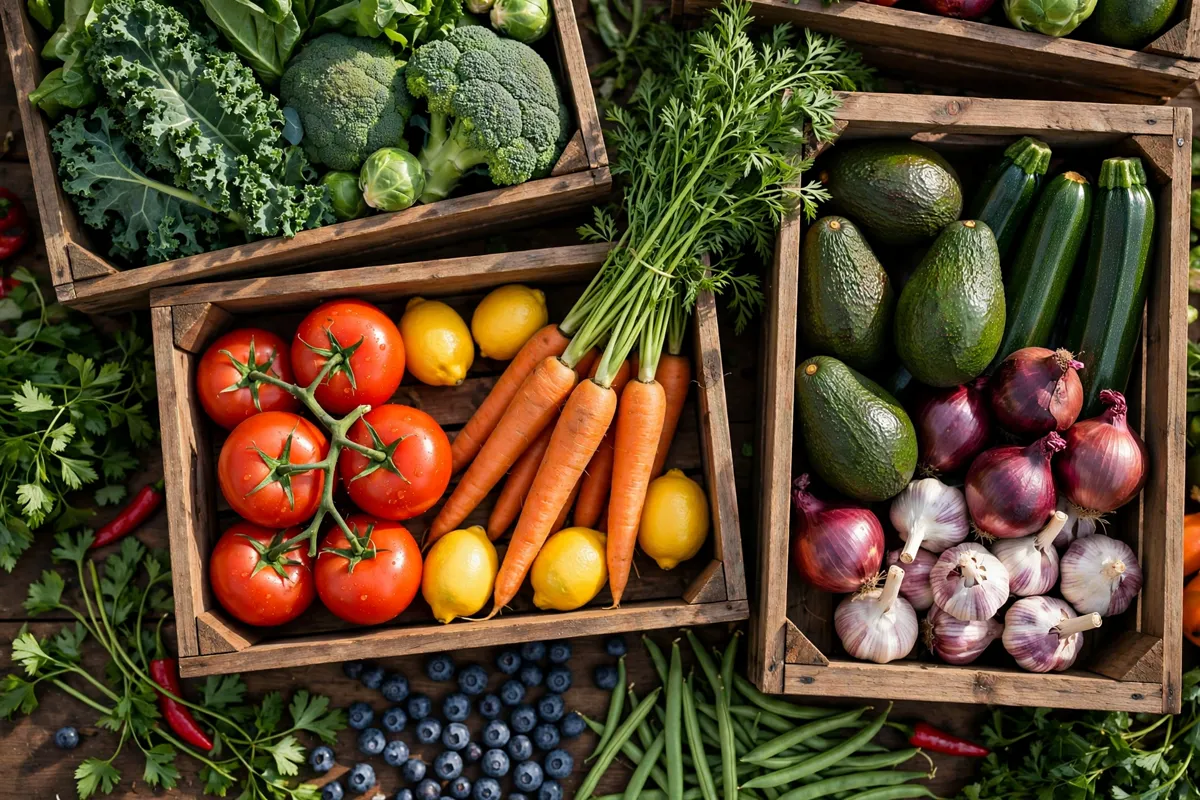
Healthy foods are nutrient-dense foods — those that deliver a lot of protein, fibre, vitamins and minerals for their calories — drawn from all five food groups: vegetables, fruits, whole grains, protein foods and dairy. A cup of cooked broccoli, at about 55 calories with 5g of fibre and 4g of protein, is the archetype: a great deal of nutrition in a small energy footprint.
There is no official list with a pass mark, and any article offering one should be read with care. What exists instead is a reliable working definition — nutrient density — plus the food-group framework that tells you where healthy foods come from and how much of each group a day should hold. This article explains the definition, profiles healthy staples group by group using this site's own verified values, names the characteristics that push a food the other way, and addresses the two honest complications: healthy foods can still be calorie-dense, and unhealthy patterns can be built from technically healthy ingredients. Your reference amounts remain those of the MyPlate plan calculator — at 2,000 calories, 2 cups of fruit, 2.5 cups of vegetables, 6 ounce-equivalents of grains, 5.5 of protein foods and 3 cups of dairy.
Short Answer
Healthy foods are minimally processed, nutrient-dense staples from the five groups: vegetables and fruits of all colours, whole grains, protein foods like fish, eggs, beans and poultry, and dairy such as milk and plain yogurt. Judge a food by what it brings per calorie — protein, fibre, micronutrients — against what it costs in added sugar, sodium and saturated fat.
What Makes a Food "Healthy" in a Way You Can Actually Measure?
Nutrient density: nutrients per calorie. Run the ratio mentally on any food. Broccoli delivers fibre, vitamin C, folate and potassium for 55 calories a cup — dense. Greek yogurt, plain and non-fat, delivers about 17g of protein for 100 calories in a 170g tub — dense. A cola delivers 39g of sugar and nothing else for 140 calories — empty. Three supporting characteristics usually travel with density. Minimal processing: the food is recognisably the plant or animal part it started as, so its fibre and micronutrients survive. Fibre content: foods retaining their fibre (whole fruit rather than juice, whole grains rather than refined) digest slower and feed the gut. And a favourable fat and sodium profile: unsaturated rather than saturated fats, and salt that seasons rather than dominates. No single score settles every case — nuts are dense yet energy-heavy, cheese is protein- and calcium-rich yet salty — which is why the group framework and the pattern, not a per-food verdict, carry the final judgement. The five food groups provide the map these foods are drawn from.
Which Healthy Staples Anchor Each Food Group?
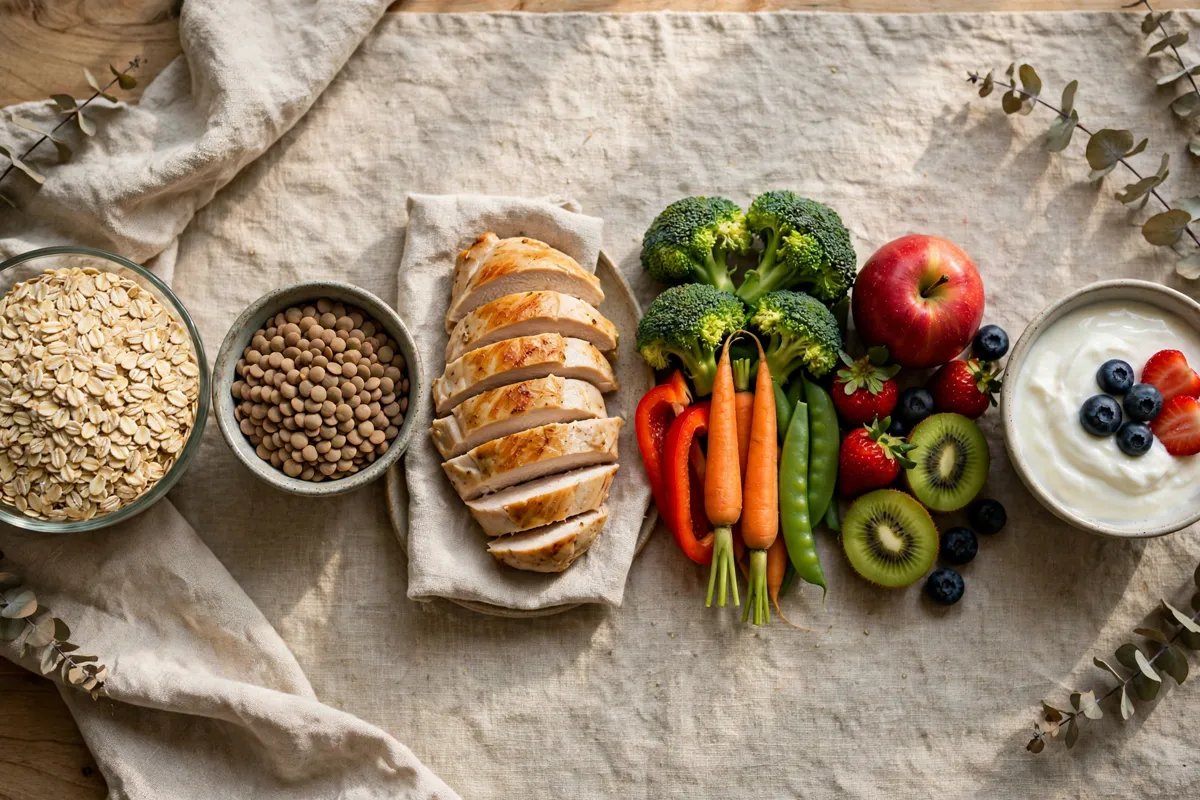
Vegetables: broccoli (55 calories, 5g fibre per cooked cup), spinach (about 7 calories a raw cup), carrots (about 52 per cup), sweet potatoes (about 103 each) — volume, fibre and the widest micronutrient spread per calorie in the diet. Fruits: apples (about 95 calories, 4g fibre), bananas (about 105, with potassium), oranges (about 62, vitamin C), strawberries (about 50 a cup). Grains, in whole form: oats (about 154 calories per half cup dry, 4g fibre), brown rice (about 216 a cooked cup), quinoa (about 222 a cup with 8g protein), whole wheat bread (about 81 a slice). Protein foods: chicken breast (165 calories and 31g protein per 100g), salmon (about 208 per 100g, with its distinctive fats), canned tuna (about 116 per 100g, 26g protein), eggs (about 78 each), tofu (about 76 per 100g), and legumes — black beans and lentils, which the fibre data on this site credits with about 15–16g of fibre per cooked cup alongside their protein. Dairy: whole milk (about 149 a cup) or low-fat versions, plain Greek yogurt, and cottage cheese (about 110 calories and 14g protein per half cup). A shopping list built from these rows is a healthy pattern waiting to be cooked, as the day laid out in the MyPlate examples guide demonstrates.
What Pushes a Food Toward the Unhealthy End?
The mirror-image characteristics: high added sugar (the sugar is a large share of the food's weight and calories), high sodium relative to calories, refined grains stripped of fibre, industrial frying fats, and heavy processing that reassembles food from extracts, syrups and flavourings. The markers are readable on labels: sugar or a syrup among the first ingredients, sodium percentages dwarfing everything else, a fibre figure of zero across a grain product. This site's own comparisons make the scale concrete: a glazed pastry-style item or a cola contributes energy and essentially nothing else, while the same calories of yogurt, fruit or eggs contribute protein, fibre and micronutrients. Note what is not on the list of sins: calories themselves. Olive oil, nuts and cheese are calorie-dense and can be healthy foods in portion; a zero-calorie sweetened drink is neither nourishing nor, by density measures, a health food. Healthiness is about what food delivers and what accompanies it, not about energy alone — the nuance handled carefully in calculating how many calories each MyPlate group should provide.
- Nutrient density is the test: protein, fibre, vitamins and minerals per calorie
- Minimal processing keeps the fibre and micronutrients the food started with
- Healthy staples exist in every group — that is the point of the group system
- Calorie-dense is not the same as unhealthy, and zero-calorie is not the same as healthy
How Much Do Healthy Foods Matter Compared With the Overall Pattern?
The pattern is the senior partner. A week built from healthy staples with one celebratory meal inside it is a healthy pattern; a week of green juices and restriction followed by collapse is not, whatever its ingredients were on the good days. This is why guidance is written in servings and patterns — 2.5 cups of vegetables a day is the actionable form of "vegetables are healthy" — and why perfection per product is the wrong ambition. It also means upgrades are marginal and cumulative: swapping white rice (about 204 calories a cup, 1g fibre) for brown (about 216, 4g fibre) at the dinners you already cook, choosing whole fruit over juice, choosing yogurt over a sweetened dessert most days. Each swap is small; their product over a year is the difference between two genuinely different diets. Build the swaps into the defaults of your kitchen and the pattern holds itself — check yours in the MyPlate plan calculator.
Common Mistakes to Avoid
Mistake one is the health halo: assuming a food marketed as healthy — a sweetened granola, a bottled smoothie, a "protein" bar — has earned the label, when its panel shows sugar rivaling a dessert's. Read the grams, not the banner. Mistake two is banning entire categories that contain healthy staples: all fats, all carbs, all dairy. The framework's answer is selection within groups, not abolition of them. Mistake three is eating healthy foods in unlimited quantity because they are healthy — nuts at about 162 calories an ounce are nutritious and still portioned by reality. Mistake four is believing organic, gluten-free or "natural" on a label equals nutrient-dense; those words describe production and composition claims, not the density test. Mistake five is treating the occasional less-healthy food as a pattern failure and abandoning the pattern — the pattern is what the week looks like, not what Friday night looked like.
Final Thoughts
Healthy foods are the nutrient-dense, minimally processed staples of the five food groups — the vegetables, fruits, whole grains, protein foods and dairy that deliver the most protein, fibre and micronutrients per calorie. Stock your kitchen from that list, portion the dense ones with respect, and let the weekly pattern carry the verdict. Your group amounts are waiting in the MyPlate plan calculator.
People Also Ask
How to Create a Meal Plan?
To create a meal plan, fix your calorie level and food-group amounts first, assign proteins and themes to the week's dinners, build lunches from leftovers and a short rotation, standardise breakfasts — then shop once from the plan. On a 2,000-calorie MyPlate pattern the plan must place 2 cups of fruit, 2. 5 cups of vegetables, 6 ounce-equivalents of grains, 5.
Why Do Portion Sizes Matter?
Portion sizes matter because nutrition scales with amount: the same rice is 204 calories at one cooked cup and about 408 at two, the same chicken is 165 calories at 100g and 248 at 150g. Every nutrient — and every calorie — on your plate is the per-serving figure multiplied by the portion you actually serve.
What Does a Heart-Healthy Food Label Look Like?
A heart-healthy food label shows low saturated fat, little or no sodium by packaged-food standards, meaningful fibre, and — when the food qualifies — an authorised "healthy" or heart-health claim printed in regulated wording. In practice, what a heart-healthy food label looks like is a Nutrition Facts panel where the saturated fat line is small, the sodium line is modest, the fibre line is present, and the front of the pack carries a claim the FDA permits rather than one…
Is a Salad Always a Healthy Choice?
No — a salad is not always a healthy choice, because "salad" is a format, not a nutrient profile. The format spans a 325-calorie garden bowl with grilled chicken and a measured dressing, and an 820-calorie restaurant construction — crispy chicken at 320, a ladled quarter-cup of creamy dressing at about 300, and croutons and cheese at about 160 over the same leaves — that carries more calories than a typical burger at 550 to 600. Both are sold under…