MyPlate Plan Calculator: The Short Answer
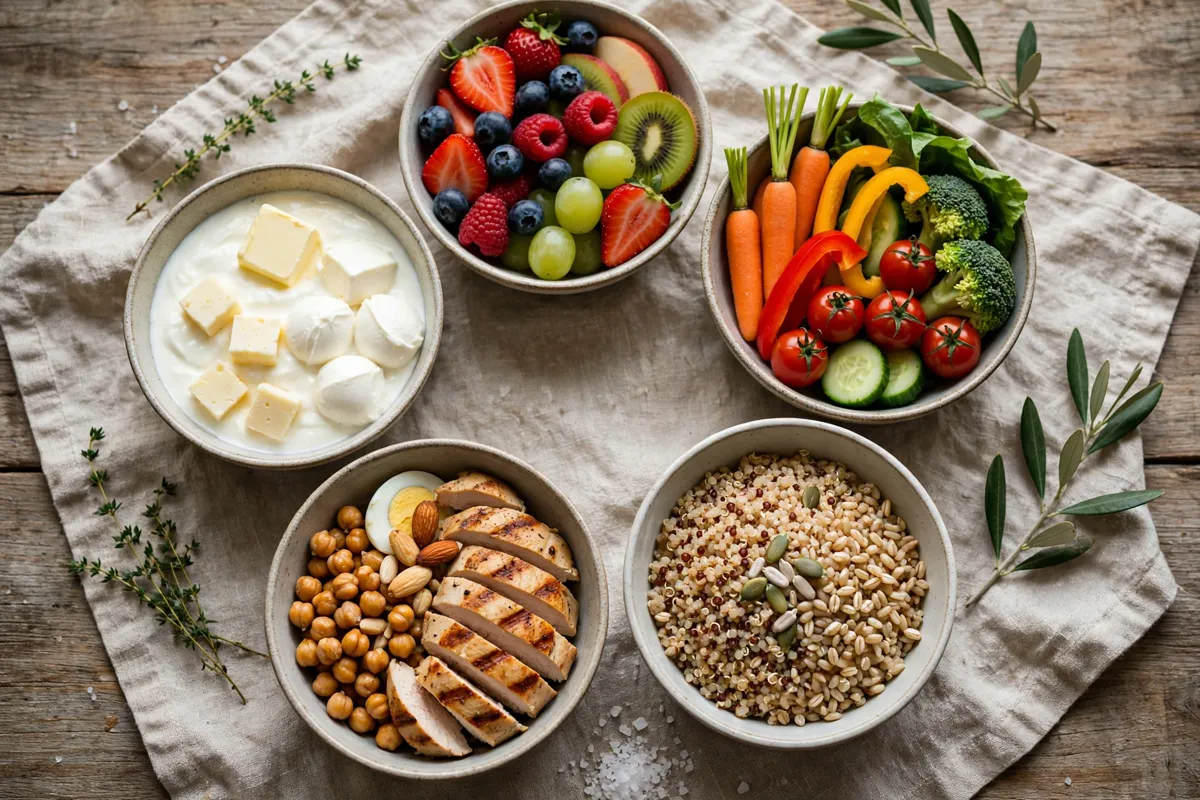
The five food groups are fruits, vegetables, grains, protein foods and dairy — the USDA MyPlate groups. On the 2,000-calorie MyPlate pattern the daily amounts are 2 cups of fruit, 2.5 cups of vegetables, 6 ounce-equivalents of grains, 5.5 ounce-equivalents of protein foods and 3 cups of dairy.
Each group exists because it specialises: no group can do another group's job, which is why dietary guidance is organised this way rather than as a list of individual superfoods. This article profiles each group in turn — what belongs to it, what it contributes, what counts as a serving, and the common classification confusions (is corn a vegetable or a grain? where do beans live?) — and closes with how the five groups assemble into the plate. Amounts for your own calorie level are in the MyPlate plan calculator; this article is the reference for what the groups are. It expands the briefer treatment in the five MyPlate food groups with serving definitions and subgroups. The four food groups are explained on their own page, in full.
Short Answer
Fruits (2 cups/day at 2,000 calories), vegetables (2.5 cups), grains (6 ounce-equivalents, at least half whole), protein foods (5.5 ounce-equivalents) and dairy (3 cups). MyPlate draws the first four as sections of a plate — half fruits and vegetables together, half grains and protein together — with dairy as a cup beside the plate.
What Belongs to the Fruits and Vegetables Groups?
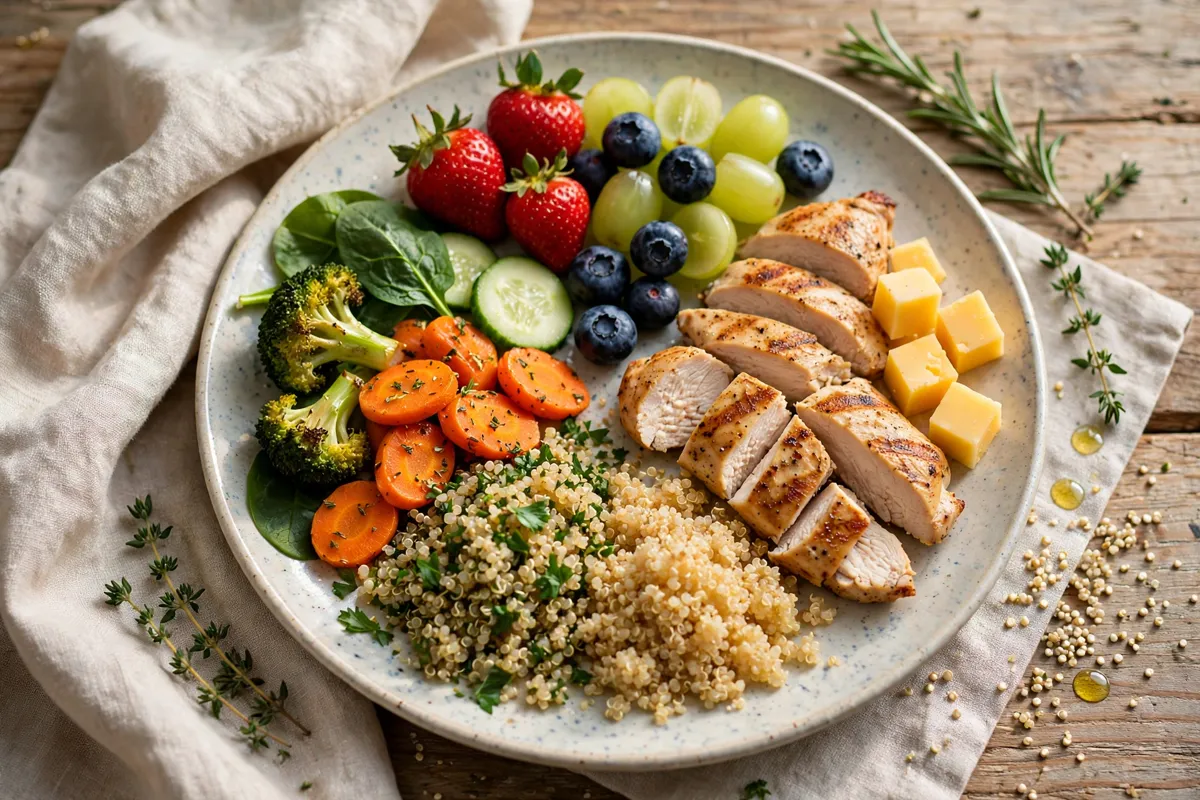
Fruits are the seed-bearing produce you know — apples, bananas, oranges, berries, grapes, melons, peaches, pears — plus 100% fruit juice, which counts but is best limited because it loses the whole fruit's fibre. Amounts are measured in cup-equivalents: a cup of fresh fruit, a cup of juice, or half a cup of dried fruit (drying concentrates, so the portion halves). The fruit figures in this site's food list show the group's character: a medium banana about 105 calories, a medium apple about 95, a cup of mango about 99 — energy with fibre, potassium and vitamin C. Vegetables are the largest and most varied group, organised into subgroups the guidance wants you to rotate weekly: dark-green vegetables (spinach, broccoli, kale), red and orange vegetables (carrots, sweet potatoes, peppers), beans, peas and lentils (which uniquely count here and in protein foods), starchy vegetables (potatoes, corn, peas) and other vegetables (green beans, cucumbers, onions, courgettes). A cup of cooked broccoli here carries about 55 calories and 5g of fibre — the group delivers volume and micronutrients at the lowest calorie cost on the plate, which is why half the plate is given to fruits and vegetables together. The share of the plate they should occupy is also asked directly in how much of your plate should be fruits and vegetables.
What Belongs to the Grains and Protein Foods Groups?
Grains split into whole grains — whole wheat bread, oats, brown rice, quinoa, wholemeal pasta — and refined grains, whose bran and germ were milled away: white bread, white rice, most standard pasta. The guidance is that at least half your grains be whole. The unit is the ounce-equivalent: one slice of bread, one cup of ready-to-eat cereal, or half a cup of cooked rice, pasta or porridge. At 6 ounce-equivalents a day that is a modest stack — this site's values put a cup of cooked white rice at about 204 calories and a cup of cooked quinoa at about 222 with 8g of protein, showing grains contribute some protein too. Protein foods cover meat, poultry, seafood, eggs, nuts, seeds, soy products and — overlapping with vegetables — beans, peas and lentils. Its ounce-equivalent is one ounce of cooked meat, poultry or fish, one egg, a tablespoon of peanut butter, or a quarter cup of cooked beans. The group's star values from this site: cooked chicken breast at 31g protein per 100g, canned tuna about 26g per 100g, a large egg about 6g. Variety within the group matters — seafood twice a week and some plant proteins are the standard guidance pattern.
What Belongs to the Dairy Group — and What Does Not?
Dairy covers milk, yogurt, cheese and fortified soy alternatives — the only plant drinks in the group, because their nutrient profile matches milk's; almond, oat and rice drinks are not in the group in MyPlate guidance, however they are marketed, because their protein and calcium (unless fortified) do not compare. The unit is the cup-equivalent: a cup of milk, a cup of yogurt, or about 1.5 ounces of hard cheese. Daily pattern: 3 cups at the 2,000-calorie level. What dairy uniquely carries is calcium in absorbable quantity plus protein — a cup of whole milk here provides about 149 calories and 8g protein, a 170g tub of plain non-fat Greek yogurt about 100 calories and 17g protein, an ounce of cheddar about 113 calories and 7g. Butter, cream and cream cheese do not count toward the group despite their origin, because they are mostly fat and carry little of the group's calcium and protein. Choosing lower-fat versions keeps the group's nutrients while spending fewer calories — the standard MyPlate advice is to shift toward fat-free or low-fat options where you can.
- Fruits 2 cups · Vegetables 2.5 cups · Grains 6 oz-equivalents (half whole) · Protein 5.5 oz-equivalents · Dairy 3 cups — at 2,000 calories
- Beans, peas and lentils are the only foods that count in two groups: vegetables and protein foods
- Fortified soy is in the dairy group; other plant drinks are not, under MyPlate rules
- Butter and cream are not dairy-group servings — the group is defined by calcium and protein, not origin
How Do the Five Groups Assemble Into the MyPlate Plate?
The plate icon divides a dinner plate into four sections: fruits and vegetables fill half — vegetables the slightly larger share — and grains and protein foods fill the other half, grains slightly larger. Dairy sits beside the plate as a cup. It is a proportion device, not a recipe: any cuisine maps onto it, from a curry (rice as grains, lentils or chicken as protein, vegetable sides as the vegetable section, fruit for dessert, a yogurt raita or a glass of milk as dairy) to a roast dinner. Mixed dishes count by their ingredients: a sandwich contributes grains (bread), protein (filling), sometimes dairy (cheese) and vegetables (salad) in one item. Once you can decompose dishes into groups, the five-group accounting becomes effortless — the practical skill taught step by step in building a balanced meal with the myplate method.
Common Mistakes to Avoid
Mistake one is counting juice and dried fruit as if they were limitless equivalents of whole fruit — they count, but the fibre loss and concentration argue for mostly whole fruit. Mistake two is treating all plant drinks as dairy — under MyPlate only fortified soy qualifies. Mistake three is classifying potatoes and corn as "free vegetables" without noting they sit in the starchy subgroup and carry grain-like energy; they count as vegetables, but rotation across subgroups is the point. Mistake four is letting one food represent a whole group every day — the same lettuce for vegetables, the same chicken for protein — and missing the variety the subgroups exist to encourage. Mistake five is forgetting that beans and lentils can cover both the vegetable and protein groups, a gift for plant-based eaters that many people never use.
Final Thoughts
The five food groups — fruits, vegetables, grains, protein foods and dairy — are a coverage system: each specialises, the amounts are standardised in cups and ounce-equivalents, and the plate visual keeps the proportions honest at a glance. Learn the groups and their serving units and every other piece of nutrition guidance becomes easier to place. Get the amounts scaled to your own calorie level in the MyPlate plan calculator.
People Also Ask
What Are the Six Essential Nutrients?
The six essential nutrients are protein, carbohydrate, fat, vitamins, minerals and water — the substances your body needs from food and drink because it cannot make them, or cannot make enough of them, itself. The first three supply energy at 4, 4 and 9 calories per gram; the last three supply none, yet life depends on them just as completely.
What Are the Three Key Dietary Principles?
There is no single official list of three dietary principles — but the trio most often taught is balance, variety and moderation: eat the food groups in the right proportions, eat widely within them, and keep portions and energy matched to your needs. On the MyPlate pattern, balance alone looks like 2. 5 cups of vegetables and 5.
Does Chicken Contain Carbohydrates?
No — plain chicken contains no carbohydrates: the USDA entry for chicken breast, meat only, cooked roasted (FDC ID 171477), lists 0 grams of carbohydrate per 100 grams, and the thigh, drumstick, leg and wing entries all list 0g as well. Carbohydrates enter chicken dishes only through what is added to the bird — breading, batter, sugary glazes and sauces — never from the meat itself. This article shows the zero across every part, then prices the additions that change…
Is Baked Chicken Fattening?
No — baked chicken is not fattening on the verified numbers: plain baked chicken breast prices on USDA's roasted dry-heat entry (FDC ID 171477) at 165 calories per 100 grams with just 3. 57g fat, and a 4-ounce portion derives to 187. 1 calories with 35.