Chicken Protein Calculator: The Short Answer
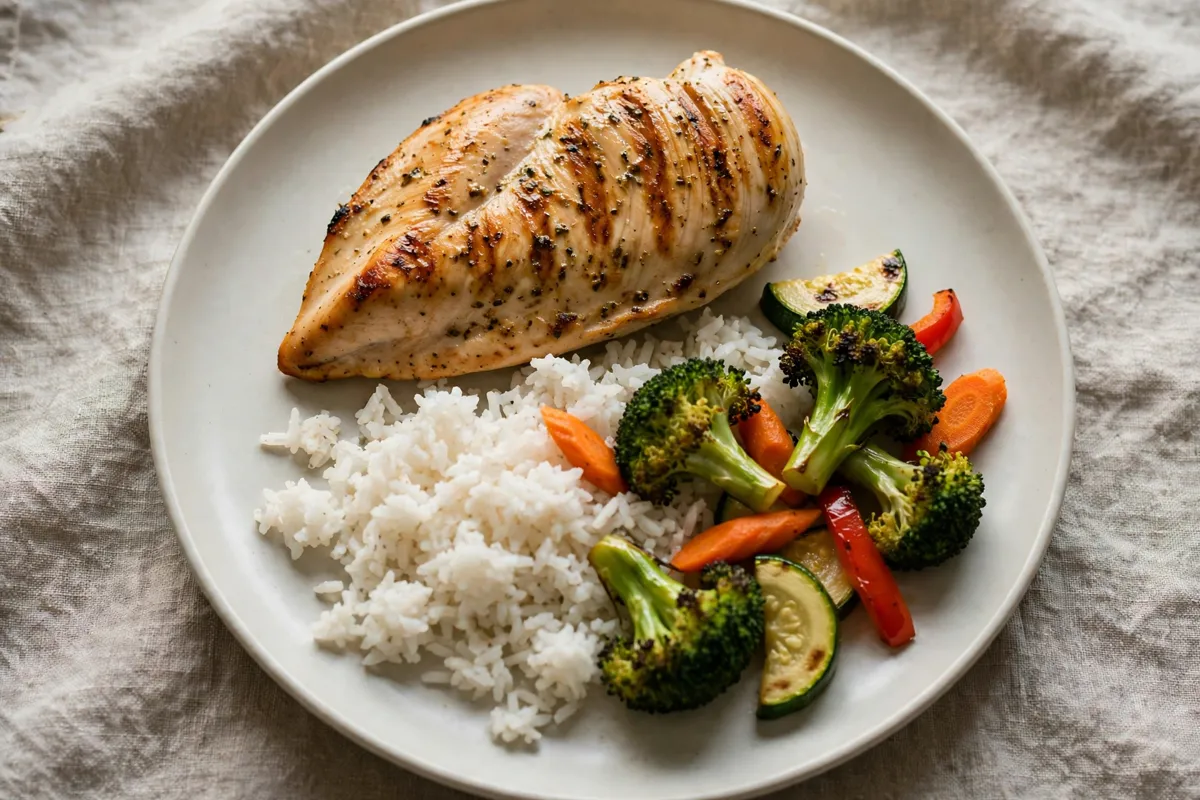
Four ounces of chicken breast contain about 187 calories — 187.1, derived from USDA FoodData Central's roasted breast entry (FDC ID 171477) — with 35.2 grams of protein. The entry prices boneless, skinless breast, meat only, cooked roasted, at 165 calories and 31.02g protein per 100g; four ounces is 113.4 grams, and 113.4 × 1.65 gives 187.1.
Four ounces is the palm portion — the serving most meal plans are actually written in, the size of a smartphone or the meat of an average hand. This article prices it completely, shows what its 35 grams of protein mean against a day's target, and covers the weighing and skin questions that move the real figure. Any other weight converts from the same entry in the chicken protein calculator.
Short Answer
About 187 calories in 4 ounces of chicken breast (187.1 for 113.4g), with 35.2g protein, 0g carbohydrate and about 4.0g fat (from the entry's 3.57g fat per 100g), plus about 84mg sodium and 290mg potassium by the same scaling. Plain, skinless and roasted is the basis; oil, skin or breading adds its own calories on top.
Why Is Four Ounces the Portion Plans Are Written In?
Because it is the portion a hand makes. Four ounces of cooked meat is roughly the size of an average adult's palm and fingers' base — the visual every portion guide reaches for — and it lines up with how chicken is sold and served: a modest restaurant breast portion, a meal-prep container's standard scoop, a sandwich's generous filling. It is also a nutritionally round serving: at 35.2g, its protein covers the classic per-meal target of 30 to 40 grams in a single item, letting the rest of the plate be vegetables and grains chosen for pleasure rather than protein anxiety.
Compare it with its neighbours to feel the scale. The standard three-ounce serving — the USDA's own half-breast portion at 86g — is 140.3 calories; four ounces is that portion plus a third. A whole reference breast of 172g (about six ounces) is two-thirds more again. Four ounces therefore sits at the practical centre of chicken eating: the amount that makes chicken the main protein of a meal without making it the whole meal. The metric shadow of the same idea is priced in how many calories are in 100 grams of chicken breast — 165 calories for a portion just 13.4 grams lighter than this one. 5 ounces of chicken breast gets the same treatment, with its calories counted in full.
What Does 35.2 Grams of Protein in 187 Calories Actually Mean?
It means chicken breast performs the trick that built its reputation: delivering protein at about 5.3 calories per gram of protein, a rate almost no other whole food matches. Put against a day, 35.2g is roughly half the baseline protein need of a 70kg adult at 0.8g per kilogram (56g), and a solid third of a 100g athletic target — from seven percent of a 2,500-calorie budget. Put against other foods, the same 187 calories spent elsewhere buy markedly less protein, which is why this portion anchors everything from contest prep to ordinary Tuesday meal prep.
The rest of the portion's profile supports the headline. Its fat is about 4.0g — a rounding error in most days — its carbohydrate is zero, and its potassium, scaled from the entry's 256mg per 100g, is about 290mg. Sodium at about 84mg is the plain meat's own, before any brine, marinade or seasoning blend adds its share; brined and rotisserie-style preparations can carry several times that, from the treatment rather than the chicken. All of which is visible, portion by portion, in the chicken protein calculator, whose default entry is this same roasted breast — the calculator and this article are one dataset wearing two coats. The protein-target arithmetic behind portions like this is developed further in how much chicken do I need for 100g of protein.
Raw or Cooked — Which Four Ounces Does 187 Describe?
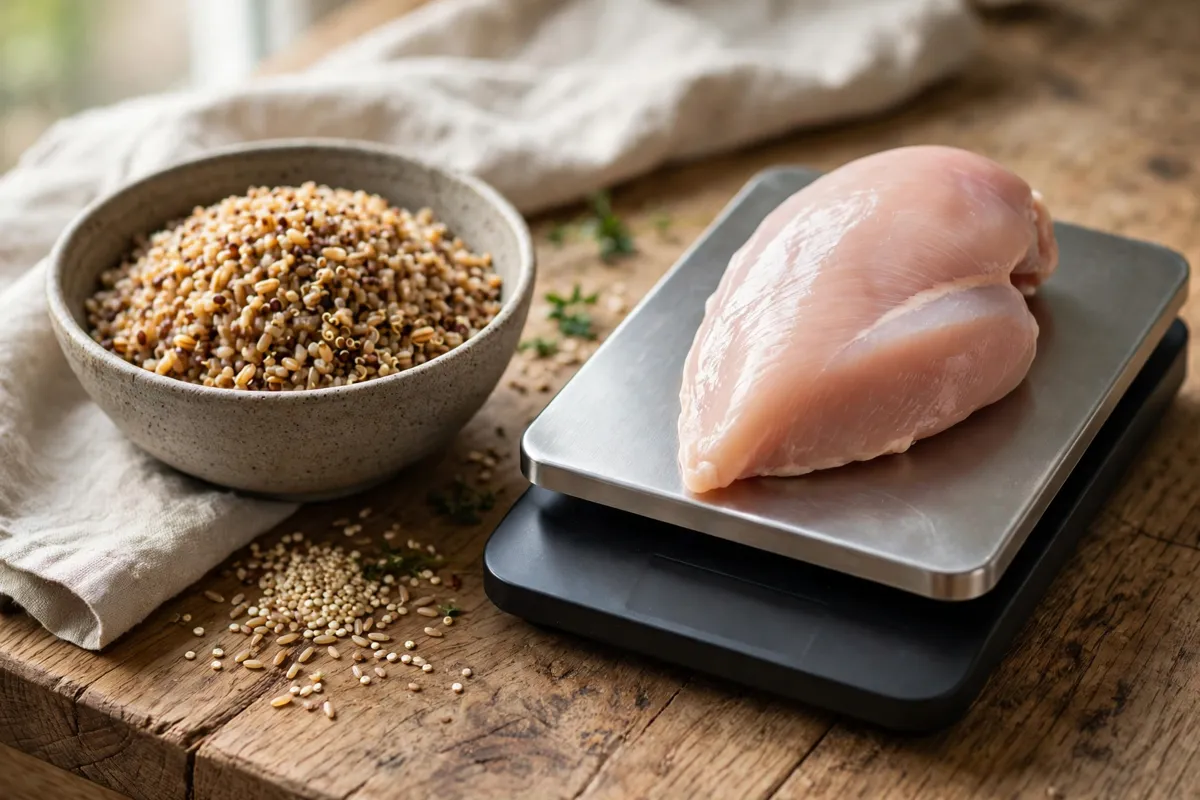
Cooked. The USDA entry is a cooked, roasted entry; its 165 per 100g describes chicken as it reaches the plate, water already lost. Four ounces weighed raw will cook down to roughly three cooked ounces — about 140 calories on this basis — because roasting drives off about a quarter of the meat's weight as water and juices. Four ounces weighed cooked requires starting with roughly five and a third raw ounces.
Meal preppers feel this distinction in their containers: a batch cooked from 500g of raw breast yields roughly 375g of cooked chicken, and dividing that batch by raw weight overstates every portion's calories and protein by a third. The fix is one habit — weigh the cooked batch, divide by the number of portions, and log cooked weights against cooked entries. Should I weigh chicken raw or cooked settles the question permanently for every portion in this series; the short version is that the entry decides, and this entry is cooked.
How Do Cooking Method and Skin Move the 187?
The roasted entry is the dry-heat reference, and grilling or baking to the same doneness lands in the same place — the USDA publishes no separate grilled or baked breast entries, and the roasted figures are the standard basis for all dry-heat cooking. Moist heat is genuinely different in the data: the stewed breast entry (FDC 171478) runs 151 calories per 100g, so four ounces stewed or boiled price at about 171.2 calories with about 32.9g protein — the broth takes a little of everything with it. Fried breast meat without breading (171078) runs 187 per 100g, making four ounces about 212.1 calories.
Skin is the biggest single mover: breast roasted with skin is 197 per 100g, so the four-ounce portion becomes about 223.4 calories. Breading adds a carbohydrate layer the plain basis does not have at all. And oil used generously in the pan is a separate food entering the pan with the chicken — price it separately. The 187.1 assumes the chicken arrives plain; everything done to it after that has its own line, which is less a warning than a method.
A Note on the Portion as a Kitchen Habit
Four ounces earns its keep as the default scoop: one portion per container, one fillet-piece per plate, one line per diary entry. Cooks who standardise on it find that shopping, prepping and logging all simplify around the unit — a kilogram of cooked breast is, near enough, nine palm portions — and that the eye, trained on a weighed four ounces for a fortnight, can portion a tray of chicken for a family with an accuracy that surprises everyone at the table. Standards are only useful when they match life, and this one matches the hand, the plan and the plate at once.
Common Mistakes to Avoid
Do not weigh four ounces raw and log 187 — you have eaten about 140 calories' worth of cooked chicken, and the error compounds across every meal-prepped day. Do not assume a restaurant's "chicken breast" is four ounces: many are six to eight, priced in their own articles in this series, and the difference between 187 and 374 is one unexamined assumption. Do not carry the figure to skin-on or breaded chicken, which run about 223 and higher at this weight. Do not credit marinades as free: sugary and oily marinades add real calories that cling to the portion. And do not round 187.1 down to 150 in a diary out of optimism — small courtesies to oneself, repeated daily, are how budgets quietly fail.
Final Thoughts
Four ounces of chicken breast — the palm portion, the meal-plan standard — contain about 187 calories: 187.1 for 113.4 cooked grams, with 35.2g protein, about 4.0g fat and no carbohydrate, on USDA's roasted, skinless basis. It is the most useful single chicken number to know, because it is the portion life actually serves. Weigh it cooked, keep it plain or price the additions, and scale it any direction in the chicken protein calculator.
People Also Ask
How Many Calories Are in 5 Ounces of Chicken Breast?
Five ounces of chicken breast contain about 234 calories — 233. 9, derived from USDA FoodData Central's roasted breast entry (FDC ID 171477) — with 44. 0 grams of protein.
How Many Calories Are in 6 Ounces of Chicken Breast?
Six ounces of chicken breast contain about 281 calories — 280. 7, derived from USDA FoodData Central's roasted breast entry (FDC ID 171477) — with 52. 8 grams of protein.
How Many Calories Should I Eat Per Day?
Most adults need roughly 1,600 to 2,800 calories per day to maintain their weight, and your own number comes from one calculation: work out your basal metabolic rate with the Mifflin-St Jeor equation, then multiply it by an activity factor to get your maintenance calories. There is no single correct intake for everyone — a small, sedentary woman and a tall, physically active man can differ by more than 1,000 calories a day and both be eating exactly right for…
How Many Calories Should a Woman Eat Per Day?
Most women need about 1,600 to 2,400 calories per day to maintain their weight, with the exact figure set by the Mifflin-St Jeor equation for women — (10 × weight in kg) + (6. 25 × height in cm) − (5 × age) − 161 — multiplied by an activity factor between 1. 2 and 1.