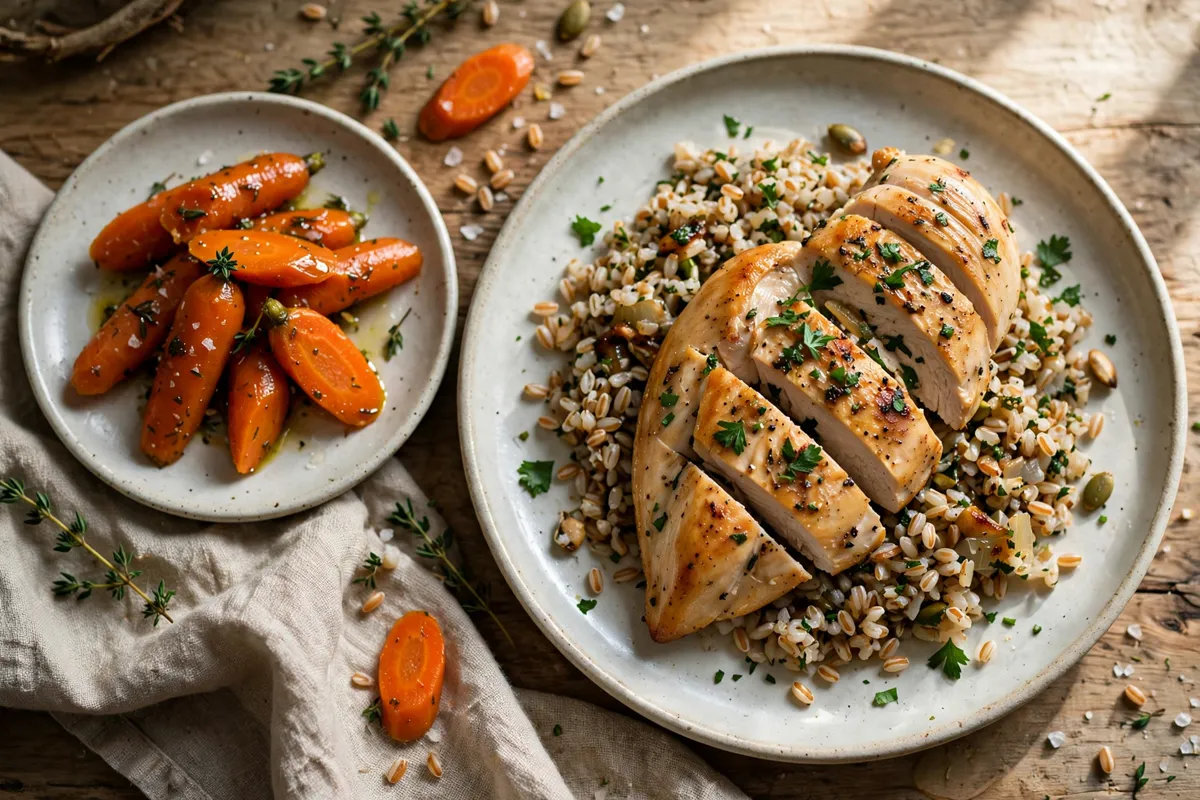
Calorie Counter: The Short Answer
Cooked carrots contain 35 calories per 100 grams — which is 27 calories in a half cup of slices and about 55 calories in a full cup. Those numbers come from USDA FoodData Central's cooked carrot entry (FDC ID 170394, boiled and drained, without salt) and its portion table: half a cup of slices weighs 78 grams, so the cup is 156 grams, and 156 × 0.35 gives you the calories in cooked carrots at the portion that fills a side dish.
The figure hides a small surprise worth understanding: cooking lowers carrots' calorie density. Raw carrots carry 41 calories per 100 grams; cooked carry 35. A vegetable that comes out of the pot lighter in energy per gram than it went in is going against the usual direction of travel, and the reason — sugar leaching into water that gets drained away — explains several other things about how cooked carrots behave in a log. This article works through the portions, the raw comparison, and what additions like butter and glaze do to a vegetable that was almost innocent. The calorie counter holds the same 35 per 100 grams; this page shows its provenance.
Short Answer
35 calories per 100g of cooked carrots (USDA FDC ID 170394). A half cup of slices (78g) is about 27 calories, a full cup (156g) about 55, and one cooked carrot (46g) about 16. The same cup provides 12.8g of carbs, 4.7g of fibre and 1.2g of protein.
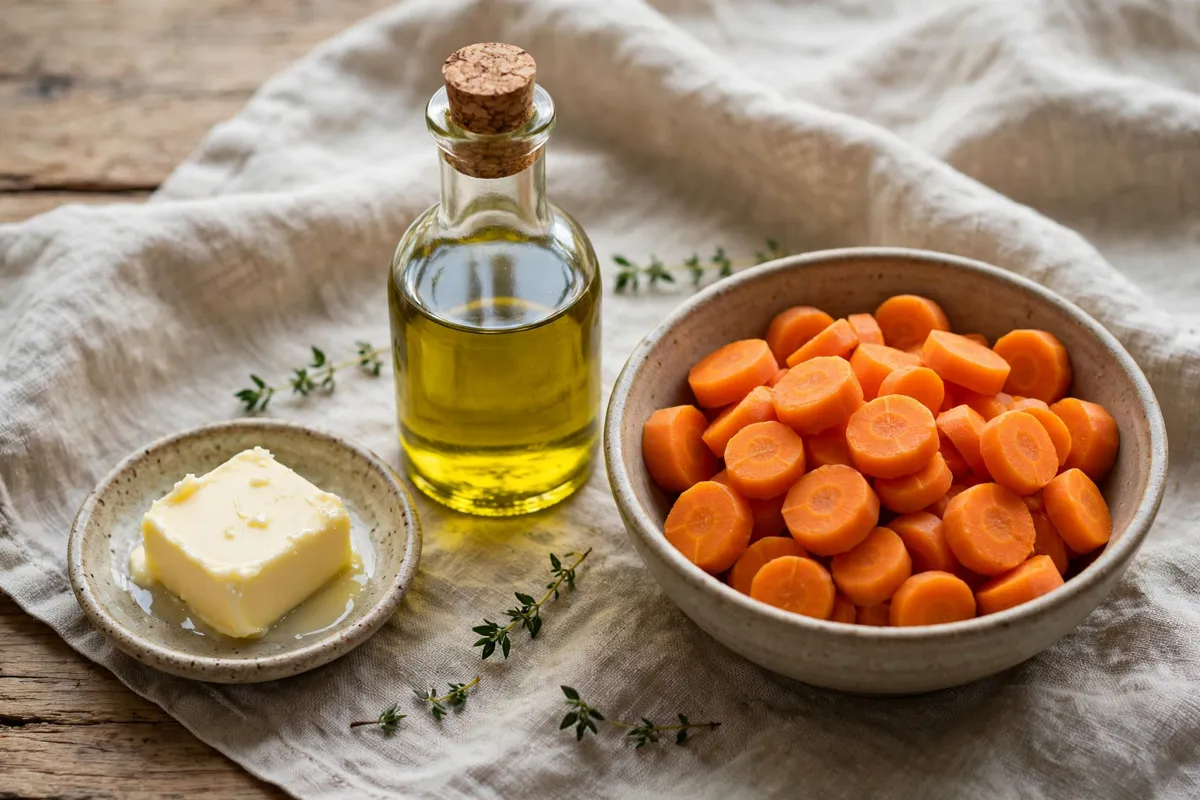
Where Do the Portion Numbers Come From?
From the entry's own portion table, with one honest doubling. The table lists half a cup of slices at 78 grams — that is a USDA-weighed portion, not an estimate. A cup of slices is therefore 156 grams by simple doubling, and every cup figure in this article is that 156 grams multiplied by the per-100g profile. The table also lists a single cooked carrot at 46 grams, smaller than the raw medium's 61 — cooking and trimming between the two entries account for the difference, and the cooked unit is the one to use when the carrot on the plate is a cooked one.
The profile those weights multiply is: 35 calories, 0.76 grams of protein, 8.22 grams of carbohydrate, 0.18 grams of fat, 3.0 grams of fibre, 3.45 grams of sugar, 58 milligrams of sodium and 235 milligrams of potassium per 100 grams. Notice the sodium: 58 milligrams is the no-salt-added figure, because the entry specifies "without salt." Carrots you boil in salted water, or buy canned in brine, will carry more — the entry cannot speak for your pot, which is why the plain figure is labelled with its condition wherever this site prints it.
Cross-check the cup against the site's other vegetables and it sits in familiar company: a cup of steamed broccoli, also 156 grams, is about 55 calories too — the coincidence is examined in how many calories are in one cup of steamed broccoli. Two very different vegetables arriving at the same cup calorie figure is a reminder that water content, not vegetable identity, sets most of these numbers.
Why Are Cooked Carrots Lower in Calories Than Raw?
Leaching and hydration, working together. When carrots boil, some of their soluble sugars dissolve into the cooking water; when the pot is drained, those sugars leave with it. The sugar line records the loss precisely — 4.74 grams per 100 grams raw, 3.45 cooked — and sugar carries calories, so the energy density falls with it. At the same time, the carrot tissue takes up and holds water as it softens, so each gram of the finished product is slightly more water and slightly less carrot than a gram of the raw root.
The net effect — 41 down to 35 calories per 100 grams, about a 15% reduction — is the honest size of it: real, worth logging correctly, and nothing like a transformation. A cooked carrot is not a diet food invented by boiling; it is a carrot that left a little of its sugar in the pot. The carb side of the same trade is laid out in how many carbs are in cooked carrots, where the concentration falls from 9.58 to 8.22 grams per 100 grams.
Steamed carrots, kept out of the water, should sit between the two entries — less leaching than boiling, some hydration — but the dataset publishes no steamed entry, and this site logs the boiled figure rather than inventing one. Roasted carrots travel the opposite direction in concentration: water leaves for the oven air, nothing leaches, and each 100 grams of the roasted result is denser than the raw root — though the tray's total calories are unchanged, a distinction the next sections lean on.
What Do Butter, Oil and Glaze Do to the Number?
They replace it. The plain cooked carrot's 35 calories per 100 grams survive only as long as the carrot stays plain, and carrots are one of the vegetables most often served dressed. The arithmetic is unforgiving in a specific way: because the base is so light, almost any addition dominates it. A cup of plain slices is about 55 calories; toss that cup in a tablespoon of butter or oil before or after cooking and the fat alone can exceed the carrots' entire energy contribution, more than doubling the dish while the log line still reads "carrots."
Glazes are the double case, adding sugar's calories on top of fat's: a honey or brown-sugar glaze returns the leached sugar with interest, plus more, in a form that sits on the surface and concentrates as it reduces. None of this makes dressed carrots a bad food — a glazed carrot is a legitimate dish — but it makes them a different dish, to be built in the log from components: carrots at the cooked entry, plus the fat, plus the sweetener, each at its own values. The calorie counter exists for exactly that assembly work.
The middle path, and the one most home cooks actually want, is seasoning that costs nothing: salt measured to taste (watching the sodium line), herbs, spices, citrus, a splash of vinegar at the end. A cup of carrots dressed that way is still the 55-calorie cup, and for many palates it is better than the glazed version — the carrot's own 5.4 grams of sugar per cup is already there, needing only salt and acid to register as sweetness.
How Do Cooked Carrots Fit Into a Meal's Calorie Budget?
Comfortably, at any realistic portion — which is their entire strategic value. As a side, the half cup at 27 calories and the full cup at 55 are both rounding errors in a meal of several hundred. As an ingredient, they sweeten and bulk soups, stews and braises at a rate few vegetables match: a whole pound of raw carrots going into a pot is about 175 calories of carrot (the count behind that is in how many carrots are in one pound), spread across every serving the pot yields.
They also pair with the foods that need volume beside them. A rich main course with a cup of plain cooked carrots beside it is a plate whose total stays sane while looking complete; the fibre — 4.7 grams in the cup — does quiet work for satiety too (its own small energy yield is accounted in does fiber have calories), a contribution tracked across the vegetable set in how much fiber is in common fruits and vegetables. For weight management, the pattern that matters is displacement with pleasure: carrots are sweet, colourful and genuinely liked by most people, including children, so the light side actually gets eaten — a virtue no amount of nutritional perfection in an uneaten vegetable can match.
For children and smaller portions, the single cooked carrot at 46 grams and about 16 calories is a handy unit, and two or three of them as a side is a child's serving that needs no weighing at all.
Common Mistakes to Avoid
- Logging cooked carrots at the raw value of 41 calories per 100g; the cooked entry is 35, and the difference is the sugar left in the pot.
- Forgetting that "without salt" is the entry's condition — salted cooking water or brined canned carrots change the sodium, though not the calories.
- Logging buttered or glazed carrots on the plain entry; the additions routinely exceed the carrots' own calories.
- Pricing a cup at the raw cup's weight — cooked slices run 156g to the cup against the raw chopped cup's 128g.
- Assuming roasting "burns off" calories; it removes water, concentrating calories per gram while the tray's total stays the same.
Final Thoughts
Cooked carrots are 35 calories per 100 grams — about 27 in a half cup of slices, 55 in a cup, 16 in a single cooked carrot — a little lighter than their raw selves because the pot keeps some of their sugar. Keep them plain and they are among the cheapest sweet flavours in the kitchen; dress them and the dressing becomes the dish, in the log as on the plate.
People Also Ask
Do Tomatoes Contain Salt?
A fresh tomato contains no added salt — but it does contain a small amount of naturally occurring sodium: 5 milligrams per 100 grams, per USDA FoodData Central's raw tomato entry (FDC ID 170457). A whole medium tomato of 123 grams therefore carries about 6. 2 milligrams of sodium, so do tomatoes contain salt?
What Are Net Calories?
Net calories are the calories you eat minus the calories you burn through exercise — your intake, netted against your activity. If you eat 2,200 calories and your workout burns 400, your net calories for the day are 1,800, and it is that net figure — measured against what your body needs for basic maintenance — that decides whether the day ran at a surplus, a balance or a deficit. That is the primary meaning of net calories in fitness…
How Many Calories Are in a Chicken Grain Bowl?
A chicken grain bowl at CAVA is 540 calories before any dip, topping or dressing is added — Saffron Basmati Rice at 290 calories plus Grilled Chicken at 250 calories, or 290 + 250 = 540, with 33 grams of protein, 57 grams of carbohydrates and 18 grams of fat. Dress that same bowl the way most people actually eat it, with hummus, tzatziki, tomato and cucumber and Lemon Herb Tahini, and it becomes 700 calories. Swap the saffron rice…
How Many Calories Are in a Pita Sandwich?
A CAVA pita sandwich built on the Traditional Pita with Grilled Chicken is 570 calories before dips or dressing — the pita itself is 320 calories and the chicken is 250, or 320 + 250 = 570, with 41 grams of protein, 57 grams of carbohydrates and 17 grams of fat. Add the classic sandwich fillings of Hummus at 45 calories, Tzatziki at 35 and Tomato & Cucumber at 10, and the sandwich most people picture is 660 calories. Finish…