Calorie Counter: The Short Answer
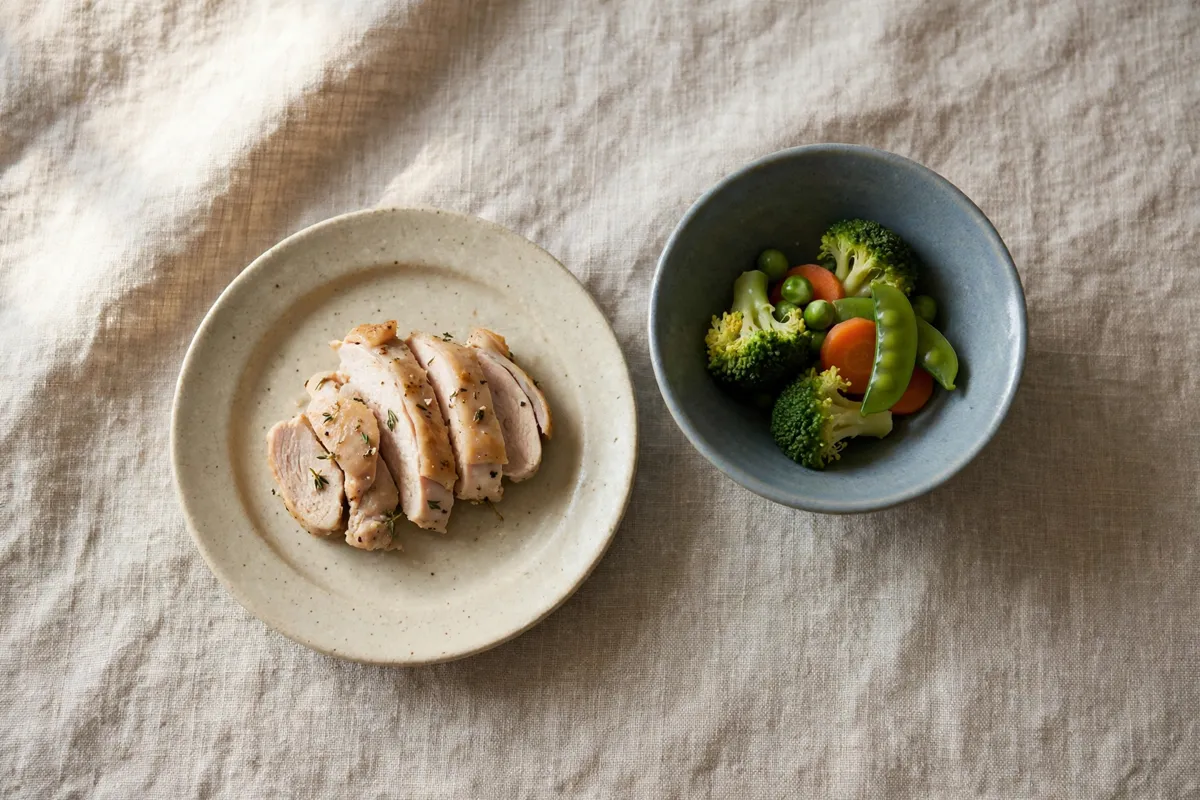
Two ounces of food is about 57 grams — a portion roughly the size of two matchboxes side by side, a pair of dice for cheese, or a small handful of nuts. For meat, 2 ounces of chicken breast is a piece about half the size of a deck of cards, carrying about 94 calories and 17.6 grams of protein on USDA's cooked breast values — so what 2 ounces of food looks like is a modest, palm-eclipsing amount: real food, but visibly a supporting portion rather than a main one.
Two ounces is the portion size that labels, deli counters and diet plans reach for constantly — cheese servings, nut servings, snack servings, the smaller protein portion in a wrap — precisely because it is the boundary between a taste and a serving. The trouble is that ounces are weight and eyes judge volume, so this article builds the visual library: what 2 ounces looks like across the foods it most often measures, using verified weights and the standard comparisons, so you can portion it without living on a scale. The calorie counter converts any of these portions into a logged meal; this page teaches the eyeballing.
Short Answer
2 ounces = 56.7 grams. Visually: cooked meat — a piece about half a deck of cards; cheese — two dice or two dominoes; nuts — one small handful; diced chicken — a scant half cup (a 140g cup means 2 oz is about 0.4 of a cup). As chicken breast, 2 oz is about 94 calories and 17.6g protein.
What Does 2 Ounces Look Like for Meat and Chicken?
Start with the anchor this site's data makes exact. Cooked chicken breast carries 165 calories and 31.02 grams of protein per 100 grams USDA (FDC ID 171477), so 2 ounces — 56.7 grams — is 93.6 calories and 17.6 grams of protein. The piece itself: take the familiar deck-of-cards image, which the next size up uses for 3 to 4 ounces, and halve it. Two ounces of breast is a slice roughly the length of your index and middle fingers together, of moderate thickness — the amount that disappears into a wrap or tops a salad without dominating it, which is exactly the role the 2-ounce chicken article in this series prices it in.
For sliced deli meats, 2 ounces is a small stack — the pre-packed serving those products are labelled by — typically a few thin slices folded once. For ground meat cooked, 2 ounces is a small handful of crumbles, about a third of a cup by loose measure; for a steak or chop, it is a piece the size of a computer mouse's smaller half — two or three good bites' worth beyond a taste. The through-line: at 2 ounces, meat is an ingredient in the dish rather than the dish. Recognising that role at sight is the skill — when the chicken on a salad looks like the main event, it is probably 4 ounces wearing a 2-ounce log entry, an error pattern the companion piece what does 4 ounces of meat look like approaches from the other side. That portion is shown in visual terms in 4 ounces of steak.
What Does 2 Ounces Look Like for Cheese, Nuts and Snacks?
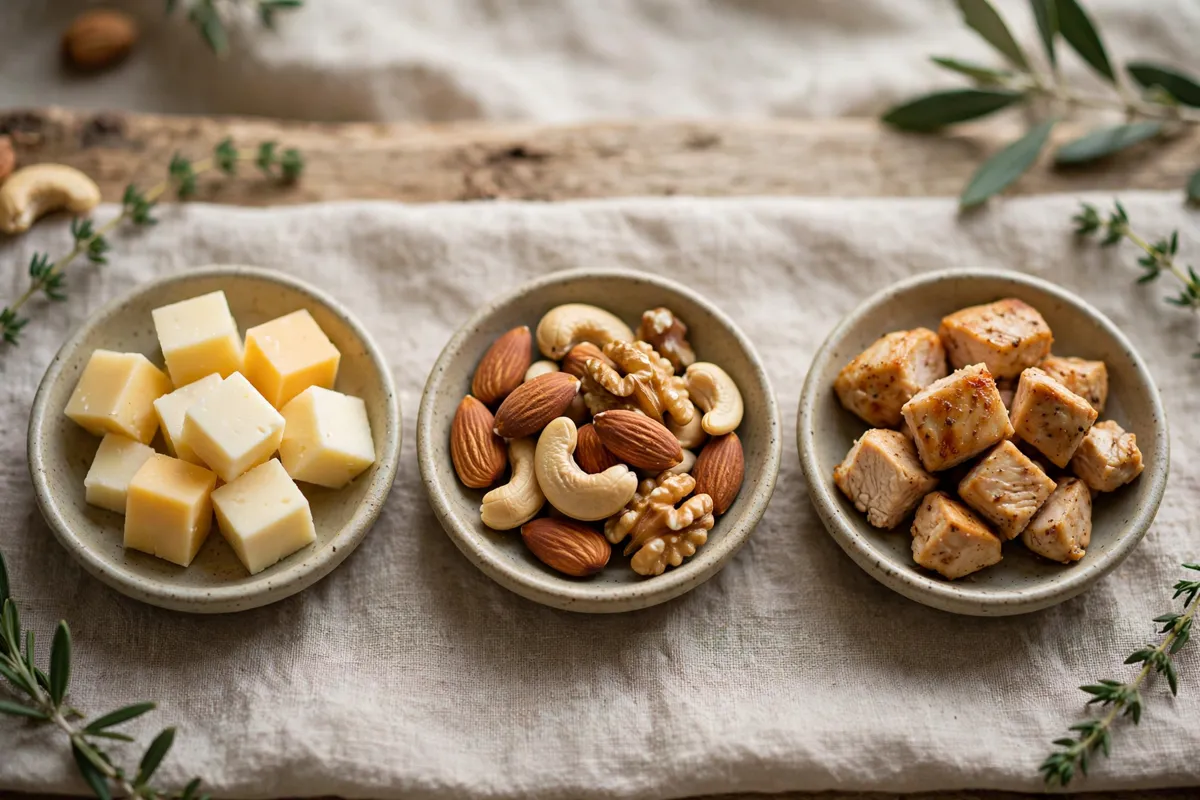
Cheese gives the cleanest visuals in all of portion estimation. One ounce of hard cheese is the famous pair-of-dice (or your thumb); two ounces is two pairs — four dice in a row, or two dominoes. Sliced cheese: most pre-sliced sandwich slices run close to an ounce each in deli formats (the FDC cheddar portion is a 28-gram slice), so two slices is your 2 ounces, neatly. Shredded cheese at 2 ounces is about half a cup loosely filled — and "loosely" matters, since shredded cheese compresses eagerly.
Nuts and seeds at 2 ounces are two small handfuls, or one generous one — the 1-ounce handful doubled. This is the portion where nuts turn from garnish into a real energy event, because nut energy density is high; the handful heuristic is the difference between a snack and a meal's worth of calories arriving unannounced. Dried fruit behaves similarly in miniature. For snack bars and packaged snacks, 2 ounces is often the whole package's neighbourhood — read the label's serving weight in grams and compare it against 56.7, the conversion that makes every package legible. The snack-screening gates in how much protein should a snack contain and the smart-snack framework assessed through the calorie counter both assume this serving literacy: a "snack" of 2 ounces is a defined thing, not a bag size.
- Hard cheese: 4 dice, 2 dominoes, or 2 deli slices ≈ 2 oz
- Shredded cheese: about ½ cup, loosely filled
- Nuts: 2 small handfuls (the 1-oz handful, twice)
- Diced cooked chicken: about 0.4 cup (the standard cup is 140g ≈ 5 oz)
- Deli meat: a small stack of a few thin slices
- Cooked ground meat crumbles: a small handful, roughly ⅓ cup loose
How Do You Weigh 2 Ounces Without a Scale?
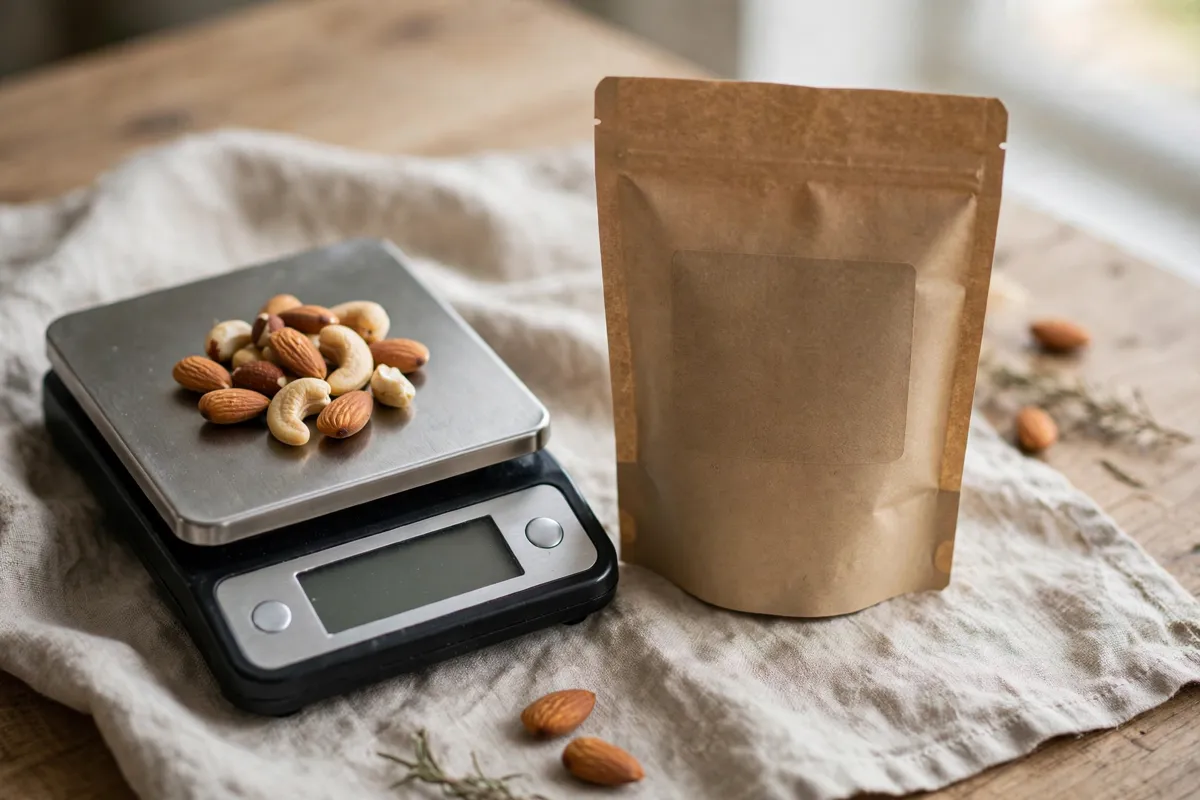
By the three standard transfers, practised once with a scale and used forever after. First, the hand transfer: portion 2 ounces of your usual foods onto a scale, then pick the portion up. The heft of 57 grams is distinctive — lighter than a phone by a wide margin, heavier than a letter — and hands remember weights they have actually held far better than numbers they have read. Second, the package transfer: foods you buy repeatedly come in known weights; half of a 4-ounce package, a quarter of an 8-ounce block of cheese, a fifth of a 10-ounce bag — arithmetic on packages you already own beats any visual guide. Third, the container transfer: learn which of your bowls, cups or lunchbox sections holds 2 ounces of the foods you portion often (the scant half-cup of diced chicken, the half-cup of shreds of cheese), and portion by container thereafter.
The honest caveat belongs here: visual estimation of 2 ounces carries a real error band, commonly a quarter to a third in either direction for untrained eyes on irregular foods. For cheese and deli slices — pre-portioned by manufacture — the error is small. For scooped, crumbled and heaped foods it is not. Where the food is energy-dense (nuts, cheese, dried fruit), the cost of the error is high enough to justify the scale's five seconds; where it is chicken or vegetables, eyeballing is a fair trade. That judgement — when precision matters and when it does not — is the actual content of portion skill, and it is the same judgement exercised throughout the portion series beginning with what does 3 ounces of chicken look like in the new drafts.
Why Does the 2-Ounce Portion Matter So Much on Labels?
Because it is a unit the labelling system uses constantly while describing it in grams. Snack servings, cheese servings, processed meat servings — a large share of the packaged foods screened by the smart snack calculator declare servings in the 1-to-2-ounce band, and their calorie, sodium and fat figures are per that serving. A shopper who cannot picture 2 ounces cannot tell whether the package in hand is one serving or three, which is the single most consequential label question there is. The grams make it mechanical: serving weight ÷ 28.35 = ounces; package weight ÷ serving weight = servings you will actually eat if you finish it.
Two ounces is also where diet plans quietly live: the cheese in the sandwich plan, the nuts in the snack plan, the chicken in the salad plan are all specified at 2 ounces because it is the largest amount of a dense food that still behaves like a component. Doubling it by eye while logging it singly, twice a day, is a several-hundred-calorie leak — the maths of which is laid bare in the fibre-and-portion survey at what is an ounce equivalent of grains or protein, where the ounce-equivalent system that school and guideline planning uses is explained. Small unit, large consequences: that is the whole argument for learning what it looks like.
Common Mistakes to Avoid
- Picturing 2 ounces as bigger than it is — 56.7g is a supporting portion; a main-event piece of meat is usually 4 ounces or more.
- Using volume for weight: a half cup is 2 ounces only for specific foods (loosely shredded cheese); for diced chicken the 2-ounce mark is about 0.4 of a cup.
- Logging the package as one serving when its serving weight is 1–2 ounces and the package holds several.
- Eyeballing energy-dense foods (nuts, cheese, dried fruit) where a one-ounce error costs the most, instead of weighing those five seconds' worth.
- Forgetting that cooked and raw weights differ: the 2-ounce visuals here are cooked, as-served weights for meats.
Final Thoughts
Two ounces is 56.7 grams: half a deck of cards of chicken (about 94 calories, 17.6 grams of protein), four dice of cheese, two small handfuls of nuts, a scant half-cup of diced chicken. Learn it once with a scale in your hand and packages, plans and plates all become readable at sight — because an enormous share of nutrition labelling is written in this one small unit.
People Also Ask
What Does 4 Ounces of Steak Look Like?
Four ounces of steak is a piece about the size and thickness of a deck of cards — or the palm of your hand, fingers excluded — weighing 113. 4 grams cooked. On USDA's sirloin values, that 4-ounce steak provides about 208 calories and 34.
Should I Count Calories Every Day?
No — not necessarily, and not forever. Count every day while you are learning what your food contains, then sample intelligently once you know it: in this article's worked week, five logged weekdays totaling 1,850 + 2,100 + 1,950 + 2,300 + 1,750 = 9,950 calories produced an average of 9,950 ÷ 5 = 1,990 calories a day, within about 70 calories — roughly 3% — of the true seven-day average of about 2,060. The Calorie Counter's own FAQ gives…
What Is the Healthiest Poke Bowl?
The healthiest Pokeworks poke bowl you can build from the tracked data is the greens bowl at 235 calories: Spring Mix / Zoodles Base (35) + Ahi Tuna (70) + Cooked Shrimp (70) + Ponzu Sauce (35) + Edamame (25) = 235 calories, with 33 grams of protein, 17 grams of carbs and just 3 grams of fat. For anyone watching sodium more than calories, the healthiest balanced alternative is the brown rice bowl at 435 calories priced in section…
What Is the Healthiest Mexican Fast Food Order?
The healthiest Mexican fast food order you can build from the tracked Taco Bell data on this site is a Chicken Soft Taco with an Unsweetened Iced Tea: 160 + 0 = 160 calories, with 12 grams of protein, 16 grams of carbohydrates, 5 grams of fat, 2 grams of fiber and 470 milligrams of sodium. No other entrée in Taco Bell's tracked menu combines that few calories with that much protein and that little fat, and the tea is…