Calorie Counter: The Short Answer
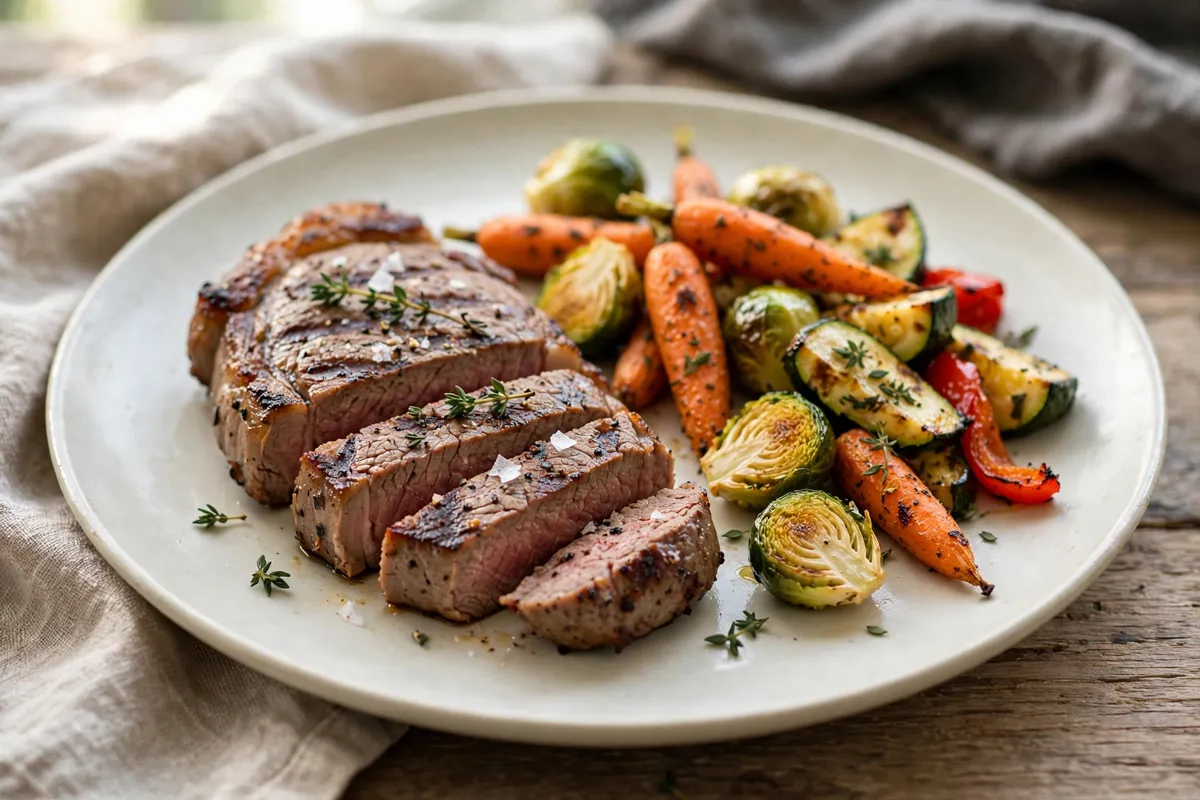
Four ounces of steak is a piece about the size and thickness of a deck of cards — or the palm of your hand, fingers excluded — weighing 113.4 grams cooked. On USDA's sirloin values, that 4-ounce steak provides about 208 calories and 34.6 grams of protein, so what 4 ounces of steak looks like is the classic single serving: a modest fillet that covers your palm, not the plate-covering slab a steakhouse sets down.
The gap between those two objects — the 4-ounce serving and the restaurant steak — is where most steak logging goes wrong, because restaurant cuts commonly run two to four times the reference serving. This article builds the visual anchors for 4 ounces precisely, on the sirloin entry the data uses (FDC ID 168634, top sirloin, lean, broiled), shows how raw weight and cooked weight relate, and gives you the comparison set — 6 ounces, 8 ounces, a pound — so the steak in front of you can be sized by eye against any of them. The calorie counter prices the steak once sized; this page does the sizing.
Short Answer
4 oz of steak = 113.4g cooked, visually a deck of cards or an average palm (no fingers). On USDA top sirloin values (183 calories, 30.55g protein per 100g) it provides about 208 calories and 34.6g protein. Bought raw, allow roughly 5 ounces of raw steak to land near 4 ounces cooked.
What Are the Reliable Visual Anchors for 4 Ounces?
Three, in descending order of fame. The deck of cards: a standard deck is about the footprint and thickness of a 3-to-4-ounce cooked portion of meat, and for steak it is the anchor to lead with — lay the mental deck beside your fillet and compare honestly, including thickness, because a deck's worth of footprint at double thickness is 8 ounces, not 4. The palm: the fleshy part of your own palm, fingers and thumb excluded, approximates 3 to 4 ounces of cooked meat for most adults, with the advantage that it scales somewhat with the eater and travels everywhere. And the smartphone comparison people reach for instinctively — a modern phone's footprint is larger than 4 ounces of steak; the deck and palm are the safer standards, a point the meat-visual series starting with what does 4 ounces of meat look like makes across proteins. That portion is shown in visual terms in 2 ounces of food.
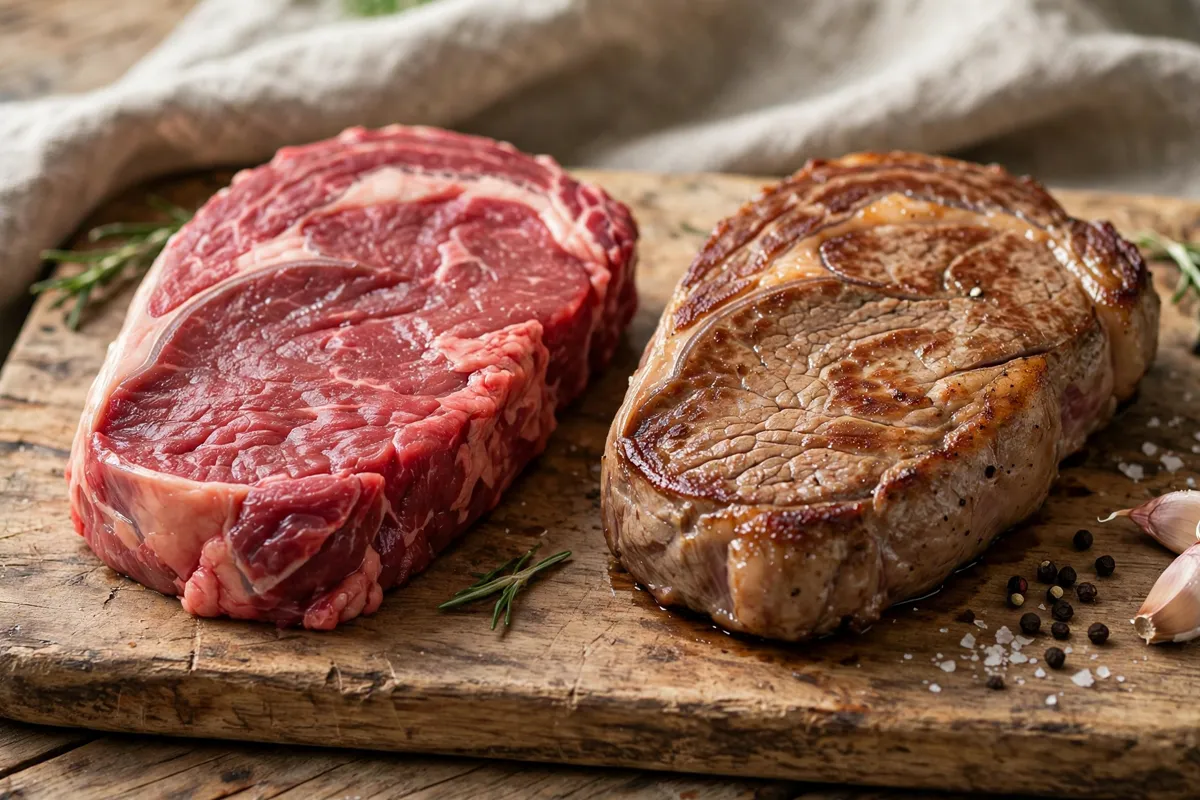
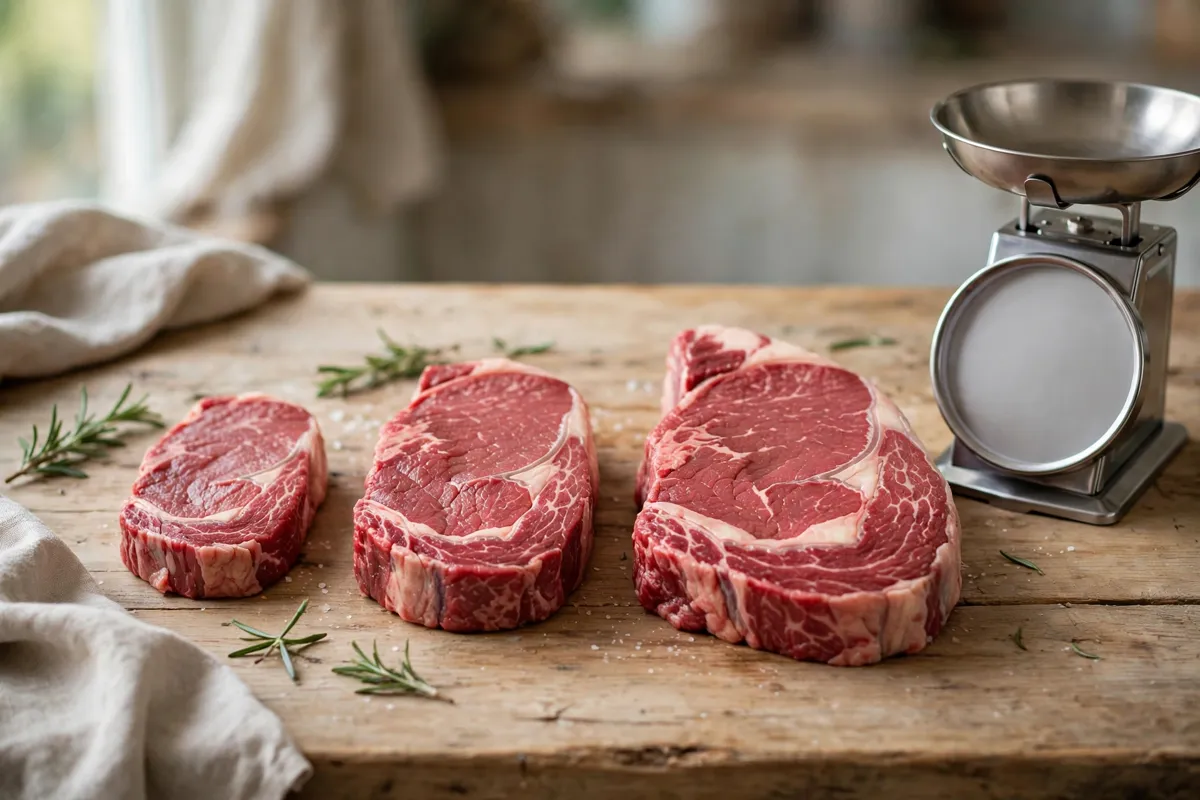
Translate to the butcher's counter: a 4-ounce cooked serving begins as roughly a 5-ounce raw fillet of ordinary thickness — the small fillet, the "petite" cut on menus, the single steak in a two-pack where its partner is the same. If the raw steak in the tray spans your whole hand, fingers included, you are looking at 8 ounces or more. Steak thickness is the great deceiver in both directions: a thick-cut 4-ounce fillet looks small from above (a compact puck) while a thin 4-ounce cut spreads wide and looks generous. Weight integrates all three dimensions; the eye sees two. When a steak's footprint surprises you, check its thickness against the deck before concluding anything.
Raw Versus Cooked — Which 4 Ounces Does the Number Mean?
Cooked, in the reference data: USDA's sirloin entry describes the steak as cooked, broiled, and its 183 calories per 100 grams describe cooked meat. A steak loses moisture — and with it, weight — as it cooks, so the raw piece that yields 4 ounces cooked starts heavier, roughly in the 5-ounce region for typical grilling or broiling, varying with doneness: rarer keeps more water and shrinks less; well-done surrenders more. That is an orientation range, not a logged figure, and the working rule from the chicken side of this site — weigh and log in one consistent state — applies unchanged: if you weigh raw, use raw values; the cooked visuals in this article describe the steak on the plate.
The distinction matters most in the two places steaks are actually logged: at home, where raw weight is what the cook knows, and in restaurants, where menus quote raw weight ("our 12-ounce ribeye" is a raw-weight claim) while the plate holds substantially less. A diner logging a menu's 12 ounces against cooked values overstates; logging the cooked-looking portion against raw values understates. Menu weight ÷ roughly 1.25 gives a serviceable cooked estimate for a mid-done steak — and the conservative diner logs the portion by the palm method on arrival instead. The protein figures that result from each size are tabulated in the companion piece how much protein is in a 6-ounce steak and its pound-sized sibling in the new drafts.
How Do the Common Steak Sizes Compare?
On the single sirloin basis used throughout — 183 calories, 30.55 grams of protein per 100 grams — the sizes scale in a straight line, and the visual ladder is worth memorising as a set:
Read the ladder as a diner and menus decode themselves: the petite fillet is your 4-to-5; the standard sirloin on a chain menu, quoted 11 ounces raw, arrives as roughly 8 to 9 cooked — two decks, not one. The protein ladder also explains steak's place in high-protein planning: even the 4-ounce serving delivers 34.6 grams, inside the per-meal target band, and the 6-ounce covers it with room to spare — comparisons against chicken and other cuts run through which steak has the most protein and the steak-bowl analyses in how much protein is in a steak bowl. Cut changes the numbers, of course: the ladder is sirloin's, a lean cut; fattier cuts carry more calories per ounce at similar protein, which is a reason to name your cut when you log, not a reason to distrust the visuals — the deck looks the same; only the price per deck changes.
- 4 oz cooked (113.4g): about 208 calories, 34.6g protein — a deck of cards, a palm
- 6 oz cooked (170.1g): about 311 calories, 52.0g protein — a deck and a half, a large palm with presence
- 8 oz cooked (226.8g): about 415 calories, 69.3g protein — two decks, the classic restaurant "small" steak once cooked down
- 1 lb cooked (453.6g): about 830 calories, 138.6g protein — four decks; a platter steak, meant for sharing or for very large appetites
How Do You Portion 4 Ounces at Home Without Obsessing?
Cut to the visual once, with a scale as referee, and the skill installs itself. Buy a steak of known raw weight, cook it as you like it, weigh it cooked, and look at it — really look, from above and from the side — before eating. That single calibration outperforms a month of guessing, because your eye now owns a reference it has verified. Afterwards, portion by the deck and the palm, and re-calibrate occasionally with steaks whose weights you happen to know from their packaging.
In restaurants, the practical moves are: order the smallest cut when 4 ounces is the plan (petite and lunch cuts exist for this), ask for the remainder boxed before eating if the cut is large — portion decided in advance beats portion negotiated mid-meal — and log by the cooked visual, not the menu's raw boast. At home for a family, one pound of raw sirloin cooks down to roughly three 4-ounce-class servings, a conversion that pairs with the per-person planning in the chicken series for mixed grill nights. And when precision truly matters — a competition prep, a clinical diet — the scale comes back out without apology; visuals are for the other ninety percent of life, and they serve it well, as the calorie counter assumes when it asks you for a portion you can honestly name.
Common Mistakes to Avoid
- Judging by footprint alone; thickness is half the weight, and a thick 4-ounce fillet looks deceptively small from above.
- Logging the menu's raw weight against cooked values in restaurants — menus quote raw, plates hold cooked, roughly a fifth less.
- Assuming the steakhouse standard is a serving; most restaurant cuts are 2–4 reference servings of 4 ounces.
- Applying sirloin's 208 calories to fattier cuts ounce-for-ounce; the visuals transfer, the calories do not.
- Guessing forever instead of calibrating once with a scale at home.
Final Thoughts
Four ounces of steak is a deck of cards, a palm without fingers, 113.4 grams cooked — about 208 calories and 34.6 grams of protein as sirloin. Learn that one object and the whole ladder — 6, 8, 16 ounces — falls into place beside it, in your kitchen and on any menu. The serving was never the slab; it was always the deck.
People Also Ask
Should I Count Calories Every Day?
No — not necessarily, and not forever. Count every day while you are learning what your food contains, then sample intelligently once you know it: in this article's worked week, five logged weekdays totaling 1,850 + 2,100 + 1,950 + 2,300 + 1,750 = 9,950 calories produced an average of 9,950 ÷ 5 = 1,990 calories a day, within about 70 calories — roughly 3% — of the true seven-day average of about 2,060. The Calorie Counter's own FAQ gives…
Does This Counter Include Drinks?
Yes. Drinks are included in the Calorie Counter on this site under the Snacks & Drinks group, and the counter's own FAQ says why they belong there: liquid calories count toward your day just like food calories. In the counter's own list, a Cola (12 oz can) is 140 calories, Orange Juice (1 cup) is 112 and Whole Milk (1 cup) is 149 — real lines with real totals, added to your day exactly the way a food line is.
What Is the Healthiest Mexican Fast Food Order?
The healthiest Mexican fast food order you can build from the tracked Taco Bell data on this site is a Chicken Soft Taco with an Unsweetened Iced Tea: 160 + 0 = 160 calories, with 12 grams of protein, 16 grams of carbohydrates, 5 grams of fat, 2 grams of fiber and 470 milligrams of sodium. No other entrée in Taco Bell's tracked menu combines that few calories with that much protein and that little fat, and the tea is…
What Is the Healthiest Stir-Fry Meal?
On the tracked honeygrow menu, the strongest all-around stir-fry meal is the Sweet Soy Stir-Fry (Tofu) at 560 calories, paired with Unsweetened Tea at 0 calories, for a 560 + 0 = 560-calorie meal with 22 grams of protein, 80 grams of carbohydrates, 17 grams of fat and 7 grams of fiber — the lowest calories and the most fiber of any complete stir-fry in this data. If protein matters more to you than calories, the Garlic Butter Chicken Stir-Fry…