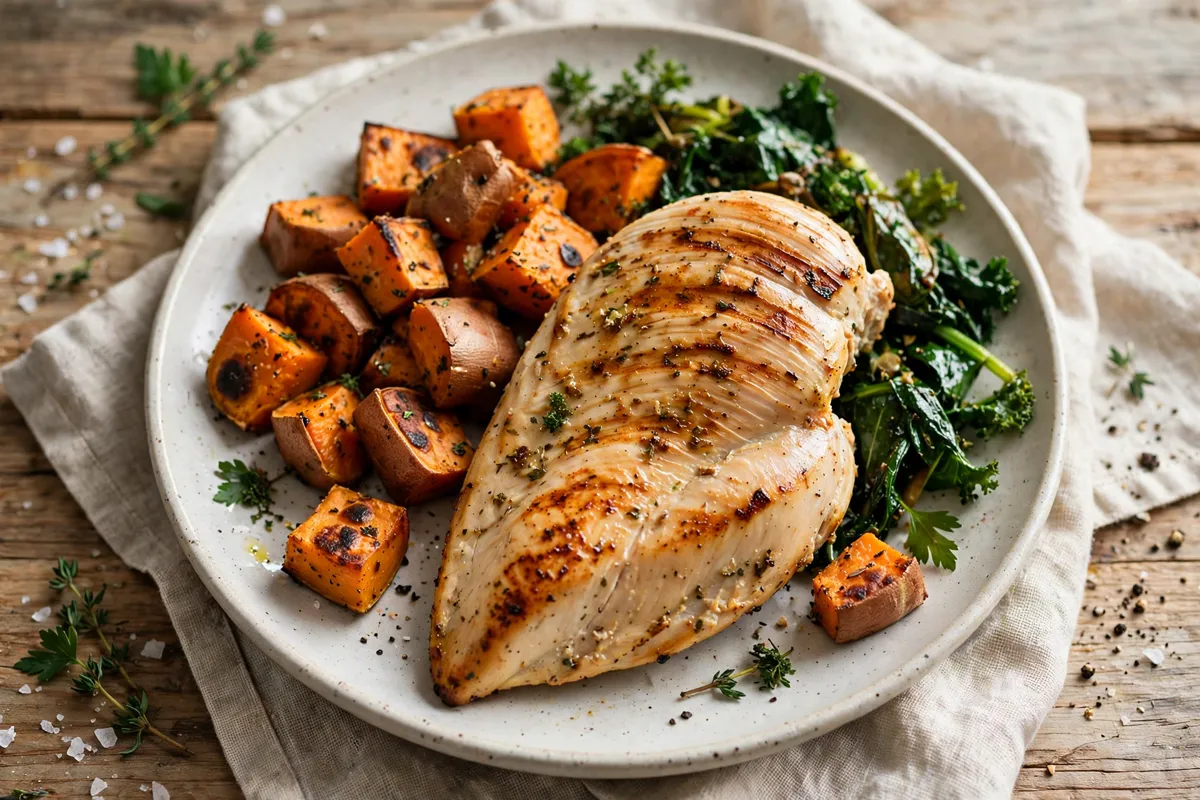
Chicken Protein Calculator: The Short Answer
Five ounces of chicken breast contain about 234 calories — 233.9, derived from USDA FoodData Central's roasted breast entry (FDC ID 171477) — with 44.0 grams of protein. The basis is boneless, skinless breast, meat only, cooked roasted, at 165 calories and 31.02g protein per 100g; five ounces weighs 141.8 grams, and 141.8 × 1.65 gives 233.9.
Five ounces is the in-between portion: more than a meal-plan standard serving, less than a whole large breast — the size you get when a medium restaurant breast is trimmed, or a home cook cuts a big breast into two unequal pieces and takes the larger. This article prices it, places it against a day's protein needs, and shows how it relates to the cup measure cooks reach for. The chicken protein calculator converts from any starting weight; this page makes five ounces itself memorable.
Short Answer
About 234 calories in 5 ounces of chicken breast (233.9 for 141.8g), with 44.0g protein, 0g carbohydrate and about 5.1g fat (from the entry's 3.57g fat per 100g). Weighed cooked and served plain, that is the whole answer; skin would lift the same weight to about 279 calories, and stewing instead of roasting would ease it to about 214.
Where Does a Five-Ounce Portion Come From?
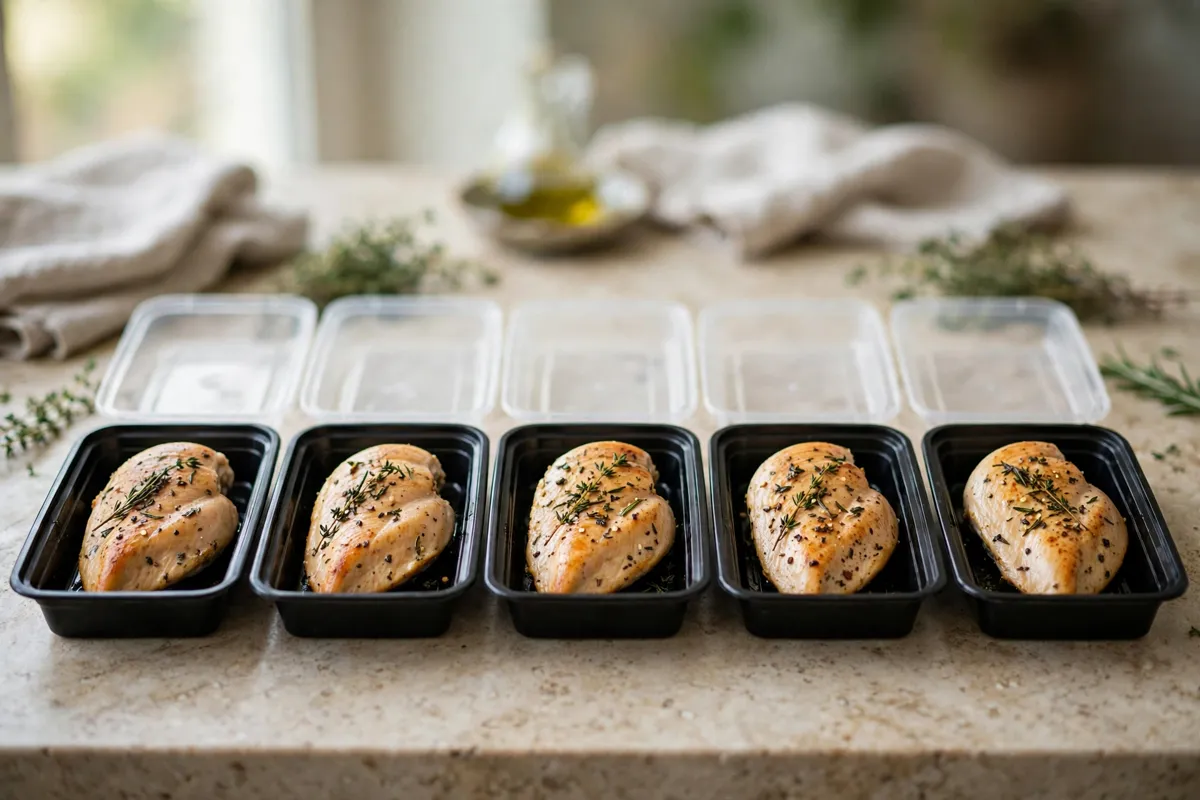
From the gap between packaging and plans. Meal plans are written in tidy units — three-ounce servings, four-ounce palms — but chicken is sold in whole breasts of irregular size, and a modern single breast fillet commonly weighs eight to ten ounces raw. Cooked and divided, those fillets yield portions of five ounces naturally: half of a large cooked breast, a whole small one, a generous single serving for a bigger eater or a post-training meal. Five ounces is what reality serves when it ignores the textbook.
Recognising the size matters because estimation drifts toward the textbook. A portion that is actually five ounces gets logged as four — the plan's number — and the day silently loses 46.9 calories and 8.8g of protein from its record. In a deficit that error flatters; in a muscle-gain plan, where the protein was the point, it quietly sabotages. Weighing portions for a few weeks recalibrates the eye to the truth that chicken portions in the wild are five ounces as often as four. The weight-based method behind all of this — cooked entry, cooked weighing — is the subject of how to calculate protein in raw versus cooked chicken. 8 ounces of chicken breast gets the same treatment, with its calories counted in full.
What Does 44 Grams of Protein Do to a Day?
It does most of the day's heavy lifting in one sitting. Against a 100g daily target — a common aim for active adults — five ounces of breast covers 44 percent. Against the 30 to 40g per-meal guidance often given for spreading protein across the day, this portion clears the top of the range, which makes it a sensible main meal for someone eating protein in two larger sittings rather than three smaller ones. And it buys those 44 grams for 233.9 calories: protein at about 5.3 calories per gram, the breast's signature efficiency, unchanged by portion size.
The comparison inside the family's own numbers is instructive. Five ounces of breast (233.9 calories, 44.0g protein) against five ounces of roasted thigh meat — about 253.8 calories and 35.1g protein on the thigh entry's 179 per 100g — shows the breast delivering nine more grams of protein for twenty fewer calories. That gap, multiplied across a week of dinners, is the practical meaning of "lean." The chicken protein calculator lets you run the same comparison for any cut it carries, and the whole-breast end of the scale is priced in how much protein is in one chicken breast, where the same 31.02g-per-100g entry builds up to the full portion.
Is Five Ounces the Same as a Cup of Chicken?
Nearly, and the near-miss is worth memorising. USDA's roasted breast entry lists one cup, chopped or diced, at 140 grams — containing 231.0 calories and 43.4g protein. Five ounces is 141.8 grams. The cup and the five-ounce portion are the same amount of chicken to within two grams, differing by about 3 calories and half a gram of protein: for any practical purpose, interchangeable.
This equivalence rescues a common recipe problem. Recipes that call for "a cup of cooked chicken" and meal plans that think in ounces describe the same pile of chicken with this portion, so a five-ounce weighed portion can stand in for a cup measure without conversion anxiety, and a cup of diced breast can be logged at this article's 233.9 with a clear conscience (or at the cup's own 231.0 for the extra-scrupulous). Volume measures wobble with dice size and packing; weight does not — but where they coincide this neatly, either road reaches the number.
How Do Preparation Choices Move the 233.9?
The figure assumes the plain roasted, skinless basis. Stewed or boiled breast — USDA's moist-heat entry at 151 per 100g — prices five ounces at about 214.1 calories with about 41.1g protein, the small tax that cooking liquid levies. Skin-on roasted breast at 197 per 100g prices the same weight at about 279.3. Fried meat without breading, at 187 per 100g, gives about 265.2. Each method is a different entry because each method genuinely produces a different food, water and fat having moved in or out.
What cooks add often matters more than how they cook. An oil-brushed grill, a butter-basted pan, a sweet glaze — each contributes ingredients the breast basis never claimed to include. The clean habit is the two-line log: chicken at its method's price, additions at theirs. Do that, and the 233.9 stays the most predictable number on the plate, which is all a reference value has ever promised to be.
Five Ounces in the Meal-Prep Week
Batch cooking is where this portion quietly dominates. A tray of fillets cooked on Sunday divides, in real kitchens, into five-ounce servings more often than any textbook size, because that is what the fillets weigh. A prepper who portions honestly at five ounces knows a container holds 233.9 calories and 44.0g of protein, can build four lunches from two pounds of cooked breast, and can state the week's protein floor — 176g from the lunches alone — without opening an app. A prepper who files those same containers as four ounces plans a week that does not exist. The portion's lesson is that accuracy is not fussiness; it is the difference between a system built on the food you cooked and one built on the food you imagined.
Common Mistakes to Avoid
Do not log a five-ounce portion as four ounces because the plan says four — the 46.9-calorie, 8.8g-protein gap is the largest silent error in chicken tracking, and it hides inside the commonest portion mismatch. Do not weigh raw and use this figure: five raw ounces cook down to roughly three and three-quarter cooked ounces (about 175 calories), so start with about six and two-thirds raw ounces to serve five cooked. Do not assume a cup measure and a scale agree for every cut and dice — they agree here, for this entry's cup of 140g, which is a fact about this entry, not about cups in general. Do not price skin-on chicken at the skinless figure (279.3, not 233.9). And do not treat the portion as excessive by textbook standards: five ounces is a normal modern serving, and the honest count serves the plan better than the wished-for one.
Final Thoughts
Five ounces of chicken breast contain about 234 calories — 233.9 for 141.8 cooked grams on the USDA's roasted, skinless basis — with 44.0g of protein, about 5.1g of fat and no carbohydrate. It is the portion real breasts actually divide into, near enough identical to a cup of diced breast, and strong enough to carry a meal's whole protein target. Weigh it as served, price the preparation honestly, and use the chicken protein calculator when the portion lands between the textbook sizes — as this one does.
People Also Ask
How Many Calories Are in 6 Ounces of Chicken Breast?
Six ounces of chicken breast contain about 281 calories — 280. 7, derived from USDA FoodData Central's roasted breast entry (FDC ID 171477) — with 52. 8 grams of protein.
How Many Calories Are in 7 Ounces of Chicken Breast?
Seven ounces of chicken breast contain about 327 calories — 327. 4, derived from USDA FoodData Central's roasted breast entry (FDC ID 171477) — with 61. 6 grams of protein.
How Many Calories Should a Woman Eat Per Day?
Most women need about 1,600 to 2,400 calories per day to maintain their weight, with the exact figure set by the Mifflin-St Jeor equation for women — (10 × weight in kg) + (6. 25 × height in cm) − (5 × age) − 161 — multiplied by an activity factor between 1. 2 and 1.
How Many Calories Should a Man Eat Per Day?
Most men need about 2,000 to 3,000 calories per day to maintain their weight, calculated with the Mifflin-St Jeor equation for men — (10 × weight in kg) + (6. 25 × height in cm) − (5 × age) + 5 — multiplied by an activity factor from 1. 2 for sedentary days up to 1.