Chicken Protein Calculator: The Short Answer
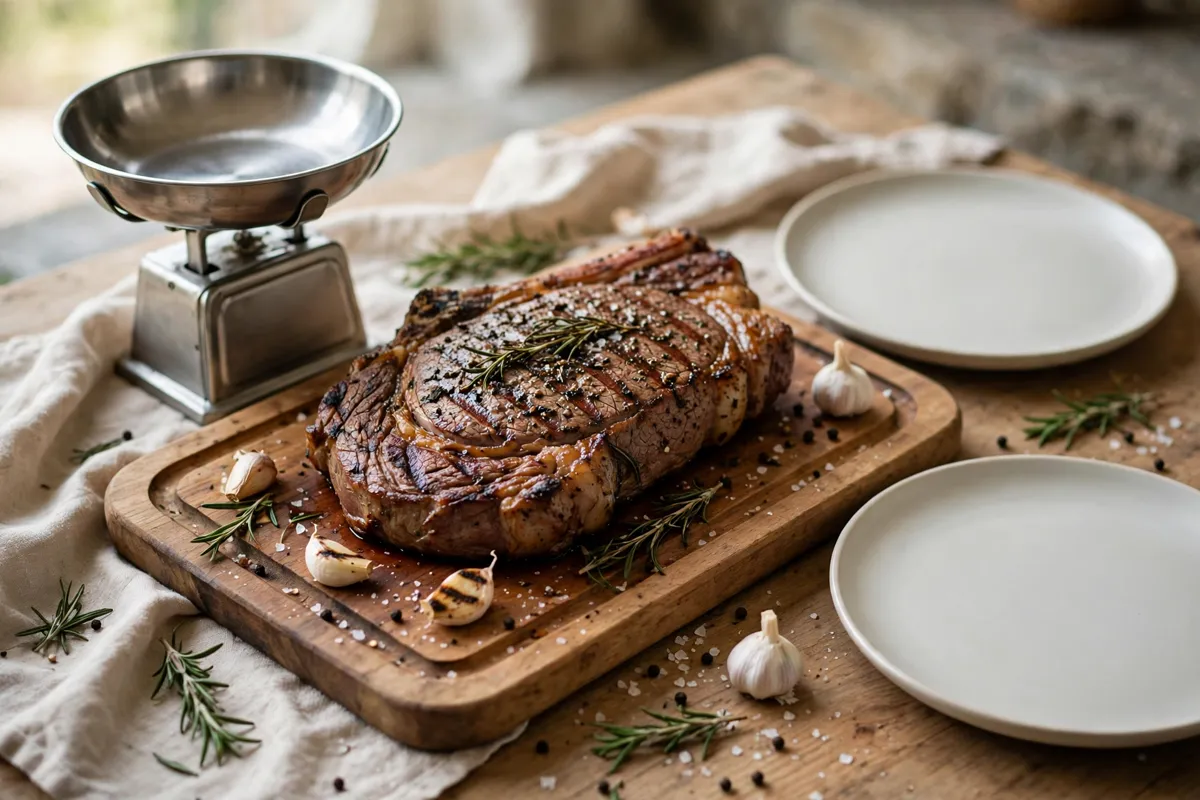
One pound of steak contains 138.6 grams of protein. That is the derived total for 453.6 grams of cooked top sirloin, from USDA's sirloin entry (FDC ID 168634) — separable lean only, broiled — at 30.55 grams of protein per 100 grams. The protein in one pound of steak, 138.6 grams with 830.1 calories, is almost exactly matched by a pound of chicken breast — the comparison this article is really about, because at the pound scale the two great protein staples can finally be weighed on identical terms.
A pound is a butcher's quantity: family packs, steak night for two, a meal-prep batch of beef. At that scale the small per-100g differences between foods compound into totals that decide shopping habits. This article builds the pound's figure, divides it the ways a pound of steak is actually divided, and stages the full-pound comparison with chicken breast that the 6-ounce article began. The chicken protein calculator hosts this cluster and prices the chicken side at any weight.
Short Answer
One pound (453.6g) of cooked lean top sirloin contains 138.6g of protein and 830.1 calories. The maths: 453.6 × 0.3055 = 138.6g of protein; 453.6 × 1.83 = 830.1 calories. A pound of chicken breast contains 140.7g of protein and 748.4 calories — marginally more protein for about 82 fewer calories, the closest heavyweight contest in this series.
How Is the Pound's Protein Built?
From the sirloin entry's per-100g profile (FDC ID 168634): 30.55g of protein, 183 calories, 5.79g of fat, 0g of carbohydrate, 64mg of sodium and 393mg of potassium, for lean meat trimmed of its separable fat and broiled. A pound is 453.6g, so protein is 453.6 × 0.3055 = 138.6g, fat is 453.6 × 0.0579 = about 26.3g, and potassium reaches about 1,783mg (453.6 × 3.93) — a reminder that a pound of any meat is a significant mineral source as well as a protein one.
Divide the pound back and the familiar units reappear, as they did for chicken: the 6-ounce steak is 52.0g of protein, the 4-ounce serving 34.6g, the ounce 8.7g (28.35 × 0.3055). A pound is four 4-ounce servings or two and two-thirds 6-ounce steaks (453.6 ÷ 170.1 ≈ 2.67). Meal preppers who batch-cook a pound of sirloin hold 138.6g of protein in the pan, and every container packed from it draws down that total at 0.3055g per gram — arithmetic that stays honest only when the batch is weighed cooked and divided by the scale, the rule this series applies to chicken pounds and beef pounds alike. The worked-division method is the same one set out for chicken in how much chicken you need for 100g of protein, where the breast's pound clears that milestone with 40.7g to spare; the sirloin pound clears it with 38.6g.
How Does the Full Pound Compare With a Pound of Chicken Breast?
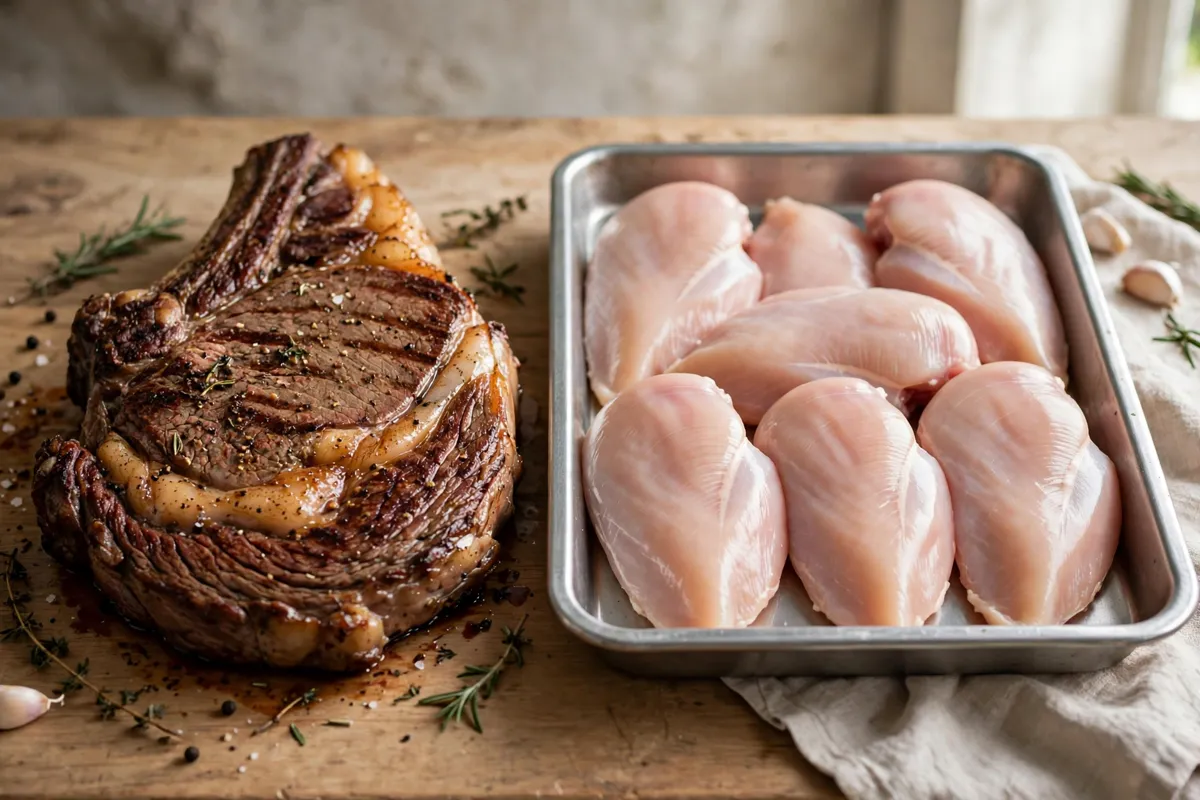
The heavyweight comparison, both pounds cooked, both from their USDA entries:
Per 100g the rates were 31.02g against 30.55g of protein and 165 against 183 calories — a near-tie and a modest gap. Multiplied by 4.536, the near-tie stays a near-tie (2.1g across a whole pound is within the variation between two individual animals), while the calorie gap grows to a meaningful 81.7: the price of the sirloin's extra 2.22g of fat per 100g, compounded. This is the correct way to read small rate differences — they matter at scale on the lines where they accumulate, and they do not manufacture a champion on the lines where they do not. On protein, a pound is a pound, within a rounding error, whichever of the two meats fills it. On calories, the chicken pound is the lighter buy by the size of a small snack. The efficiency framing in the chicken protein calculator guide makes the same point from the tool's side: protein per calorie is where these two foods actually separate.
- Chicken breast, 1 lb: 140.7g protein, 748.4 calories, about 16.2g fat
- Top sirloin, 1 lb: 138.6g protein, 830.1 calories, about 26.3g fat
- Difference: breast +2.1g protein, −81.7 calories, −10.1g fat
How Is a Pound of Steak Actually Divided?
Rarely as one portion. The realistic divisions:
The sliced-remainder pattern deserves its line, because it is how a steak pound usually lives in a real kitchen: the showcase steak on night one, and the quiet protein of lunches for days after, all drawn from one weighed total. Logging it honestly means the total is spent across the days it is eaten, container by container, not booked entire to the evening it was cooked.
- Two steak-night servings of 8 ounces (226.8g): 69.3g protein each (half of 138.6), 415.1 calories each
- Four 4-ounce servings (113.4g): 34.6g protein and 207.5 calories each — the meal-prep division
- A 6-ounce steak plus a 10-ounce remainder for slicing (283.5g): 52.0g, and about 86.6g of protein in the remainder (283.5 × 0.3055) for salads and sandwiches across the week
- One eater, one pound, one sitting: the full 138.6g and 830.1 calories — possible, memorable, and a decision rather than a default
What Moves a Real Pound Away From 138.6 Grams?
Cut, trim and the raw-to-cooked journey — the same three levers as the 6-ounce article, with pound-sized consequences. Cut: this figure is top sirloin's. A fattier cut carries fat where sirloin carries lean, reading lower on protein per 100g and higher on calories; a pound of it provides less than 138.6g of protein at more than 830.1 calories. Trim: the entry is separable lean only, fat cap removed. A pound weighed and eaten with its cap on is part lean, part cap, and its protein is the blend's — lower than the lean figure the scale seemed to promise.
And the raw pound: steak is bought raw, and this article's pound is cooked. A raw pound broils down to less than 453.6g of cooked meat, so its protein is proportionally less than 138.6g — the raw purchaser who wants a cooked pound of steak must buy more than a pound, and the raw purchaser who logs 138.6g for a raw pound has overstated dinner. None of these are flaws in the figure; they are its stated borders: cooked, lean sirloin, cap off. Inside the borders the number is exact, and outside them the borders themselves tell you which way the truth lies. Steak's place among the high-protein staples, priced the same way throughout, is compared further in the portions planning of the chicken protein guide to portions for 100g of protein.
Common Mistakes to Avoid
Do not log a raw pound at the cooked pound's 138.6g; the cooked yield is lighter and carries less protein. Do not apply sirloin's rate to every steak in the case — the pound's figure belongs to lean sirloin, trimmed. Do not eat the fat cap inside a "lean" log entry. Do not declare steak the protein winner over chicken by reputation: at the pound, the breast provides 2.1g more protein for 81.7 fewer calories. And do not book a shared or multi-day pound to a single day's record — the total belongs to the days the meat is eaten, in the portions it is eaten.
Final Thoughts
One pound of steak — lean top sirloin, broiled, weighed cooked — contains 138.6g of protein and 830.1 calories. It is, to within a couple of grams, the protein equal of a pound of chicken breast, at a modest calorie premium that is the honest price of beef's fat and flavour. Bought by the pound, it divides into four template servings or a steak night for two, and it rewards the same discipline as every food in this series: name the cut, weigh it cooked, trim as the entry assumes. The chicken protein calculator will price the chicken pound beside it whenever the comparison needs redoing at a different weight.
People Also Ask
How Much Protein Is in Half a Cup of Ground Beef?
Half a cup of ground beef has no single verified protein figure, because USDA FoodData Central publishes no cup weight for cooked ground-beef crumbles — the verified anchor is 28. 45 grams of protein per 100 grams for 90% lean ground beef crumbles, cooked pan-browned (FDC ID 171794). That per-100g figure is the honest answer to the half-cup question: any cup number depends on how large the crumbles are and how firmly the cup is packed, and this article works…
How Much Protein Does Turkey Have?
Turkey breast has 30. 13 grams of protein per 100 grams, cooked and roasted, meat only (USDA FoodData Central FDC ID 171496) — one of the highest protein densities of any plain meat. Deli turkey slices are a different food on the same name: the prepackaged sliced entry (FDC 172941) carries 14.
How Much Protein Is in Common Indian Vegetarian Foods?
Common Indian vegetarian foods deliver protein as an architecture rather than a single star food: a cup of cooked dal carries about 18 grams of protein, paneer carries about 18 grams per 100 grams, chickpeas carry 12 to 15 grams per cup, and soya chunks sit above 50 grams per 100 grams dry — and stacked in one thali, dal at 18 + a half-cup of chana at about 7 + 50 grams of paneer at about 9 + curd…
How Much Protein Is in a Poke Bowl?
A typical poke bowl carries about 30 to 36 grams of protein with one scoop of fish, and 50 grams or more with two scoops. In this site's Poke Bowl Calorie Calculator, a single-scoop bowl of white rice (240 calories, 4g protein), ahi tuna (110 calories, 26g protein), edamame (60 calories, 5g protein), cucumber (8 calories) and ponzu (15 calories, 1g protein) totals 240 + 110 + 60 + 8 + 15 = 433 calories and 4 + 26 +…