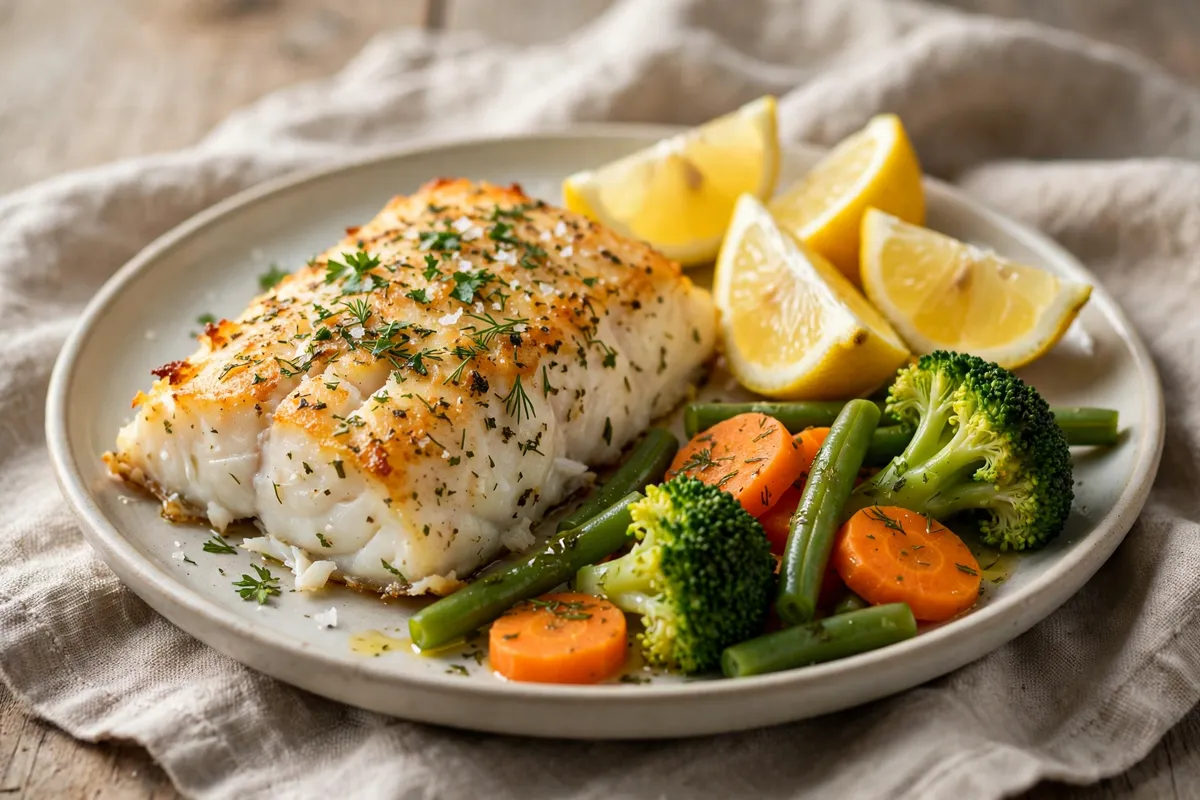
Chicken Protein Calculator: The Short Answer
Fish has between 22.83 and 25.44 grams of protein per 100 grams in the two representative USDA entries — Atlantic cod at 22.83g (FDC ID 171956) and wild Atlantic salmon at 25.44g (FDC ID 171998), both cooked with dry heat. There is no single protein number for "fish," and any source quoting one is hiding a species. This article prices the range honestly and shows where common fish sit inside it.
The range matters because the species differ in more than protein. Cod delivers its 22.83g at just 105 calories and 0.86g fat per 100g, while salmon delivers 25.44g at 182 calories and 8.13g fat — salmon is the richer fish in every sense. Choosing between them is choosing a calorie and fat profile as much as a protein figure, and the chicken protein calculator shows the poultry benchmark — 31.02g per 100g — that both fish sit below.
Short Answer
Fish protein runs about 22.8 to 25.4 grams per 100 grams cooked, across the logged cod and salmon entries. Cod (FDC 171956): 105 calories, 22.83g protein, 0.86g fat per 100g. Salmon (FDC 171998): 182 calories, 25.44g protein, 8.13g fat per 100g. Quote the species, not the category — "fish" alone cannot price a portion.
How Much Protein Is in Cod?
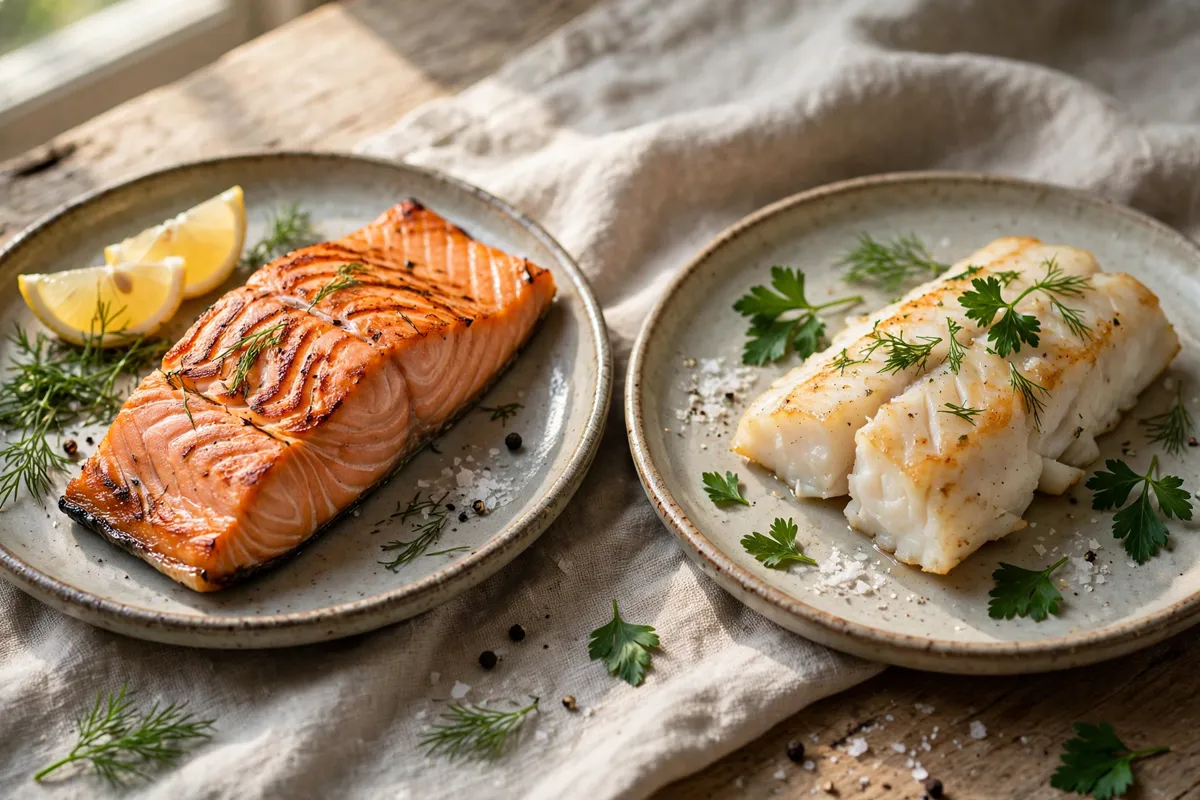
Atlantic cod, cooked with dry heat (FDC 171956), carries per 100 grams: 105 calories, 22.83g protein, 0g carbohydrate, 0.86g fat, 78mg sodium and 244mg potassium. It is one of the leanest protein foods in the entire dataset — under a gram of fat per 100g — which makes its protein-per-calorie rate excellent: about 21.7g of protein per 100 calories, better than chicken breast's 18.8g and second in this series only to turkey breast's profile. The FDC portions are 3 ounces (85g), deriving to about 89.3 calories and 19.4g protein, and one fillet at 180 grams, deriving to 189 calories and about 41.1g protein (180 × 1.05 and 180 × 0.2283).
Cod's leanness is also its culinary warning. With almost no fat to keep it moist, cod dries quickly when overcooked, and the breading or batter on fried fish-shop cod is a different food from this plain entry — the coating adds carbohydrate and fat that the 105-calorie figure knows nothing about. Plain, baked or grilled to just-done, cod is the fish for a strict calorie budget; its protein arrives with almost nothing else attached.
How Much Protein Is in Salmon?
Wild Atlantic salmon, cooked with dry heat (FDC 171998), carries per 100 grams: 182 calories, 25.44g protein, 0g carbohydrate, 8.13g fat, 56mg sodium and 628mg potassium. The potassium figure is the standout — 628mg per 100g is more than double cod's and the highest in this comparison set — and the fat, at 8.13g, is the price of salmon's richness. The FDC portion is half a fillet at 154 grams, deriving to about 280.3 calories and 39.2g protein (154 × 1.82 and 154 × 0.2544).
Salmon's protein density, 25.44g per 100g, is the top of the logged fish range, yet its protein-per-calorie rate (about 14.0g per 100 calories) trails cod's because of the fat. That is not a defect: the fat is intrinsic to the fish rather than added in cooking, and many eaters choose salmon precisely because it stays moist and satisfying at portions where cod feels austere. The honest summary is that cod wins the efficiency contest and salmon wins the protein-density contest, and the two titles are not the same. Compare either against poultry in the chicken protein calculator, where chicken breast's 31.02g per 100g still leads both on density while trailing cod on calories.
How Does Fish Protein Compare With Chicken and Meat?
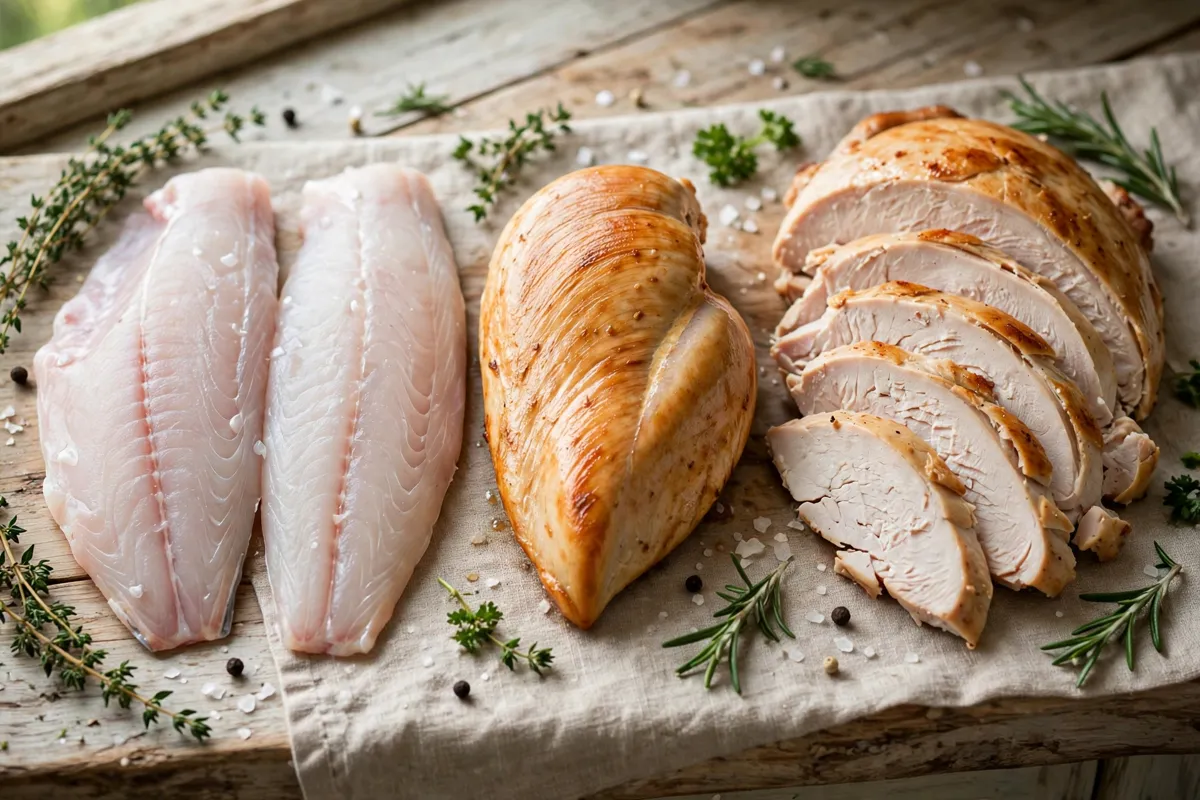
Per 100 grams cooked, the density ranking runs: chicken breast 31.02g, turkey breast 30.13g, sirloin 30.55g, ground beef crumbles 28.45g, salmon 25.44g, shrimp 23.98g, cod 22.83g. Fish sits at the lower end of the plain-protein league on density alone — a 100-gram portion of cod gives about 8 fewer grams of protein than the same weight of chicken breast. But density is only one axis. On protein per 100 calories, cod (about 21.7g) beats every meat in the list, and salmon (about 14.0g) sits mid-pack with the beef entries.
Portion size quietly closes much of the density gap in real meals. Fish is commonly served in larger portions than chicken — the cod fillet portion is 180 grams against the chicken half-breast's 86 — so a plate of cod at 41.1g protein actually out-delivers a modest chicken portion at 26.7g. How much protein is in a salad with chicken shows the same portion-versus-density lesson from the poultry side: what lands on the plate matters more than the per-100g league table. Fish earns its place through variety, leanness at the cod end, and portion generosity — not through winning the density ranking.
How Much Fish Do You Need for a Protein Target?
From cod, 30 grams of protein needs 30 ÷ 22.83 × 100 ≈ 131 grams of cooked fish, deriving to about 138 calories. From salmon, the same 30 grams needs 30 ÷ 25.44 × 100 ≈ 118 grams, deriving to about 215 calories. For a 40-gram target — a generous main-course anchor — cod needs about 175 grams (close to the whole 180g fillet portion) and salmon about 157 grams (close to its 154g half-fillet portion). The fillet portions in the data are, not coincidentally, sized almost exactly to deliver a full meal's protein.
A few planning notes keep the arithmetic honest:
- Price fish cooked: these entries describe cooked fish, and raw fillets lose water weight in the pan or oven
- Price the species you bought — swapping cod numbers onto salmon understates calories by about 77 per 100g
- Plain entries only: sauces, butter and breading are separate foods with their own lines
- Frozen fish prices the same once cooked, as long as it is plain — glazes and coatings change the entry
Which Fish Should You Choose for Which Goal?
The two logged entries divide the goals cleanly. For a strict calorie budget, cod: its 105 calories per 100g is the lowest figure of any protein food in this comparison series, and its protein-per-calorie rate of about 21.7g per 100 calories means a large, satisfying fillet costs less than most small meat portions. For maximum protein in a modest portion, salmon: 25.44g per 100g reaches a 40-gram target at about 157 grams, and its richness carries a meal without sauces. For a middle path, portion size does the steering — a larger cod portion matches a smaller salmon portion on protein at fewer calories, which is why fish counters sell cod in bigger fillets by custom. Whichever you choose, the benchmark it is usually replacing is priced in how much protein is in 100 grams of chicken breast: 31.02g per 100g, the density neither fish reaches, at 165 calories, the figure cod undercuts and salmon exceeds. The three together — chicken for density, cod for lightness, salmon for richness — cover nearly every protein brief a week of dinners can present.
Common Mistakes to Avoid
- Quoting one protein number for "fish" — the logged range alone spans 22.83 to 25.44g per 100g, and the species is the answer
- Logging salmon with cod's calories — a 77-calorie-per-100g error in the flattering direction
- Treating battered or breaded fish as the plain entry — the coating adds carbs and fat the plain figures exclude
- Weighing raw and logging cooked values, which overstates the portion's protein
- Judging fish only on density — cod's protein per calorie beats chicken breast even though its per-100g protein is lower
Final Thoughts
Fish has 22.83 to 25.44 grams of protein per 100 grams in the verified entries — cod at the lean, efficient end, salmon at the rich, dense end — and the species name is part of the answer. Both sit below chicken breast on density and both hold real advantages on other axes. Name your fish, weigh it cooked, and the numbers behave; the poultry benchmark for comparison lives in the chicken protein calculator.
People Also Ask
Does Shrimp or Chicken Have More Protein?
Chicken has more protein than shrimp — chicken breast carries 31. 02 grams of protein per 100 grams (USDA FDC ID 171477) against shrimp's 23. 98 grams per 100 grams (FDC ID 175180), a clear seven-gram gap at equal weights.
Does Chicken or Turkey Have More Protein?
Chicken has more protein than turkey — by a hair: chicken breast carries 31. 02 grams of protein per 100 grams (USDA FDC ID 171477) against turkey breast's 30. 13 grams per 100 grams (FDC ID 171496), both cooked, roasted and meat only.
How to Build a High-Protein, Low-Calorie Poke Bowl?
Build a high-protein, low-calorie poke bowl on a half-rice base with two lean scoops: half rice, half greens (130 calories) + ahi tuna (110) + cooked shrimp (85) + edamame (60) + cucumber (8) + ponzu (15) = 408 calories, carrying 3 + 26 + 20 + 5 + 0 + 1 = 55 grams of protein. That is about 13. 5 grams of protein per 100 calories across the whole bowl — a ratio most restaurant lunches never approach…
What Are the Best High-Protein Snacks Under 200 Calories?
The best high-protein snacks under 200 calories are anchored on Greek yogurt, tuna, cottage cheese, eggs and edamame — in that order of protein density. A Greek yogurt pot delivers about 17 grams of protein for about 100 calories, a tuna pouch about 16 grams for about 110 calories, and a small protein shake 20 to 25 grams for 120 to 150 calories. Paired with berries, cucumber or tomatoes, those anchors build complete snacks at 125 to 160 calories carrying…