Chicken Protein Calculator: The Short Answer
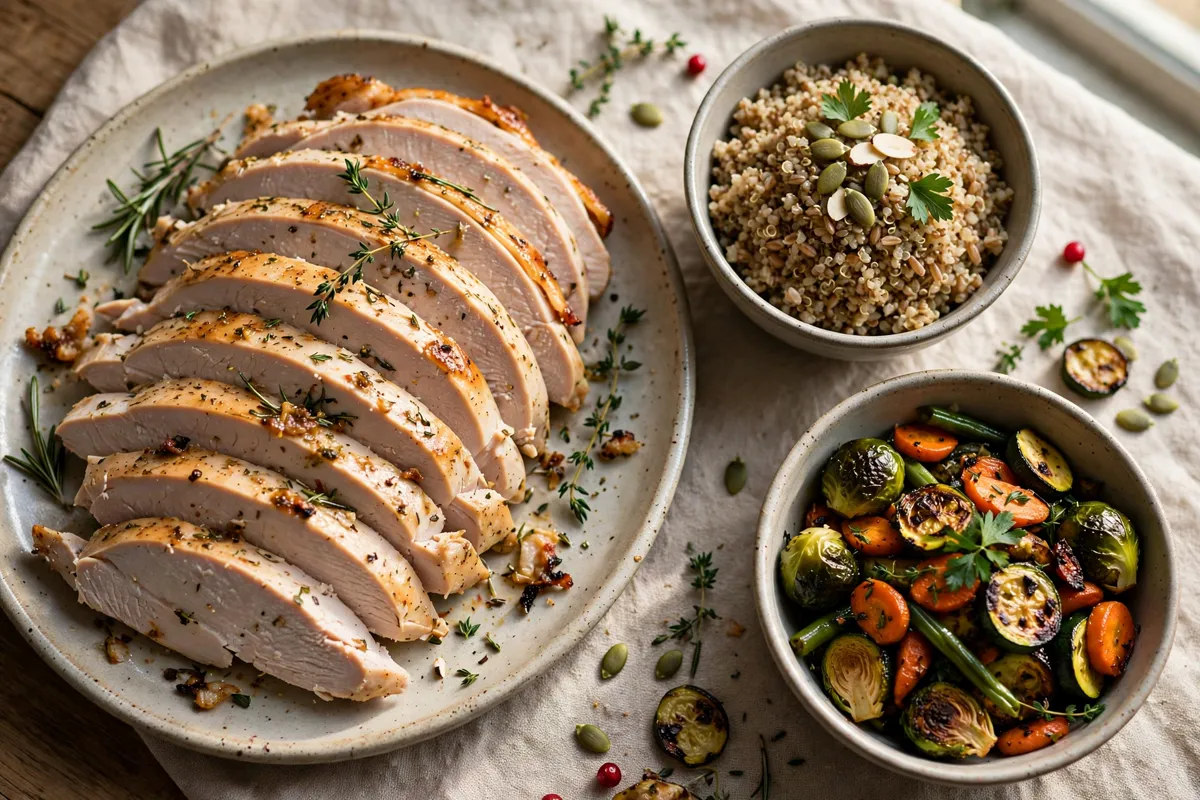
Turkey breast has 30.13 grams of protein per 100 grams, cooked and roasted, meat only (USDA FoodData Central FDC ID 171496) — one of the highest protein densities of any plain meat. Deli turkey slices are a different food on the same name: the prepackaged sliced entry (FDC 172941) carries 14.81g protein per 100g, less than half the density, because the slices are a processed product with added water. Which turkey you mean decides the answer, and this article prices both.
That gap surprises people because the deli product markets itself on the roast bird's reputation. Both are legitimately turkey, both belong in a kitchen, but they do not swap one-for-one in a meal plan: a sandwich built on deli slices needs roughly twice the weight of meat to match the protein of sliced roast breast. The full comparison, plus the sodium story that separates them just as sharply, is below — and every poultry portion converts in the chicken protein calculator. A turkey sandwich gets the same treatment for protein, with its grams worked out in full.
Short Answer
Roasted turkey breast, meat only, has 30.13g protein per 100g (FDC 171496), at 147 calories, 2.08g fat and 99mg sodium per 100g. A 3-ounce serving (85g) derives to 125.0 calories and 25.6g protein. Deli turkey slices (FDC 172941) have 14.81g protein per 100g, with one 16g slice at 2.4g protein — and 898mg sodium per 100g against the roast breast's 99mg.
How Much Protein Is in Roasted Turkey Breast?
Per 100 grams, roasted turkey breast (meat only, FDC 171496) provides 147 calories, 30.13g protein, 0g carbohydrate, 2.08g fat, 99mg sodium and 249mg potassium. Two things stand out against its closest rival. First, the protein density is elite: only chicken breast, at 31.02g per 100g, edges it among plain cooked meats. Second, it is the leanest entry in that company — 2.08g fat per 100g undercuts even chicken breast's 3.57g — which makes turkey breast the most protein-efficient plain meat per calorie in this dataset: about 20.5g of protein per 100 calories, ahead of chicken breast's 18.8g.
The standard 3-ounce serving (85g) derives to 125.0 calories and 25.6g protein — a complete meal's protein anchor for most people, at fewer calories than the same weight of chicken breast (140.3). A whole roasted breast portion of 172g, matching the reference size used for chicken, would derive to about 252.8 calories and 51.8g protein (172 × 1.47 and 172 × 0.3013). For the direct rivalry priced both ways, how much protein is in one chicken breast gives the chicken side, and the two birds are compared head-on in the chicken-versus-turkey article in this series.
How Much Protein Is in Deli Turkey Slices?
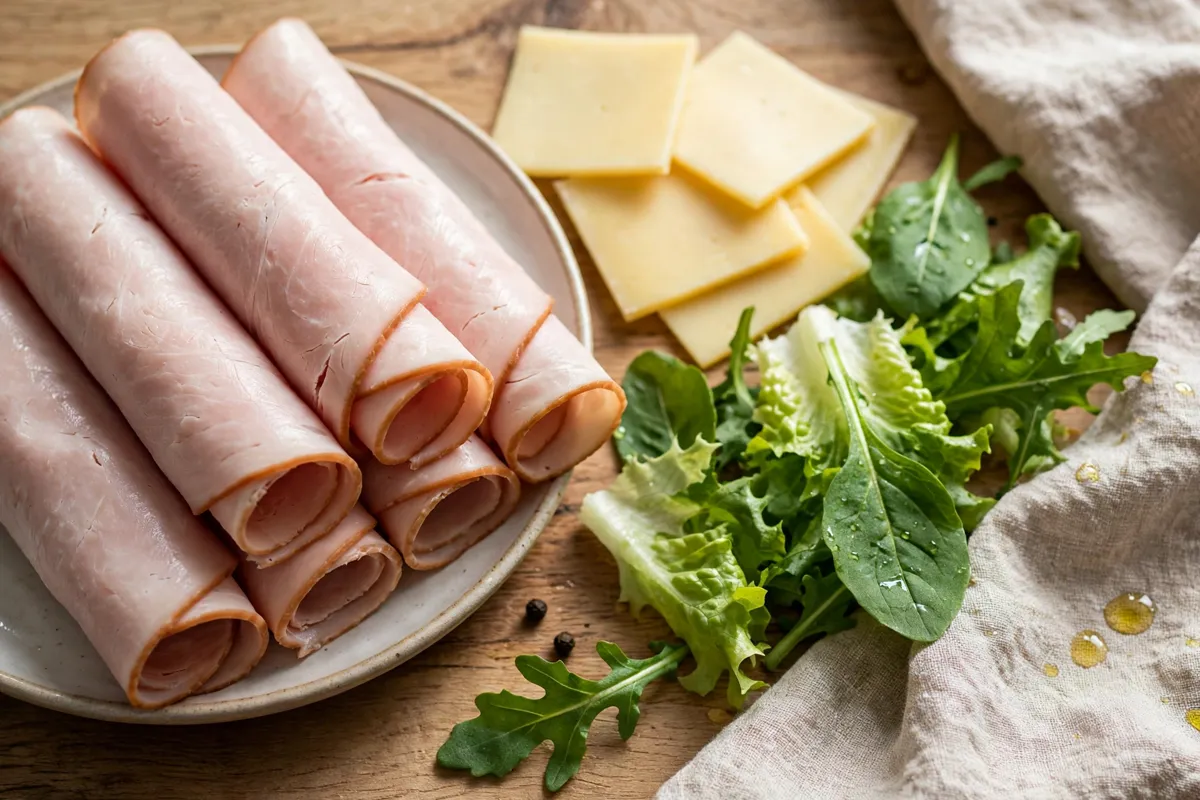
The prepackaged sliced entry (FDC 172941) tells a different story: per 100 grams it carries 106 calories, 14.81g protein, 2.2g carbohydrate, 3.77g fat and 898mg sodium. The single FDC slice portion is 16 grams, deriving to 17.0 calories, 2.4g protein and 144mg sodium per slice; two slices (32g) derive to 33.9 calories and 4.7g protein. The protein density is less than half the roast breast's because deli slices are formed from brined, pressed meat with added water — water that adds weight without protein — and the small carbohydrate figure (2.2g per 100g, against zero in plain breast) comes from the curing and binding ingredients in the product.
None of this makes deli turkey a poor food; it makes it a different one. Four slices (64g) derive to about 67.8 calories and 9.5g protein — a reasonable sandwich layer, but a cook expecting roast-breast numbers from a deli pack will undershoot a protein target by half. The sodium gap deserves equal billing: at 898mg per 100g, deli slices carry about nine times the sodium of roast breast (99mg per 100g), so the deli version is also the one to watch on a sodium budget. The chicken protein calculator prices plain poultry portions; deli products need their own label, read slice by slice.
How Does Turkey Compare With Chicken and Other Meats?
Per 100 grams cooked, the plain-meat protein ranking runs: chicken breast 31.02g, turkey breast 30.13g, sirloin steak 30.55g — steak actually slots between the two birds — then ground beef crumbles (90% lean) at 28.45g, with deli turkey far behind at 14.81g. Turkey's claim is not raw protein leadership but the combination: near-top protein with the lowest fat (2.08g) and a moderate calorie count (147) in the group. Chicken breast wins on protein per 100 grams by 0.89g; turkey wins on protein per calorie and on fat.
Context decides which matters. A cook chasing maximum protein in minimum calories reaches for turkey breast; a cook chasing maximum protein per bite, or the more widely available and usually cheaper bird, reaches for chicken. Does dark meat have less protein covers the within-bird version of the same question — dark cuts of either bird run several grams lower per 100g than breast, with more fat — and the breast-first ranking holds for both species. That comparison is taken up directly in chicken or turkey for protein.
How Much Turkey Do You Need for a Protein Target?
The arithmetic is the per-100g rate inverted. For 30 grams of protein from roasted turkey breast: 30 ÷ 30.13 × 100 = about 99.6 grams of meat — call it 100 grams, or about 3.5 ounces — deriving to roughly 147 calories. For 50 grams of protein: about 166 grams of breast (50 ÷ 0.3013), deriving to roughly 244 calories. From deli slices, the same 30-gram target needs about 203 grams of slices (30 ÷ 0.1481) — roughly thirteen 16g slices — deriving to about 215 calories and, more importantly, about 1,823mg of sodium (203 × 8.98), which is why deli meat is a flavour layer in a protein plan, not its foundation.
Practical translation for the plate:
- A 3-ounce roast breast serving (85g) gives 25.6g protein at 125.0 calories — most of a meal target in one item
- A sandwich on 4 deli slices (64g) gives about 9.5g protein — pair it with cheese or another protein to reach a meal target
- Leftover roast breast sliced at home keeps the 30.13g density in sandwich form — the best of both formats
- Whole-bird leftovers mixed from breast and dark meat land between the breast figure and the dark-meat figures, weighted by what you serve
What About the Rest of the Bird?
This article prices the breast because the breast is where turkey's protein reputation is earned, but the whole bird follows the pattern every poultry dataset shows: white breast meat at the top, dark meat below it with more fat, and processed forms below that. A cook using leftover roast turkey across a week is therefore eating a gradient, not a single number — breast slices near the 30.13g rate, mixed picked meat somewhere between the breast and the dark cuts, and any deli-style product from the bird's leftovers still priced by the roast entries, since home leftovers are unprocessed meat. The honest habit is to log mixed leftover portions conservatively, nearer the middle of the gradient, and to keep breast portions — the ones whose entry is verified to the decimal — for the meals where the protein target is tightest and the number matters most.
Common Mistakes to Avoid
- Logging deli slices at roast-breast values — the single biggest turkey error, overstating protein by about half
- Ignoring deli sodium: 898mg per 100g against 99mg in roast breast, a ninefold difference hiding behind one word, "turkey"
- Assuming dark turkey meat matches breast — dark cuts of any bird run lower in protein and higher in fat per 100g
- Counting the skin: the 30.13g figure is meat only, and skin-on portions shift the balance toward fat
- Weighing raw and logging cooked values — the roasted entry describes cooked meat, water already lost
Final Thoughts
Turkey has 30.13 grams of protein per 100 grams as roasted breast — elite density at the group's lowest fat — and 14.81 grams per 100 grams as deli slices, a processed product priced by its own label. Name the format before you quote the number, weigh the portion, and the bird delivers exactly what the data promises. Portions of either format scale in the chicken protein calculator alongside the chicken figures they rival.
People Also Ask
How Much Protein Does Fish Have?
Fish has between 22. 83 and 25. 44 grams of protein per 100 grams in the two representative USDA entries — Atlantic cod at 22.
Does Shrimp or Chicken Have More Protein?
Chicken has more protein than shrimp — chicken breast carries 31. 02 grams of protein per 100 grams (USDA FDC ID 171477) against shrimp's 23. 98 grams per 100 grams (FDC ID 175180), a clear seven-gram gap at equal weights.
What Is the Lowest-Calorie Protein for a Poke Bowl?
Tofu is the lowest-calorie protein for a poke bowl at 80 calories per 4-ounce serving in this site's Poke Bowl Calorie Calculator — but it carries only 9 grams of protein, and the lowest-calorie protein that still behaves like a protein is cooked shrimp, at 85 calories with 20 grams of protein. Ahi tuna follows at 110 calories with 26 grams. Those three numbers, not the single winner, are the real answer: the leanest serving and the leanest useful serving…
How to Build a High-Protein, Low-Calorie Poke Bowl?
Build a high-protein, low-calorie poke bowl on a half-rice base with two lean scoops: half rice, half greens (130 calories) + ahi tuna (110) + cooked shrimp (85) + edamame (60) + cucumber (8) + ponzu (15) = 408 calories, carrying 3 + 26 + 20 + 5 + 0 + 1 = 55 grams of protein. That is about 13. 5 grams of protein per 100 calories across the whole bowl — a ratio most restaurant lunches never approach…