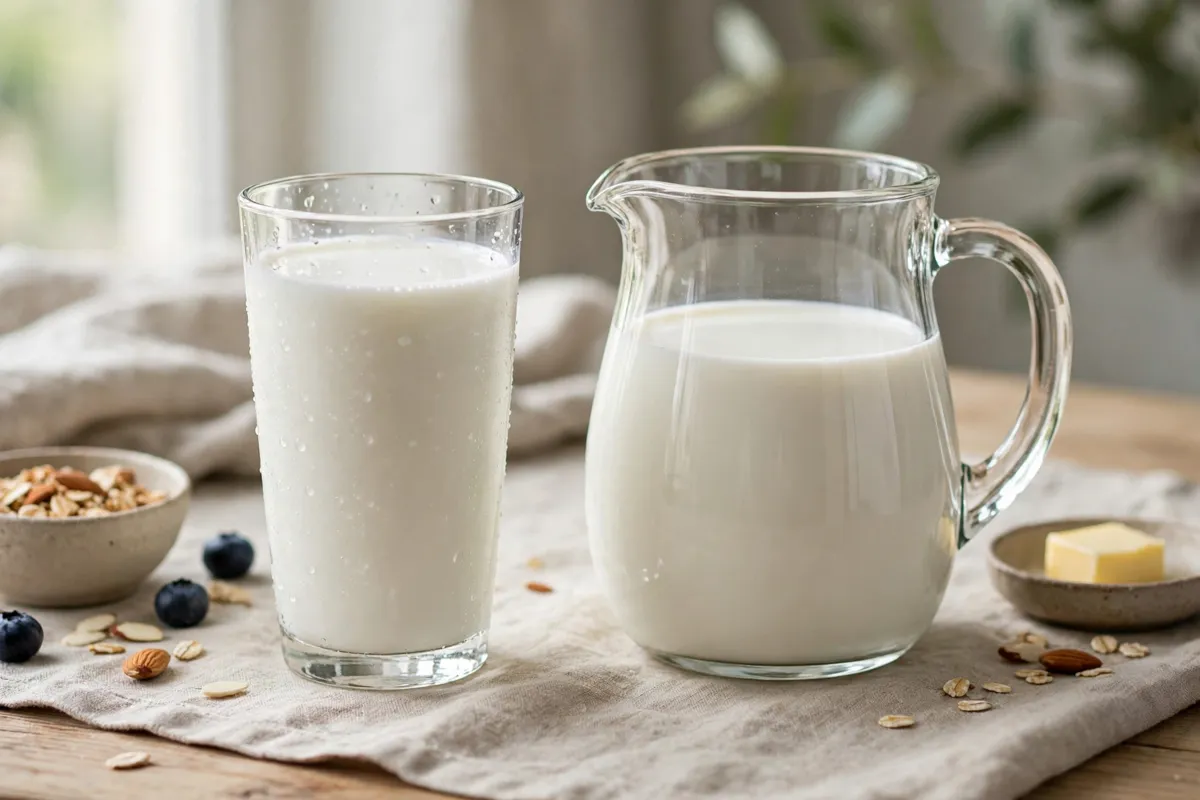
Calorie Counter: The Short Answer
One cup of 1% milk contains about 102 calories — 102.5, precisely, in the USDA's figures. FoodData Central's entry for 1% low-fat milk (FDC ID 170872) gives 42 calories per 100g, and its standard cup weighs 244g, which works out to 102.5 calories, with 8.2g protein, 12.2g carbohydrate and 2.4g fat in the cup.
That combination — a round hundred calories carrying eight grams of protein — is why 1% milk occupies its particular place in fridges and diet plans. This article unpacks the cup in full: what its calories are made of, how the cup's weight drives the number, and how to log milk accurately when the glass, not the cup measure, is your portion. Enter the glass in the calorie counter like any other food; here is what you are entering.
Short Answer
About 102 calories in one cup of 1% milk. The cup is 244 grams of a milk that carries 42 calories per 100g — 244 × 0.42 = 102.5 — made up of 8.2g protein (about 33 calories), 12.2g carbohydrate (about 49) and 2.4g fat (about 21). Per fluid ounce, the same milk is about 12.8 calories.
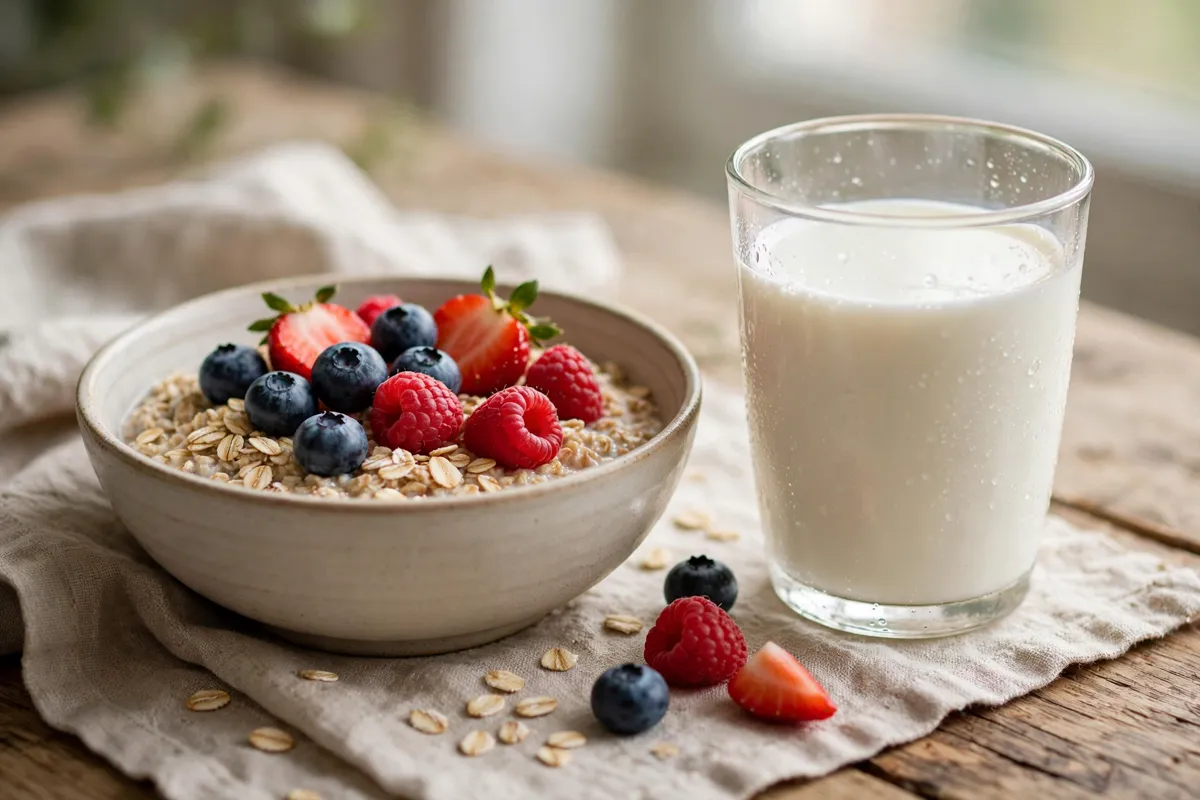
What Is Inside the Cup, Nutrient by Nutrient?
Start with the per-100g profile, because everything else is scaling. USDA's 1% milk lists 42 calories, 3.37g protein, 4.99g carbohydrate, 0.97g fat and 5.2g sugar per 100g, along with 44mg sodium and 150mg potassium. The "1%" in the name is the milkfat share — about one gram of fat per hundred grams — which is the entire identity of this milk: it is skimmed down to a whisper of fat while keeping milk's protein and its natural sugar, lactose, intact.
Scale that profile to the 244g cup and the cup's full identity appears: 102.5 calories, 8.2g protein, 12.2g carbohydrate, 2.4g fat and roughly 12.7g of sugar, all of it lactose rather than added sugar. Price the macros with the standard factors and the total reconciles the way a label should: protein 8.2 × 4 = 32.8, carbohydrate 12.2 × 4 = 48.8, fat 2.4 × 9 = 21.6 — a sum of about 103, matching the cup's 102.5 within rounding. A cup of this milk is therefore best pictured as a protein-and-carbohydrate drink with a garnish of fat, which is precisely why it behaves so differently in a diet from creamier dairy at the same volume.
Why Does the Cup Weigh 244 Grams — and Why Does It Matter?
Because milk is denser than water. A cup measure is a volume (about 237ml by the US measure, and the USDA's own cup portion for this milk is recorded at 244g), and milk's dissolved proteins, sugars and minerals make each millilitre weigh more than a gram. The distinction matters in the only place it can bite: if you weigh out 237g of milk assuming a gram-per-millilitre, you have poured slightly less than a cup; if you pour a true 244g cup while logging 237, you understate by about 3 calories — trivial here, but the habit of weighing dairy as if it were water distorts richer products more.
The fluid-ounce conversion in the USDA data makes small portions easy: 1 fl oz of this milk is 30.5g and about 12.8 calories. A splash for coffee at an ounce or two is 13 to 26 calories; a cereal bowl's half cup is about 51; a tall glass filled to 12 ounces is about 154. Most logging errors with milk come not from the milk but from the vessel — glasses hold more than a cup, and "a glass of milk" at 350ml is about 147 calories, not 102. The calorie counter will take grams, ounces or cups; give it the one you actually measured.
- 1 fl oz (30.5g): about 12.8 calories
- Half a cup (122g): about 51 calories
- 1 cup (244g): about 102.5 calories
- A 350ml glass: about 147 calories
How Does 1% Milk Earn Its Place in a Calorie Budget?
By being one of the cheapest protein sources in the calorie economy. Eight grams of protein for about 102 calories is a ratio few foods beat without being pure protein, and the protein arrives with calcium-bearing, satiating liquid rather than in a dry supplement. For someone lifting their protein intake inside a fixed budget — the arithmetic explored in pieces like how much protein should you add to a smoothie, where milk is often the base — a cup of 1% milk does quiet, efficient work at breakfast, in cooking and in shakes.
Its carbohydrate deserves a calm word, too. The 12.2g in a cup is lactose, milk's own sugar, and it is counted in the cup's 102.5 from the start — there is no hidden addition waiting in the total. People managing carbohydrate closely should count it, as they count any food's carbohydrate; people simply watching calories should notice that the milk's sugar is inseparable from its protein, unlike a sweetened drink where sugar is nearly the whole cargo. The sodium, at 44mg per 100g (about 107mg per cup), is modest. Altogether the cup is a balanced, mid-priced food: not free, not expensive, and unusually informative per calorie.
How Accurate Is the 102 Figure for Your Glass?
The USDA figure is a reference value for a standardised product: milk processed to a 1 percent fat standard, with vitamins A and D added, as the entry's full name specifies. Your carton meets the same fat standard, so its per-100g energy will sit very close to 42 — fat is the variable that matters, and it is the one the percentage fixes. Brand-to-brand differences in protein and lactose are small enough to disappear inside ordinary measuring error.
The realistic sources of drift are on your side of the carton. A generously filled measuring cup, a glass treated as a cup, milk poured over cereal and then drunk from the bowl in unlogged top-ups — each moves the day by tens of calories, dwarfing any laboratory variation in the milk itself. Weigh or measure the portion for a week and the 102.5 becomes a dependable constant in your diary, the kind of anchor number that makes the rest of a day's logging faster. That is the role reference values are built for, and this cup is one of the most dependable of them.
Common Mistakes to Avoid
Do not log a glass as a cup: the standard glass in most kitchens holds 300 to 400ml, which is 126 to 168 calories of this milk, not 102. Do not confuse the fat percentages when comparing milks in the shop — this article's figure belongs strictly to 1% milk at 42 calories per 100g, and other milks carry other figures because their fat differs. Do not treat the cup's sugar as added sugar; it is lactose, intrinsic to milk, already inside the 102.5. Do not weigh milk as 237g for a cup — the USDA cup is 244g, and while the error here is small, the habit matters with denser foods. Finally, do not forget milk used in cooking and drinks: the cup in a sauce or a day's coffees is the same 42 per 100g, whether or not it passed through a glass.
Final Thoughts
One cup of 1% milk contains about 102 calories — 102.5 by the USDA's entry, from 244 grams at 42 calories per 100g — delivering 8.2g protein, 12.2g carbohydrate and 2.4g fat. It is a reference number you can rely on, provided the portion you drink is truly a cup. Measure the glass once, log it in the calorie counter, and this staple will never be a source of drift in your diary again.
People Also Ask
How Many Calories Are in One Cup of Fruit?
One cup of fruit contains anywhere from about 46 to 134 calories depending on the fruit — watermelon at the light end, banana at the heavy end — and a mixed cup of common fruits averages about 59 calories. All of those figures come from USDA FoodData Central entries, using each fruit's own official cup weight, and the full table is set out below.
How Many Calories Are in a Bowl of Fruit?
A bowl of fruit contains about 118 calories if the bowl holds two cups of mixed fruit — the honest way to answer a question whose key word, "bowl," has no standard size. Build the same two-cup bowl from a single fruit and the range runs from about 91 calories for watermelon to about 267 for banana, all on USDA FoodData Central values, so this article defines its bowl before it prices it.
How Many Calories in a Harissa Honey Chicken?
A portion of Harissa Honey Chicken at CAVA is 260 calories, with 26 grams of protein, 7 grams of carbohydrates, 13 grams of fat, 1 gram of fibre, 3 grams of sugar and 680 milligrams of sodium. That is only 10 calories more than the plain Grilled Chicken portion at 250 — in a grain bowl on Saffron Basmati Rice, the harissa honey version is 290 + 260 = 550 calories against 540 for the plain chicken, and in a…
How Many Calories in a Peach Rebel™ Iced?
A medium Peach Rebel Iced at Dutch Bros is 250 calories, as tracked in the Dutch Bros calculator on this site — with 0 grams of protein, 63 grams of carbohydrates, 0 grams of fat, 0 grams of fiber, 60 grams of sugar and 110 milligrams of sodium. That is the complete answer for the standard drink as listed, and it comes with a comparison that reframes it: the Sugar-Free Peach Rebel Iced, the same drink in the same size,…