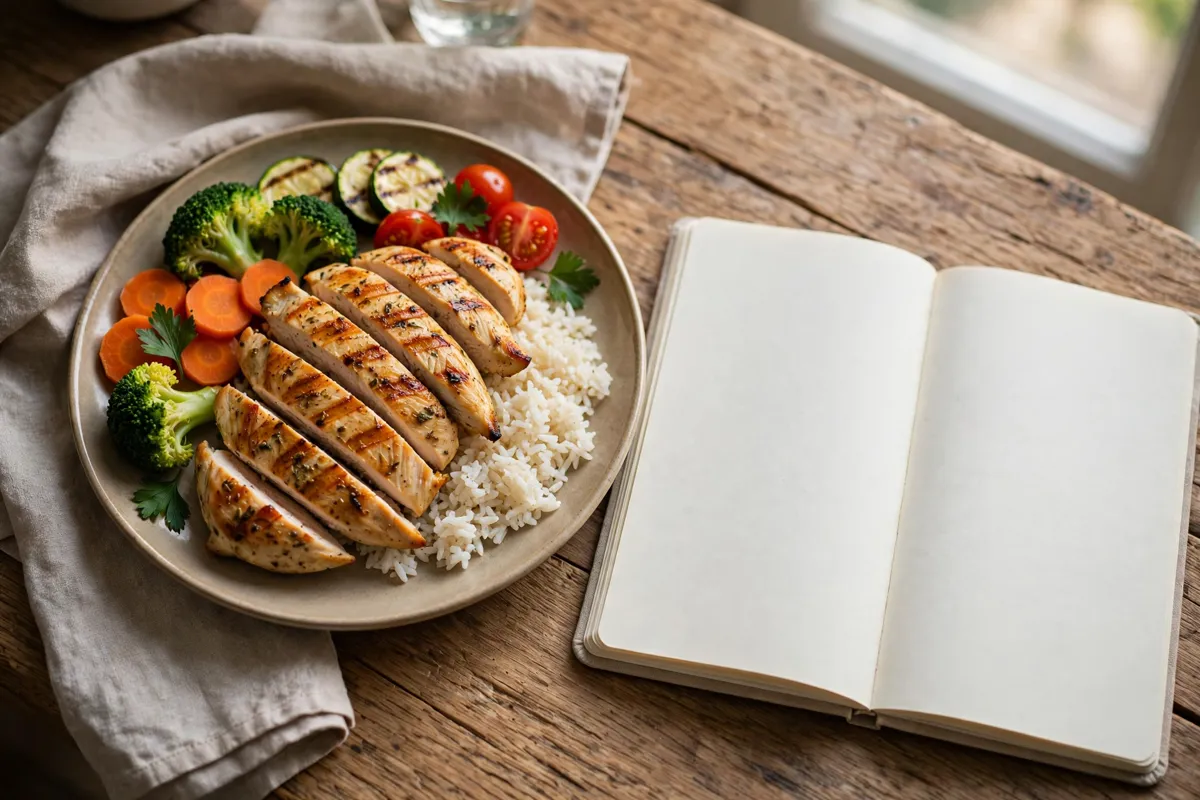
Macro Calculator: The Short Answer
To track macros, log every food's protein, carbs and fat in grams and compare the running totals with your daily targets. Protein and carbs count as 4 calories per gram and fat as 9, so the gram totals — not just calories — tell you whether the day is on plan.
Tracking macros sounds technical, but the daily habit is simple: weigh or portion your food, record it before or right after you eat it, and check the three totals once or twice during the day. You do not need a perfect record to benefit. A mostly honest log, kept for a few weeks, shows you patterns that memory alone always misses — the cooking oil you forgot, the snack that was bigger than you thought, the protein that quietly fell short. This guide walks through the whole method step by step, using the same 4, 4 and 9 calorie factors the macro calculator uses, so you can start today with nothing more than a phone, a notebook and, ideally, a kitchen scale.
Short Answer
Track macros in five steps: set gram targets for protein, carbs and fat, weigh or portion each food, look up or scan its nutrition values, log the grams as you eat, and review the totals at the end of the day. Stay within about 5–10g of each target on most days and the method is working — exact hits are not required, a point the site also makes in hitting your macros exactly.
Step 1 — How Do You Set Your Macro Targets Before You Track Anything?
Tracking without targets is just diary-keeping. Start from a daily calorie level that fits your goal, then split it into percentages. The presets used on this site are a balanced split of 30% protein, 40% carbs and 30% fat, a high-protein split of 40% protein, 30% carbs and 30% fat, and a keto split of 20% protein, 5% carbs and 75% fat. Convert each percentage into grams by multiplying your calories by the percentage and dividing by 4 for protein or carbs, or by 9 for fat. On 2,000 calories, the balanced split gives 150g protein (2,000 × 0.30 ÷ 4), 200g carbs (2,000 × 0.40 ÷ 4) and about 67g fat (2,000 × 0.30 ÷ 9). If percentages feel abstract, work through converting macro percentages to grams once and write your three gram numbers somewhere you will see them daily.
Step 2 — How Do You Log a Meal, Gram by Gram?
For each food, you need three numbers: grams of protein, grams of carbs and grams of fat per serving — plus the size of the serving you actually ate. Packaged foods carry these on the label. Whole foods can be looked up in a database or totalled in a tool like the calorie counter on this site. A worked breakfast makes it concrete. One large egg provides about 6g protein, 1g carbs and 5g fat. Half a cup of dry oats provides about 5g protein, 27g carbs and 3g fat. A medium banana adds about 1g protein, 27g carbs and almost no fat. Added together, that breakfast is roughly 12g protein, 55g carbs and 8g fat — about 340 calories once you apply the 4, 4 and 9 factors. Logging meal by meal like this, rather than reconstructing the whole day at night, is what keeps the record honest.
Step 3 — Why Does Weighing Food Make Macro Tracking Actually Work?
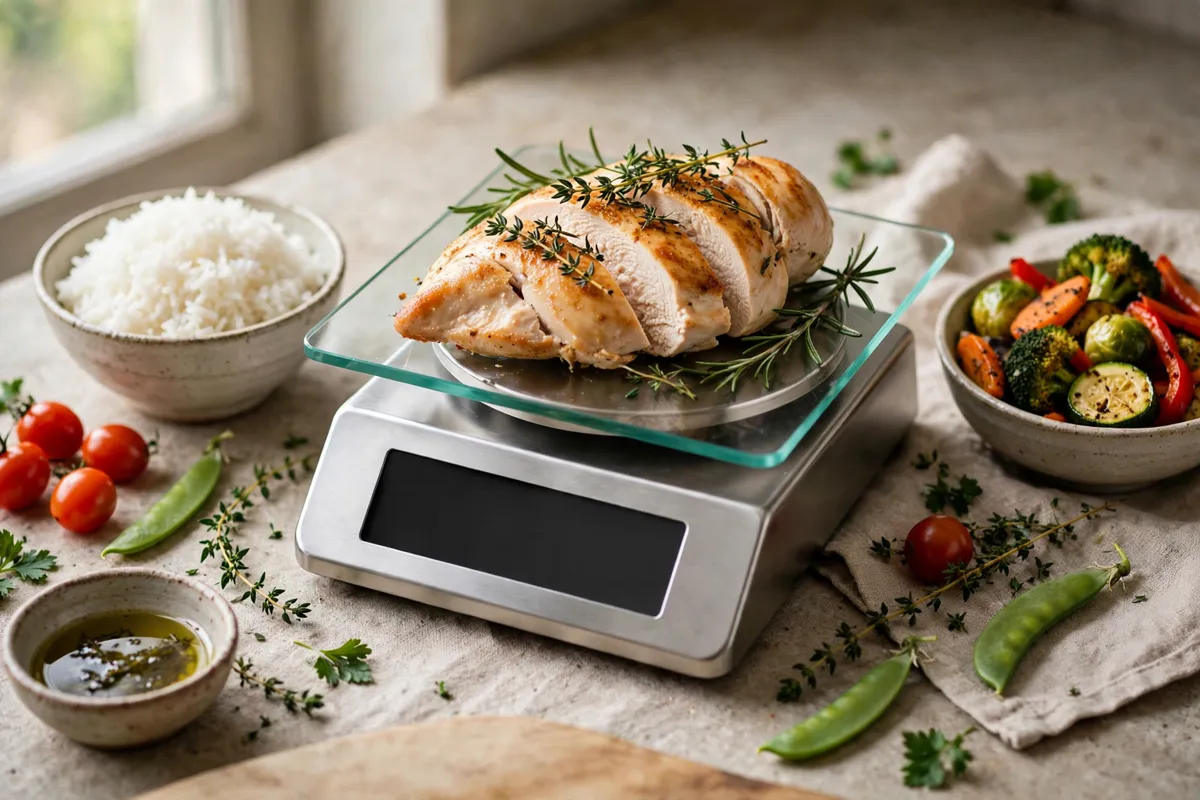
Most tracking error is portion error, not database error. A "tablespoon" of peanut butter heaped on a spoon can weigh twice the 1-tablespoon serving on the label, which is listed here at about 95 calories with 4g protein, 3g carbs and 8g fat — so a heaped spoon quietly doubles all three macros. A kitchen scale removes the guesswork: place your bowl on it, add each ingredient, and record the real weight. You do not need to weigh forever. Most people weigh for two to four weeks, learn what their usual portions actually look like, and then weigh only new or calorie-dense foods — oils, nuts, cheese, nut butters and grains — where eyeballing fails worst. Restaurant meals are the exception you cannot weigh; for those, estimate using the strategies in tracking macros when eating out and accept a rougher entry rather than skipping the meal entirely.
Step 4 — How Should You Check Your Totals During the Day?
Review the running totals at least once before your last meal, while you can still change the outcome. If protein is 40g short with dinner still to come, you can plan a protein-rich dinner — 100g of cooked chicken breast alone provides about 31g protein — instead of discovering the shortfall at bedtime. If fat is already at target by lunch, an oil-heavy dinner will overshoot no matter how carefully you log it, so you would choose a leaner cooking method. A simple rhythm works well: log breakfast and lunch as you go, glance at the totals mid-afternoon, then build dinner to fill the gaps. Weekly averages matter more than any single day, so judge the habit on seven days, not one.
What Should You Do When Your Logged Macros and Calories Disagree?
Multiply your logged grams by 4, 4 and 9 and add them up. If that total is far from the calories your app shows, something in an entry is wrong — usually a serving size. For example, 150g protein, 200g carbs and 67g fat should total about 2,003 calories (600 + 800 + 603). A gap of a few percent is normal because labels round values and fibre is sometimes counted at a lower factor, but a gap of 15–20% means an entry needs fixing. The macro calculator guide shows the same maths from the calculator's side, and checking one day by hand teaches you more about your log than a month of trusting it blindly.
- Log food before or right after eating, never from memory at night
- Weigh calorie-dense foods: oils, nuts, cheese, nut butters and dry grains
- Check totals once mid-day, while dinner can still fix a shortfall
- Judge the week, not the day — aim to land within 5–10g of each target
Common Mistakes to Avoid
The most common mistake is tracking only on "good" days and skipping weekends, celebrations and restaurant meals — which guarantees the average you see is better than the average you eat. The second is logging cooked and raw weights interchangeably: grains and rice absorb water and roughly triple in weight when cooked, while meat loses about a quarter of its weight, so mixing the two up distorts every macro. Third, people forget liquids, cooking oils, sauces and tastings while cooking; a tablespoon of oil is almost pure fat at 9 calories per gram of fat, and it counts even though it never sits on the plate. Fourth, chasing exact targets daily leads to absurd end-of-day snacking to "hit the number." Staying in a sensible range beats precision theatre. Finally, do not copy someone else's targets: your grams follow from your calories, your body and your goal, which is why calculating your own macros comes before any logging habit.
Final Thoughts
Macro tracking is a measuring habit, not a diet in itself: set gram targets from your calorie goal, log protein, carbs and fat as you eat, weigh the foods that are easy to misjudge, and review the totals while the day can still be adjusted. Give it two honest weeks and you will know more about how you actually eat than years of guessing could teach you. Start with the macro calculator, set your three numbers, and log tomorrow — imperfectly is fine.
People Also Ask
What Is Macro Counting?
Macro counting is tracking the grams of protein, carbohydrate and fat you eat each day against set targets, instead of counting calories alone. Because protein and carbs provide 4 calories per gram and fat provides 9, your macro grams and your calories are two views of the same food.
How to Calculate Your Daily Macros?
To calculate your daily macros, set a calorie target first, choose a percentage split, then convert each share to grams — calories × percentage ÷ 4 for protein and carbs, ÷ 9 for fat. On 2,000 calories at 30/40/30, that gives 150g protein, 200g carbs and about 67g fat.
How Much of Your Plate Should Be Fruits and Vegetables?
Half of your plate should be fruits and vegetables — and inside that half, vegetables take the larger share. MyPlate divides the produce half into roughly 30% of the plate for vegetables and roughly 20% for fruit, a split that produces the 2,000-calorie pattern's daily amounts of 2½ cups of vegetables and 2 cups of fruit. So the short answer is: fill half the plate with produce, weight it toward vegetables, and across a full day at the reference level…
How to Build a Balanced Meal Using the MyPlate Method?
To build a balanced meal with the MyPlate method, build the plate in four moves, in order: fill half the plate with vegetables and fruit, give a quarter to grains, give a quarter to a protein food, and put dairy on the side. A dinner built this way — about 2 cups of vegetables, 1 cup of cooked rice (2 ounce-equivalents of grains), a 4-ounce portion of salmon (4 ounce-equivalents of protein) and a cup of yogurt — delivers roughly…