Macro Calculator: The Short Answer
To track macros to lose weight, set calories at a modest deficit, raise the protein share — the high-protein 40/30/30 split is a practical start — and log protein, carbs and fat daily. Weight loss still comes from the calorie deficit; the macros decide how hungry and how muscular you are while it happens.
That distinction matters. Tracking macros is sometimes sold as a way around calorie balance, and it is not: the grams you log multiply by 4, 4 and 9 to become calories, and the total has to sit below what you burn for fat loss to occur. What the macro layer genuinely adds is control over the quality of the deficit. A deficit with enough protein protects the muscle you want to keep and blunts hunger; a deficit built carelessly — whatever calories are left after snacks and drinks — usually feels miserable and costs muscle along with fat. This article sets out the targets, the daily tracking routine, the adjustments that keep loss moving, and the plateaus explained, using the same presets as the macro calculator.
Short Answer
Pick a calorie target below maintenance, split it high-protein — for example 2,000 calories at 40% protein, 30% carbs, 30% fat gives 200g protein, 150g carbs and about 67g fat — then log every day's grams and review the weekly average weight trend. The companion piece on how many macros you need to lose weight covers the target-setting maths in more depth.

Step 1 — How Do You Set a Deficit You Can Actually Live With?
Start from your maintenance calories — the intake where your weight is currently stable — and reduce modestly rather than drastically. A smaller deficit loses fat more slowly on paper but preserves training, mood and adherence, and adherence over months is what produces the total loss. Set the new calorie figure, then apply your split. Many people in a deficit do best shifting protein up: the high-protein preset here is 40% protein, 30% carbs, 30% fat. At 1,800 calories that is 180g protein, 135g carbs and 60g fat; at 2,200 calories it is 220g protein, 165g carbs and about 73g fat. If 40% protein feels unreachable at first, use the balanced 30/40/30 split and raise protein as the habit builds — a deficit you follow beats a perfect split you abandon, a point the comparison in the best macro ratio for weight loss makes with several splits side by side.
Step 2 — Why Does Protein Get Priority While You Track?
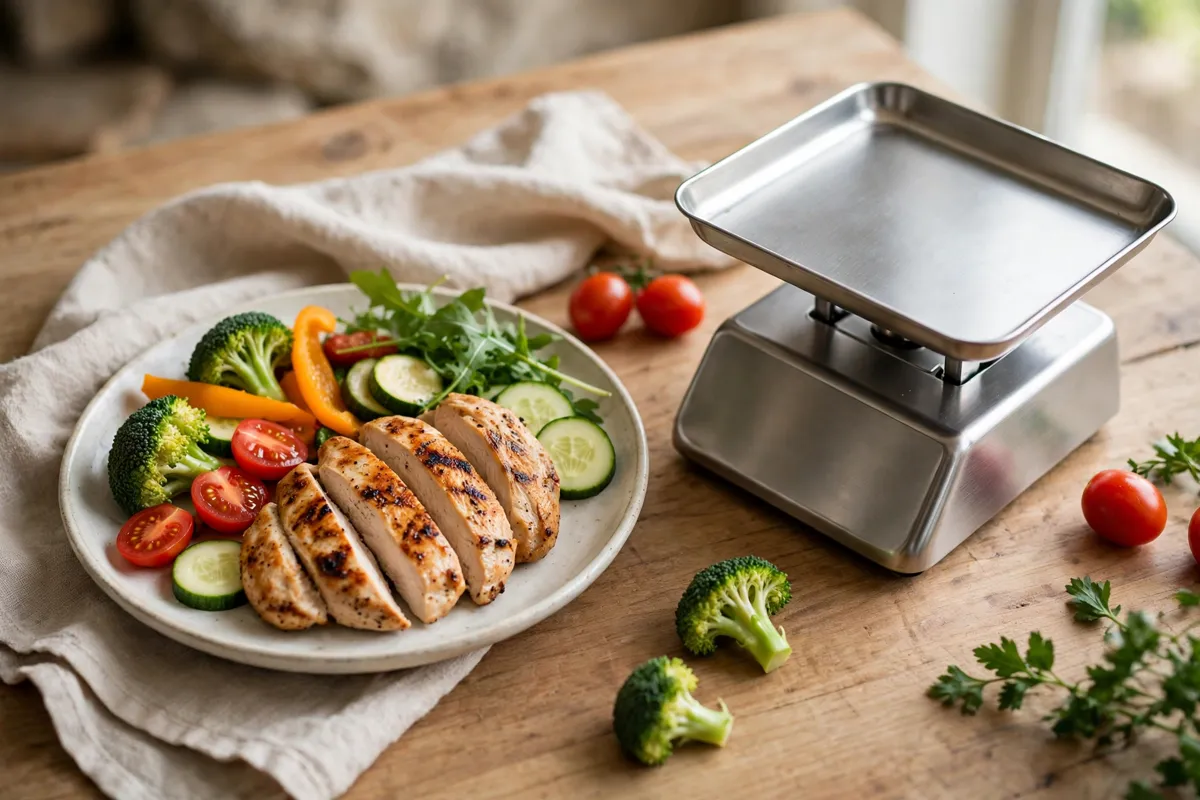
In a deficit your body is looking for energy, and without a reason to keep muscle, some of what you lose will be muscle. A high protein intake plus resistance training is that reason. Protein is also the most satiating macro per calorie, which is a practical gift when food is limited. Anchor every meal: 100g of cooked chicken breast provides about 31g protein for 165 calories, 100g of canned tuna about 26g protein for 116 calories, a 170g tub of plain non-fat Greek yogurt 17g protein for 100 calories, and two large eggs about 12g protein for 156 calories. Hitting 180–200g of protein from foods like these is filling almost by construction — there is simply less room left for the low-protein, energy-dense foods that usually break a deficit.
Step 3 — What Does Daily Tracking Look Like During Weight Loss?
Log before the day gets away from you. Weigh calorie-dense ingredients — oils, butter, nut butters, cheese, dry rice and pasta — because underestimating them is how deficits quietly vanish: a heaped tablespoon of peanut butter can double its labelled 95 calories, 8g of fat included. Pre-log dinner in the morning if evenings are your weak point, so the day's remaining protein and calories shape lunch rather than surprise you. Expect to track every day during active loss, including weekends; the weekly average of your intake is the real number your body responds to, and two unlogged days can lift that average above maintenance even when five days were perfect. Restaurant meals get estimated, not skipped — the approach in tracking calories and macros when eating out keeps those entries honest enough to be useful.
- Set the deficit first, then the split — order matters
- Protein first at every meal; carbs and fat fill around it
- Weigh oils, nut butters, cheese and dry grains — the silent deficit-killers
- Track weekends; judge intake and weight as weekly averages
How Do You Adjust When Weight Loss Stalls?
First confirm it is a stall: daily weight bounces with water, glycogen and digestion, so compare two-week average weights, not single mornings. If the average has not moved for three weeks, check the log before cutting anything — most "plateaus" are logging drift: portions crept up, weekend tracking slipped, or a new regular food was never added. If the log is honest, reduce calories modestly — a small step, re-checked after two more weeks — or add activity, which raises the expenditure side without touching food. Do not slash protein to find the cut; take the reduction from carbs or fat, keeping the split's protein share intact. As you lose weight your maintenance falls, so a deficit that worked at the start slowly shrinks — periodic recalculation with the macro calculator keeps the target honest.
What Should You Expect, Week by Week?
Expect the first week to mislead: glycogen and water shifts can exaggerate early loss, and the second or third week often looks flat by comparison even when fat loss is proceeding steadily underneath. Expect hunger to come in waves rather than constantly, usually at the times you used to snack — planning a protein-rich snack inside the targets (Greek yogurt, cottage cheese at about 14g protein per half cup, or tuna) handles most of them. Expect social meals to be the hardest entries, and plan them: check the menu ahead, decide the order, log it first. And expect the method to get easier — the foods repeat, the portions become familiar, and by week four most people log a day in a few minutes total.
Expect the tracking itself to change what you choose, before any willpower is consulted. Once a person has seen, in their own log, that a mid-afternoon pastry costs the same fat grams as the olive oil in two dinners, or that a protein-rich breakfast removes the 11am hunger that used to drive the snack run, the swaps suggest themselves. This feedback effect is the strongest argument for tracking even temporarily during weight loss: the deficit creates the loss, but the log creates the knowledge that keeps the loss when formal tracking ends. People who have tracked for a season estimate portions accurately for years afterwards, because they have seen the true numbers attached to their own plates too many times to unsee them.
Common Mistakes to Avoid
The biggest mistake is setting a deficit so aggressive that the tracking collapses within a fortnight; the rebound usually overshoots. Second is tracking macros while ignoring the calorie total they add up to — 4, 4 and 9 mean the two cannot disagree, so check the sum weekly. Third is "saving" all your calories for one evening meal, arriving at it ravenous and overshooting; spreading protein across the day controls hunger far better. Fourth is drinking the deficit away: a 12 oz cola adds about 140 calories and 39g of sugar with no protein or fullness at all. Fifth is quitting at the first flat week — water retention routinely hides two weeks of fat loss and then releases it at once.
Final Thoughts
Tracking macros to lose weight is a deficit with better engineering: calories modestly below maintenance, protein set high enough to protect muscle and appetite, carbs and fat arranged around your preferences, and every day logged so the weekly average tells the truth. Set your targets with the macro calculator, weigh the sneaky foods, and judge progress in fortnights. Slow, tracked and sustainable beats fast, guessed and abandoned.
People Also Ask
What Is a Macro Diet?
A macro diet is an eating approach where you plan your day around gram targets for the three macronutrients — protein, carbohydrate and fat — rather than following a list of allowed and banned foods. A typical starting split is 30% protein, 40% carbs and 30% fat, converted to grams with the 4, 4 and 9 calorie factors.
What Is a Good Protein-to-Calorie Ratio?
A good protein-to-calorie ratio means getting at least 10g of protein per 100 calories — a 10:1 score, as in chicken breast at about 31g protein per 165 calories. Foods above that line deliver protein efficiently; foods far below it spend most of their calories on carbs or fat.
Is CAVA Good for Weight Loss?
Yes — CAVA can work well for weight loss, because its menu lets you build a genuinely filling bowl for 400 to 615 calories with 23 to 50 grams of protein, using the tracked builds priced in this article. A Black Lentils bowl with Roasted Vegetables, Tomato & Cucumber and Yogurt Dill Dressing is 260 + 100 + 10 + 30 = 400 calories with 23 grams of protein and 21 grams of fibre, and a lentil-and-chicken bowl with a…
Is Five Guys Good for Weight Loss?
Five Guys can fit into weight loss, but only with a deliberately small order — the lightest main on the menu tracked here, the Veggie Sandwich, is 440 calories on its own, the Little Hamburger is 540 calories, and a standard tray of a Hamburger at 840 calories, Regular Fries at 950 calories and a Regular Soft Drink at 240 calories totals 840 + 950 + 240 = 2,030 calories before any shake is added. Weight loss comes from your…