Macro Calculator: The Short Answer
Macro counting is tracking the grams of protein, carbohydrate and fat you eat each day against set targets, instead of counting calories alone. Because protein and carbs provide 4 calories per gram and fat provides 9, your macro grams and your calories are two views of the same food.
That one sentence explains both the appeal and the extra work. A calorie tells you how much energy you ate; the macro split tells you what that energy was made of — and the makeup matters for fullness, training and body composition. Two 600-calorie lunches can leave you completely differently fed: one built on chicken, rice and vegetables, the other on pastry and a sweet drink. Macro counting was popularised by bodybuilders, spread through flexible-dieting communities, and is now a mainstream way to structure eating without banning food groups. This article explains what the three macros are, how counting them differs from counting calories, how targets are set, and who the method suits — with the arithmetic kept visible throughout, using the same factors as the macro calculator.
Short Answer
Macro counting means setting daily gram targets for protein, carbohydrate and fat, then logging what you eat to land near those targets. It starts from a calorie goal — for example 2,000 calories split 30% protein, 40% carbs and 30% fat gives 150g protein, 200g carbs and about 67g fat — so it is calorie counting with the composition made explicit, not a replacement for it.
What Are the Three Macronutrients You Are Counting?
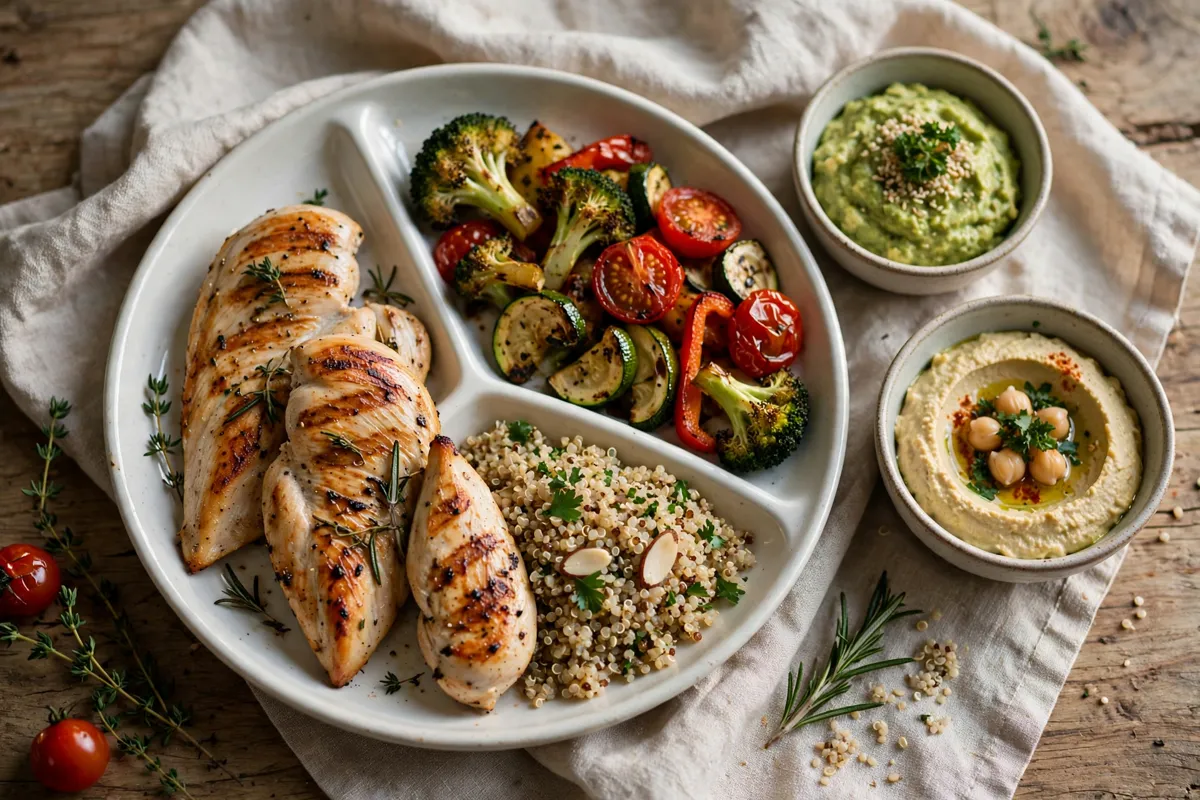
Protein, carbohydrate and fat are called macronutrients because you need them in large — macro — amounts, unlike vitamins and minerals, which you need in milligrams or micrograms. Protein (4 calories per gram) supplies amino acids for muscle, skin, enzymes and immune proteins. Carbohydrate (4 calories per gram) is the body's most readily used fuel, stored as glycogen in muscle and liver and present in grains, fruit, vegetables and dairy. Fat (9 calories per gram) is the most energy-dense macro; it carries fat-soluble vitamins, builds cell membranes and hormones, and slows digestion, which helps meals satisfy. Water is sometimes called a fourth macro because you need it in large amounts, but it provides no calories and is not counted in macro targets. The worked examples in calculating total calories from macronutrients show how any food's three numbers combine into its energy total.
How Is Macro Counting Different From Counting Calories Alone?
Every macro count is also a calorie count, because the grams determine the calories through the 4, 4 and 9 factors. The difference is what you do with the information. A calorie-only dieter who reaches their target on mostly sugar and oil has "succeeded" on paper while likely feeling hungry and under-recovered; a macro counter with the same calorie budget but a protein target of, say, 150g has a built-in structure that pushes meals toward filling, muscle-supporting foods. Protein is the macro people most often under-eat when they only watch calories. On the other hand, macro counting demands more effort: three numbers per food instead of one, and more label reading. Some people thrive on that structure; others find one number — calories — is all the tracking they can sustain. Neither is morally better. The best system is the one you will still be using in three months, a trade-off explored in the macro essentials guide.
How Are Macro Targets Worked Out in Practice?
The sequence is always the same. First, estimate the calories you need for your goal — maintenance, a modest deficit for fat loss, or a small surplus for muscle gain. Second, choose a percentage split. Common starting points are the balanced 30% protein, 40% carbs and 30% fat split, or a higher-protein 40/30/30 split that many people find easier for fullness. Third, convert percentages to grams: calories × percentage ÷ 4 for protein and carbs, ÷ 9 for fat. On 2,500 calories at 30/40/30, that is about 188g protein, 250g carbs and 83g fat. Fourth, eat, log and adjust. If the grams feel impossibly high or low after two weeks, the split — not your willpower — is the first thing to change. Calculating macros for a 2,000-calorie diet walks the same steps at that calorie level in full.
What Does a Day of Macro Counting Actually Look Like?
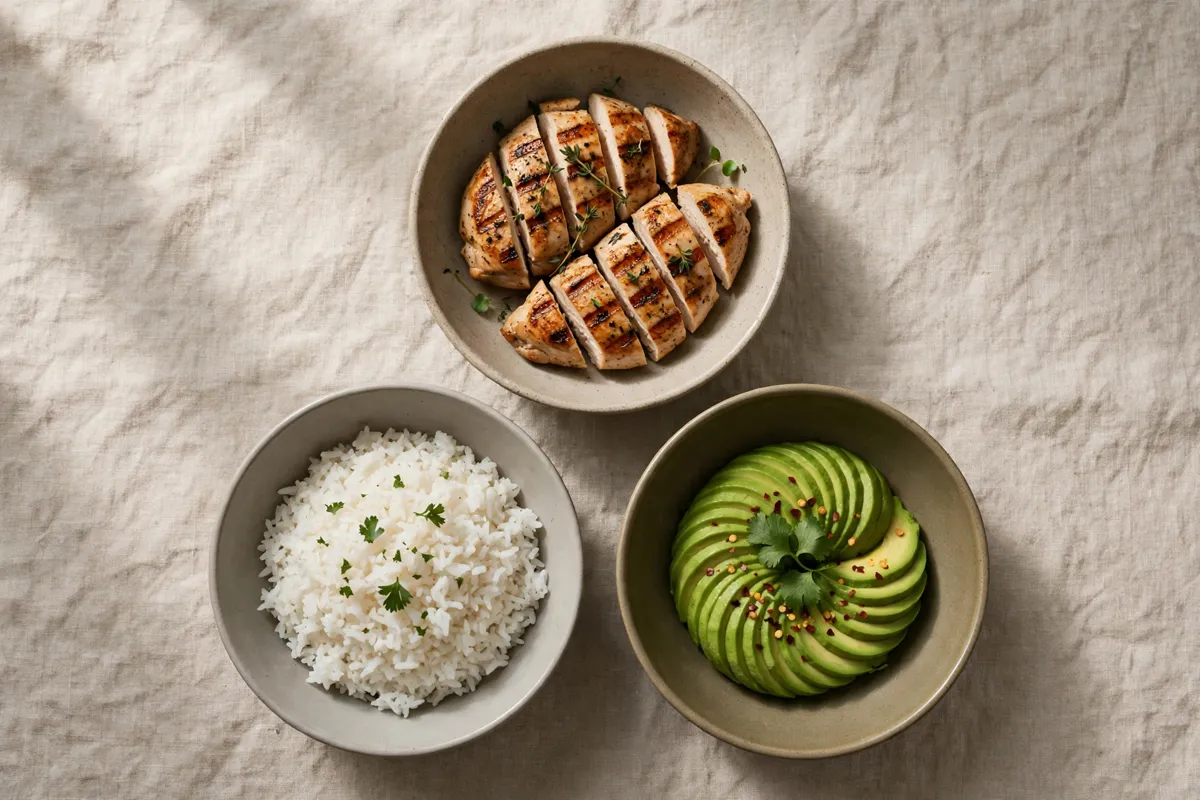
Imagine a target of 150g protein, 200g carbs and 67g fat. Breakfast — an egg (6g protein), oats (5g protein, 27g carbs) and a banana (27g carbs) — contributes roughly 12g protein, 55g carbs and 8g fat. Lunch built on 100g of cooked chicken breast delivers about 31g protein with almost no carbs and 4g fat; add a cup of cooked white rice (about 44g carbs) and the meal becomes a deliberate protein-plus-fuel block. By dinner, the counter can see exactly what is left — perhaps 70g protein and 80g carbs — and build the evening meal to fit, instead of guessing. Nothing in the day was forbidden; foods were chosen and portioned to land near three numbers. That flexibility — any food can fit if the day's totals work — is the method's defining feature, sometimes called flexible dieting.
A short history explains the method's shape. Counting macros began in competitive bodybuilding, where athletes needed to lose fat without losing muscle and discovered that total calories alone let protein drift too low at exactly the wrong moment. Gym culture generalised the practice into percentage splits, and the smartphone era turned it into an app habit: barcode scanning removed the lookup labour that had kept the method niche. What survived each stage is the core loop described in this article — target, log, compare, adjust — and what fell away is the rigidity: modern practice judges weekly averages and allows any food inside the budget. Understanding that origin also explains the method's bias: it was built by and for people who train, which is why protein — the macro lifters could not afford to miss — sits at the centre of the system, and why sedentary users can adopt the loop while moderating its protein emphasis to their own needs.
One clarification prevents a common disappointment: macro counting does not grade food quality, and it was never designed to. A day can hit its grams on refined, fibreless foods and leave its eater undernourished in everything the three numbers do not capture — fibre, potassium, the vitamin alphabet. Serious practitioners therefore run a quiet second check alongside the grams: vegetables and fruit present in quantity, fibre somewhere near the 28g daily value used on labels, and most protein arriving from recognisable foods. Treat the macros as the frame and food quality as the picture inside it, and the method delivers what its advocates claim. Treat the frame as the whole artwork and the disappointment is structural, not personal.
- Protein and carbs: 4 calories per gram; fat: 9 calories per gram
- Targets come from calories first, percentages second, grams third
- Protein is the macro most people under-eat without a target
- Any food can fit — the day's totals are what get judged
Common Mistakes to Avoid
The classic mistake is treating macro counting as separate from calories and being surprised when weight does not change: if the grams add up to more energy than you burn, the composition cannot rescue the total. A second mistake is copying an influencer's grams — targets scale with body size and calorie needs, so borrowed numbers are usually wrong in both directions. Third, many beginners set protein by wishful thinking, choosing a target so high they fail daily and quit; a target you hit four days out of five beats a perfect target you hit once. Fourth, ignoring fibre inside the carb total leads to a carb target met entirely by refined foods; the grams match while the meals disappoint. Finally, counting macros but never reviewing them — logging without a weekly glance at averages is data collection, not a method.
Final Thoughts
Macro counting is calorie counting with the composition switched on: three gram targets — protein, carbs and fat — derived from your calorie goal and checked as you eat. It suits people who want structure without forbidden foods and who care about protein for training, fullness or body composition. Set your numbers with the macro calculator, log for two weeks, and let the averages tell you whether the split fits your life.
People Also Ask
How to Calculate Your Daily Macros?
To calculate your daily macros, set a calorie target first, choose a percentage split, then convert each share to grams — calories × percentage ÷ 4 for protein and carbs, ÷ 9 for fat. On 2,000 calories at 30/40/30, that gives 150g protein, 200g carbs and about 67g fat.
How Many Macros Do I Need Each Day?
How many macros you need each day depends on your calorie target and split: on 2,000 calories with a balanced 30/40/30 split you need 150g protein, 200g carbs and about 67g fat daily. Change the calories or the split and all three gram numbers change with them.
What Is the Healthiest Thing to Eat at a Burger Restaurant?
At Five Guys, the healthiest main item by the tracked numbers is the Veggie Sandwich, at 440 calories with 10 grams of protein, 57 grams of carbohydrates, 19 grams of fat, 5 grams of fiber, and 660 mg of sodium. It is the lowest-calorie main on the menu, it has the joint-highest fiber of any sandwich or burger, and its fat content is the lowest of any main item. Paired with Bottled Water at 0 calories, it is the lightest…
What Is the Healthiest Coffee Drink to Order?
The healthiest coffee drink to order at Dutch Bros, judged on the numbers tracked in this site's Dutch Bros calculator, is the medium Americano: 10 calories, 0 grams of sugar, 0 grams of fat and 10 milligrams of sodium, with the Cold Brew at 15 calories and 0 grams of sugar a step behind it. If the drink also has to feed you, the answer changes to the Protein Coffee Latte — 310 calories, but with 36 grams of protein,…