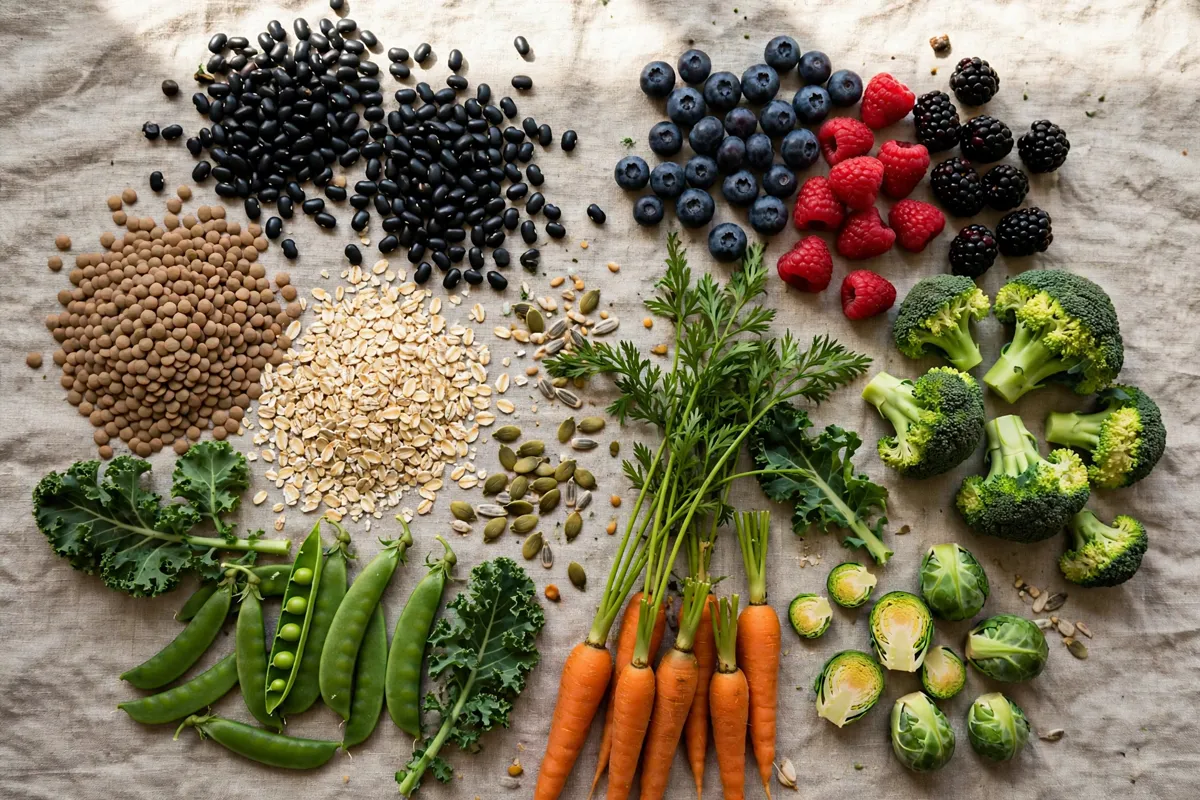
Dietary Fiber Calculator: The Short Answer
No — fiber is not counted as a macronutrient in the classic three of protein, carbohydrate and fat, even though it is itself a type of carbohydrate eaten in gram-sized amounts. Fiber is listed under total carbohydrate on food labels, yields about 2 calories per gram through fermentation rather than direct digestion, and carries an Adequate Intake of 14 grams per 1,000 calories — 28 grams a day on a 2,000-calorie pattern — set in the same reference tables as the true macronutrients.
The question arises because fiber behaves like a major nutrient in every way except the accounting: it is eaten in tens of grams, printed prominently on labels, assigned a daily target and credited with major health effects. This article settles its classification precisely — why it sits inside carbohydrate rather than beside the big three, how its unusual energy value works, how much of it you are meant to eat, and what it does that protein, carbohydrate and fat do not. Your own daily fiber target and the foods that reach it are worked out in the dietary fiber calculator.
Short Answer
Fiber is not a fourth macronutrient. The macronutrients are protein, carbohydrate and fat — the energy-yielding nutrients the body needs in large amounts and can break down for fuel and building material. Fiber is a largely indigestible component of carbohydrate: counted within total carbohydrate on labels, partly fermented by gut bacteria for about 2 calories per gram, and given its own intake target despite sitting outside the classic three.
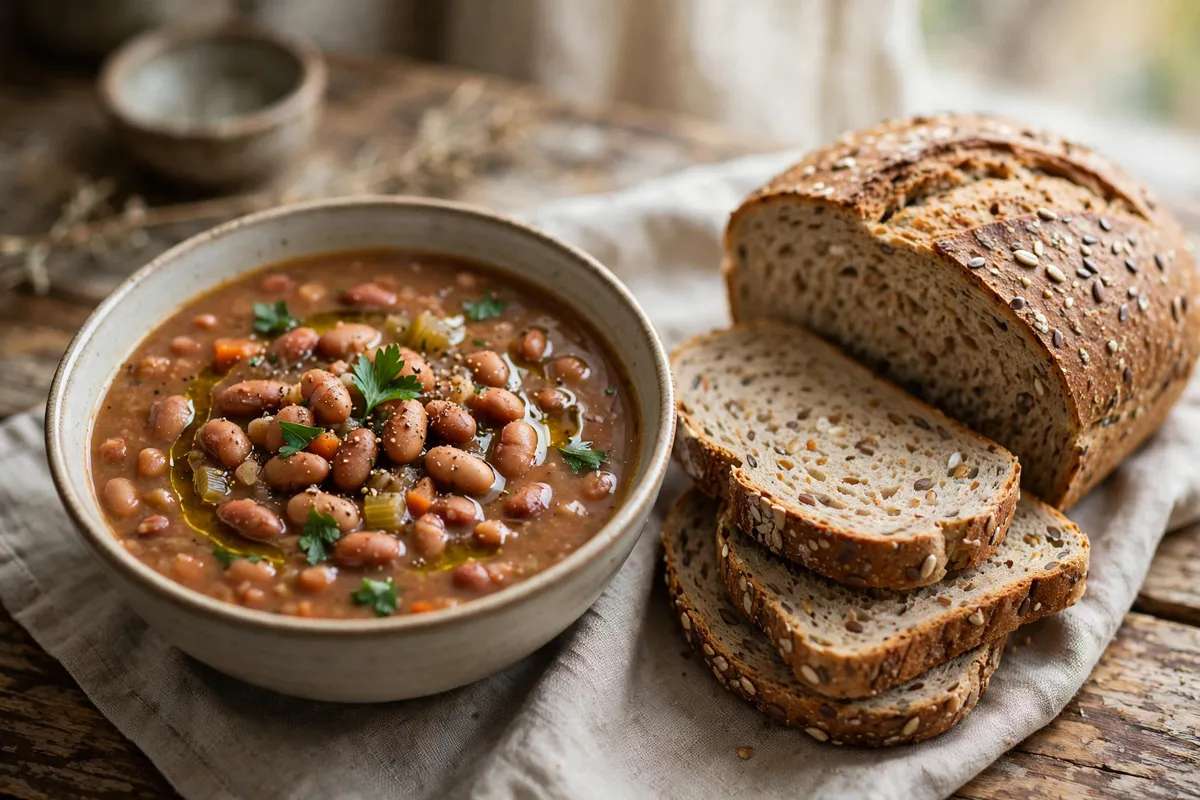
Why Is Fiber Classed With Carbohydrate Instead of as a Fourth Macronutrient?
Classification follows chemistry first and function second. Fiber consists of carbohydrate molecules — long chains of sugar units, like starch — whose bonds human digestive enzymes cannot break. Starch is dismantled and absorbed as glucose; fiber passes through the small intestine essentially intact because the tools to dismantle it are missing. A macronutrient, in the strict sense, is a nutrient class the body needs in large quantity and can metabolise through its own pathways for energy and construction — protein, digestible carbohydrate and fat each qualify. Fiber fails the second half of that test: the body itself extracts nothing from it directly. What energy it does yield arrives indirectly, through bacteria in the large intestine, which is why nutrition science treats it as a distinct fraction within carbohydrate rather than promoting it to a fourth pillar. The label reflects the taxonomy exactly — total carbohydrate is the heading, and dietary fiber is indented beneath it as a component, a relationship examined in does fiber have calories from the energy side.
How Much Energy Does Fiber Actually Provide?
About 2 calories per gram on average — half the 4 assigned to digestible carbohydrate — and the route explains the discount. In the large intestine, gut bacteria ferment a portion of the fiber, producing short-chain fatty acids that the intestinal wall absorbs and the body can use as fuel. The yield varies by fiber type: highly fermentable soluble fibers return close to that average, while coarse insoluble fibers pass through largely unfermented and return little. Two calories per gram is therefore a working average across a mixed diet, not a property of every gram. This is also why fiber-rich foods satisfy beyond their calorie figures — a serving of beans delivers fiber's bulk, its slow fermentation and its modest energy together. For label arithmetic, the practical effect is small but real: a product carrying 30 grams of total carbohydrate of which 8 grams are fiber does not deliver quite the energy a naive 30-times-4 multiplication suggests. The reference framework behind the figure, and the targets built on it, are gathered in the dietary fiber key facts guide.
How Much Fiber Are You Meant to Eat Each Day?
Fiber has an Adequate Intake rather than an RDA, set by the rule of 14 grams per 1,000 calories of energy need. Applied to standard patterns, that gives 28 grams a day on the 2,000-calorie reference pattern used for food labels — the figure behind the label's daily value for fiber — and 38 grams a day is the Adequate Intake commonly published for younger adult men, whose energy needs and therefore fiber targets run higher. The rule-based construction is worth noticing, because it ties fiber directly to how much food you eat overall: a person eating 2,500 calories carries a fiber target near 35 grams by the same arithmetic. Reaching those numbers from ordinary food requires deliberate sources at most meals — beans and lentils, whole grains, vegetables, fruit with its skin, nuts and seeds — since refined staples carry very little. The day-by-day construction of a target-hitting pattern is laid out in how to calculate your daily fiber requirements, and how much fiber you should eat per day works through the same targets by age and sex.
- The rule: 14 grams of fiber per 1,000 calories eaten
- On a 2,000-calorie pattern: 28 grams a day — the label daily value
- Younger adult men: 38 grams a day is the published Adequate Intake
- Energy credit: about 2 calories per gram, from bacterial fermentation
What Does Fiber Do That the Three Macronutrients Do Not?
Its work is mechanical and microbial rather than metabolic. In the stomach and small intestine, fiber adds bulk and, in its soluble forms, viscosity — slowing the rate at which a meal's carbohydrate reaches the bloodstream and extending the feeling of fullness after eating. In the large intestine it becomes the working material of the gut itself: it holds water, gives stool its bulk and softness, keeps transit regular, and feeds the bacterial community whose fermentation products nourish the cells lining the colon. Soluble fiber additionally binds some cholesterol-carrying compounds in the gut, one reason diets rich in it are consistently favoured in heart-health guidance. None of these jobs belongs to protein, fat or digestible carbohydrate, which is why fiber earns its own target and its own label line despite failing the strict macronutrient test. The two families behind these effects — soluble and insoluble — are contrasted in the difference between soluble and insoluble fiber, and most whole plant foods supply both in mixture, which is why guidance emphasises food variety over any single fiber type.
Common Mistakes to Avoid
The first mistake is counting fiber as a fourth macronutrient in macro arithmetic and assigning it 4 calories per gram alongside digestible carbohydrate — its working value is about 2, and double-counting it inside total carbohydrate inflates a day's energy estimate. The second is subtracting all fiber automatically when reading any label, regardless of the labelling system in front of you; conventions differ, and the printed calorie figure already reflects the manufacturer's calculation. Third is chasing the gram target with a sudden large increase: fiber added abruptly, without fluid, commonly produces bloating and discomfort, and the standard advice is to build up gradually over weeks. Fourth is treating an isolated fiber supplement as equivalent to fiber-rich food — the foods bring protein, minerals and the rest of the plant's chemistry with the fiber, and the target was set against food patterns. Fifth is dismissing fiber as unimportant because it is "not essential" in the strict sense; its Adequate Intake exists because the evidence for benefit at those intakes is strong, whatever its taxonomic rank.
Final Thoughts
Fiber is a carbohydrate fraction with a macronutrient-sized reputation: not a fourth macro, because the body cannot digest it directly, but a component important enough to carry its own 14-grams-per-1,000-calories target, its own label line and an energy value of about 2 calories per gram earned through fermentation. Classify it correctly and both label reading and macro counting get cleaner. Size your own target and find the foods that meet it in the dietary fiber calculator.

People Also Ask
How Much Cooked Beans Do You Need to Get 21 Grams of Protein?
You need 237 grams of cooked black beans — about 1. 38 cups — to get 21 grams of protein. The arithmetic runs off USDA FoodData Central's cooked black bean entry (FDC ID 173735) at 8.
Can I Eat Too Much Fibre?
Yes, you can eat too much fiber — but almost never by eating too much food. The realistic route is speed and stacking: jumping from a typical intake near 15 grams a day to 40 grams or more in a few days, usually by adding a supplement drink, fortified bars and a bran cereal on top of an ordinary day, produces gas, bloating and cramps, and a large increase without extra water can paradoxically worsen constipation instead of relieving it.…
Which Indian Dishes are Highest in Fibre?
The legume dishes are highest in fiber, and it is not close: a cup of rajma (kidney bean curry) carries about 13 grams of fiber, a cup of chana masala about 11 grams, and a cup of lobia (black-eyed pea curry) about 11 grams — more fiber in a single Indian main course than many meals built around salads manage in a whole day. The dals follow close behind, whole-wheat rotis assist at about 2 grams each, and a thali…
How Much Fiber Is in Chicken?
Chicken has 0 grams of fiber — the USDA entry for chicken breast, meat only, cooked roasted (FDC ID 171477), lists 0g fiber per 100 grams, and every other part entry logged here reads the same zero. Fiber is a plant structure, and no cut of chicken, prepared any plain way, contains it. This article explains why the zero is permanent, what it means for planning a day's fiber, and where the fiber in a chicken meal actually comes from.