Dietary Fiber Calculator: The Short Answer
You need 237 grams of cooked black beans — about 1.38 cups — to get 21 grams of protein. The arithmetic runs off USDA FoodData Central's cooked black bean entry (FDC ID 173735) at 8.86 grams of protein per 100 grams: 21 ÷ 8.86 × 100 = 237 grams of cooked beans for 21 grams of protein, a figure that cross-checks neatly against this site's host data, where the dietary fiber calculator tracks black beans at about 15 grams of protein per cup.
Twenty-one grams is a deliberate target — roughly a meal's worth of protein in the common planning frameworks — and beans are the plant food people most often try to hit it with, which makes the honest size of the pile worth seeing clearly. It is bigger than most expect: not a scoop, not a side, but nearly a cup and a half of beans, carrying its fibre and carbohydrate with it. This article shows the derivation, the cup conversions, what the 237 grams brings besides protein, and how the target changes across the bean family — with every number traceable to the entry or the host data. The dietary fiber calculator tracks the beans themselves; this page does the protein maths on them.
Short Answer
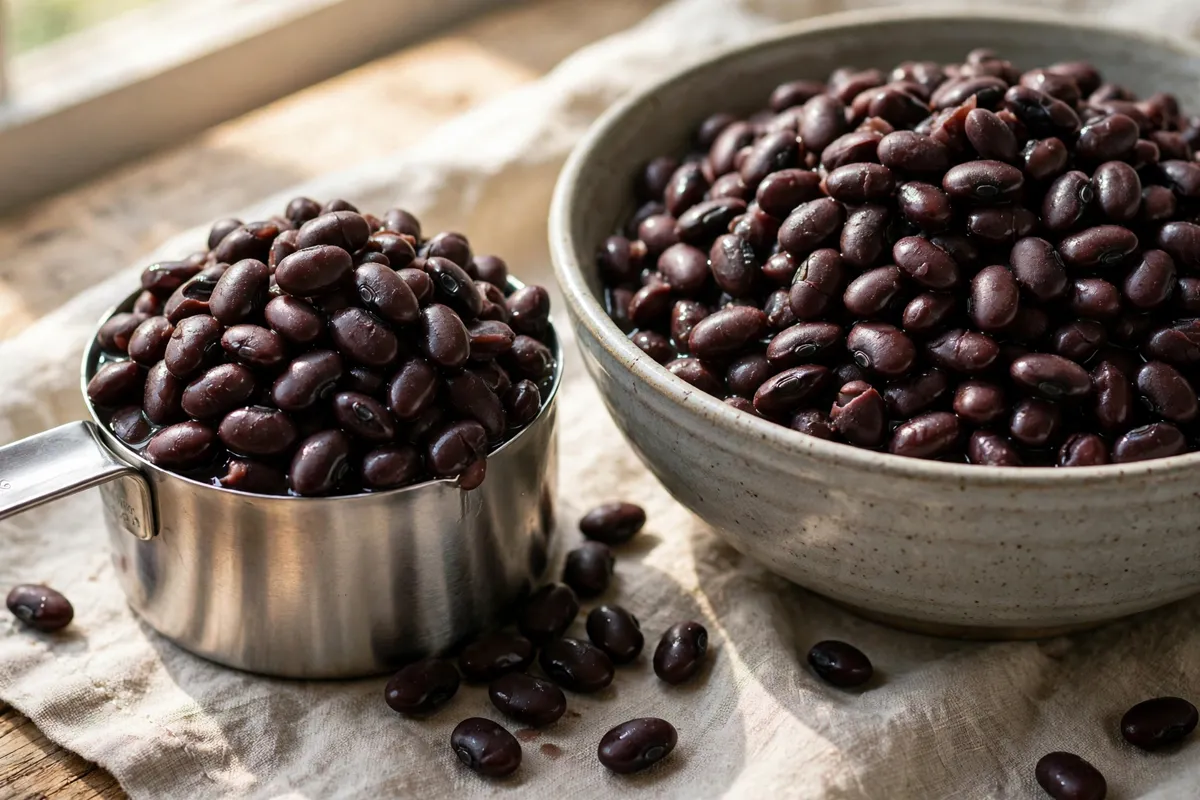
237g of cooked black beans provides 21g of protein (21 ÷ 8.86g per 100g × 100). At the entry's cup weight of 172g, that is about 1.38 cups. The same 237g provides about 313 calories, 56.2g of carbohydrate and 20.6g of fibre.
How Is the 237 Grams Calculated?
In one division, from the entry's verified protein density. Cooked black beans — boiled, without salt — carry 8.86 grams of protein per 100 grams, alongside 132 calories, 23.71 grams of carbohydrate, 0.54 grams of fat and 8.7 grams of fibre. To find the weight that contains 21 grams of protein, divide the target by the density: 21 ÷ 8.86 = 2.37, and multiply by the 100-gram unit — 237 grams. No step in that chain is estimated; the only rounding is in the presentation.
The cup conversion uses the entry's own portion: one cup of cooked black beans is 172 grams, providing 227 calories and 15.2 grams of protein by the same entry. So 237 ÷ 172 = 1.38 cups. The cross-check with the host calculator is reassuring: the dietary fiber calculator's legume data tracks black beans at about 15 grams of protein per cup — the USDA derivation says 15.2 — and 21 grams at 15-per-cup is 1.4 cups, the same answer by the other road. When two independent sources land within a rounding error, the figure can be used with confidence, and it can also be inverted for any other target: 10 grams of protein needs about 113 grams of these beans; 30 grams needs about 339 grams, just under 2 cups.
Why 21 grams specifically? Because it is a realistic per-meal protein goal in common planning — the amount a single main dish is often asked to carry — and because beans test that goal honestly. A chicken breast hits it in a 68-gram piece (at 31.02g per 100g, from the chicken data used across this site); black beans need 237 grams to do the same work. That 3.5-to-1 weight ratio is not an argument against beans; it is the planning fact about them, and the next sections show what the extra weight brings with it.
What Else Comes With the 237 Grams?
A great deal, and most of it is the reason beans are eaten. Scaling the entry to 237 grams: about 313 calories, 56.2 grams of carbohydrate, 20.6 grams of fibre, 1.3 grams of fat, and about 2 milligrams of sodium for beans cooked without salt — a sodium figure so low it deserves its exclamation in a processed-food world. The fibre is the headline companion: 20.6 grams in the portion is the majority of many adults' daily fibre target, delivered by the same bowl that carries the protein — the double duty that puts legumes at the top of the rankings in which foods have the highest amount of fiber and in the fibre-target framework of how much fiber should you eat per day.
The calorie comparison deserves honesty in both directions. At 313 calories, the bean route to 21 grams of protein costs more energy than the chicken-breast route (about 112 calories for the 68-gram piece) — protein density is not beans' contest. But the bean portion is also a full meal's carbohydrate and fibre in itself, needing little beside it, while the chicken piece is one component of a plate. Judged as a self-contained bowl — protein target met, fibre target nearly met, sodium negligible, fat minimal — the 237 grams is an efficient food, and judged as a protein supplement it is a bulky one. Both judgements are the same numbers wearing different questions, which is why this site insists on printing the whole profile and letting the reader's actual goal decide, in the dietary fiber calculator as here.
Satiety follows from the composition: 237 grams of food bulk, 56 grams of slow carbohydrate and 20 grams of fibre is a portion that stays eaten for hours. People who switch a meal's protein to beans and report being unexpectedly full are reporting this arithmetic from the inside.
How Does the Answer Change for Other Beans and Targets?
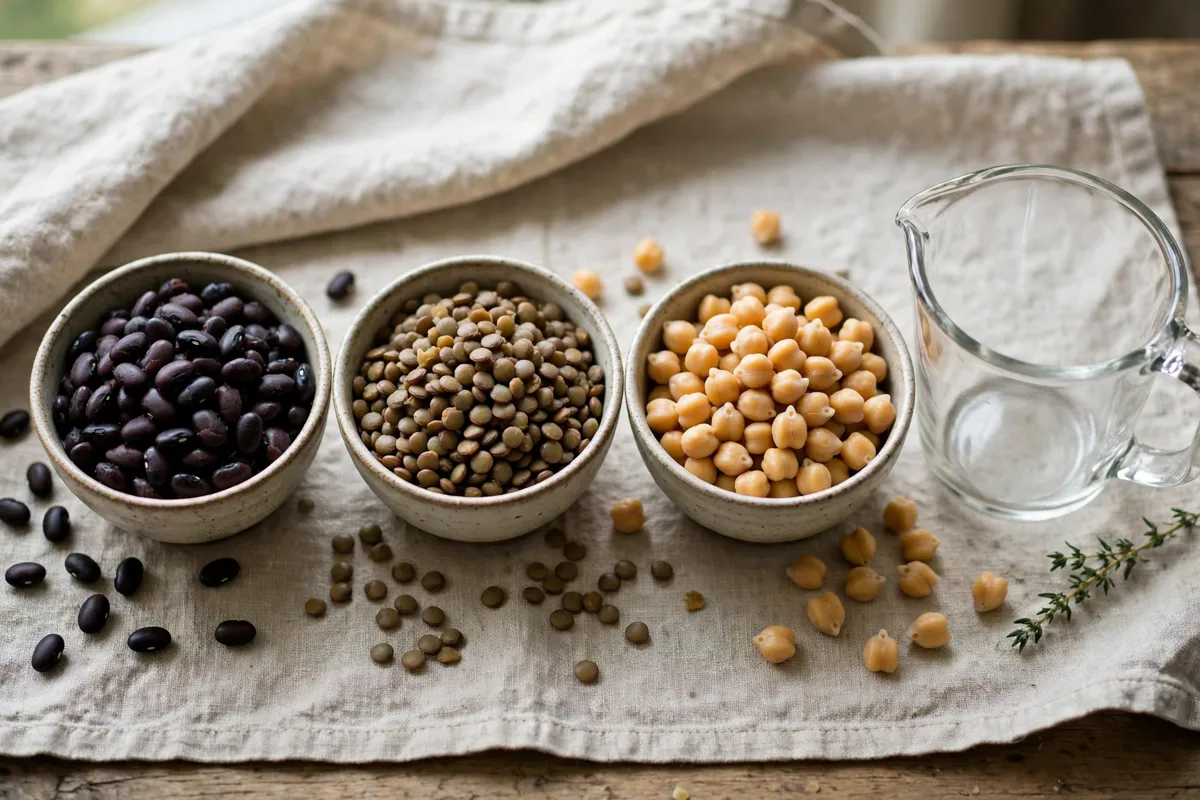
The method is portable; the density is the variable. Black beans at 8.86 grams per 100 grams are a solid mid-family protein density, and the closely related legumes tracked in this site's data cluster near them — the host calculator's legume entries put cooked lentils and black beans together at about 15 grams of protein per cup, making lentils an almost identical route to 21 grams at roughly the same cup count. Where a bean or lentil's cup carries a little more or less protein, the target weight slides in inverse proportion — the formula (target ÷ per-100g protein × 100) absorbs any entry you feed it, and feeding it only verified entries is the discipline the whole series runs on.
Targets scale linearly, and it is worth seeing the common ones on the black-bean basis:
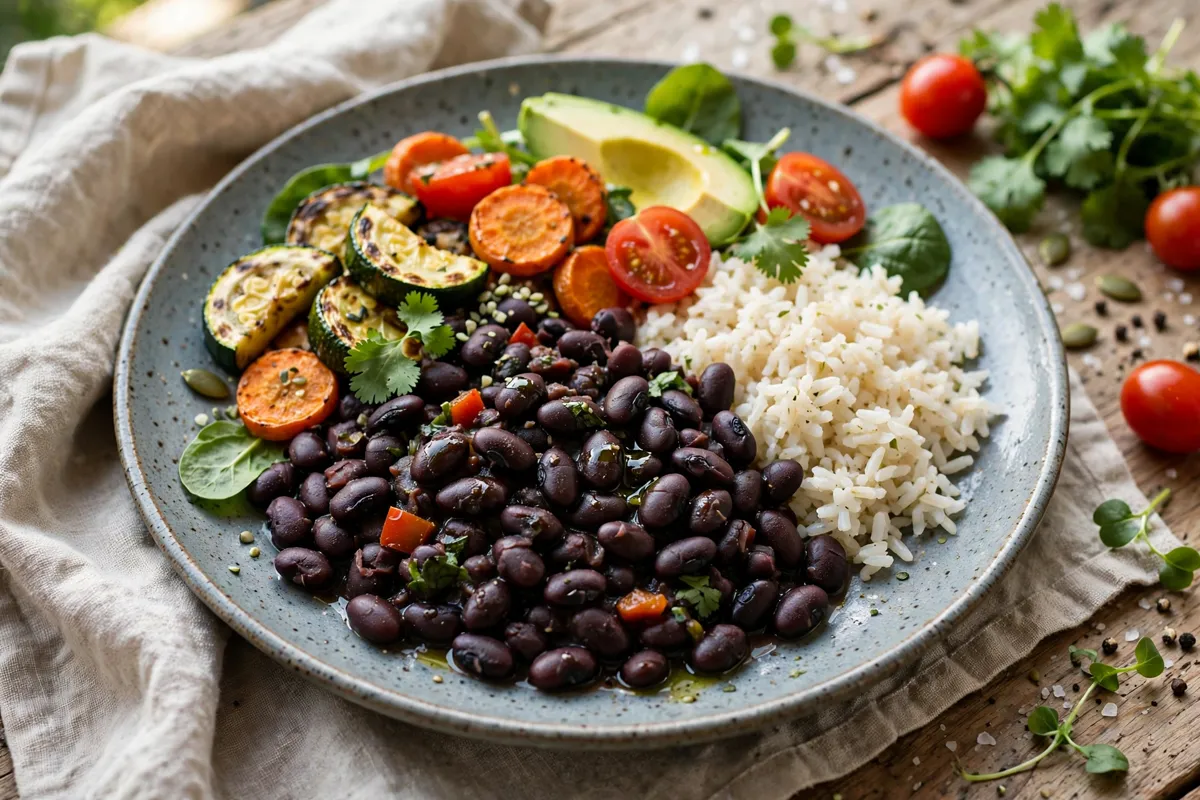
Read up the ladder and the strategic picture forms: beans alone can carry a meal's protein, but the carbohydrate and calories climb with the target, so high daily protein goals built on beans alone become a volume project. Most real plates solve this by partnership — beans plus a grain, beans in a bowl beside another protein, beans as the fibre-and-protein base under a smaller portion of a denser protein — the architecture the bowl-building guides in how to build a high-protein burrito bowl work out dish by dish. The 21-gram answer stands as the pure-bean benchmark against which those partnerships are measured.
- 10g protein: about 113g cooked black beans — about ⅔ cup, 149 calories
- 15g protein: about 169g — just under 1 cup (the cup itself, 172g, gives 15.2g)
- 21g protein: 237g — about 1.38 cups, about 313 calories
- 25g protein: about 282g — about 1.64 cups, about 372 calories
- 30g protein: about 339g — just under 2 cups, about 447 calories
How Should You Measure and Cook for the Target?
By weight where the target matters, by the cup where it nearly matters. The 172-gram cup is the entry's portion for cooked beans, drained — and "drained" is doing quiet work: beans scooped with their cooking liquid weigh more per cup in water and less in bean, so the protein per scoop falls. For the 237-gram target, drain the beans, then weigh or measure: 1.38 cups is an awkward measure, so most cooks will portion 1⅓ to 1½ cups and accept the gram-or-two of protein either side — a rounding the body will never detect.
Home-cooked versus canned changes the sodium, not the protein story: beans you boil without salt carry the entry's near-zero sodium, while canned beans arrive in brine and should be read off their own labels and rinsed, which returns much of the surface salt to the sink. The protein density of the bean itself does not care which pot it cooked in. And for anyone starting from dry beans: the entry describes the cooked food, so weigh after cooking — dry beans roughly double-plus in weight as they hydrate, and logging dry weights against cooked values is the one error that can double this article's answer without anyone noticing. The calorie counter will total the finished bowl, beans and all, once the cooked weight is in hand.
Common Mistakes to Avoid
- Expecting a small side scoop to carry 21g of protein; at 8.86g per 100g, the target needs 237g — about 1.38 cups.
- Logging dry-bean weights against cooked-bean values; hydration more than doubles the weight while the protein stays put.
- Scooping beans undrained and counting the liquid's weight as bean.
- Comparing beans to chicken on protein alone and missing the 20.6g of fibre and near-zero sodium travelling with the bean portion.
- Assuming all legumes share black beans' exact density; use each entry's own per-100g protein in the same formula.
Final Thoughts
Twenty-one grams of protein takes 237 grams of cooked black beans — about 1.38 cups, 313 calories, 56 grams of carbohydrate and a remarkable 20.6 grams of fibre. It is a meal-sized portion doing a meal-sized job, verified two ways: by USDA's entry and by the host calculator's tracked cup. Measure them drained, weigh them cooked, and the beans will deliver exactly what the arithmetic promises.
People Also Ask
Can I Eat Too Much Fibre?
Yes, you can eat too much fiber — but almost never by eating too much food. The realistic route is speed and stacking: jumping from a typical intake near 15 grams a day to 40 grams or more in a few days, usually by adding a supplement drink, fortified bars and a bran cereal on top of an ordinary day, produces gas, bloating and cramps, and a large increase without extra water can paradoxically worsen constipation instead of relieving it.…
Does Cooking Remove Fibre?
No — cooking removes almost no fiber. Boiling, steaming, baking and roasting leave fiber essentially intact: 100 grams of raw broccoli carries about 2. 6 grams of fiber, and 100 grams boiled and drained still carries about 2.
How Much Protein Is in a Gladiator Strawberry?
The Gladiator Strawberry at Smoothie King has 45 grams of protein in the tracked 20 oz size. That is the short answer, and it is a remarkable figure: 45 grams is the highest protein total of any item in the Smoothie King data on this site — higher than every other smoothie, higher than every bowl — in a drink that is also tied for the lowest calories among the 20 oz blends at 220.
How Much Protein Is in a Caribbean Jerk Chicken Wrap?
The Caribbean Jerk Chicken Wrap has 38g of protein — the most of any item at Tropical Smoothie Cafe — for 700 calories, with 91g of carbs and 20g of fat. For most adults that is roughly a third to a half of a day's protein in one menu item.