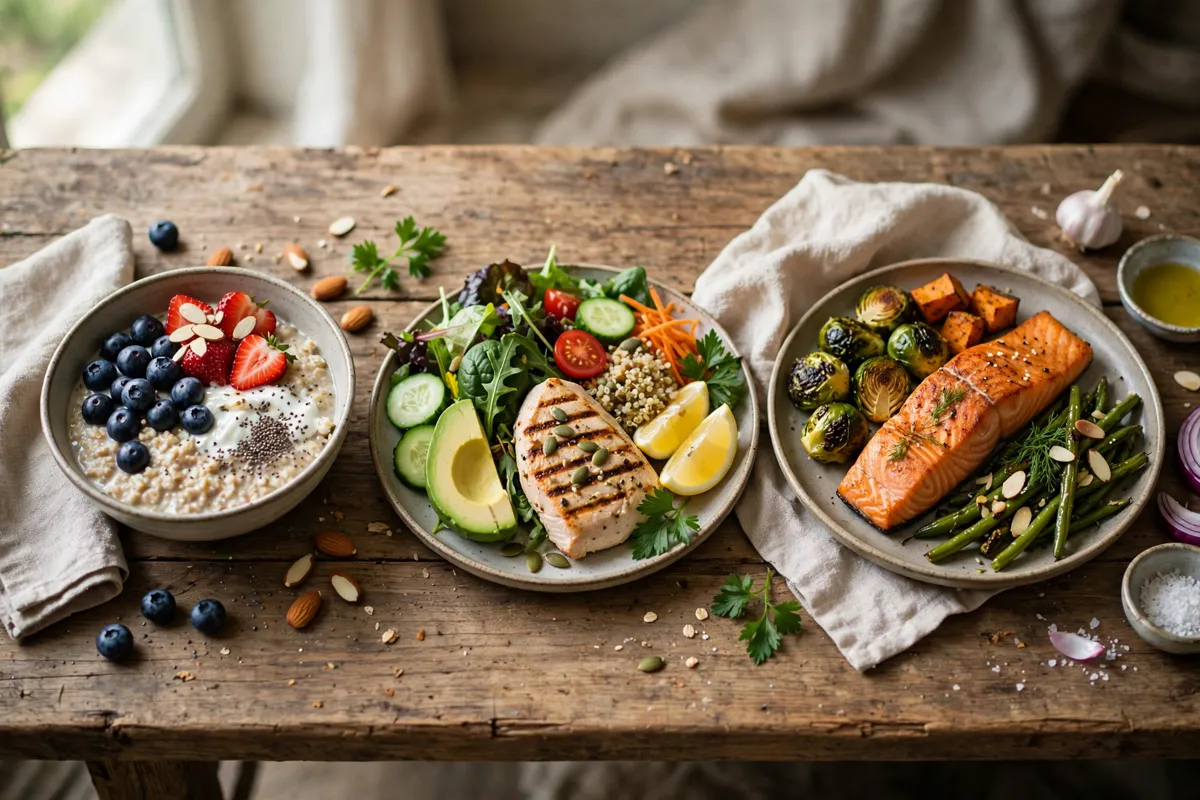
Calorie Counter: The Short Answer
Most people do well on 3 meals a day, with 1–2 planned snacks if needed — the total matters more than the count. What decides your weight and energy is the day's total intake against your needs: three 650-calorie meals and three 400-calorie meals are different diets, whatever the meal frequency says.
Meal frequency is one of nutrition's most argued small questions, and the honest answer is underwhelming in the best way: when total calories and protein are equal, research does not crown a winner among three meals, two meals, or three meals plus snacks for most healthy adults. What differs is fit — to your schedule, your hunger pattern, your training, and your ability to keep portions sane at each sitting. This article sets out the main patterns honestly, the situations that genuinely favour more or fewer meals (long gaps, large calorie targets, blood-sugar management under medical care), and a decision method based on your own two-week trial, with totals kept straight in the calorie counter.
Short Answer
Three meals a day is the default that suits most schedules and appetites, and it maps neatly onto food-group coverage. Two larger meals suits people who prefer eating later and heartily; four to six smaller eating occasions suits people with large calorie needs, small appetites per sitting, or long waking days. Choose by hunger, schedule and total intake — then hold the pattern constant for two weeks before judging it.
Why Does the Total Matter More Than the Meal Count?
Because the body accounts in totals. A 2,000-calorie pattern eaten as three meals of about 650, as two meals of 1,000, or as three meals of 500 plus two 250-calorie snacks delivers the same energy; protein distributed reasonably across the day, and the groups covered, matter more for outcomes than where the boundaries between occasions fall. The popular claims for frequency — that small meals "stoke the metabolism" or that skipping breakfast uniquely stores fat — do not survive contact with equal-calorie comparisons: the energy cost of digestion scales with the food eaten, not the number of sittings. Where meal count does bite is behaviour. Some people snack their way past a meal's worth of calories between two virtuous meals (a cola at about 140 calories here, a pastry there); others arrive at a single huge evening meal too hungry to stop at a sensible portion. Those are portion and planning problems wearing a frequency costume — the accounting in how many calories each meal should contain makes them visible.
Who Does Better With Fewer, Larger Meals?
People with late-starting appetites, people whose work forbids midday eating, and people practising deliberate time-restricted patterns often settle well on two substantial meals. The pattern's discipline is composition: with only two occasions, each must carry half the day's protein and group coverage — a brunch of eggs, whole grains, fruit and dairy, and a dinner built on the full plate (protein anchor such as 100–150g of chicken breast at about 31g protein per 100g, vegetables taking half the plate, grains a quarter). Its failure mode is the evening blowout: two meals become one snack-riddled afternoon and one enormous dinner. A two-meal pattern that works is two actual meals, planned, with drinks and snacks between them counted honestly if they exist at all. Anyone managing blood sugar with medication, and anyone pregnant, should set meal timing with their clinician rather than from an article — frequency is a medical variable in those cases.
Who Does Better With More, Smaller Eating Occasions?
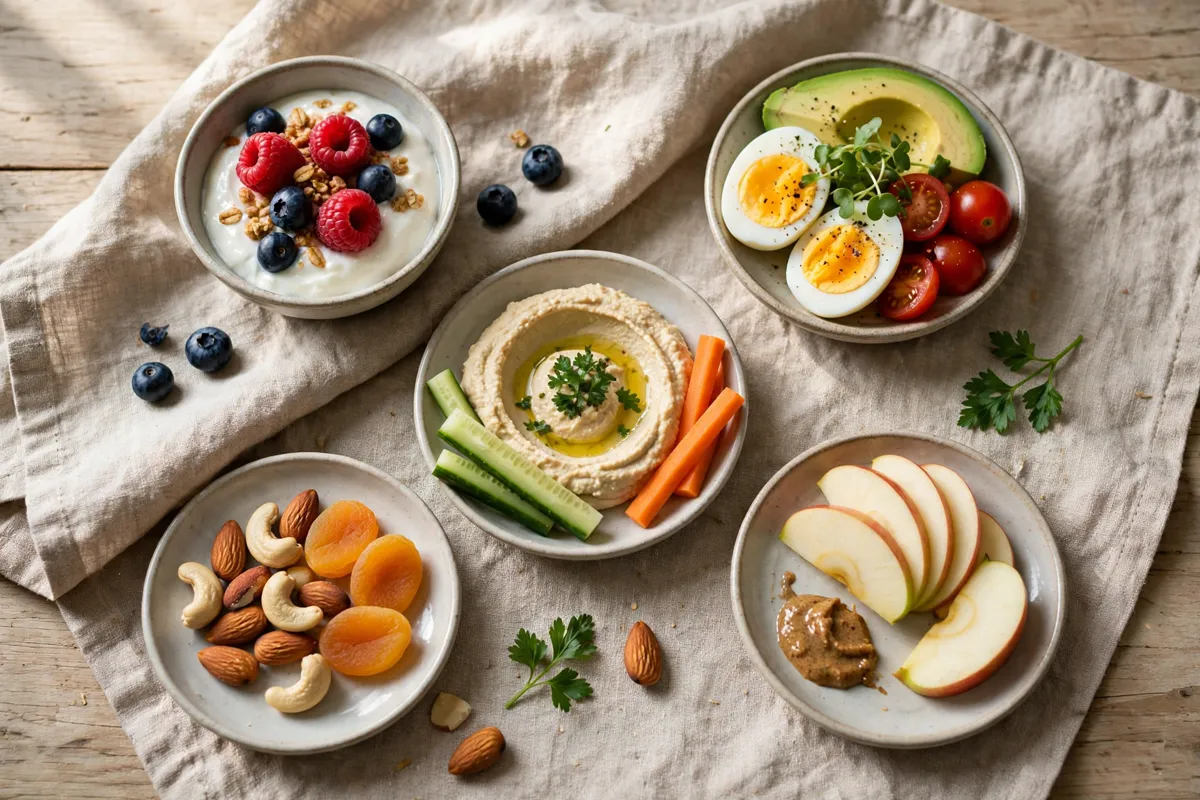
People who must eat a lot: a 3,000-calorie pattern (the top of the MyPlate range for active adults) is hard work in two sittings, and three meals plus two group-based snacks — fruit, yogurt at about 100–149 calories, a small handful of almonds at about 162 an ounce — spreads it comfortably. People with small per-sitting appetites, some older adults, and people whose training sits between two meals also do well with planned snacks, because a pre- or post-training occasion carries energy that would otherwise crowd a meal. Children are the standing example: smaller stomachs, high needs, snacks as structure. The pattern's failure mode is grazing — occasions without boundaries, where "snack" quietly becomes a fourth and fifth meal. Planned snacks have names, times and portions; grazing has none of the three. The site-side question of whether to count calories every day is worth reading alongside this one, because grazing is where uncounted calories live.
- Three meals is the workable default; two or five work when they fit a life better
- Equal totals produce equal energy outcomes — frequency is a fit question, not a metabolic trick
- Two-meal patterns must deliberately carry the whole day's protein and groups in two sittings
- Snacks help when they are planned, named and portioned — and hurt when they are grazing
How Do You Choose Your Own Meal Count in Practice?
Run a two-week self-trial. Week one: three meals, no unplanned snacks, totals logged or at least estimated honestly; note hunger timing, energy, and where the pattern chafed. Week two: adjust one variable — add a planned mid-afternoon snack if afternoons collapsed, or consolidate to two meals if breakfast was always forced — and note the same things. Judge by adherence and hunger scores, not by a few days of scale noise. Check the totals as you go with the calorie counter, because the trial's whole point is separating frequency effects from intake effects: whichever pattern you choose, it must deliver your calorie pattern and your group servings (at 2,000 calories: 2 cups fruit, 2.5 cups vegetables, 6 ounce-equivalents of grains, 5.5 of protein, 3 cups of dairy). The pattern that delivers those numbers on your worst working day, not your best Sunday, is your answer.
Work patterns deserve a specific word, because they decide more meal counts than preferences do. A shift worker awake through the night needs an eating pattern anchored to their waking hours, not to the clock on the wall: a main meal before the shift, a planned meal during it, and a lighter meal before sleep is a three-meal pattern wearing night clothes. A manual worker with a physical morning and a desk-bound afternoon may front-load meals; a carer eating around children may find four smaller occasions simply happen and should be planned rather than fought. In each case the method is identical — define the occasions, compose them from the groups, and count the total — which is why this article treats frequency as logistics. The right number of meals is the number your actual day can hold, deliberately.
Common Mistakes to Avoid
Mistake one is copying an athlete's or influencer's frequency without their calorie needs or schedule — six meals is a solution to a 3,500-calorie problem most people do not have. Mistake two is keeping the meals and adding the snacks, a frequency increase that is really an intake increase. Mistake three is skipping meals accidentally and calling it a pattern; deliberate two-meal eating is planned and composed, while accidental skipping usually ends in vending-machine arithmetic. Mistake four is forcing breakfast on someone whose appetite starts at noon, or banning it for someone who trains at dawn — the evidence supports fit, not dogma, in both directions. Mistake five is judging a new pattern in three days; hunger rhythms take a week or more to re-settle, and the two-week trial exists for that reason.
Final Thoughts
Eat as many meals as makes your totals, your groups and your life work — three for most people, two for deliberate late-and-large eaters, more for high needs and small sittings — and let a logged fortnight, not a headline, decide. The count is the container; the contents are the diet. Set your contents with the calorie counter and choose the container that survives your worst working day.
People Also Ask
What Foods Should You Eat to Lose Weight?
To lose weight, eat foods that fill you up for few calories: lean proteins like chicken breast (165 calories and 31g protein per 100g), high-fibre vegetables and legumes, whole fruits and whole grains — inside a calorie deficit. No single food causes weight loss; the deficit does, and these foods are how a deficit becomes livable.
What Is the Nutritional Value of Food?
The nutritional value of food is the balance between what a food gives your body and what it costs — the protein, fibre, vitamins and minerals it delivers weighed against its calories and its load of added sugar, sodium and saturated fat. A food has high nutritional value when it packs many nutrients into few calories, which is why a cup of broccoli at about 55 calories with fibre and vitamin C outranks a same-calorie mouthful of sweets that delivers…
How to Calculate Daily Food Portions Using MyPlate?
To calculate your daily food portions with MyPlate, find your calorie level first, then read off that level's five daily amounts. At the 2,000-calorie reference level — the pattern most adults start from — the day is 2½ cups of vegetables, 2 cups of fruit, 6 ounce-equivalents of grains, 5½ ounce-equivalents of protein foods and 3 cups of dairy. Those five numbers are the whole calculation.
How Much of Your Plate Should Be Fruits and Vegetables?
Half of your plate should be fruits and vegetables — and inside that half, vegetables take the larger share. MyPlate divides the produce half into roughly 30% of the plate for vegetables and roughly 20% for fruit, a split that produces the 2,000-calorie pattern's daily amounts of 2½ cups of vegetables and 2 cups of fruit. So the short answer is: fill half the plate with produce, weight it toward vegetables, and across a full day at the reference level…