Calorie Counter: The Short Answer
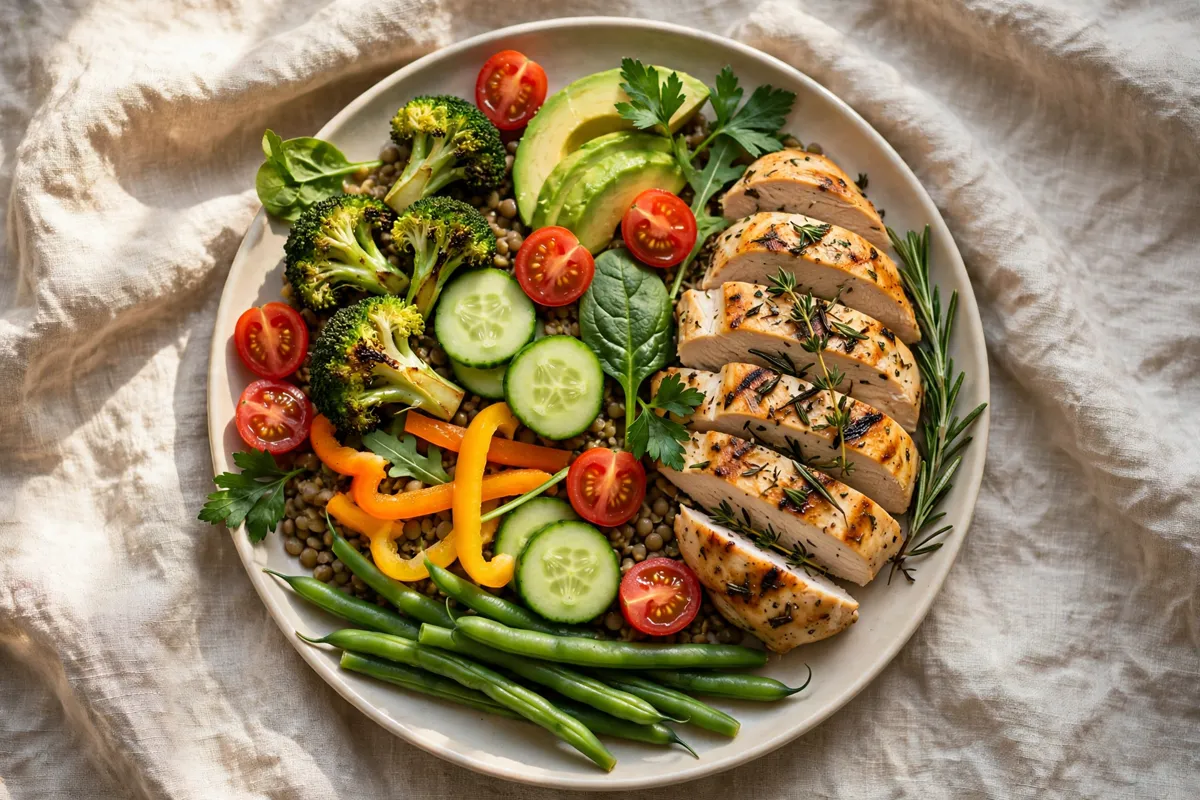
To lose weight, eat foods that fill you up for few calories: lean proteins like chicken breast (165 calories and 31g protein per 100g), high-fibre vegetables and legumes, whole fruits and whole grains — inside a calorie deficit. No single food causes weight loss; the deficit does, and these foods are how a deficit becomes livable.
That framing matters, because the search for "weight-loss foods" usually chases magic — a berry, a tea, a seed that supposedly burns fat. None exists. What exists is food physics: protein and fibre and water-rich volume make meals satisfying per calorie, and a diet you are not fighting all day is a diet that lasts long enough to work. This article profiles the categories that earn their place, with the verified values used across this site, shows a day built from them, and names the high-calorie "healthy" traps and the genuinely unhelpful categories to demote. Totals for any day you build can be checked in the calorie counter, and the calorie target itself is the subject of how many calories you should eat to lose weight.
Short Answer
Build the diet on: lean protein at every meal (chicken, tuna, eggs, Greek yogurt, tofu), vegetables in large volume, beans and lentils for fibre-plus-protein, whole fruit instead of juice and sweets, and whole grains in measured portions. Demote liquid calories, fried foods and refined snacks — they spend the deficit budget without buying fullness.
Which Proteins Help Most When You Are Losing Weight?
The ones with the best protein per calorie, because protein protects muscle in a deficit and is the most filling macro. From this site's food data: canned tuna in water, about 116 calories with 26g protein per 100g; cooked chicken breast, 165 calories with 31g per 100g; plain non-fat Greek yogurt, about 100 calories with 17g per 170g tub; firm tofu, about 76 calories with 8g per 100g; eggs, about 78 calories with 6g each; cottage cheese, about 110 calories with 14g per half cup; salmon, about 208 calories with 20g per 100g — richer, but satisfying and nutrient-dense. Anchor each meal on one of these and the day's protein largely takes care of itself. Compare the method with the higher-protein plate: this is the food-level version of a higher-protein macro split, and pairing it with sensible portions is what distinguishes a weight-loss plate from a merely smaller version of the same unhelpful meal.
Which Vegetables, Fruits and Fibre Foods Earn Their Place?
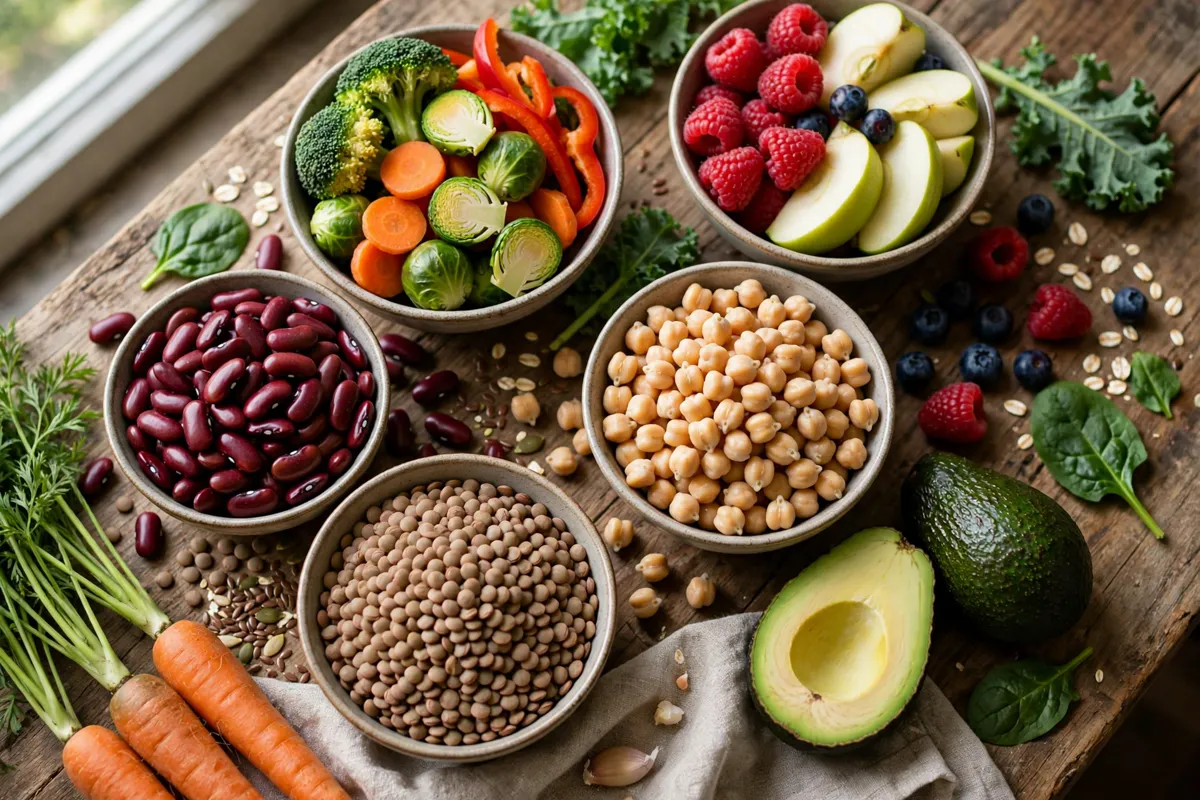
Vegetables are the volume engine: a cup of cooked broccoli brings about 55 calories with 5g of fibre; spinach about 7 calories a raw cup; carrots about 52 a cup; mixed greens about 15 for two cups — you can, and should, eat these in quantities that look indulgent on the plate while barely moving the calorie total. Legumes are the second engine, because they combine fibre with protein: cooked black beans and lentils carry around 15–16g of fibre per cup in this site's fibre data (black beans about 227 calories and 15g protein per cup) — a bean-based lunch keeps hunger away for hours in a way a refined lunch of the same calories cannot. Fruit, eaten whole, is the sweet course that behaves: a medium apple about 95 calories with 4g of fibre, a banana about 105, a cup of strawberries about 50. Juice removes the fibre and the chewing and should be demoted accordingly — a cup of orange juice is about 112 calories that satisfy like far less. Whole grains in measured portions complete the set: oats (about 154 calories per half cup dry, 4g fibre), brown rice (about 216 a cooked cup, 4g fibre) over their refined versions.
- Protein anchors: tuna, chicken breast, Greek yogurt, eggs, tofu, cottage cheese
- Volume foods: broccoli, greens, carrots and other vegetables in generous portions
- Fibre engines: beans and lentils at about 15g of fibre per cooked cup
- Whole fruit for sweetness; whole grains, portioned, for staying power
What Does a Day of Weight-Loss Eating Look Like at About 1,600–1,800 Calories?
Breakfast: Greek yogurt (about 100 calories, 17g protein) with a cup of strawberries (about 50) and a sprinkle of oats — roughly 200 calories and genuinely filling. Lunch: a large salad (two cups of greens, about 15 calories) with 100g of chicken breast (165), chickpeas or beans, tomatoes and cucumber, and a measured dressing — around 450–500 calories with protein above 35g. Afternoon: an apple (about 95) or a small tub of cottage cheese. Dinner: salmon (about 208 per 100g) or tofu with a heaped portion of broccoli and other vegetables (about 110 for two cups) and a measured cup of brown rice (about 216) — roughly 550–600. The day lands around 1,500–1,700 calories with protein well over 100g, fibre near the 28g daily value, and no point at which you were asked to eat a tiny, sad portion of anything. Swap the anchors — tuna for chicken, lentils for salmon — and the structure survives indefinitely, which is the test of a weight-loss pattern as opposed to a weight-loss week. The calorie side of the structure is checked meal by meal in how many calories each meal should contain.
Which Foods Quietly Work Against Weight Loss?
Liquid calories lead the list because they spend without satisfying: a 12-ounce cola is about 140 calories with 39g of sugar and no fullness, and juices and sweet coffees repeat the trick daily. Fried foods and pastry combine fat and refined flour into the highest densities in ordinary eating. Refined snacks — crisps, biscuits, sweets — are engineered to be eaten past fullness and carry almost no protein or fibre to argue back. Then the traps with health halos: nuts (about 162 calories an ounce) and nut butters (about 95 a level tablespoon, easily doubled) are nutritious foods whose portions must be measured, not poured; cheese (about 113 calories an ounce of cheddar) likewise; granola and many "protein" bars are desserts in gym clothing once their sugar is read. None of these is banned — a deficit with no joy in it fails too — but they belong in the pattern as measured guests, not as the foundation. The pattern-level mistakes are collected in the calorie counter mistakes guide.
Finally, a note on drinks and the foods around the foods. Water is the default drink of every successful pattern in this article, not as a ritual but because every alternative spends calories or, in the case of juices, behaves like a food without a food's fullness. Sauces and dressings deserve the same measured treatment as the foods they cover: a salad carrying two tablespoons of a creamy dressing at about 140 calories is still a good lunch, but it is a different lunch from the one its greens suggested, and the honest version is the one that gets counted. Weight-loss eating is mostly ordinary eating, chosen and portioned with unusual honesty.
Common Mistakes to Avoid
Mistake one is hunting for a magic food instead of building the deficit: no berry or tea outruns a surplus. Mistake two is cutting protein along with everything else, which costs muscle and multiplies hunger — in a deficit, protein foods are the last category to shrink, not the first. Mistake three is drinking the deficit back through juices, sodas and sweet coffees while eating impeccably. Mistake four is unlimited "healthy" eating — nuts, oils, cheese and avocado in unmeasured amounts can hold a day above maintenance on virtuous foods alone. Mistake five is a plan with no satisfying meals in it: a pattern built only of restriction collapses socially and psychologically within weeks, while the protein-volume-fibre structure above is designed to be lived on.
Final Thoughts
Eat to lose weight the way the evidence and the arithmetic agree on: a modest calorie deficit furnished with lean protein at every meal, vegetables in volume, beans and lentils for fibre, whole fruit and measured whole grains — and liquid calories, refined snacks and unmeasured calorie-dense "health" foods demoted to guests. Set your target, build a day like the one above, and verify it in the calorie counter.
People Also Ask
What Is the Nutritional Value of Food?
The nutritional value of food is the balance between what a food gives your body and what it costs — the protein, fibre, vitamins and minerals it delivers weighed against its calories and its load of added sugar, sodium and saturated fat. A food has high nutritional value when it packs many nutrients into few calories, which is why a cup of broccoli at about 55 calories with fibre and vitamin C outranks a same-calorie mouthful of sweets that delivers…
How Many Calories Should I Eat Per Day?
Most adults need roughly 1,600 to 2,800 calories per day to maintain their weight, and your own number comes from one calculation: work out your basal metabolic rate with the Mifflin-St Jeor equation, then multiply it by an activity factor to get your maintenance calories. There is no single correct intake for everyone — a small, sedentary woman and a tall, physically active man can differ by more than 1,000 calories a day and both be eating exactly right for…
Are Smoothies Good for Weight Loss?
They can be — and the same blender can just as easily work against you, because a smoothie is not a food group, it is a delivery system. Built deliberately, a smoothie makes an excellent weight-loss meal: unsweetened almond milk, strawberries, spinach, plain Greek yogurt and half a cucumber blend to 40 + 50 + 7 + 100 + 8 = 205 calories carrying 20 grams of protein and 5 grams of fiber. Built carelessly, a smoothie is 584 calories…
What Is the Best Smoothie for Weight Loss?
The best smoothie for weight loss in the tracked Smoothie King data is the Gladiator Strawberry (20 oz): 220 calories — the joint-lowest figure for any full-size smoothie on the menu — with 45 grams of protein, 3 grams of carbohydrates, 2 grams of fat, 1 gram of sugar and 340 milligrams of sodium. It wins because weight loss ordering is a two-part problem, the lowest calorie cost and enough protein to make that cost sustainable, and the Gladiator is…