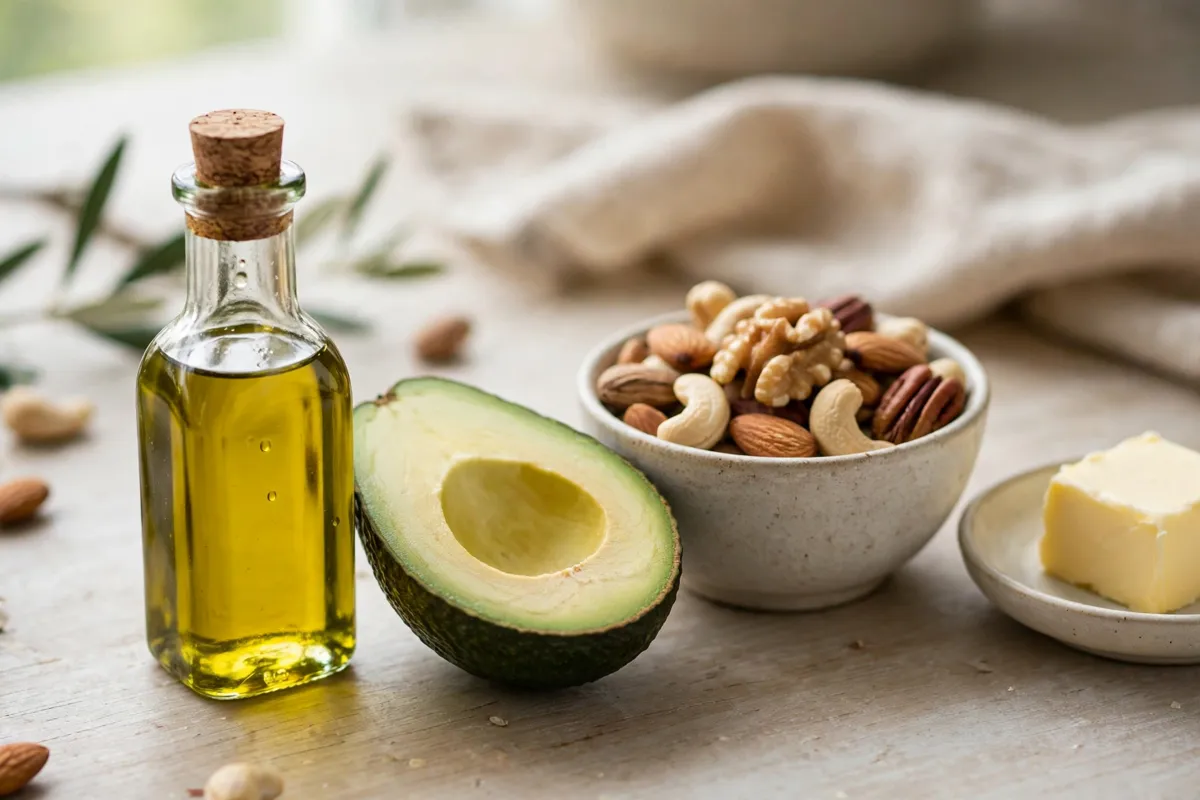
Grams to Calories Calculator: The Short Answer
One gram of fat provides 9 calories — more than double the 4 provided by a gram of protein or a gram of carbohydrate. That single fact explains most of what puzzles people about food energy: why a small handful of nuts out-calories a large bowl of salad, why oils are the densest thing in the kitchen, and why trimming fat is the fastest arithmetic lever on a meal's total.
This article is built around the word "provides." It shows how the 9 was established — from fat's burn value of about 9.4 calories per gram, trimmed by digestion to the label factor of 9 — and then works the factor through real labels, real portions and real swaps. The grams-to-calories calculator applies the same 9 instantly; the site's earlier article on how many calories are in one gram of fat approaches it from the food-content side, while this page follows the provided, usable energy and what you do with it.
Short Answer
9 calories per gram of fat, usable energy. Fat burns at about 9.4 calories per gram in a calorimeter and is absorbed at roughly 95 percent efficiency, so the Atwater system rounds its delivered value to 9 — the factor on every label, and the highest of the macronutrients by a wide margin.
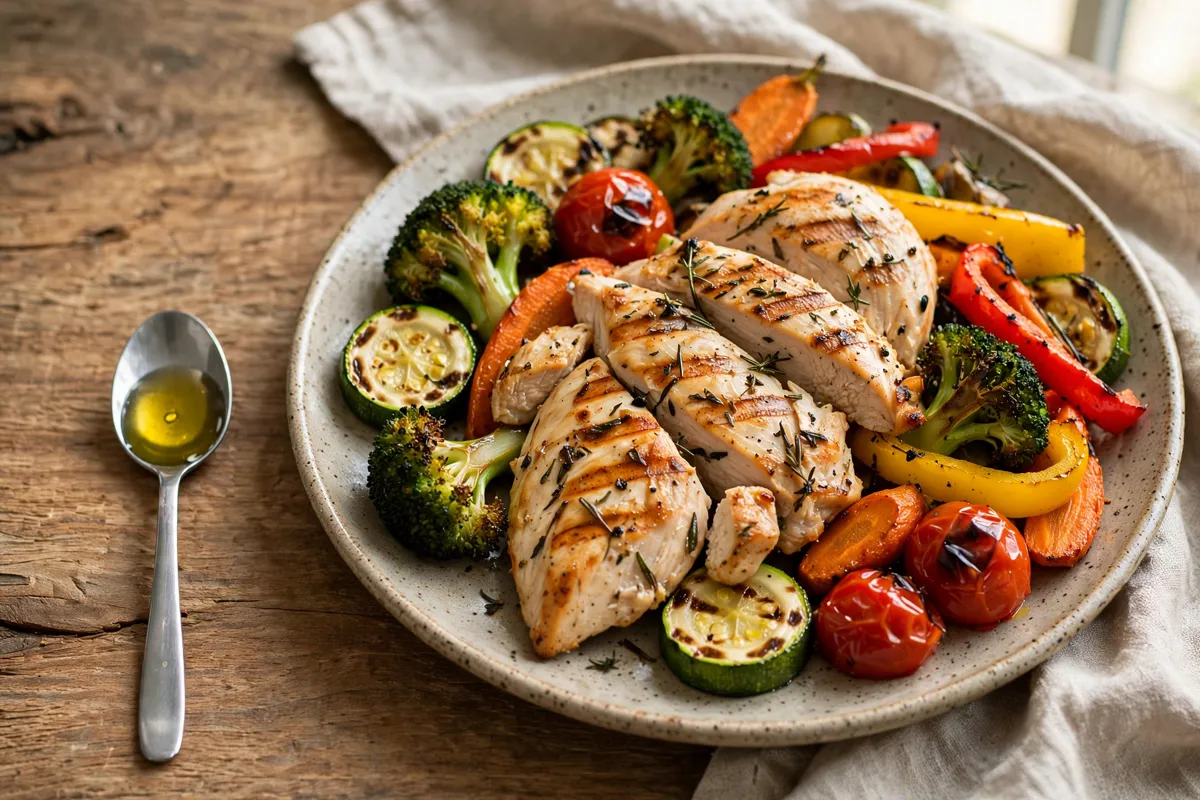
Why Does Fat Provide More Than Twice the Energy per Gram?
Chemistry, in one idea: fat molecules are energy-rich and water-poor. Protein and carbohydrate carry oxygen atoms within their structure and arrive, in a sense, partially oxidised already; fat is mostly long chains of carbon and hydrogen with energy stored in every bond, and it carries almost no water weight. When the body oxidises those chains fully, the yield per gram is about 9.4 calories gross — against 4.1 for carbohydrate and 5.6 for protein before its nitrogen penalty.
Evolution noticed the same arithmetic. The body stores its long-term energy reserve as fat precisely because 9 per gram packs a season's insurance into the smallest, lightest depot; stored carbohydrate (glycogen) binds several grams of water per gram and would make the same reserve absurdly heavy. The density that serves a hibernating animal is the density that ambushes a modern eater: energy the body designed to be compact is, by the same design, easy to over-consume without feeling full. Every practical consequence in this article — portion caution with oils, the leverage of fat-trimming, the surprising totals on small rich foods — is that one chemical fact wearing different clothes.
How Do Worked Label Examples Show the 9 in Action?
Take three foods and price only their fat lines. A tablespoon-sized portion of oil with 14g fat: 14 × 9 = 126 calories from fat — and since the oil is nothing but fat, that is essentially its whole story on the label. A cheese portion with 9g fat: 81 calories from fat, before its protein adds 4 per gram on top. A handful of nuts at 16g fat: 144 calories from fat alone, which is why the handful can exceed a whole sandwich's carbohydrate contribution without looking like a meal.
Now run a complete label to see the factor dominate. A product with 5g protein, 12g carbohydrate and 20g fat: protein provides 20, carbohydrate 48, fat 180 — a total of 248, of which fat supplies nearly three quarters from a plurality of the grams. Reduce that product's fat to 10g and the total falls to 158, a saving of 90 calories from a 10-gram change; achieving the same saving from carbohydrate would require removing 22.5 grams. This asymmetry is the working heart of label reading, and how to calculate total calories from macronutrients builds whole products with it line by line. If your own multiplication of a label disagrees with its printed total, the usual explanations are rounding and fibre, reconciled in why a label total may not match the 4-4-9 maths.
- 5g fat = 45 calories from fat
- 10g fat = 90 calories from fat
- 14g fat (a tablespoon of oil) = 126 calories from fat
- 30g fat = 270 calories from fat
Does the Kind of Fat Change the 9?
Barely. Saturated, monounsaturated and polyunsaturated fats differ in chemistry at the level of bonds, and their precise gross energies vary by small fractions — but digestion treats them all at roughly 95 percent efficiency and labels price them all at 9. Medium-chain fats, concentrated in coconut-derived products, are absorbed by a slightly different route and deliver a touch less in some refined measurements; the difference is small enough that labels ignore it and so, for planning, should you.
The far larger practical variation is not between fat types but between foods' fat content. A gram of fat provides 9 wherever it sits — in butter, in a nut, in the marbling of a steak, in the oil a pan absorbed and passed to your dinner. Hidden fat is where the factor earns its keep: frying oils soaked into food, dressings poured by eye, and the fat inside processed products all provide their honest 9 per gram whether or not anyone saw them go in. Weighing and measuring fatty additions for a few weeks recalibrates the eye more than any other single tracking habit, because the 9 amplifies every estimation error by more than double compared with the other nutrients.
How Should You Use the 9 When Planning or Cutting Calories?
As the first lever, not the only one. Because each gram of fat removed saves 9 calories, modest fat changes outperform heroic carbohydrate cuts gram for gram: switching a cooking method from frying to grilling, choosing a leaner cut, measuring oil instead of pouring it — each trims tens of calories without shrinking the plate. The division runs the other way for targets: a 70g daily fat allowance on a 2,000-calorie plan accounts for 630 of those calories (70 × 9), a share worth knowing before protein and carbohydrate split the rest.
Handle the lever with respect, though. Fat carries flavour, fat-soluble vitamins and essential fatty acids, and diets that slash it to near zero fail on satisfaction long before they fail on arithmetic. The sensible use of the 9 is targeting waste — unmeasured oils, unseen frying mediums, fatty extras that add little pleasure per calorie — rather than fearing the nutrient itself. The grams-to-calories calculator will show you, food by food, exactly where a meal's fat grams are doing their quiet multiplying.
Common Mistakes to Avoid
The classic error is estimating fatty portions by the standards of other foods: a "small" drizzle of oil is small in volume and large in calories, because every gram carries 9. Second, do not apply fat's 9 to the whole weight of a fatty food — a 100g portion of cheese is not 900 calories; only its fat grams (about 33g in a typical hard cheese) multiply by 9, while its protein multiplies by 4. Third, do not assume low-fat on a label means low-calorie: removed fat is often replaced by sugar and starch, which still provide 4 per gram in generous quantities. Fourth, remember that label fat grams include all fat types together; the saturated figure is a subset, not an addition. Finally, do not fear the 9 into avoidance — it is an accounting fact, and the goal is to spend fat calories deliberately, not to pretend a body can run on none.
Final Thoughts
One gram of fat provides 9 calories — the digestion-adjusted value of the most energy-dense nutrient, and the reason small fatty portions carry such large totals. Learn to spot the fat line on a label, multiply by 9, and you can predict most of a food's energy before reading its headline. Spend those calories where they earn their place, measure the invisible ones, and let the grams-to-calories calculator do the multiplying when the meal gets complicated.
People Also Ask
Does Sugar Count Separately From Carbs?
No — sugar does not count separately from carbs, and its calories are already inside the carbohydrate line. Sugar is a member of the carbohydrate family, not a fifth macro, so the grams of sugar on a label are part of the total carbohydrate grams above them. Price those sugar grams once, as part of the total, at 4 calories per gram: on the worked label below, 12 grams of sugar contribute 12 × 4 = 48 calories, and all…
Why Doesn't My Label Total Match the 4/4/9 Maths?
Your label total usually does not match the 4/4/9 math because 4/4/9 is the gross approximation and your label was built with refinements. Labels may count fiber at about 2 calories per gram rather than 4, polyol sweeteners at reduced factors — erythritol near 0, others around 2 to 2. 4 — and every printed value is rounded, calories to the nearest 5 or 10.
How to Calculate Calories in Homemade Indian Food?
To calculate calories in homemade Indian food, weigh every ingredient raw, price each one, add the whole pot, and divide by the number of portions — and measure the tadka, because 1 tablespoon of oil or ghee is about 120 calories and the tempering is routinely the second-largest line in the dish. Worked through on a six-portion chana masala, the method gives a pot of 1,456 + 150 + 360 = 1,966 calories and a portion of 1,966 ÷ 6…
How Many Calories Are in One Roti and a Bowl of Dal?
One whole-wheat roti and a bowl of dal come to about 370 calories — a roti at about 120 plus a cup of dal tadka at about 250, so 120 + 250 = 370 — with about 13 grams of protein and about 10 grams of fiber between them. That makes roti and dal the lightest full meal in the cuisine's everyday repertoire: not a snack and not merely a small plate, but a structured small meal whose pulse and…